Why is the govt underreporting COVID deaths all over India?

Mafazah Sharafuddin
May 5, 2021

cd1.jpg

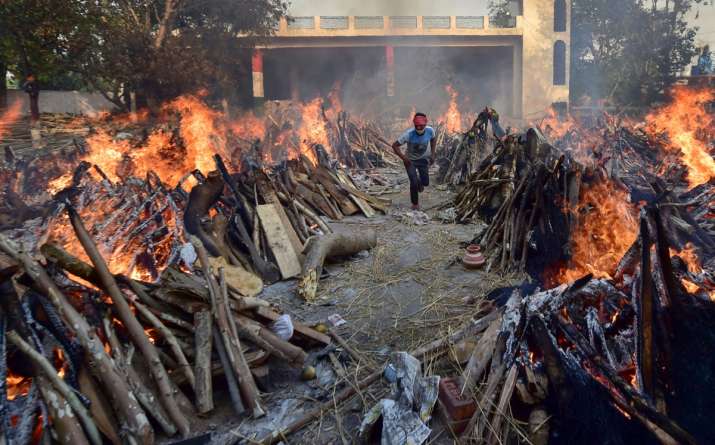
There have been several claims of undercounting the number of COVID deaths on the part of the government. This is a result of several factors, but most significantly, the number of corpses piling up in crematoriums and burial grounds. According to those who run crematoriums, the number of deaths due to COVID sent for cremation is much higher than what is disclosed by the government.
 
This issue isn’t limited to any one state, as there have been reports of the same in several states, including Karnataka, UP and the capital, Delhi. The crisis of having too many bodies and insufficient means to dispose of them is making people notice. NGOs are helping with cremations outside crematoriums, in parks etc. The crematoriums themselves are working towards building more cremation platforms. 

People running burial grounds and crematoriums are not turning people away. This has led to long queues for the same. In an interview with NDTV, a man who had lost his father to COVID said, “Earlier we were struggling to get oxygen, now we are struggling for cremation. The Government is useless.”

The owners of certain crematoriums state that those who die at home are not reported as COVID deaths in an official capacity, despite having succumbed to COVID. Several people are at home due to a lack of hospital beds and oxygen. They are being turned away from the hospitals. 

There have been mixed reactions to these claims. Most state governments are paying it no heed, and continuing to report deaths as they did prior to it. Adithyanath, however, has reacted with having the open sides of Rajghat covered up with cloth and plastic banners. This blocks the view to the cremation grounds and any bodies that might be piling up there. The banners claim that photography and videography of the cremations within the grounds would be considered criminal activity. It cites religious sanctity as its reason. 

The situation is dire. Overwhelming evidence states that the number of deaths of people diagnosed with COVID may be much higher than that being reported. This does not even begin to count the fact that there are plenty of people unable to get tested. This paints a truly grim picture of the COVID situation in India. 

The Madras HC on Monday severely reprimanded the Election Commission for allowing campaign rallies to take place during the pandemic. They went as far to say “Your institution is singularly responsible for the second wave of Covid-19. Election Commission officers should be booked on murder charges probably.”

The Co-Win portal and the announcement of vaccines for those aged 18-44 followed by the lack of production is another factor causing people to raise their voice. There are far too many accusations of improper administration for it to be brushed off without address. 

A report in the Financial Times stated that the, “numbers of Covid victims who have been cremated are 10x larger than official Covid death counts in same areas.” The state India is in is capturing global attention. 

The situation right now calls for many questions. What are the true numbers? How many decisions, like the EC’s decision to give parties the go ahead, were promoted by political reasons? How many were financially motivated? Where does public welfare stand among the list of reasons?

The glaring question, of course, is why?

Why is the government underreporting the COVID deaths all over the country?

The number of deaths, the state of the hospitals, the lack of vaccines, and the political rallies etc. all point towards one thing. Inefficient administration. The possibility that the underreporting is a ploy by the government to seem like they have a better handle on the situation is becoming more and more likely. 

It isn’t a new concept for governments to cover up things leading up to the election. There are thousands of cartoons that just speak about deceit before the election. 

It is an insidious idea, but that does not make it less likely. This is a matter of national and global importance. Underreporting the deaths due to COVID could skew research studying the fatality of this wave of the virus. It is also vital that the citizen see the gravity of the situation. The government must address the disparity in the numbers and provide clarity to the citizens.

Comments

MOHAMED S SULTAN
 - 
Friday, 7 May 2021

This is man made problem.
We(You) paid very dearly as the consequences of choosing our governments.
At least learn from this UNFORGETTABLE LESSON, what type of party and leaders you have to select for ruling.

costly lesson, never ever forget and pass it to all generations until end of the planet.

Add new comment

  • Coastaldigest.com reserves the right to delete or block any comments.
  • Coastaldigset.com is not responsible for its readers’ comments.
  • Comments that are abusive, incendiary or irrelevant are strictly prohibited.
  • Please use a genuine email ID and provide your name to avoid reject.
News Network
November 27,2025

siddDKS.jpg

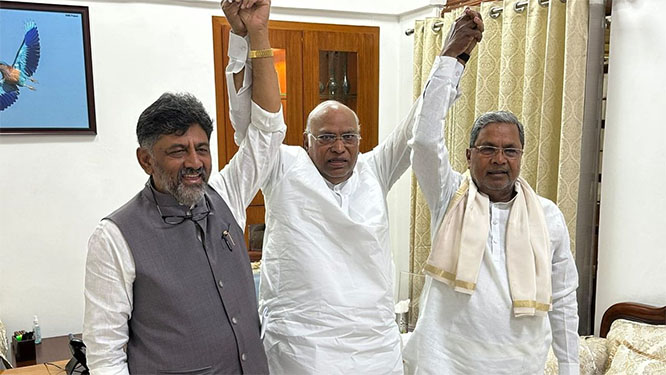
Congress president Mallikarjun Kharge on Thursday announced that he will convene a high-level meeting in New Delhi with senior leaders — including Rahul Gandhi, Karnataka Chief Minister Siddaramaiah and Deputy Chief Minister D.K. Shivakumar — to resolve the escalating leadership turmoil in Karnataka and “put an end to the confusion.”

Kharge said the discussions would focus on the way forward for the ruling party, as rumours of a possible leadership change continue to swirl. The speculation has intensified after the Congress government crossed the halfway mark of its five-year term on November 20, reviving talk of an alleged 2023 “power-sharing agreement” between Siddaramaiah and Shivakumar.

“After reaching Delhi, I will call three or four important leaders and hold discussions. Once we talk, we will decide how to move ahead and end this confusion,” Kharge told reporters in Bengaluru, according to PTI.

When asked specifically about calling Siddaramaiah and Shivakumar to Delhi, he responded: “Certainly, we should call them. We will discuss with them and settle the issue.”

He confirmed that Rahul Gandhi, the Chief Minister, the Deputy Chief Minister and other senior members would be part of the deliberations. “After discussing with everyone, a decision will be made,” he said.

Meanwhile, Siddaramaiah held a separate strategy meeting at his Bengaluru residence with ministers and leaders seen as his close confidants, including G. Parameshwara, Satish Jarkiholi, H.C. Mahadevappa, K. Venkatesh and K.N. Rajanna.
Signalling calm, the Chief Minister told reporters, “Will go to Delhi if the high command calls.”

Shivakumar echoed a similar stance, saying he too would head to the national capital if summoned by the party leadership.

Comments

Add new comment

  • Coastaldigest.com reserves the right to delete or block any comments.
  • Coastaldigset.com is not responsible for its readers’ comments.
  • Comments that are abusive, incendiary or irrelevant are strictly prohibited.
  • Please use a genuine email ID and provide your name to avoid reject.
News Network
December 6,2025

pilot.jpg

New Delhi: IndiGo, India’s largest airline, faced major operational turbulence this week after failing to prepare for new pilot-fatigue regulations issued by the Directorate General of Civil Aviation (DGCA). The stricter rules—designed to improve flight safety—took effect in phases through 2024, with the latest implementation on November 1. IndiGo has acknowledged that inadequate roster planning led to widespread cancellations and delays.

Below are the key DGCA rules that affected IndiGo’s operations:

1. Longer Mandatory Weekly Rest

Weekly rest for pilots has been increased from 36 hours to 48 hours.

The government says the extended break is essential to curb cumulative fatigue. This rule remains in force despite the current crisis.

2. Cap on Night Landings

Pilots can now perform only two night landings per week—a steep reduction from the earlier limit of six.

Night hours, defined as midnight to early morning, are considered the least alert period for pilots.

Given the disruptions, this rule has been temporarily relaxed for IndiGo until February 10.

3. Reduced Maximum Night Flight Duty

Flight duty that stretches into the night is now capped at 10 hours.

This measure has also been kept on hold for IndiGo until February 10 to stabilize operations.

4. Weekly Rest Cannot Be Replaced With Personal Leave

Airlines can no longer count a pilot’s personal leave as part of the mandatory 48-hour rest.

Pilots say this closes a loophole that previously reduced actual rest time.

Currently, all airlines are exempt from this rule to normalise travel.

5. Mandatory Fatigue Monitoring

Airlines must submit quarterly fatigue reports along with corrective actions to DGCA.

This system aims to create a transparent fatigue-tracking framework across the industry.

The DGCA has stressed that these rules were crafted to strengthen flight safety and align India with global fatigue-management standards. The temporary relaxations are expected to remain until February 2025, giving IndiGo time to stabilise its schedules and restore normal air travel.

Comments

Add new comment

  • Coastaldigest.com reserves the right to delete or block any comments.
  • Coastaldigset.com is not responsible for its readers’ comments.
  • Comments that are abusive, incendiary or irrelevant are strictly prohibited.
  • Please use a genuine email ID and provide your name to avoid reject.
News Network
November 28,2025

ministerPM.jpg

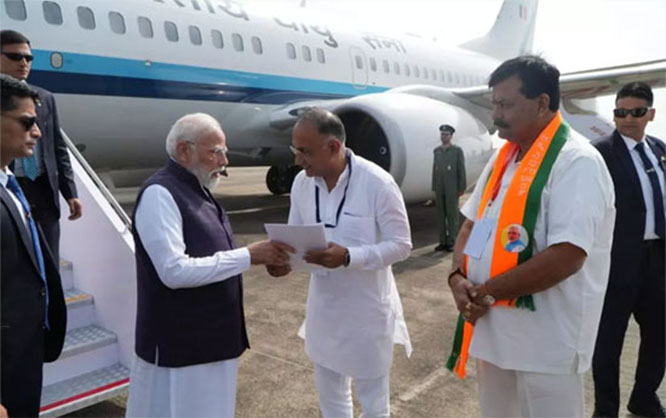
Mangaluru, Nov 28: Karnataka Health Minister and Dakshina Kannada district in-charge minister Dinesh Gundu Rao on Friday handed over Chief Minister Siddaramaiah’s letter to Prime Minister Narendra Modi, highlighting the severe distress faced by farmers due to crashing crop prices.

PM Modi arrived at the Mangaluru International Airport en route to Udupi, where Gundu Rao welcomed him and submitted the letter. The chief minister’s message stressed that farmers are suffering heavy losses because maize and green gram are being bought far below the Minimum Support Price (MSP). The state urged the Centre to immediately begin procurement at MSP.

According to the letter, Karnataka has a bumper harvest this year—over 54.74 lakh metric tons of maize and 1.98 lakh metric tons of green gram—yet farmers are unable to secure fair prices. Against the MSP of ₹2,400/MT for maize and ₹8,768/MT for green gram, market rates have plunged to ₹1,600–₹1,800 and ₹5,400 respectively.

The chief minister has requested the Centre to:

• Direct NAFED, FCI and NCCF to start MSP procurement immediately.
• Ensure ethanol units purchase maize directly from farmers or FPOs.
• Increase Karnataka’s ethanol allocation, citing high production capacity.
• Stop maize imports, which have depressed domestic prices.
• Relax quality norms for green gram, allowing up to 10% discoloration due to rains.

The letter stresses that MSP is crucial for farmer dignity and income stability and calls for swift central intervention to prevent a deepening crisis.

Comments

Add new comment

  • Coastaldigest.com reserves the right to delete or block any comments.
  • Coastaldigset.com is not responsible for its readers’ comments.
  • Comments that are abusive, incendiary or irrelevant are strictly prohibited.
  • Please use a genuine email ID and provide your name to avoid reject.