Tens of millions plunge into poverty in Modi-led India

Agencies
May 8, 2021

poverty.jpg

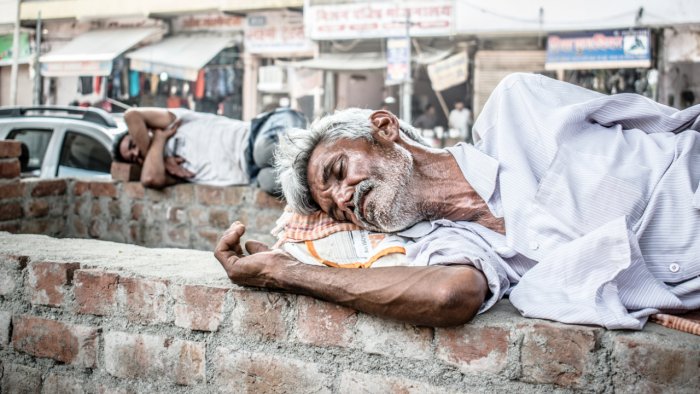
After dipping into his savings to weather India’s snap pandemic lockdown last March, Manoj Kumar was just getting his head above water again earning 600 rupees ($8) a day as a construction worker in the tourist hotspot of Goa. He’d squirreled away enough for a trip last month to his native village in Bihar some 1,490 miles away for a wedding. He’s still there, stuck in one of the nation’s least developed states, as a fierce second Covid-19 wave triggers the world’s worst health crisis and prevents his return.

On a lucky day, he’ll land some odd jobs that fetch him as much as 300 rupees. But there aren’t too many of those chores left. So he’s taking loans to feed and clothe his wife and three kids.

“It is all in God’s hands now,” said Kumar, who’s told his wife to curtail spending on items such as lentils, cooking oil and clothes. “I don’t know when I will return. My family is worried and doesn’t want me to go back as the cases are also rising in Goa.”

Kumar, 40, is one of the millions of migrant workers who form part of India’s vast unreported informal sector, which accounts for half of its $2.9 trillion, domestic demand-driven economy.

A protracted Covid-19 wave is shrinking incomes and wiping out savings of people like Kumar, posing the risk of a double whammy for Asia’s third-largest economy that’s still struggling to recover from last year’s pandemic-induced recession.

The government estimates India’s gross domestic product shrank 8% in the year ended March, its biggest contraction since 1952.

Many economists are cutting their forecasts for the current fiscal year as rising unemployment and dwindling savings dim the chances of a double-digit growth. Shaun Roache, chief economist for Asia Pacific at S&P Global Ratings, slashed his prediction to 9.8% from 11% earlier.

Fitch Solutions sees the economy expanding by 9.5%, a projection that’s below the Bloomberg consensus of around 11%. “A drawn-out Covid-19 outbreak will impede India’s economic recovery,” Singapore-based Roache said.

 “The country already faces a permanent loss of output versus its pre-pandemic path, suggesting a long-term production deficit equivalent to about 10% of GDP.”

With the latest surge caused by a new coronavirus strain, total infections in India have risen to 21.5 million, a third of which were added just in the past three weeks alone.

Experts have warned the crisis has the potential to worsen in the coming weeks, with one model predicting as many as 1,018,879 deaths by the end of July, quadrupling from the current official count of 234,083.

Harsh and Sudden

As new travel restrictions are put in place in some of the nation’s biggest economic centers to contain the outbreak, India’s poor are likely to bear the brunt again, just as they did in 2020.

They have yet to recover from the lockdown ordered by Prime Minister Narendra Modi in late March last year. The harsh and sudden measure sparked an exodus of migrant workers from cities such as Mumbai and New Delhi, as they trekked hundreds of miles to reach home.

People like Kumar typically work without contracts and often for a pittance. The so-called informal economy in India employs approximately 411 million workers, according to calculations by Jeemol Unni, a professor of economics at Ahmedabad University, who relied on surveys by the government’s National Statistical Office to arrive at the number.

While the low-paying farm sector employs the bulk of them, construction comes second with about 56 million.

Unprotected by unions and politicians, these laborers often miss out on handouts from governments. After meeting daily expenses, they are left with little to pay for health care and medicines -- a risky situation especially when a pathogen is taking lives and sending thousands to intensive care at overcrowded hospitals running short of beds.

Dip in Savings

Economists warn depleting household savings and falling incomes will have an impact on domestic consumption, which accounts for almost 60% of GDP. A study by Nikhil Gupta, an economist at Mumbai-based brokerage Motilal Oswal Financial Services Ltd., found that India’s household savings dropped to 22.1% of GDP in the quarter through December, from 28.1% in the three months ended June last year. Full-year numbers show India’s savings growth lagged behind the likes of the US, the UK and Japan, he said.

“A slower rise in household savings, coupled with similar or slower decline in consumption, confirms weak income growth in India,” Gupta said. “If so, the contribution of pent-up demand in growth recovery would also be limited in India compared with other nations.”

Data showed April jobless rate increased to nearly 8% from 6.5% in March, with more than seven million exiting the workforce last month, according to data from Center for Monitoring Indian Economy Pvt., a private research firm.
 
As a result of all the turmoil that started last year, income inequality is deepening in India. A study by Pew Research Center has shown an estimated 75 million people slipped into poverty since the pandemic began. The second wave is set to crush some more. For the study, Pew considered daily incomes of 150 rupees or less as poor, 151 to 750 rupees as low income and 3,750 rupees and above as high income.

A study by the Azim Premji University in Bangalore showed even more alarming numbers. About 230 million individuals slid below the national daily minimum wage threshold of 375 rupees during the pandemic, it said.

Though India could still emerge as one of the fastest growing economies in the world, it will also be one of the most unequal countries, Oxfam, a non-profit organization said.

Duvvuri Subbarao, a former governor of India’s central bank, said the strife faced by the informal-economy workers could hurt India’s long-term growth prospects. “Inequalities have intensified because the formal sector has nearly normalized while the informal sector remains distressed,” he said.

Slower growth would be bad news for workers like A.K. Singh, who was a cook for a monthly salary of about 20,000 rupees in a restaurant in Mumbai. He fled recently to his home town of Gorakhpur in northern India to start a tire business, for which he’s waiting for a loan.

“I used some of my savings and money I received from my last salary,” he said. “But there’s a lockdown here too for the past week. My shop was hardly open for two days during the week. What will we earn out of that?

 

Comments

MOHAMED S SULTAN
 - 
Saturday, 8 May 2021

Keep this actor away from administration.

At least please remember not to allow him or any one like him to sit on the responsible seat.
There is another dangerous guy is so called Yogi.

Identify those guys to blacklist from cheating you again

Add new comment

  • Coastaldigest.com reserves the right to delete or block any comments.
  • Coastaldigset.com is not responsible for its readers’ comments.
  • Comments that are abusive, incendiary or irrelevant are strictly prohibited.
  • Please use a genuine email ID and provide your name to avoid reject.
News Network
November 24,2025

Mangaluru, Nov 24: The original departure time of 11.10 pm was a distant memory for scores of Dammam-bound passengers at Mangaluru International Airport last Friday night, as their Air India Express flight was abruptly cancelled at the eleventh hour, sparking hours of frustration and chaos.

The flight, IX 885, initially scheduled to depart at 11.10 pm on November 22, was subject to two back-to-back reschedules—first pushed to 11.45 pm and then significantly postponed to 1.40 am—before the final, crushing announcement of cancellation was made. For the travellers, many of whom are likely expatriate workers with tight schedules, the last-minute change marked the beginning of a distressing ordeal.

"There was no drinking water, no food, and absolutely no proper guidance. We were left stranded like refugees," complained a stranded passenger.

According to multiple passenger accounts, the airline's ground staff failed to provide adequate support or essential amenities following the cancellation. Complaints poured in about the total absence of drinking water, food provisions, and any reliable guidance from the carrier's representatives. Travellers alleged they were left stranded for a considerable period, with no immediate arrangements or clear communication offered regarding accommodation or alternative travel to send them back home.

The incident has highlighted serious concerns over the carrier's contingency planning and customer service protocols during flight disruptions at one of India's key international gateways. The airline is yet to issue a comprehensive statement addressing the alleged lapse in passenger care.
 

Comments

Add new comment

  • Coastaldigest.com reserves the right to delete or block any comments.
  • Coastaldigset.com is not responsible for its readers’ comments.
  • Comments that are abusive, incendiary or irrelevant are strictly prohibited.
  • Please use a genuine email ID and provide your name to avoid reject.
News Network
November 29,2025

DKSsiddu.jpg

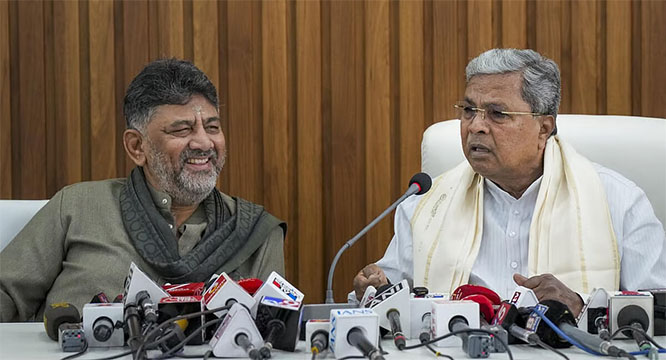
New Delhi: Karnataka chief minister Siddaramaiah and deputy CM DK Shivakumar on Saturday put up a dramatic display of unity at a closely watched joint press briefing, firmly dismissing weeks of speculation about a power-sharing tussle within the Congress. With the high command nudging both leaders to sit together and settle the dust, the meeting became a political spectacle, ending with the duo declaring that there was “no confusion, no differences.”

Calling the reports of a rift “manufactured confusion,” Siddaramaiah said the talks had gone smoothly, even joking about their breakfast. “Breakfast was very good. All three of us enjoyed it,” he said. “We want to end this confusion once and for all. For local elections and for 2028, our mission is clear — Congress must return to power. There is no difference between me and DKS, not now, not before.”

He blamed the media for fuelling rumours and reiterated absolute adherence to the party leadership. “From tomorrow, let there be no confusion. What the high command says, we will follow.”

Siddaramaiah also assured that the Assembly session starting December 8 would run smoothly and vowed that Congress would take on the BJP and JD(S) “together.”

Shivakumar echoed the chief minister word for word, stressing loyalty and discipline. “People have given us a massive mandate. It is our duty to deliver,” he said. “This government was formed under Siddaramaiah’s leadership. We both have complete trust in the high command. If they tell me to wait, I will wait.”

He added that the two leaders had discussed strategy for the 2028 Assembly elections. “Whatever the CM says, I agree. We are loyal soldiers of the party. The party may be facing challenges nationally, but we will keep it strong in Karnataka.”

Shivakumar also said Siddaramaiah would soon visit his home for lunch or dinner — another symbolic gesture meant to underline their unity.

Both leaders later posted on social media describing the breakfast meeting as “productive” and focused on “Karnataka’s priorities.”

The BJP, however, rejected the show of camaraderie as “pure bunkum,” accusing Congress of trying to paper over an internal power struggle. But Siddaramaiah and Shivakumar insisted their united front would continue — and that there was “no confusion” within the state leadership.

Comments

Add new comment

  • Coastaldigest.com reserves the right to delete or block any comments.
  • Coastaldigset.com is not responsible for its readers’ comments.
  • Comments that are abusive, incendiary or irrelevant are strictly prohibited.
  • Please use a genuine email ID and provide your name to avoid reject.
News Network
November 30,2025

The United Nations Committee against Torture (CAT) has condemned the Israeli regime for enforcing a policy of “organized torture” against Palestinians.

In a report published on Friday, CAT stated that the occupying regime enforces a deliberate policy of “organized and widespread torture and ill-treatment” against Palestinian abductees, particularly since October 7, 2023, when Israel launched its genocidal war on Gaza.

The committee expressed “deep concern over repeated severe beatings, dog attacks, electrocution, water-boarding, use of prolonged stress positions [and] sexual violence” inflicted on Palestinians.

Palestinian prisoners were degraded by “being made to act like animals or being urinated on,” systematically denied medical care, and subjected to excessive restraints, “in some cases resulting in amputation,” the report added.

CAT also condemned the routine application of “unlawful combatants law” to justify the prolonged detention without trial of thousands of Palestinian men, women, and children.

More than 10,000 Palestinians, including women and children, are currently held in Israeli prisons, according to Palestinian and international human rights groups, with 3,474 Palestinians in “administrative detention,” meaning they are imprisoned without trial for indefinite periods.

The report highlighted the “high proportion of children who are currently detained without charge or on remand,” noting that while Israel sets the age of criminal responsibility at 12, even younger children have been abducted.

Children designated as security prisoners face severe restrictions on family contact, may be subjected to solitary confinement, and are denied access to education, in clear violation of international law.

The committee further suggested that Israel’s policies across the Occupied Territories constitute collective torture against the Palestinian population.

“A range of policies adopted by Israel in the course of its continued unlawful presence in the Occupied Palestinian Territory amounts to cruel, inhuman or degrading living conditions for the Palestinian population,” the report said.

On Thursday, the Palestinian resistance movement Hamas condemned the systematic killing and torture of Palestinian abductees in Israeli prisons, urging international action to halt these abuses.

Citing human rights data, Hamas stated that 94 Palestinians have been killed in Israeli prisons since the start of Tel Aviv’s genocidal war on Gaza.

“This reflects an organized criminal approach that has turned these prisons into direct killing grounds to eliminate our people,” the resistance movement said.

Hamas called on the international community, the UN, and human rights organizations to immediately pressure Israel to end crimes against prisoners and uphold their rights as guaranteed by all international conventions and norms.

Comments

Add new comment

  • Coastaldigest.com reserves the right to delete or block any comments.
  • Coastaldigset.com is not responsible for its readers’ comments.
  • Comments that are abusive, incendiary or irrelevant are strictly prohibited.
  • Please use a genuine email ID and provide your name to avoid reject.