



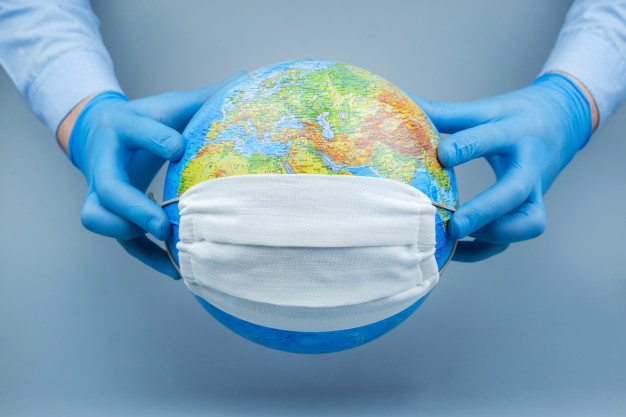
The long term implications of COVID: When it leaves, what remains?

Mafazah Sharafuddin
June 1, 2021

postcovid.jpg

The pandemic has swept the world in a panic. It has come with the pervading sense of fear and loss, and completely unexpectedly to the common man. Although environmentalists have been predicting a rise in pandemics as a consequence of the same things that caused climate change, to the layman, it arrived out of the blue. 

The pandemic has taken away several things that make us social beings. Physical touch, gatherings, dining together etc. have all gone from being something one does for fun to something that could be potentially fatal.

It does not come as a shock that people all of the globe are suffering during the pandemic. While they are unsure of how much longer this will go on, the spread of the vaccines make people hopeful that it will soon come to an end. 

When the pandemic ends, what will it leave behind?

The anxiety of being

With fatal illness and massive death-tolls, anxiety comes as an almost inevitable companion. The compulsive act of using hand sanitizer after touching anything in public is slowly becoming second nature. 

A US study comparing the number of adults experiencing symptoms of an anxiety or depressive disorder saw the number raise from 11% in January 2019 to 41.1% in January 2021. It also showed an increase in suicidal ideation and substance use. 

Another unfortunate consequence of the pandemic is a possible rise in agoraphobia. Agoraphobia is a specific anxiety disorder. It is defined by a fear of being in part of a public environment or activity from which leaving or escaping is perceived to be difficult. Due to the frequent and persistent lockdowns and the association of danger with being in public spaces, the slip towards agoraphobia is understandable. 

An integral part of the human experience is physical touch. While some may be isolating with family, there are many people all over the world who are living along in the middle of the pandemic. The pandemic may also lead to an increase in ‘touch-starvation’ as the stress relieving hormone, oxytocin, is released through touch.

The prevalence of mental illness after a calamity is not a new phenomenon. The aftermath of war and natural disasters have left people suffering in its wake. This is, however, a calamity of global magnitude. Like the survivors of war, those who come out of this pandemic alive are going to carry it with them for the rest of their lives.

A state of grief 

Aptly dubbed the ‘grief pandemic’ by sociologist Holly Prigerson, the Coronavirus pandemic has taken away many loved ones. Children are left orphaned and parents mourn their children. The elderly are kept under keen watch by their loved ones in fear that they, too, will be taken away. 

Grief and mourning have become an everyday thing since the pandemic showed its full strength. With entire families being wiped out, and crematoriums unable to process the bodies at the rate at which they arrive, we as a society are experiencing death in high definition. 

The processing of is complex. It is made more complex by the situation we are in. the constant anxiety and fear of safety are severely detrimental to the processing of grief. There is no room to process grief in a situation where death is continuous. As of now, we are in a persistent state of grief.

Money matters 

The economic implications of the pandemic have been spoken about often at a global scale. Small businesses have shut down. Daily wage laborers struggle to find jobs with the lockdowns in place. Several people who, before 2020, believed they were secure in their jobs, have been unexpectedly dismissed. 

Survival in the middle of a pandemic, even without getting infected, with no incoming money is precarious. People are dependent of the goodwill of social workers and people who give out food, donations, etc. People are being rendered homeless because they are unable to pay rent. The inability to properly socially distance or isolate, however, increases the risk of infection.

If survival for the poor without getting infected is precarious, surviving COVID is a miracle. They have to combat steep prices for treatment, trouble with transportation, being unable to afford medication and several other issues. 

Not only is getting infected and showing symptoms a death sentence for so many, it comes with the fear that it will bankrupt their family. 

The state the economy is in right now has no quick fixes. There are small scale industries that have suffered in a way they may not recover from. An alarming percentage of medium and small enterprises have faced permanent closure. The recovery of the economy is going to a long, arduous process. 

On a positive note

While the pandemic has been a cause of suffering for people everywhere, the long term social implications of it are not all bad. 

For environmentalists, the pandemic has been proof that there can be no real solution to climate change until bog corporations stop contributing to it. With the common people staying at home most of the time, hugely reducing the amount of fuel used by the public, there has been no huge change in the state of the world. 

While it may always be the socially responsible option to continue to use environmentally friendly options, the onus truly does fall on large corporations to limit their damage before it is unsalvageable. 

It addition to this, curb-side pickups, online learning, work from home etc. have shown that it is possible to do these actions remotely. This opens up a whole realm of possibilities for people with disabilities not only in employment and education, but day to day activities.

When accessibility has been made possible because there is no other way, employers and management of educational institutes can no longer give excuses for their lack of accessibility for disabled employees or students. 

The pandemic may leave behind a more accessible world. 

Comments

Ramesh Mishra
 - 
Wednesday, 2 Jun 2021

COVID-19, PANDEMIC
Has put the world behind at least 25 years but India, Pakistan, Bangla Desh, and Nepal 50 years. During the coming 50 years, India would face massive internal conflicts dividing the Provinces. India lacks skilled leaders.

Ramesh Mishra
Victoria BC CANADA

Add new comment

  • Coastaldigest.com reserves the right to delete or block any comments.
  • Coastaldigset.com is not responsible for its readers’ comments.
  • Comments that are abusive, incendiary or irrelevant are strictly prohibited.
  • Please use a genuine email ID and provide your name to avoid reject.
News Network
November 26,2025

Mangaluru, Nov 26: Assembly Speaker and local MLA U.T. Khader has initiated a high-level push to resolve one of Mangaluru’s longest-standing traffic headaches: the narrow, high-density stretch of National Highway-66 between Nanthoor and Talapady.

He announced on Tuesday that a formal proposal has been submitted to the Union Ministry of Road Transport and Highways (MoRTH) seeking approval to prepare a Detailed Project Report (DPR) for the widening of this crucial corridor.

The plan specifically aims to expand the existing 45-meter road width to a full 60 meters, coupled with the construction of dedicated service roads. Khader highlighted that land for a 60-meter highway was originally acquired during the initial four-laning project, but only 45 meters were developed, leading to a perpetual bottleneck.

"With vehicle density rising sharply, the expansion has become unavoidable," Khader stated, stressing that the upgrade is essential for ensuring smoother traffic flow and improving safety at the city's main entry and exit points.

The stretch between Nanthoor and Talapady is a vital link on the busy Kochi-Panvel coastal highway and connects to major city junctions. The move to utilize the previously acquired land for the full 60-meter width is seen as a necessary measure to catch up with the region's rapid vehicular growth and prevent further traffic gridlocks.

Comments

Add new comment

  • Coastaldigest.com reserves the right to delete or block any comments.
  • Coastaldigset.com is not responsible for its readers’ comments.
  • Comments that are abusive, incendiary or irrelevant are strictly prohibited.
  • Please use a genuine email ID and provide your name to avoid reject.
News Network
December 3,2025

indigo.jpg

IndiGo, India’s largest airline, is battling one of its worst operational disruptions in recent years, with hundreds of delays and cancellations throwing domestic travel into chaos.

Government data on Tuesday showed its on-time performance plunging to 35%, an unusual dip for a carrier long associated with punctuality.

By Wednesday afternoon, airports in Delhi, Mumbai, Bengaluru and Hyderabad had collectively reported close to 200 cancellations, stranding travellers across the country.

Crew Shortage After New Duty Norms

A major trigger behind the meltdown is a severe crew shortage, especially among pilots, following the rollout of revised Flight Duty Time Limitation (FDTL) norms last month.

The rules mandate longer rest hours and more humane rosters — a shift IndiGo has struggled to incorporate across its vast network.

Sources said several flights were grounded due to lack of cabin crew, while some delays stretched upwards of eight hours.

With IndiGo controlling over 60% of India’s domestic aviation market, the ripple effect has impacted airports nationwide.

IndiGo Issues Apology, Lists “Compounding Factors”

In a statement, IndiGo acknowledged the large-scale disruption:

“We sincerely apologise to customers. A series of unforeseen operational challenges — technology glitches, winter schedule changes, adverse weather, system congestion and updated FDTL norms — created a compounding impact that could not have been anticipated.”

To stabilise operations, the airline has begun calibrated schedule adjustments for the next 48 hours, aiming to restore punctuality. Affected passengers are being offered refunds or alternate travel arrangements, IndiGo said.

What the FDTL Rules Require

The FDTL norms, designed to reduce pilot fatigue, cap duty and flying hours as follows:
•    Maximum 8 hours of flying per day
•    35 hours per week
•    125 hours per month
•    1,000 hours per year

Crew must also receive rest equalling twice the flight duration, with a minimum 10-hour rest period in any 24-hour window.

The DGCA introduced these limits to enhance flight safety.

Hyderabad: 33 Flights Cancelled, Long Queues Reported

Hyderabad’s Rajiv Gandhi International Airport saw heavy early-morning crowds as 33 IndiGo flights (arrivals and departures) were cancelled.

The airport clarified on X that operations were normal, advising passengers to contact IndiGo directly for latest flight status.

Cancellations included flights to and from Visakhapatnam, Goa, Ahmedabad, Delhi, Bengaluru, Chennai, Madurai, Hubli, Bhopal and Bhubaneswar.

Bengaluru: 42 Flights Disrupted

Bengaluru’s Kempegowda International Airport recorded 42 cancellations — 22 arrivals and 20 departures — affecting routes to Delhi, Mumbai, Chennai, Hyderabad, Goa, Kolkata and Lucknow.

Passengers Vent on Social Media

Irate travellers took to X to share their experiences. One passenger stranded in Hyderabad wrote: “I have been here since 3 a.m. and missed an important meeting.”

Another said: “My flight was pushed from 1:55 PM to 2:55 PM and now 4:35 PM. I was informed only three minutes before entering the airport.”

Delhi Airport Hit by Tech Glitch

At Delhi Airport, the disruption deepened due to a slowdown in the Amadeus system — used for reservations, check-ins and departure control.

The technical issue led to longer queues and sluggish processing, adding to delays already worsened by staff shortages.

Comments

Add new comment

  • Coastaldigest.com reserves the right to delete or block any comments.
  • Coastaldigset.com is not responsible for its readers’ comments.
  • Comments that are abusive, incendiary or irrelevant are strictly prohibited.
  • Please use a genuine email ID and provide your name to avoid reject.
News Network
November 30,2025

airportmetro.jpg

Udupi: The pontiffs of Sri Paryaya Puttige Mutt, the sacred seat of Jagadguru Shrimad Madhvacharya Moola Samsthanam, have submitted a proposal to the Prime Minister seeking comprehensive development for Udupi district. 

Proposal for International Airport

A key request is the establishment of an international airport. Highlighting that around 1,000 acres of land are available and suitable, the pontiffs noted that the existing Mangalore Airport provides limited international connectivity. They suggested the airport be developed under a Public-Private Partnership (PPP) or as a Greenfield Airport to boost trade, education, healthcare, and spiritual tourism.

Metro and Rapid Transit Connectivity

The proposal also calls for Metro Rail or Rapid Transit between Mangaluru and Udupi. The 55 km coastal stretch experiences heavy daily commuter traffic, causing congestion. The district administration is ready to prepare an initial project report for a Mass Rapid Transit corridor and requested inclusion under national urban mobility programmes to ensure safe, green, and time-efficient regional transport.

Port and Coastal Development

The pontiffs urged the development of an international-standard port with a cruise terminal along Udupi’s coast. They also requested fast-tracking of pending coastal tourism projects and revising Coastal Regulation Zone (CRZ) norms to encourage sustainable infrastructure and hospitality investment.

IT, AI and Technological Infrastructure

Support was sought for an IT and AI Innovation Park with incubation facilities under Digital India and Startup India initiatives. The proposal also emphasized the need for strengthened data security and cloud computing infrastructure to boost India’s technological independence.

Sports and Education Initiatives

The pontiffs requested national sports status for Kambala, along with financial and infrastructure support. They also sought the establishment of an AIIMS in Udupi, a new IIT campus, and approval for an IIM to promote higher education in the district.

Representation to the Prime Minister

Sri Sugunendra Tirtha Pontiff and Sri Sushrendra Tirtha Swamiji represented the pontiffs in submitting the comprehensive development proposal to the Prime Minister during his recent visit.

Comments

Add new comment

  • Coastaldigest.com reserves the right to delete or block any comments.
  • Coastaldigset.com is not responsible for its readers’ comments.
  • Comments that are abusive, incendiary or irrelevant are strictly prohibited.
  • Please use a genuine email ID and provide your name to avoid reject.