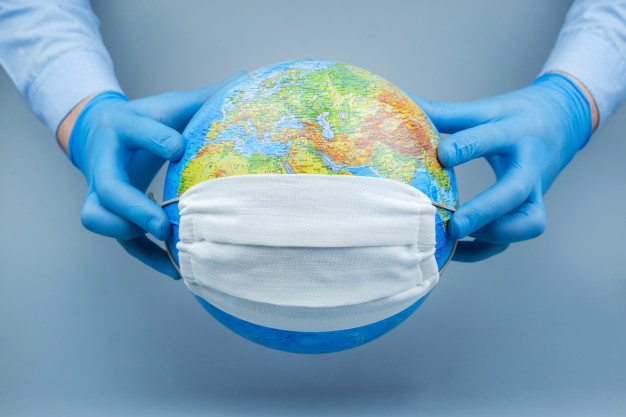
The long term implications of COVID: When it leaves, what remains?

Mafazah Sharafuddin
June 1, 2021

postcovid.jpg

The pandemic has swept the world in a panic. It has come with the pervading sense of fear and loss, and completely unexpectedly to the common man. Although environmentalists have been predicting a rise in pandemics as a consequence of the same things that caused climate change, to the layman, it arrived out of the blue. 

The pandemic has taken away several things that make us social beings. Physical touch, gatherings, dining together etc. have all gone from being something one does for fun to something that could be potentially fatal.

It does not come as a shock that people all of the globe are suffering during the pandemic. While they are unsure of how much longer this will go on, the spread of the vaccines make people hopeful that it will soon come to an end. 

When the pandemic ends, what will it leave behind?

The anxiety of being

With fatal illness and massive death-tolls, anxiety comes as an almost inevitable companion. The compulsive act of using hand sanitizer after touching anything in public is slowly becoming second nature. 

A US study comparing the number of adults experiencing symptoms of an anxiety or depressive disorder saw the number raise from 11% in January 2019 to 41.1% in January 2021. It also showed an increase in suicidal ideation and substance use. 

Another unfortunate consequence of the pandemic is a possible rise in agoraphobia. Agoraphobia is a specific anxiety disorder. It is defined by a fear of being in part of a public environment or activity from which leaving or escaping is perceived to be difficult. Due to the frequent and persistent lockdowns and the association of danger with being in public spaces, the slip towards agoraphobia is understandable. 

An integral part of the human experience is physical touch. While some may be isolating with family, there are many people all over the world who are living along in the middle of the pandemic. The pandemic may also lead to an increase in ‘touch-starvation’ as the stress relieving hormone, oxytocin, is released through touch.

The prevalence of mental illness after a calamity is not a new phenomenon. The aftermath of war and natural disasters have left people suffering in its wake. This is, however, a calamity of global magnitude. Like the survivors of war, those who come out of this pandemic alive are going to carry it with them for the rest of their lives.

A state of grief 

Aptly dubbed the ‘grief pandemic’ by sociologist Holly Prigerson, the Coronavirus pandemic has taken away many loved ones. Children are left orphaned and parents mourn their children. The elderly are kept under keen watch by their loved ones in fear that they, too, will be taken away. 

Grief and mourning have become an everyday thing since the pandemic showed its full strength. With entire families being wiped out, and crematoriums unable to process the bodies at the rate at which they arrive, we as a society are experiencing death in high definition. 

The processing of is complex. It is made more complex by the situation we are in. the constant anxiety and fear of safety are severely detrimental to the processing of grief. There is no room to process grief in a situation where death is continuous. As of now, we are in a persistent state of grief.

Money matters 

The economic implications of the pandemic have been spoken about often at a global scale. Small businesses have shut down. Daily wage laborers struggle to find jobs with the lockdowns in place. Several people who, before 2020, believed they were secure in their jobs, have been unexpectedly dismissed. 

Survival in the middle of a pandemic, even without getting infected, with no incoming money is precarious. People are dependent of the goodwill of social workers and people who give out food, donations, etc. People are being rendered homeless because they are unable to pay rent. The inability to properly socially distance or isolate, however, increases the risk of infection.

If survival for the poor without getting infected is precarious, surviving COVID is a miracle. They have to combat steep prices for treatment, trouble with transportation, being unable to afford medication and several other issues. 

Not only is getting infected and showing symptoms a death sentence for so many, it comes with the fear that it will bankrupt their family. 

The state the economy is in right now has no quick fixes. There are small scale industries that have suffered in a way they may not recover from. An alarming percentage of medium and small enterprises have faced permanent closure. The recovery of the economy is going to a long, arduous process. 

On a positive note

While the pandemic has been a cause of suffering for people everywhere, the long term social implications of it are not all bad. 

For environmentalists, the pandemic has been proof that there can be no real solution to climate change until bog corporations stop contributing to it. With the common people staying at home most of the time, hugely reducing the amount of fuel used by the public, there has been no huge change in the state of the world. 

While it may always be the socially responsible option to continue to use environmentally friendly options, the onus truly does fall on large corporations to limit their damage before it is unsalvageable. 

It addition to this, curb-side pickups, online learning, work from home etc. have shown that it is possible to do these actions remotely. This opens up a whole realm of possibilities for people with disabilities not only in employment and education, but day to day activities.

When accessibility has been made possible because there is no other way, employers and management of educational institutes can no longer give excuses for their lack of accessibility for disabled employees or students. 

The pandemic may leave behind a more accessible world. 

Comments

Ramesh Mishra
 - 
Wednesday, 2 Jun 2021

COVID-19, PANDEMIC
Has put the world behind at least 25 years but India, Pakistan, Bangla Desh, and Nepal 50 years. During the coming 50 years, India would face massive internal conflicts dividing the Provinces. India lacks skilled leaders.

Ramesh Mishra
Victoria BC CANADA

Add new comment

  • Coastaldigest.com reserves the right to delete or block any comments.
  • Coastaldigset.com is not responsible for its readers’ comments.
  • Comments that are abusive, incendiary or irrelevant are strictly prohibited.
  • Please use a genuine email ID and provide your name to avoid reject.
News Network
November 27,2025

Bengaluru, Nov 27: Karnataka Chief Minister Siddaramaiah’s camp is reportedly on alert as the Congress leadership tussle in the state intensifies, particularly amid speculation over the potential promotion of Deputy Chief Minister D.K. Shivakumar. Siddaramaiah is said to be in a “wait-and-watch” mode after admitting to “confusion” earlier this week and urging the party to “put a full stop” to it.

Sources say his supporters are ready to act if senior leaders — including party chief Mallikarjun Kharge, Sonia Gandhi, and Rahul Gandhi — give any indication of backing Shivakumar. If the party insists on a leadership change, Siddaramaiah’s camp has a list of alternatives, underscoring the deep rift between the two leaders. One possible candidate is Home Minister G. Parameshwara, a Siddaramaiah loyalist and influential Dalit leader.

The strategy was reportedly finalized at a meeting led by PWD Minister Satish Jarkiholi, another Siddaramaiah supporter, who stressed that Delhi leaders need to resolve the issue. Kharge and the Gandhis are expected to meet soon, after which Siddaramaiah and Shivakumar may be summoned to Delhi.

Shivakumar has largely stayed non-confrontational, publicly endorsing Siddaramaiah and downplaying speculation about his own ambitions. However, he has made pointed comments emphasizing the importance of honoring promises, directed at Siddaramaiah.

The feud traces back to the 2023 state election, when Siddaramaiah was chosen as Chief Minister while Shivakumar, who led the party’s campaign, was made Deputy CM and state party chief — a departure from the Congress’ usual “one post per person” rule.

There were also hints of a prior understanding that Siddaramaiah would step down midway through the term. As the halfway mark passed last week, Shivakumar-aligned lawmakers have ramped up pressure on the party for a leadership change, with Shivakumar himself hinting at stepping down as state party chief to pursue the top job.

Comments

Add new comment

  • Coastaldigest.com reserves the right to delete or block any comments.
  • Coastaldigset.com is not responsible for its readers’ comments.
  • Comments that are abusive, incendiary or irrelevant are strictly prohibited.
  • Please use a genuine email ID and provide your name to avoid reject.
coastaldigest.com news network
December 2,2025

karkala.jpg

Udupi, Dec 2: A wave of regional pride is sweeping through Udupi district as Shagun S Verma Hegde, a talented Class 9 student from Christ King English Medium High School, Karkala, has been named the captain of the Indian National Team for the Under-15 Girls’ Volleyball Championship.

Shagun holds the unique distinction of being the sole player from Karnataka selected to represent the country in the prestigious international tournament. The championship, organized by the School Games Federation, is scheduled to take place in Shangluo, China, from December 3 to 13, where Shagun will lead the national squad.

A Remarkable Journey to the Top

Shagun’s selection is a testament to her dedication and exceptional skill on the court. Her journey included several rigorous rounds of selection:

•    She was the only player from Udupi district to qualify for the state-level selection camp.

•    Out of eight players from Karnataka who advanced to the national selection camp in Pune, Maharashtra, Shagun was the only one to secure a place in the final national squad.

•    The national camp saw participation from approximately 200 players, which was shortlisted to 23. Shagun not only made the final cut but was also ranked as the second-best player overall, solidifying her leadership role.

Shagun, who is the daughter of Sandesh Verma and Shruthiraj of Kallotte, Karkala, has trained under experienced coaches Santosh D’Souza, Jeevan D’Silva, Jairaj Poojary, and Ramesh. Her selection as the team captain has brought profound honour to her family, school, the Udupi district, and the entire state of Karnataka.

Comments

Add new comment

  • Coastaldigest.com reserves the right to delete or block any comments.
  • Coastaldigset.com is not responsible for its readers’ comments.
  • Comments that are abusive, incendiary or irrelevant are strictly prohibited.
  • Please use a genuine email ID and provide your name to avoid reject.
News Network
December 2,2025

A major upgrade in safety and monitoring is planned for Haj 2026, with every Indian pilgrim set to receive a Haj Suvidha smart wristband linked to the official Haj Suvidha mobile app. The initiative aims to support pilgrims—especially senior citizens—who may struggle with smartphones during the 45-day journey.

What the Smart Wristband Will Do

Officials said the device will come with:
•    Location tracking
•    Pedometer
•    SOS emergency button
•    Qibla compass
•    Prayer timings
•    Basic health monitoring

SP Tiwari, secretary of the UP State Haj Committee, said the goal is to make the pilgrimage safer and more comfortable.

“Most Hajis are elderly and not comfortable with mobile apps,” he said. “The smartwatch will help locate pilgrims who forget their way or cannot communicate their location.”

The wristbands will be monitored by the Consulate General of India in Saudi Arabia, similar to mobile tracking via the Haj Suvidha App.

Free Distribution and Training

•    Smart wristbands will be given free of cost.
•    Training for pilgrims will be conducted between January and February 2026.
•    Sample units will reach state Haj committees soon.
•    Final devices will be distributed as pilgrims begin their journey.

New Rules for Accommodation

Two major decisions have also been finalised for Haj 2026:
1.    Separate rooms for men and women – including married couples. They may stay on the same floor but must occupy different rooms, following stricter Saudi guidelines.
2.    Cooking banned – gas cylinders will not be allowed; all meals will be provided through official catering services arranged by the Haj Committee of India.

These decisions were finalised during a meeting of the Haj Committee of India and state representatives in Mumbai.

Haj Suvidha App Launched Earlier

The government launched the Haj Suvidha App in 2024, offering:

•    Training modules
•    Accommodation and flight details
•    Baggage information
•    SOS and translation tools
•    Grievance redressal

Haj 2026 Quota and Key States

•    India’s total Haj quota for 2026: 1,75,025 pilgrims
•    70% (1,25,000) allotted to the Haj Committee of India
•    30% (around 50,000) reserved for Haj Group Organisers

Uttar Pradesh has the largest allocation (around 30,000 seats), though approximately 18,000 pilgrims are expected to go this year. States with high pilgrim numbers include Kerala, Maharashtra and Gujarat.

Dates of Haj 2026

The pilgrimage is scheduled to take place from 24 May to 29 May, 2026 (tentative).
Haj is one of the five pillars of Islam and is mandatory for Muslims who meet the required conditions.

Comments

Add new comment

  • Coastaldigest.com reserves the right to delete or block any comments.
  • Coastaldigset.com is not responsible for its readers’ comments.
  • Comments that are abusive, incendiary or irrelevant are strictly prohibited.
  • Please use a genuine email ID and provide your name to avoid reject.