Indian economy, battered by covid-19, needs its lost growth

News Network
September 1, 2021

The coronavirus continues to batter India’s damaged economy, putting growing pressure on Prime Minister Narendra Modi to nurture a nascent recovery and get the country back to work.

The coronavirus, which has struck in two waves, has killed hundreds of thousands of people and at times has brought cities to a halt. Infections and deaths have eased, and the country is returning to work. Economists predict that growth could surge in the second half of the year on paper.

Still, the damage could take years to undo. Economic output was 9.2% lower for the April-through-June period this year than what it was for the same period in 2019, according to India Ratings, a credit ratings agency.

The coronavirus has essentially robbed India of much of the momentum it needed to provide jobs for its young and fast-growing workforce. It has also exacerbated longer-term problems that were already dragging down growth, such as high debt, a lack of competitiveness with other countries and policy missteps.

Economists are particularly concerned about the slow rate of vaccinations and the possibility of a third wave of the coronavirus, which could prove to be disastrous for any economic recovery.

“Vaccination progress remains slow,” with just 11% of the population fully inoculated so far, Priyanka Kishore, the head of India and Southeast Asia at Oxford Economics, said in a research briefing last week. The firm lowered its growth rate for 2021 to 8.8%, from 9.1%.

Even growth of 8.8% would be a strong number in better times. Compared with the previous year, India’s economy grew 20.1% April through June, according to estimates released by the Ministry of Statistics and Program Implementation.

But those comparisons benefit from comparison with India’s dismal performance last year. The economy shrank 7.3% last year, when the government shut down the economy to stop a first wave of the coronavirus. That led to big job losses, now among the biggest hurdles holding back growth, experts say.

Real household incomes have fallen further this year, said Mahesh Vyas, chief executive of the Center for Monitoring Indian Economy. “Till this is not repaired,” he said, “the Indian economy can’t bounce back.”

At least 3.2 million Indians lost stable, well-paying salaried jobs in July alone, Vyas estimated. Small traders and daily wage labourers had bigger job losses during the lockdowns than others, though they were able to go back to work once the restrictions were lifted, Vyas said in a report in August. “Salaried jobs are not similarly elastic,” he said. “It is difficult to retrieve a lost salaried job.”

About 10 million people have lost such jobs since the beginning of the pandemic, Vyas said.

In August, Modi’s government moved to rekindle the economy by selling stakes worth close to $81 billion in state-owned assets like airports, railway stations and stadiums. But economists largely see the policy as a move to generate cash in the short term. It remains to be seen if it will lead to more investment, they say.

“The whole idea is that the government will borrow this money from the domestic market,” said Devendra Kumar Pant, chief economist at India Ratings. “But what happens if this project goes to a domestic player and he is having to borrow in the domestic market? Your credit demand domestically won’t change.”

Pant added that questions remained about how willing private players would be to maintain those assets long term and how the monetization policy would ultimately affect consumer prices.

 “In India, things will decay for the worse rather than improve,” he said, adding that the costs to users of highways and other infrastructure could go up.

During the second wave in May, Modi resisted calls by many public health researchers, including Dr Anthony Fauci, director of the US National Institute of Allergy and Infectious Diseases, to reinstitute a nationwide lockdown.

The lockdowns in 2021 were nowhere near as severe as the nationwide curbs last year, which pushed millions of people out of cities and into rural areas, often on foot because rail and other transportation had been suspended.

Throughout the second wave, core infrastructure projects across the country, which employ millions of domestic migrant workers, were exempted from restrictions. More than 15,000 miles of Indian highway projects, along with rail and city metro improvements, continued.

On Tuesday, Pant said that India’s growth estimates of 20.1% for the April through June period were nothing but an “illusion.” Growth contracted so sharply around the same period last year, by a record 24%, that even double-digit gains this year would leave the economy behind where it was two years ago.

Economists say that India needs to spend, even splurge, to unlock the full potential of its huge low-skilled workforce. “There is a need for very simple primary health facilities, primary services to deliver nutrition to children,” Vyas said. “All these are highly labour intensive jobs and these are government services largely.”

One of the reasons Indian governments typically have not spent in those areas, Vyas said, is that it has been considered “not a sexy thing to do.” Another is the government's “dogmatic fixation” with keeping fiscal deficits in control, he said. The government simply can’t rely on the private sector alone for creating jobs, Vyas said.

The “only solution,” he said, is for the government to spend and spur private investment. “You have a de-motivated private sector because there isn’t enough demand. That’s what’s holding India back.”

Comments

Ramesh Mishra
 - 
Monday, 13 Sep 2021

INDIAN ECONOMY
Due to the malfeasance in the Judiciary, Politicians and Executives, the economy is gone back 75,years behind. The malfeasance into the three vital branches can not be corrected and consolidated because all the three vital organs of the government have completely collapsed. Modi, PM of India has pilloried, tortured, traumatised, harassed, humiliated, degraded and destroyed his opposition, critics. India is now a " total loss". The internal conflict has ruined the trade commerce and the mutual trust. Hindu, Muslim, Christian and Sikh are divided due to the lack of leadership. The division of India can't be prevented its too late to rebuild the public trust. The public is cheated at every step in India which is a country of crooks.
Ramesh Mishra, Victoria, British Columbia, CANADA

Add new comment

  • Coastaldigest.com reserves the right to delete or block any comments.
  • Coastaldigset.com is not responsible for its readers’ comments.
  • Comments that are abusive, incendiary or irrelevant are strictly prohibited.
  • Please use a genuine email ID and provide your name to avoid reject.
News Network
December 4,2025

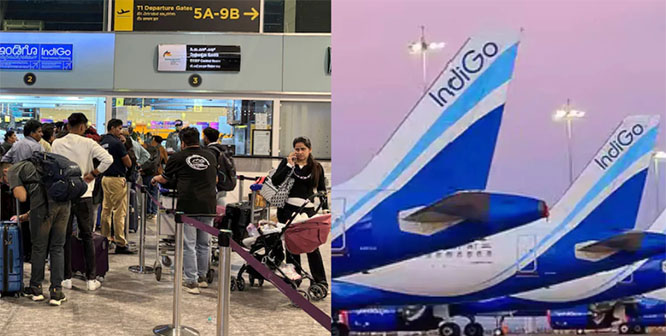
indigocrisis.jpg

Angry outbursts, long queues, and desperate appeals filled airports across India today as IndiGo grappled with a severe operational breakdown. Hundreds of flights have been cancelled or delayed, leaving thousands of passengers stranded through the night and forcing many to spend long hours at helpdesks.

Social media was flooded with videos of fliers pleading for assistance, accusing the airline of misleading updates, and demanding accommodation after being stuck for 10 to 12 hours at airports such as Hyderabad and Bengaluru.

What Triggered the Meltdown?

IndiGo has attributed the widespread disruption to “a multitude of unforeseen operational challenges.” These include:

•    Minor technology glitches
•    Winter-season schedule adjustments
•    Bad weather
•    Congestion in the aviation network
•    New crew rostering rules (Flight Duty Time Limitations or FDTL)

Among these, the most disruptive has been the implementation of the updated FDTL norms introduced by the Directorate General of Civil Aviation (DGCA) in January 2024.

These rules were designed to reduce pilot fatigue and improve passenger safety. Key changes include:

•    Longer weekly rest periods for flight crew
•    A revised definition of “night,” extending it by an extra hour
•    Tighter caps on flight duty timing and night landings
•    Cutting night shifts for pilots and crew from six per roster cycle to just two

Once these norms became fully enforceable, airlines were required to overhaul rosters well in advance. For IndiGo, this triggered a sudden shortage of crew available for duty, leading to cascading delays and cancellations.

Why IndiGo Was Hit the Hardest

IndiGo is India’s largest airline by a wide margin, operating over 2,200 flights daily. That’s roughly double the number operated by Air India.

When an airline of this size experiences even a 10–20% disruption, it translates to 200–400 flights being delayed or grounded — producing massive spillover effects across the country.

IndiGo also relies heavily on high-frequency overnight operations, a model typical of low-cost carriers that aim to maximise aircraft utilisation and reduce downtime. The stricter FDTL norms clash with these overnight-heavy schedules, forcing the airline to pull back services.

Aviation bodies have also criticised IndiGo’s preparedness. The Airline Pilots' Association of India (ALPA) said airlines were given a two-year window to plan for the new rules but “started preparing rather late.” IndiGo, it said, failed to rebuild crew rosters 15 days in advance as required.

The Federation of Indian Pilots (FIP) went further, calling the crisis the result of IndiGo’s “prolonged and unorthodox lean manpower strategy,” and alleging that the airline adopted a hiring freeze even as it knew the new rules would require more careful staffing.

How Many Flights Are Affected?

In the past 48 hours, over 300 flights have been cancelled. At least 100 more are expected to be cancelled today.

City-wise impact:

•    Hyderabad: 33 expected cancellations; several fliers stranded overnight
•    Bengaluru: over 70 expected cancellations
•    Delhi, Mumbai, Chennai, Kolkata: widespread delays and missed connections

Passengers shared distressing accounts online.

One customer at Hyderabad airport said they waited from 6 PM to 9 AM with “no action taken” regarding their delayed Pune flight. Another said IndiGo repeatedly told them the crew was “arriving soon,” only for the delay to stretch over 12 hours.

IndiGo has apologised for the disruption and promised that operations will stabilise within 48 hours, adding that “calibrated adjustments” are being made to contain the chaos.

What Should Passengers Do Now?

For those flying in the next few days, especially with IndiGo, here are key precautions:

1. Keep Checking Flight Status
Monitor your flight closely before leaving for the airport, as delays may be announced last-minute.

2. Arrive Early
Expect long queues at counters and security due to crowding and rescheduling.

3. Carry Essentials
Pack snacks, water, basic medicines, chargers, and items for children or senior citizens. Extended waiting times should be anticipated.

4. Use Flexible Booking Options
If you booked tickets with a free-date-change or cancellation option, consider using them.
If you haven’t booked yet, prefer refundable or flexible fares, or even consider alternate airlines.

5. Follow IndiGo’s Updates
Keep an eye on IndiGo’s official social media channels and contact customer support for rebooking and refund queries.

What Needs to Change?

Pilot groups have raised concerns not just about staffing but also the planning practices behind it.
The Federation of Indian Pilots accused IndiGo of:

•    Imposing an unexplained hiring freeze despite knowing the FDTL changes were coming
•    Entering non-poaching agreements that limited talent movement
•    Keeping pilot pay frozen
•    Underestimating the need to restructure operations in advance

They have urged DGCA to approve seasonal schedules only after airlines prove they have adequate pilot strength under the new norms.

ALPA also warned that some airlines might be using the delays as an “immature pressure tactic” to push DGCA for relaxations in the new rules — which, if granted, could compromise the very safety standards the norms were meant to protect.

Both pilot bodies stressed that no exemption should dilute safety, and any deviations should be based solely on scientific risk assessment.

Is a Solution in Sight?

While IndiGo says normalcy will return within two days, aviation experts believe that fully stabilising operations could take longer, depending on how quickly the airline can:
•    Re-align rosters
•    Mobilise rested crew
•    Boost staffing
•    Adjust its winter schedule to match regulatory requirements
Passengers are advised to remain prepared for continued delays over the next few days as the airline works through its backlog. 

Comments

Add new comment

  • Coastaldigest.com reserves the right to delete or block any comments.
  • Coastaldigset.com is not responsible for its readers’ comments.
  • Comments that are abusive, incendiary or irrelevant are strictly prohibited.
  • Please use a genuine email ID and provide your name to avoid reject.
P A Hameed Padubidri
November 26,2025

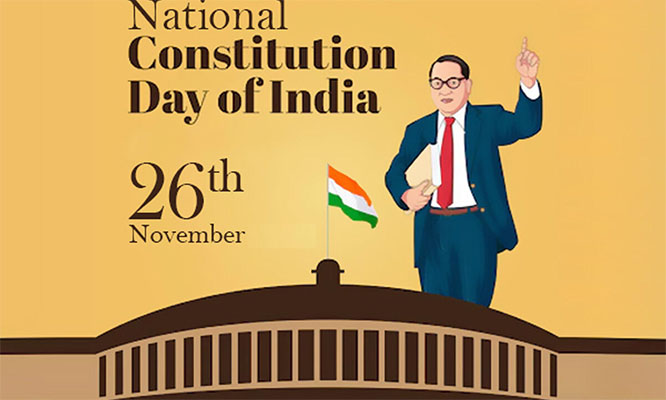
CD.jpg

Constitution Day, also known as Samvidhan Divas, is observed every year on November 26 to honor the adoption of the Constitution of India and to recognize the visionary effort that shaped the world’s largest democracy.

Historical Background

It’s on November 26, 1949, the Constituent Assembly of India formally adopted the Constitution.This date is commemorated to acknowledge the completion of nearly three years of drafting, debate, and refinement.

On January 26, 1950, the Constitution came into force, marking India’s transition from a dominion to a sovereign republic.

The date 26 January was chosen to honor the “Purna Swaraj” declaration made in 1930 that marked the relentless efforts & sacrifices of the many. 

Why Constitution Day is Celebrated

* To honor & remember the framers of the Constitution, especially Dr. B. R. Ambedkar, the Chairman of the Drafting Committee, & many others. 

* To remind the citizens of the values, responsibilities, and rights enshrined in the Constitution.

* To promote constitutional values & literacy among students, institutions, and the general public.

* To reaffirm the nation’s commitment to justice, equality, liberty, fraternity and secular values. 

Vision and Significance of the Constitution

It establishes the fundamental political and legal framework for the nation.

Defines the structure, powers and functions of:
    •    The Executive
    •    The Legislature
    •    The Judiciary
    •    Guarantees a comprehensive set of Fundamental Rights, including:

-Equality before law
-Freedom of speech & expression
-Protection of life and personal liberty
-Freedom of religion
-Embeds Directive Principles of State Policy, guiding governance toward social justice and welfare.
-Introduces Fundamental Duties to ensure civic responsibility among citizens.

Key Features Celebrated on Constitution Day

-The Indian constitution is considered one of the longest written constitutions of the world. It’s systematically drafted considering almost all aspects that properly fits to the country. 

-Blend of multiple global constitutional principles while staying rooted in Indian values and realities.

-Framework that balances Federalism, Secularism, Democracy and Rule of Law. This makes everyone-from President to common man-below the law & are equal in the sight of law. 

-Another feature is that it’s based on built-in mechanisms for amendments, ensuring the Constitution grows with changing needs.

Message of the Day

The core ethos of this  Constitution Day is not merely about looking back at history-it’s a reminder of the continuous duty to protect democratic values, respect diversity and uphold the principles that define India as a sovereign, socialist, secular and democratic republic.

Happy Constitution Day to all my compatriots

Comments

Add new comment

  • Coastaldigest.com reserves the right to delete or block any comments.
  • Coastaldigset.com is not responsible for its readers’ comments.
  • Comments that are abusive, incendiary or irrelevant are strictly prohibited.
  • Please use a genuine email ID and provide your name to avoid reject.
News Network
November 27,2025

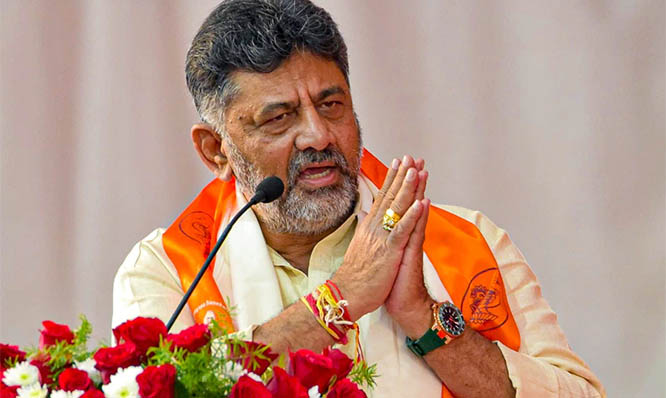
DKSvokkaliga.jpg

Bengaluru: The Vokkaligara Sangha on Thursday issued a stern warning to the Congress, saying the party could face serious electoral repercussions if Deputy Chief Minister D.K. Shivakumar is not appointed as Chief Minister.

The warning follows the public backing of Shivakumar’s chief ministerial ambition by top Vokkaliga pontiff Nirmalanandanatha Swami, who urged the Congress high command to honor his claim.

“The community supported Congress in the 2023 Assembly elections only because Shivakumar had a real chance to become CM. If he is cheated, we’ll teach the party a big lesson,” said newly elected Sangha president L. Srinivas. He added that Vokkaligas would organize protests under the guidance of community leaders.

General Secretary C.G. Gangadhar pointed out that Congress won more seats in the Vokkaliga-dominated Old Mysuru region due to Shivakumar’s influence, adding, “If Congress wants to retain power, Shivakumar should be made the CM.”

Outgoing president Kenchappa Gowda emphasized Shivakumar’s contribution to Congress’ victory. “Our community voted for Congress thinking he would become CM. Siddaramaiah has also served the party well, but Shivakumar should now be given a chance,” he said.

Former general-secretary Konappa Reddy appealed to Sonia and Rahul Gandhi to recognize Shivakumar’s loyalty and service, saying, “Congress is known to keep its promises. We hope it won’t break the promise made to him.”

Comments

Add new comment

  • Coastaldigest.com reserves the right to delete or block any comments.
  • Coastaldigset.com is not responsible for its readers’ comments.
  • Comments that are abusive, incendiary or irrelevant are strictly prohibited.
  • Please use a genuine email ID and provide your name to avoid reject.