
The Idea of Students' Development

Muhammad Abdullah Javed
September 14, 2023

sudents.jpg

The true essence of educational process is that it continues with sustained progress and ends up with holistic development. In the pursuit of students’ progress, we often evaluate their performance with emphasis on improved test and exam results. However, in reality, the educational journey that students embark ultimately demands their comprehensive development, of which performance in exams is just one aspect. If one fails to recognise the other aspects of this process, students may in the long-run appear to be ill-equipped to solve their own problems. The proper utilization of their inbuilt soft skills may not always be possible to them. Therefore, focussing on the overall development of students becomes essential. This involves nurturing students, by cementing their growing age at the school premises, to emerge with abundant energy and enthusiasm to face the world. Students' comprehensive development can be of three dimensions: academic, moral, and social.

1) Academic Development

By academic development we mean (a) knowledge-enhancement (b) excellence and (c) knowledge-application.

(a) Knowledge: With the gradual advancement of the classes, students must expand their knowledge base. Students should not be seen as vessels for storing information; instead, they should embody the true essence of education. Else, there remain no distinction between a machine and a human being. The topics taught in any subject are brimming with information. When a teacher succeeds in transforming this information into understanding through effective teaching methods, it becomes knowledge that retains in students' memories for longer periods. Therefore, classroom lectures should not be restricted to the mere transmission of information; rather, they should be imbued with the art of transforming information into knowledge. As a result, students will grasp the essence of conceptual understanding, cultivate a culture of healthy argument and develop critical thinking skills.

(b) Excellence: The knowledge acquired through gradual process exerts a vigorous impact and enables students to excel in whatever they do. Therefore, focusing solely on scoring marks can impede their pursuit of excellence. This needs to be taught and should be considered as a parameter to gauge students' performance. From maintaining a decent physical appearance to excelling in both academic and non-academic activities, all aspects need to be in view to make excellence a synonymous with their persona.

(c) Application: The pragmatic approach towards acquired knowledge is pivotal when considering its beneficial aspects. Often, this aspect remains veiled from students, as at times they encounter difficulties in applying the knowledge they have acquired over the years. The knowledge-application aspect serves to identify the authenticity of education and paves the way for improvisation of teaching and learning methodologies. Knowledge acquired with excellence must be synchronized with its practical application. This enables students to know various answers to the question: What can students actually do with the knowledge they gain in every class?

2) Moral Development

The process of moral development for students is like teaching them how the wings of birds enable them to fly and soar high in the skies. The flip side of excellent performance is high moral standards. This implies that students have two sides: one sports their academic performance, and the other reflects their high moral standards. The moral development also has three prong prerequisites: 

(a) Self-awareness: The process of moral development begins with self-awareness. When students know who they are, the rest follows in accordance with their understanding. It sets them on untiring and exemplary journey towards excellence. By self-awareness we mean enabling students recognize their strengths and weaknesses and empowering them with the ability to enhance their strengths and overcome their weaknesses.

(b) Righteous deeds: It can serve as a parameter of one's moral character. The extension of being in good conduct involves performing good deeds. It's about benefiting others, lending a helping hand, speaking the truth, and even a simple smiling gesture….all have the power to exert a positive impact on others.

(c) Duty towards fellow being: It is the natural extension of moral deeds; it involves recognizing one’s obligation to others. The pinnacle of morality is when the people in one's vicinity benefit from either words or deeds. Morality can be summarized as 'loving for others what one loves for oneself. These shades of morality can be summarized as spirituality with the aid of which a person finds proximity with the God.

3) Social Development

Socializing students means synchronizing them with their surroundings. Every aspect, whether related to themselves, their homes, or society, has enormous potential for their educational and moral development. Socially aware students always fall under our jurisdiction. This jurisdiction doesn't rely solely on the four walls of an institution; rather, the entire city where students live becomes a kind of virtual school. Students perceive their surroundings in the way we guide them. When they leave their homes, they view every nook and corner and the surroundings through our perspectives. The influence of the school extends far beyond its physical walls, and the teaching and training process begins the moment students leave their homes.

This socialization requires a mentality of owning everything. Every person is connected to them. From the executives living in high-rise buildings to the individuals residing in small localities, to the beggars who extend their hands to earn a livelihood, all are interconnected with them in one way or another. This owning mentality helps students adopt realistic perspective. The high-rise executives can inspire them to dream big, while the beggars can motivate them to step forward and address this social evil. Their vision will be inclusive of a mission of serving people, and their earnings will be dedicated to the well-being of others through selfless service. This way, the dearth of highly qualified and educated individuals in small villages can be mitigated. This approach can encourage students to consider constructing their societies and actively contribute to the progress of the country in all spheres.

This idea of students’ development can help us make our teaching and learning system more efficient and foster a competitive spirit among both students and teachers alike.

The author is the Director of AJ Academy for Research and Development, Raichur. [email protected] 

Comments

Zaheer Ahmed
 - 
Saturday, 16 Sep 2023

Very well written article and very informative. Covered the topics in all the aspects and dimensions...

Add new comment

  • Coastaldigest.com reserves the right to delete or block any comments.
  • Coastaldigset.com is not responsible for its readers’ comments.
  • Comments that are abusive, incendiary or irrelevant are strictly prohibited.
  • Please use a genuine email ID and provide your name to avoid reject.
News Network
January 23,2026

Karnataka Governor Thaawarchand Gehlot read only three lines from the 122-paragraph address prepared by the Congress-led state government while addressing the joint session of the Legislature on Thursday, effectively bypassing large sections critical of the BJP-led Union government.

The omitted portions of the customary Governor’s address outlined what the state government described as a “suppressive situation in economic and policy matters” under India’s federal framework. The speech also sharply criticised the Centre’s move to replace the Mahatma Gandhi National Rural Employment Guarantee Act (MGNREGA) with the Viksit Bharat–Guarantee for Rozgar and Ajeevika Mission (Gramin) Act, commonly referred to as the VB-GRAM (G) Act.

Governor Gehlot had earlier conveyed his objection to several paragraphs that were explicitly critical of the Union government. On Thursday, he confined himself to the opening lines — “I extend a warm welcome to all of you to the joint session of the State legislature. I am extremely pleased to address this august House” — before jumping directly to the concluding sentence of the final paragraph.

He ended the address by reading the last line of paragraph 122: “Overall, my government is firmly committed to doubling the pace of the State’s economic, social and physical development. Jai Hind — Jai Karnataka.”

According to the prepared speech, the Karnataka government demanded the scrapping of the VB-GRAM (G) Act, describing it as “contractor-centric” and detrimental to rural livelihoods, and called for the full restoration of MGNREGA. The state government argued that the new law undermines decentralisation, weakens labour protections, and centralises decision-making in violation of constitutional norms.

Key points from the unread sections of the speech:

•    Karnataka facing a “suppressive” economic and policy environment within the federal system

•    Repeal of MGNREGA described as a blow to rural livelihoods

•    VB-GRAM (G) Act accused of protecting corporate and contractor interests

•    New law alleged to weaken decentralised governance

•    Decision-making said to be imposed by the Centre without consulting states

•    Rights of Adivasis, women, backward classes and agrarian communities curtailed

•    Labourers allegedly placed under contractor control

•    States facing mounting fiscal stress due to central policies

•    VB-GRAM (G) Act accused of enabling large-scale corruption

Comments

Add new comment

  • Coastaldigest.com reserves the right to delete or block any comments.
  • Coastaldigset.com is not responsible for its readers’ comments.
  • Comments that are abusive, incendiary or irrelevant are strictly prohibited.
  • Please use a genuine email ID and provide your name to avoid reject.
News Network
January 19,2026

trump.jpg

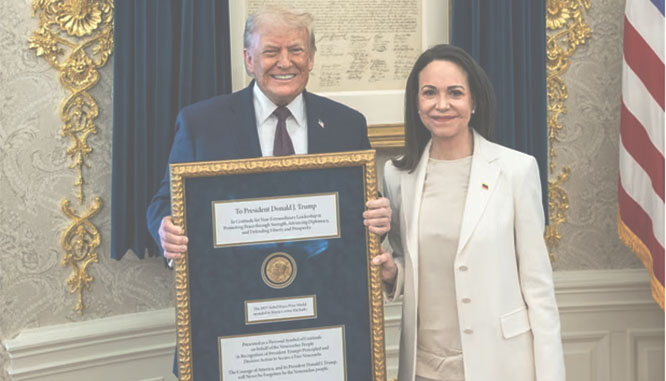
Donald Trump has linked his repeated threats to seize Greenland to his failure to win the Nobel Peace Prize, in a letter to Norwegian Prime Minister Jonas Gahr Støre.

The authenticity of the letter, in which Trump says he no longer feels obligated to “think purely of peace,” was confirmed by Støre to the Norwegian newspaper VG.

“Considering your country decided not to give me the Nobel Peace Prize for having stopped eight wars plus, I no longer feel an obligation to think purely of peace,” Trump wrote, adding he can now “think about what is good and proper for the United States.”

Støre said Trump’s letter was in response to a short message he had sent earlier, on behalf of himself and Finland’s President Alexander Stubb.

Trump has escalated rhetoric toward Greenland, a self-governing Danish territory, insisting the US will take control “one way or the other.” Over the weekend, he tweeted: “Now it is time, and it will be done!!!”

On Saturday, Trump threatened a 10% tariff on imports from Denmark, Norway, Sweden, France, Germany, the UK, the Netherlands, and Finland from 1 February until the US is allowed to purchase the island. EU diplomats met for emergency talks on possible retaliatory tariffs and sanctions.

In his letter, Trump argued Denmark “cannot protect” Greenland from Russia or China, questioning Danish ownership: “There are no written documents; it’s only that a boat landed there hundreds of years ago.” He added that NATO should support the US, claiming the world is “not secure unless we have complete and total control of Greenland.”

Trump’s stance has unsettled the EU and NATO, as he refused to rule out military action to take control of the mineral-rich island.

The Nobel Peace Prize is awarded by the independent Norwegian Nobel Committee, not the government. Trump had campaigned for last year’s prize, which went to Venezuelan opposition leader María Corina Machado, who dedicated her award to him.

Støre reiterated that the Nobel Prize decision rests solely with the committee.

Comments

Add new comment

  • Coastaldigest.com reserves the right to delete or block any comments.
  • Coastaldigset.com is not responsible for its readers’ comments.
  • Comments that are abusive, incendiary or irrelevant are strictly prohibited.
  • Please use a genuine email ID and provide your name to avoid reject.
News Network
January 23,2026

modIKERALA.jpg

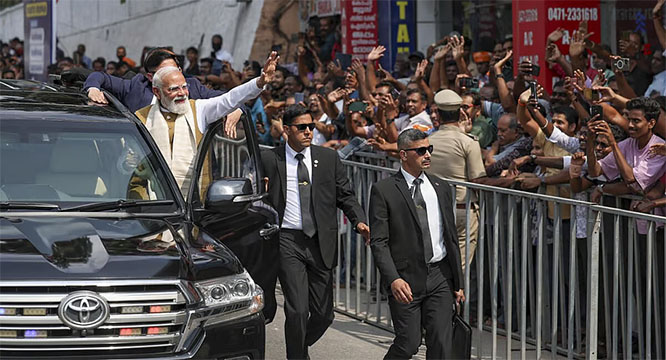
Prime Minister Narendra Modi, during his visit to Thiruvananthapuram on Friday, January 23, indicated that the Bharatiya Janata Party (BJP) is aiming to expand its political footprint in Kerala ahead of the Assembly elections scheduled in the coming months.

Speaking at a BJP-organised public meeting, Modi drew parallels between the party’s early electoral gains in Gujarat and its recent victory in the Thiruvananthapuram Municipal Corporation. The civic body win, which ended decades of Left control, was cited by the Prime Minister as a possible starting point for the party’s broader ambitions in the state.

Recalling BJP’s political trajectory in Gujarat, Modi said the party was largely insignificant before 1987 and received little media attention. He pointed out that the BJP’s first major breakthrough came with its victory in the Ahmedabad Municipal Corporation that year.

“Just as our journey in Gujarat began with one city, Kerala’s journey has also started with a single city,” Modi said, suggesting that the party’s municipal-level success could translate into wider electoral acceptance.

The Prime Minister alleged that successive governments led by the Left Democratic Front (LDF) and the United Democratic Front (UDF) had failed to adequately develop Thiruvananthapuram. He accused both fronts of corruption and neglect, claiming that basic infrastructure and facilities were denied to the capital city for decades.

According to Modi, the BJP’s control of the civic body represents a shift driven by public dissatisfaction with the existing political alternatives. He asserted that the BJP administration in Thiruvananthapuram had begun working towards development, though no specific details or timelines were outlined.

Addressing the gathering at Putharikandam Maidan, Modi said the BJP intended to project Thiruvananthapuram as a “model city,” reiterating his party’s commitment to governance-led change.

The Prime Minister’s visit to Kerala also included the inauguration of several development projects and the flagging off of new train services, as the BJP intensifies its political outreach in the poll-bound state.

Comments

Add new comment

  • Coastaldigest.com reserves the right to delete or block any comments.
  • Coastaldigset.com is not responsible for its readers’ comments.
  • Comments that are abusive, incendiary or irrelevant are strictly prohibited.
  • Please use a genuine email ID and provide your name to avoid reject.