
The Idea of Students' Development

Muhammad Abdullah Javed
September 14, 2023

sudents.jpg

The true essence of educational process is that it continues with sustained progress and ends up with holistic development. In the pursuit of students’ progress, we often evaluate their performance with emphasis on improved test and exam results. However, in reality, the educational journey that students embark ultimately demands their comprehensive development, of which performance in exams is just one aspect. If one fails to recognise the other aspects of this process, students may in the long-run appear to be ill-equipped to solve their own problems. The proper utilization of their inbuilt soft skills may not always be possible to them. Therefore, focussing on the overall development of students becomes essential. This involves nurturing students, by cementing their growing age at the school premises, to emerge with abundant energy and enthusiasm to face the world. Students' comprehensive development can be of three dimensions: academic, moral, and social.

1) Academic Development

By academic development we mean (a) knowledge-enhancement (b) excellence and (c) knowledge-application.

(a) Knowledge: With the gradual advancement of the classes, students must expand their knowledge base. Students should not be seen as vessels for storing information; instead, they should embody the true essence of education. Else, there remain no distinction between a machine and a human being. The topics taught in any subject are brimming with information. When a teacher succeeds in transforming this information into understanding through effective teaching methods, it becomes knowledge that retains in students' memories for longer periods. Therefore, classroom lectures should not be restricted to the mere transmission of information; rather, they should be imbued with the art of transforming information into knowledge. As a result, students will grasp the essence of conceptual understanding, cultivate a culture of healthy argument and develop critical thinking skills.

(b) Excellence: The knowledge acquired through gradual process exerts a vigorous impact and enables students to excel in whatever they do. Therefore, focusing solely on scoring marks can impede their pursuit of excellence. This needs to be taught and should be considered as a parameter to gauge students' performance. From maintaining a decent physical appearance to excelling in both academic and non-academic activities, all aspects need to be in view to make excellence a synonymous with their persona.

(c) Application: The pragmatic approach towards acquired knowledge is pivotal when considering its beneficial aspects. Often, this aspect remains veiled from students, as at times they encounter difficulties in applying the knowledge they have acquired over the years. The knowledge-application aspect serves to identify the authenticity of education and paves the way for improvisation of teaching and learning methodologies. Knowledge acquired with excellence must be synchronized with its practical application. This enables students to know various answers to the question: What can students actually do with the knowledge they gain in every class?

2) Moral Development

The process of moral development for students is like teaching them how the wings of birds enable them to fly and soar high in the skies. The flip side of excellent performance is high moral standards. This implies that students have two sides: one sports their academic performance, and the other reflects their high moral standards. The moral development also has three prong prerequisites: 

(a) Self-awareness: The process of moral development begins with self-awareness. When students know who they are, the rest follows in accordance with their understanding. It sets them on untiring and exemplary journey towards excellence. By self-awareness we mean enabling students recognize their strengths and weaknesses and empowering them with the ability to enhance their strengths and overcome their weaknesses.

(b) Righteous deeds: It can serve as a parameter of one's moral character. The extension of being in good conduct involves performing good deeds. It's about benefiting others, lending a helping hand, speaking the truth, and even a simple smiling gesture….all have the power to exert a positive impact on others.

(c) Duty towards fellow being: It is the natural extension of moral deeds; it involves recognizing one’s obligation to others. The pinnacle of morality is when the people in one's vicinity benefit from either words or deeds. Morality can be summarized as 'loving for others what one loves for oneself. These shades of morality can be summarized as spirituality with the aid of which a person finds proximity with the God.

3) Social Development

Socializing students means synchronizing them with their surroundings. Every aspect, whether related to themselves, their homes, or society, has enormous potential for their educational and moral development. Socially aware students always fall under our jurisdiction. This jurisdiction doesn't rely solely on the four walls of an institution; rather, the entire city where students live becomes a kind of virtual school. Students perceive their surroundings in the way we guide them. When they leave their homes, they view every nook and corner and the surroundings through our perspectives. The influence of the school extends far beyond its physical walls, and the teaching and training process begins the moment students leave their homes.

This socialization requires a mentality of owning everything. Every person is connected to them. From the executives living in high-rise buildings to the individuals residing in small localities, to the beggars who extend their hands to earn a livelihood, all are interconnected with them in one way or another. This owning mentality helps students adopt realistic perspective. The high-rise executives can inspire them to dream big, while the beggars can motivate them to step forward and address this social evil. Their vision will be inclusive of a mission of serving people, and their earnings will be dedicated to the well-being of others through selfless service. This way, the dearth of highly qualified and educated individuals in small villages can be mitigated. This approach can encourage students to consider constructing their societies and actively contribute to the progress of the country in all spheres.

This idea of students’ development can help us make our teaching and learning system more efficient and foster a competitive spirit among both students and teachers alike.

The author is the Director of AJ Academy for Research and Development, Raichur. [email protected] 

Comments

Zaheer Ahmed
 - 
Saturday, 16 Sep 2023

Very well written article and very informative. Covered the topics in all the aspects and dimensions...

Add new comment

  • Coastaldigest.com reserves the right to delete or block any comments.
  • Coastaldigset.com is not responsible for its readers’ comments.
  • Comments that are abusive, incendiary or irrelevant are strictly prohibited.
  • Please use a genuine email ID and provide your name to avoid reject.
News Network
November 26,2025

Mangaluru, Nov 26: Assembly Speaker and local MLA U.T. Khader has initiated a high-level push to resolve one of Mangaluru’s longest-standing traffic headaches: the narrow, high-density stretch of National Highway-66 between Nanthoor and Talapady.

He announced on Tuesday that a formal proposal has been submitted to the Union Ministry of Road Transport and Highways (MoRTH) seeking approval to prepare a Detailed Project Report (DPR) for the widening of this crucial corridor.

The plan specifically aims to expand the existing 45-meter road width to a full 60 meters, coupled with the construction of dedicated service roads. Khader highlighted that land for a 60-meter highway was originally acquired during the initial four-laning project, but only 45 meters were developed, leading to a perpetual bottleneck.

"With vehicle density rising sharply, the expansion has become unavoidable," Khader stated, stressing that the upgrade is essential for ensuring smoother traffic flow and improving safety at the city's main entry and exit points.

The stretch between Nanthoor and Talapady is a vital link on the busy Kochi-Panvel coastal highway and connects to major city junctions. The move to utilize the previously acquired land for the full 60-meter width is seen as a necessary measure to catch up with the region's rapid vehicular growth and prevent further traffic gridlocks.

Comments

Add new comment

  • Coastaldigest.com reserves the right to delete or block any comments.
  • Coastaldigset.com is not responsible for its readers’ comments.
  • Comments that are abusive, incendiary or irrelevant are strictly prohibited.
  • Please use a genuine email ID and provide your name to avoid reject.
News Network
November 21,2025

Bengaluru, Nov 21: The Karnataka government is facing pressure to overhaul its employment system after a high-level Cabinet sub-committee recommended the complete phase-out of job outsourcing in government offices, boards, and corporations by March 2028. The move is aimed at tackling a systemic issue that has led to the potential violation of constitutional reservation policies and the exploitation of workers.

The Call for Systemic Change

With over three lakh vacant posts currently being filled through private agencies on an outsource, insource, or daily wage basis, the sub-committee highlighted a significant lapse. "As a result, reservations are not being followed as per the Constitution and state laws. It’s an urgent need to take serious steps to change the system. It has been recommended to completely stop the system of outsourcing by March 2028," the panel stated in a document.

The practice of outsourcing involves private companies hiring workers to perform duties for a government agency. Critics argue this model results in lesser salaries, a lack of social security benefits (otherwise available to permanent government employees), and a failure to adhere to the provisions of Articles 14 and 15 of the Constitution, which guarantee equality before the law and prohibit discrimination.

The 'Bidar Model' as a Stop-Gap Solution

To regulate the current mode of employment and reduce worker exploitation until the 2028 deadline, the government plans to establish workers’ services multi-purpose cooperative societies across all districts, following the successful "Bidar Model."

The Bidar District Services of Labour Multi-purpose Cooperative Society Ltd., which operates under the District Commissioner, is cited as a successful example of providing a measure of social security to outsourced staff. Labour Department officials argue this society ensures workers receive their due wages and statutory facilities like ESI (Employees' State Insurance) and PF (Provident Fund), in exchange for a 1% service fee collected from the employees.

legislative push and Priority Insourcing

The recommendations, led by the sub-committee headed by Law and Parliamentary Affairs Minister H K Patil, are set to be discussed at the next Cabinet meeting. The committee has proposed the introduction of the Karnataka Outsourced Employees (Regulation, Placement and Welfare) Bill 2025.

In a move addressing immediate concerns, Labour Minister Santosh Lad, a member of the sub-committee, has reportedly assured that steps will be taken over the next 2-3 years to insource workers in "life-threatening services" on a priority basis. This includes essential personnel like pourakarmikas (sanitation workers), drivers, electrical staff in the Energy Department, and Health Department staff handling contagious diseases. The transition aims to grant these workers the long-term security and benefits they currently lack under the outsourcing system. 

Comments

Add new comment

  • Coastaldigest.com reserves the right to delete or block any comments.
  • Coastaldigset.com is not responsible for its readers’ comments.
  • Comments that are abusive, incendiary or irrelevant are strictly prohibited.
  • Please use a genuine email ID and provide your name to avoid reject.
News Network
November 22,2025

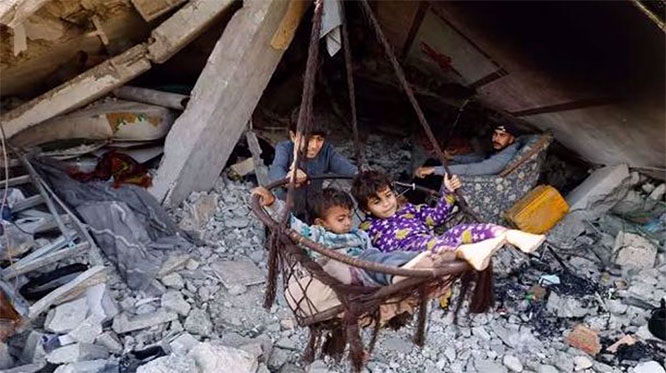
gaza.jpg

The Israeli regime’s forces have killed two Palestinian children in the Gaza Strip every day since the ceasefire began in early October, UNICEF has warned.

The UN children’s agency said on Friday that Israeli forces continue to attack Palestinians in Gaza even though the agreement was meant to stop the killing.

“Since 11 October, while the ceasefire has been in effect, at least 67 children have been killed in conflict-related incidents in the Gaza Strip. Dozens more have been injured. That is an average of almost two children killed every day since the ceasefire took effect,” UNICEF spokesperson Ricardo Pires said in Geneva, reminding that each number in the statistics represents a child whose life had ended violently.

“These are not statistics,” he said. “Each child had a story, a family, and a future that was stolen from them.”

Data from Palestinian factions, human rights groups, and government bodies recorded since the US-brokered ceasefire deal went into effect on October 10 show that Israeli forces have carried out numerous attacks, each constituting a separate ceasefire violation.

UNICEF teams say they repeatedly continue to witness heart-wrenching scenes of fearful Palestinian children sleeping outdoors with amputated limbs, while others live as orphans in flooded, makeshift shelters.

“I saw this myself in August. There is no safe place for them. The world cannot normalize their suffering,” Pires said, lamenting that the UN could “do a lot more if the aid that is really needed was entering faster.”

The UNICEF spokesperson warned that with the advent of winter, the risks for hundreds of thousands of displaced children will increase.

He warned, “The stakes are incredibly high” for children as winter acts as a threat multiplier, where children have no heating, no insulation, and few blankets. He said respiratory infections rise.

“Too many children have already paid the highest price,” Pires said. “Too many are still paying it, even under a ceasefire. The world promised them it would stop and that we would protect them.”

“Now we must act like it,” the UNICEF spokesperson added.

Since the Israeli regime launched its genocidal war against Palestinians in Gaza in October 2023, it has killed nearly 70,000 people in the territory, most of them women and children, and injured over 170,000 more, while reducing most of the structures in the enclave to rubble.

Comments

Add new comment

  • Coastaldigest.com reserves the right to delete or block any comments.
  • Coastaldigset.com is not responsible for its readers’ comments.
  • Comments that are abusive, incendiary or irrelevant are strictly prohibited.
  • Please use a genuine email ID and provide your name to avoid reject.