Communal violence prevention bill back in focus, Parliament adjourned

December 5, 2013

Communal_violence
New Delhi, Dec 5: No business could be transacted on the first day of Parliament's Winter Session, which began on Thursday, as the Opposition strongly opposed the Centre's move to bring the Anti-Communal Violence Bill among other important legislations.

According to reports, both houses of Parliament were adjourned for the day after obituary references.

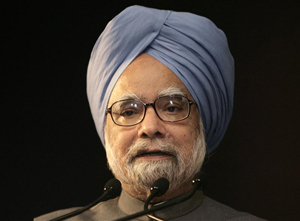
Minutes ahead of the commencement of the Winter Session, the Prime Minister, Dr Manmohan Singh, made an appeal to all political parties to ensure the smooth functioning of Parliament and sought to evolve a broad consensus on all important matters.

Expecting fireworks during the Winter Session, the Prime Minister said, "Government will try to arrive at a consensus and seek support of all parties on all controversial issues."

Responding to objections raised by several chief ministers, including Narendra Modi, to the proposed Anti-Communal Violence Bill, Dr Singh said, "It will be our effort to evolve a broad based consensus on Anti-Communal Violence, Women's Reservation and other important Bills.”

Seeking the cooperation of the opposition parties in ensuring the smooth functioning of Parliament, the PM said, "This session of Parliament is of short duration hence it is obligatory on all parties to get essential business transacted as speedily and smoothly as possible."

The appeal from the PM came shortly after various political parties condemned the move to introduce the Anti-Communal Violence Bill in this session.

Reacting to it, KC Tyagi of the JD (U) said, "In the name of this Bill (Communal Violence) Narendra Modi is doing politics."

BJP leader Murli Manohar Joshi also reacted by saying, "The Communal Violence Bill is highly divisive in itself."

"This is not Communal Violence Bill, this is Communal Vote Bill, " Mukhtar Abbas Naqvi of BJP said.

While BSP chief Mayawati opposed the high amount of control the Communal Violence Bill gives to the Centre, D Raja of the Left said that changes must be made to the bill.

"First a consensus on Communal Violence Bill must be made and then it should be brought in Parliament," Mayawati said.

However, Union Home Minister Sushilkumar Shinde said that the Communal Violence Bill will definitely be passed in this session.

Bringing the issue back in spotlight, BJP's PM candidate Narendra Modi wrote a letter to the Prime Minister and raised objections to the controversial bill.

The Winter Session of Parliament is likely to be a stormy one with Centre aiming to push several controversial bills and the Opposition all set to attack it on a number of issues.

The tone of the Winter Session will also depend on the outcome of Assembly polls in five states, especially as the exit polls have suggested huge losses for the ruling Congress in major states.

The UPA government has listed a number of important bills, including Anti-Communal Violence Bill and Women's Reservation Bill etc, while the Opposition, which is demanding extension of the 12-day sitting, is likely to press for introducing the Telangana Bill.

The Centre is expected to face Opposition heat over bills like the Lokpal Bill and Women's Reservation Bill which have been passed by one House and now await the other House's nod.

A bill on the creation of the new Telangana state does not figure in the government's agenda but the BJP is adamant that the process for the same should be set in motion immediately.

As per the Anti-Communal Violence Bill is concerned, the Centre wants to bring an amended version, but it has been opposed by several states and the Opposition, which sees it as an attempt to infringe on the Constitutional rights of a state.

The UPA, which has faced criticism over allegations of corruption, for failing to control inflation and its handling of the overall economy, will certainly try to make an attempt to win back some lost ground by putting up key Bills for debate.

The BJP has also sought a discussion on internal security with a special focus on the 27 October blasts in Patna ahead of a rally in the city addressed by its prime ministerial candidate Narendra Modi.

The main opposition party has a wide range of controversial issues on which it will challenge the government, including a move to bring in a controversial communal violence Bill, alleged misuse of the Central Bureau of Investigation (CBI) and the functioning of the Joint Parliamentary Committee that probed irregularities in the allocation of second-generation telecom spectrum.

At Tuesday’s all-party meeting, the Samajwadi Party threatened to disrupt proceedings if the Women’s Reservation Bill and legislation seeking to carve out a quota in job promotions for scheduled castes and scheduled tribes are taken up.

The BJP and Asom Gana Parishad strongly opposed any plans to introduce a constitutional amendment Bill on the India-Bangladesh Land Boundary Agreement; the Bill is listed in the legislative agenda.

Left parties are seeking a detailed debate on the communal riots that killed more than 62 people and displaced thousands in Uttar Pradesh’s Muzaffarnagar district in August-September.

The government has also listed one of its major reform initiatives, the Direct Taxes Code Bill, in the legislative agenda as well as an education tribunal Bill that aims to create a quasi-judicial body to fast-track resolution of conflicts in the education sector, and the proposed whistle blowers protection law.

The government's arsenal seems restricted to countering the BJP on the Gujarat snooping scandal, targeting its prime ministerial candidate Narendra Modi.


Comments

Add new comment

  • Coastaldigest.com reserves the right to delete or block any comments.
  • Coastaldigset.com is not responsible for its readers’ comments.
  • Comments that are abusive, incendiary or irrelevant are strictly prohibited.
  • Please use a genuine email ID and provide your name to avoid reject.
News Network
December 16,2025

jordan.jpg

Prime Minister Narendra Modi on Monday held talks with Jordan’s King Abdullah II in Amman, during which the two leaders discussed ways to further strengthen bilateral relations, with the Prime Minister outlining an eight-point vision covering key areas of cooperation.

Describing the meeting as “productive”, PM Modi said he shared a roadmap focused on trade and economy, fertilisers and agriculture, information technology, healthcare, infrastructure, critical and strategic minerals, civil nuclear cooperation, and people-to-people ties.

In a post on social media platform X, the Prime Minister praised King Abdullah II’s personal commitment to advancing India–Jordan relations, particularly as both countries mark the 75th anniversary of the establishment of diplomatic ties this year.

“Held productive discussions with His Majesty King Abdullah II in Amman. His personal commitment towards vibrant India-Jordan relations is noteworthy. This year, we are celebrating the 75th anniversary of our bilateral diplomatic relations,” PM Modi said.

The meeting took place at the Al Husseiniya Palace, where the two leaders also exchanged views on regional and global issues of mutual interest. According to the Ministry of External Affairs (MEA), both sides agreed to further deepen cooperation in areas including trade and investment, defence and security, counter-terrorism and de-radicalisation, fertilisers and agriculture, infrastructure, renewable energy, tourism, and heritage.

The MEA said both leaders reaffirmed their united stand against terrorism.

PM Modi arrived in Amman earlier on Monday and was received by Jordanian Prime Minister Jafar Hassan, who accorded him a formal welcome. Following the talks, King Abdullah II hosted a banquet dinner in honour of the Prime Minister, reflecting the warmth of bilateral ties.

Jordan is the first leg of PM Modi’s three-nation tour. From Amman, the Prime Minister will travel to Ethiopia at the invitation of Prime Minister Abiy Ahmed Ali, marking his first official visit to the African nation. The tour will conclude with a visit to Oman.

Comments

Add new comment

  • Coastaldigest.com reserves the right to delete or block any comments.
  • Coastaldigset.com is not responsible for its readers’ comments.
  • Comments that are abusive, incendiary or irrelevant are strictly prohibited.
  • Please use a genuine email ID and provide your name to avoid reject.
News Network
December 6,2025

pilot.jpg

New Delhi: IndiGo, India’s largest airline, faced major operational turbulence this week after failing to prepare for new pilot-fatigue regulations issued by the Directorate General of Civil Aviation (DGCA). The stricter rules—designed to improve flight safety—took effect in phases through 2024, with the latest implementation on November 1. IndiGo has acknowledged that inadequate roster planning led to widespread cancellations and delays.

Below are the key DGCA rules that affected IndiGo’s operations:

1. Longer Mandatory Weekly Rest

Weekly rest for pilots has been increased from 36 hours to 48 hours.

The government says the extended break is essential to curb cumulative fatigue. This rule remains in force despite the current crisis.

2. Cap on Night Landings

Pilots can now perform only two night landings per week—a steep reduction from the earlier limit of six.

Night hours, defined as midnight to early morning, are considered the least alert period for pilots.

Given the disruptions, this rule has been temporarily relaxed for IndiGo until February 10.

3. Reduced Maximum Night Flight Duty

Flight duty that stretches into the night is now capped at 10 hours.

This measure has also been kept on hold for IndiGo until February 10 to stabilize operations.

4. Weekly Rest Cannot Be Replaced With Personal Leave

Airlines can no longer count a pilot’s personal leave as part of the mandatory 48-hour rest.

Pilots say this closes a loophole that previously reduced actual rest time.

Currently, all airlines are exempt from this rule to normalise travel.

5. Mandatory Fatigue Monitoring

Airlines must submit quarterly fatigue reports along with corrective actions to DGCA.

This system aims to create a transparent fatigue-tracking framework across the industry.

The DGCA has stressed that these rules were crafted to strengthen flight safety and align India with global fatigue-management standards. The temporary relaxations are expected to remain until February 2025, giving IndiGo time to stabilise its schedules and restore normal air travel.

Comments

Add new comment

  • Coastaldigest.com reserves the right to delete or block any comments.
  • Coastaldigset.com is not responsible for its readers’ comments.
  • Comments that are abusive, incendiary or irrelevant are strictly prohibited.
  • Please use a genuine email ID and provide your name to avoid reject.
News Network
December 5,2025

indigoCEO.jpg

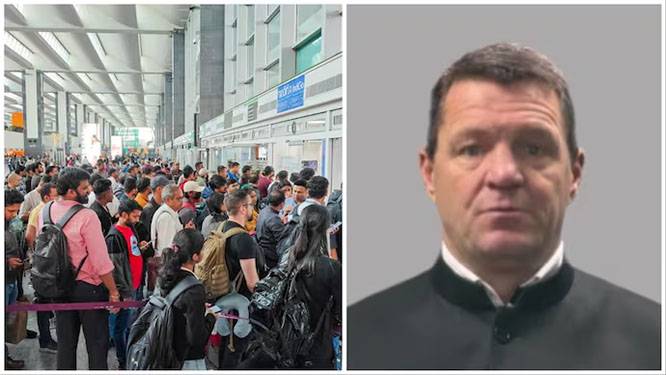
New Delhi, Dec 5: IndiGo CEO Pieter Elbers issued a public apology this evening after more than a thousand flights were cancelled today, making it the "most severely impacted day" in terms of cancellations. The biggest airline of the country cancelled "more than half" of its daily number of flights on Friday, said Elbers. He also said that even though the crisis will persist on Saturday, the airline anticipates fewer than 1,000 flight cancellations.

"Full normalisation is expected between December 10 and 15, though IndiGo cautions that recovery will take time due to the scale of operations," the IndiGo CEO said. 

IndiGo operates around 2,300 domestic and international flights daily.

Pieter Elbers, while apologising for the major inconvenience due to delays and cancellations, said the situation is a result of various causes.

The crisis at IndiGo stems from new regulations that boost pilots' weekly rest requirements by 12 hours to 48 and allow only two night-time landings per week, down from six. IndiGo has attributed the mass cancellations to "misjudgment and planning gaps".

Elbers also listed three lines of action that the airline will adopt to address the issue.

"Firstly, customer communication and addressing your needs, for this, messages have been sent on social media. And just now, a more detailed communication with information, refunds, cancellations and other customer support measures was sent," he said.

The airline has also stepped up its call centre capacity.

"Secondly, due to yesterday's situation, we had customers stranded mostly at the nation's largest airports. Our focus was for all of them to be able to travel today itself, which will be achieved. For this, we also ask customers whose flights are cancelled not to come to the airports as notifications are sent," the CEO said.

"Thirdly, cancellations were made for today to align our crew and planes to be where they need to start tomorrow morning afresh. Earlier measures of the last few days, regrettable, have proven not to be enough, but we have decided today to reboot all our systems and schedules, resulting in the highest numbers of cancellations so far, but imperative for progressive improvements starting from tomorrow," he added.

As airports witnessed chaotic scenes, the Directorate General of Civil Aviation (DGCA) stepped in to grant IndiGo a temporary exemption from stricter night duty rules for pilots. It also allowed substitution of leaves with a weekly rest period. 

Civil Aviation Minister Ram Mohan Naidu has said a high-level inquiry will be ordered and accountability will be fixed.

Comments

Add new comment

  • Coastaldigest.com reserves the right to delete or block any comments.
  • Coastaldigset.com is not responsible for its readers’ comments.
  • Comments that are abusive, incendiary or irrelevant are strictly prohibited.
  • Please use a genuine email ID and provide your name to avoid reject.