



Mangaluru, Aug 8: The citizens of Mangaluru, who had stopped the four-laning of the Kankanady-Nandigudda road to save trees in the past, have once again come together under the banner of Citizens’ Forum for Mangalore Development and raised voice against MCC’s “surreptitious move” to widen the concretized road stretch.
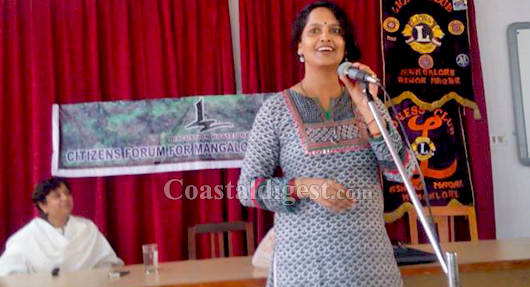
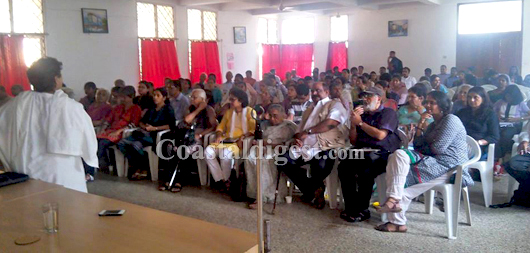
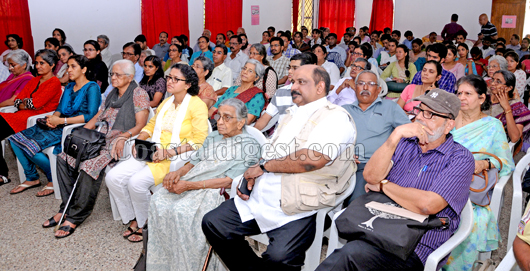
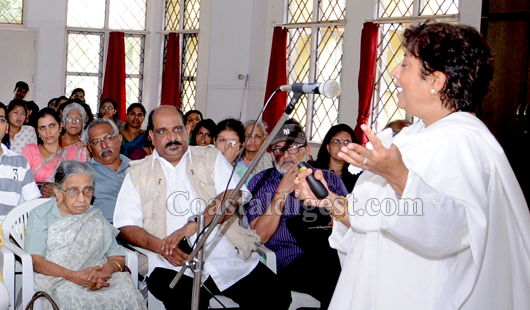
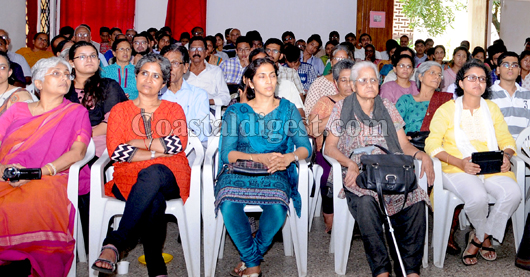
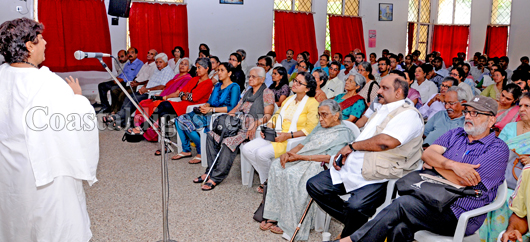
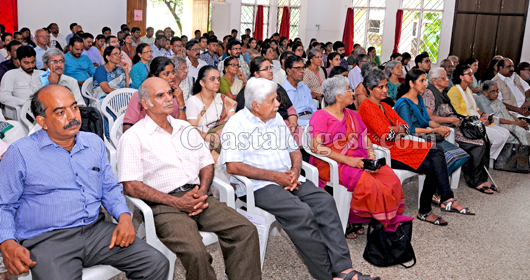
At a meeting held on Friday at MSW Seminar Hall, Roshni Nilaya, here in the presence of activist Vidya Dinakar, the participants reiterated their commitment to exert pressure on the civic body to take up the road widening project from a “human-centric” perspective and not a “vehicle-centric” perspective.
The meeting concluded with a decision to reconvene on August 13 to discuss on a model road project that prevents felling of over 40 trees on both sides of the road stretch.
Talk on trees
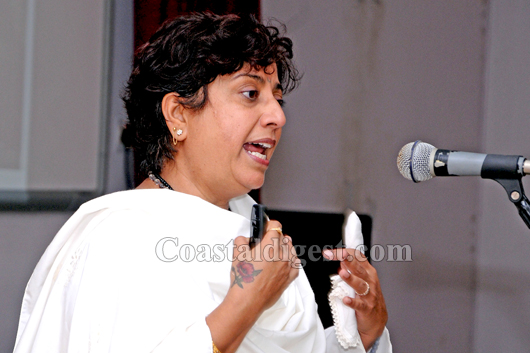
Delivering a talk on the occasion, Jaya Reddy, Instructor at Department of Religion, University of Florida, Gainesville, said that the sciences of astrology, plants and medicine were interconnected to each other, which was consistently evident in the belief and usage of sacred trees in relieving body disorders or ‘dosha’ caused by ‘Grahas’ (planets).
She said that systems of knowledge related to plants and Astrology interacted with each other and were also part of a larger multi-dimensional network.
According to the traditional Indian medicine system of Ayurveda, certain trees and plants which are considered sacred, are ritually used to cure body disorders or dosha caused by planets. An example of plants and religion being connected to Astrology is the ritual use of Ural and Sesame in association with Vata disorders and ‘Sani-dosha’, which are excellent foods to relieve the disorders. Meanwhile, ‘Sani’ (Saturn) is also worshipped as Devi in parts of Karnataka as per Hindu belief, she said, explaining how plants, religion and Astrology were interconnected.
She said that in Hindu religion, plants were used in worship in many forms or as objects of worship. One of the ways plants are considered sacred is that they are considered as the abode of ‘god’ – such as Dodda Sampige Mara in Bandipur and Dandin Durgamma (Neem tree) in Gadag.
In another way, plants are considered and worshipped as the body of god, while some plants are considered as god himself – such as Banni Mara as ‘Devi’ in Gadag, where a house is built around the sacred tree. Even in ancient sculptures, paintings and scriptures, the Ashoka tree is considered sacred and also connected to women by relieving their sorrow, she said.
Speaking of the consideration of trees as sacred by Muslims in Karnataka, Jaya Reddy said that this was evident in places such as Hazrat Zindavali Dargah in Gadag where a large Banyan tree was considered sacred since a Peer was buried underneath, and Mehboob Sahib Dargah in Gadag where a Neem tree was considered sacred by local Muslims and also worshipped by Hindus.

Comments
Add new comment