Cong puts off party polls by 1 year; Sonia to carry on at helm

September 8, 2015

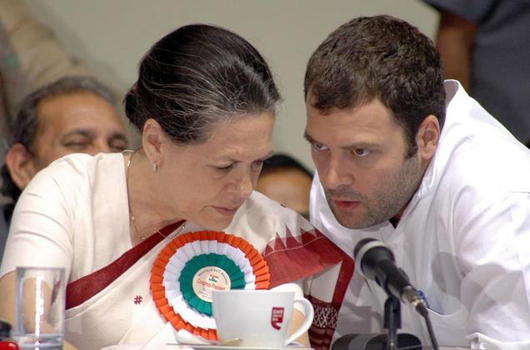
New Delhi, Sep 8: Sonia Gandhi will continue as the Congress president for up to one year after the party today resolved to push back its internal polls by a year, signalling that Rahul Gandhi is unlikely to take over at its helm in the immediate future.
soni

With a view to bringing in massive changes in the wake of its worst showing in the Lok Sabha polls last year, the resolution passed the Congress Working Committee puts to rest for the moment the speculation that had begun after the Congress Vice President's return from a sabbatical earlier this year that he could be elevated any time this year.

Congress sources said that since the party was required to complete its organisational elections by this year-end, it now has to seek Election Commission's permission for postponing the exercise on the grounds that it needs additional time to bring in key amendments in the party Constitution.

The party will soon be informing the poll body about the decision of the CWC, Congress's apex policy-making body.

Sonia Gandhi has the record of holding the longest tenure as Congress chief. She took over the party in early 1998. Her current term is expiring in December this year.

Upping the reservation for weaker sections -- SC, ST, OBC, minorities and women -- in party posts from 20 to 50 per cent is a key proposal accepted by the CWC with Sonia Gandhi insisting that it was "only through affirmative action that we will guarantee greater say in the working of our party to these sections of society".

Through another amendment, the party has reduced the term of membership from five years to three years. This will necessitate organisational polls every three years and not five as was decided by the party in December, 2010, at their Burari session. The term of all party office-bearers, including that of the Congress President, now stands restored to three years instead of five.

Upon conclusion of the organisational polls, a resolution of the CWC will be adopted at a Congress Plenary after which the changes will be included in the party constitution.

With the Congress vote-share plummeting in the Lok Sabha polls and a number of state elections, Sonia Gandhi told the CWC, "Our priority must be to strengthen our existing support base and actively reach out and win the confidence of new constituents."

Congress also decided to bring in a one-membership system for those joining Congress or its front wings like Youth Congress, NSUI, Seva Dal or Mahila Congress.

It further decided to also revive the concept of active member. A member enrolling at least 25 members will be regarded as an active member and will have a say in inner body polls.

With the party expecting to would have a fresh schedule for organisational polls in the new year, Sonia Gandhi said that as new members are registered "we have to ensure that our internal processes and systems are sufficiently robust to recognise, reward and nurture talent".

A transparent mechanism to recognise and reward hard- working party workers should be institutionalised, she said amidst calls for the infusion of fresh blood into the organisation.

The Congress President said that the amendments passed today will require some time to be implemented but, once done, shall "go a long way towards making our party institutions truly responsive and equip it to face the challenges that lie ahead".

She said that to successfully implement these initiatives, Congress needs to bolster organisational institutions right from the grassroots up.

During the three-hour-long meeting of the party's apex body, former Union ministers P Chidambaram and Anand Sharma made a detailed briefing on the GST Bill amidst renewed efforts by the government to take Congress on board for passing the key reform measure.

NDA plans to roll out the GST from April next year.

Congress, which had earlier decided to press for at least five changes in the Goods and Services Tax (GST) Bill, today said that there were three such issues that were non- negotiable.

There was an indication that the party could soften its stance on GST if the government agreed to some of its proposals and may not refrain from discussions on the measure.


Comments

Add new comment

  • Coastaldigest.com reserves the right to delete or block any comments.
  • Coastaldigset.com is not responsible for its readers’ comments.
  • Comments that are abusive, incendiary or irrelevant are strictly prohibited.
  • Please use a genuine email ID and provide your name to avoid reject.
News Network
December 6,2025

pilot.jpg

New Delhi: IndiGo, India’s largest airline, faced major operational turbulence this week after failing to prepare for new pilot-fatigue regulations issued by the Directorate General of Civil Aviation (DGCA). The stricter rules—designed to improve flight safety—took effect in phases through 2024, with the latest implementation on November 1. IndiGo has acknowledged that inadequate roster planning led to widespread cancellations and delays.

Below are the key DGCA rules that affected IndiGo’s operations:

1. Longer Mandatory Weekly Rest

Weekly rest for pilots has been increased from 36 hours to 48 hours.

The government says the extended break is essential to curb cumulative fatigue. This rule remains in force despite the current crisis.

2. Cap on Night Landings

Pilots can now perform only two night landings per week—a steep reduction from the earlier limit of six.

Night hours, defined as midnight to early morning, are considered the least alert period for pilots.

Given the disruptions, this rule has been temporarily relaxed for IndiGo until February 10.

3. Reduced Maximum Night Flight Duty

Flight duty that stretches into the night is now capped at 10 hours.

This measure has also been kept on hold for IndiGo until February 10 to stabilize operations.

4. Weekly Rest Cannot Be Replaced With Personal Leave

Airlines can no longer count a pilot’s personal leave as part of the mandatory 48-hour rest.

Pilots say this closes a loophole that previously reduced actual rest time.

Currently, all airlines are exempt from this rule to normalise travel.

5. Mandatory Fatigue Monitoring

Airlines must submit quarterly fatigue reports along with corrective actions to DGCA.

This system aims to create a transparent fatigue-tracking framework across the industry.

The DGCA has stressed that these rules were crafted to strengthen flight safety and align India with global fatigue-management standards. The temporary relaxations are expected to remain until February 2025, giving IndiGo time to stabilise its schedules and restore normal air travel.

Comments

Add new comment

  • Coastaldigest.com reserves the right to delete or block any comments.
  • Coastaldigset.com is not responsible for its readers’ comments.
  • Comments that are abusive, incendiary or irrelevant are strictly prohibited.
  • Please use a genuine email ID and provide your name to avoid reject.
News Network
December 5,2025

indigoCEO.jpg

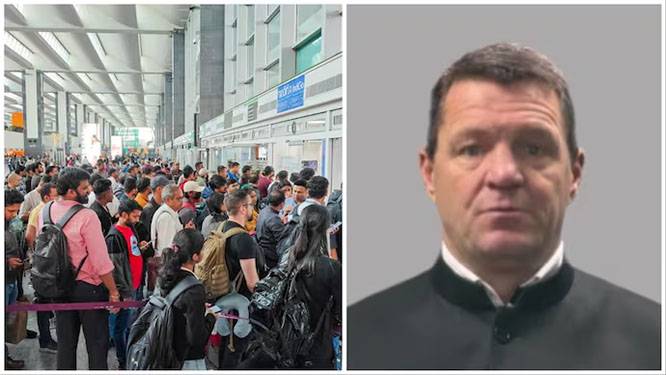
New Delhi, Dec 5: IndiGo CEO Pieter Elbers issued a public apology this evening after more than a thousand flights were cancelled today, making it the "most severely impacted day" in terms of cancellations. The biggest airline of the country cancelled "more than half" of its daily number of flights on Friday, said Elbers. He also said that even though the crisis will persist on Saturday, the airline anticipates fewer than 1,000 flight cancellations.

"Full normalisation is expected between December 10 and 15, though IndiGo cautions that recovery will take time due to the scale of operations," the IndiGo CEO said. 

IndiGo operates around 2,300 domestic and international flights daily.

Pieter Elbers, while apologising for the major inconvenience due to delays and cancellations, said the situation is a result of various causes.

The crisis at IndiGo stems from new regulations that boost pilots' weekly rest requirements by 12 hours to 48 and allow only two night-time landings per week, down from six. IndiGo has attributed the mass cancellations to "misjudgment and planning gaps".

Elbers also listed three lines of action that the airline will adopt to address the issue.

"Firstly, customer communication and addressing your needs, for this, messages have been sent on social media. And just now, a more detailed communication with information, refunds, cancellations and other customer support measures was sent," he said.

The airline has also stepped up its call centre capacity.

"Secondly, due to yesterday's situation, we had customers stranded mostly at the nation's largest airports. Our focus was for all of them to be able to travel today itself, which will be achieved. For this, we also ask customers whose flights are cancelled not to come to the airports as notifications are sent," the CEO said.

"Thirdly, cancellations were made for today to align our crew and planes to be where they need to start tomorrow morning afresh. Earlier measures of the last few days, regrettable, have proven not to be enough, but we have decided today to reboot all our systems and schedules, resulting in the highest numbers of cancellations so far, but imperative for progressive improvements starting from tomorrow," he added.

As airports witnessed chaotic scenes, the Directorate General of Civil Aviation (DGCA) stepped in to grant IndiGo a temporary exemption from stricter night duty rules for pilots. It also allowed substitution of leaves with a weekly rest period. 

Civil Aviation Minister Ram Mohan Naidu has said a high-level inquiry will be ordered and accountability will be fixed.

Comments

Add new comment

  • Coastaldigest.com reserves the right to delete or block any comments.
  • Coastaldigset.com is not responsible for its readers’ comments.
  • Comments that are abusive, incendiary or irrelevant are strictly prohibited.
  • Please use a genuine email ID and provide your name to avoid reject.