Coronavirus airborne: What we should do now

International New York Times
July 7, 2020

The coronavirus can stay aloft for hours in tiny droplets in stagnant air, infecting people as they inhale, mounting scientific evidence suggests.

This risk is highest in crowded indoor spaces with poor ventilation, and may help explain superspreading events reported in meatpacking plants, churches and restaurants.

It’s unclear how often the virus is spread via these tiny droplets, or aerosols, compared with larger droplets that are expelled when a sick person coughs or sneezes, or transmitted through contact with contaminated surfaces, said Linsey Marr, an aerosol expert at Virginia Tech.

Follow latest updates on the Covid-19 pandemic here

Aerosols are released even when a person without symptoms exhales, talks or sings, according to Marr and more than 200 other experts, who have outlined the evidence in an open letter to the World Health Organization.

What is clear, they said, is that people should consider minimizing time indoors with people outside their families. Schools, nursing homes and businesses should consider adding powerful new air filters and ultraviolet lights that can kill airborne viruses.

What does it mean for a virus to be airborne?

For a virus to be airborne means that it can be carried through the air in a viable form. For most pathogens, this is a yes-no scenario. HIV, too delicate to survive outside the body, is not airborne. Measles is airborne, and dangerously so: It can survive in the air for up to two hours.

For the coronavirus, the definition has been more complicated. Experts agree that the virus does not travel long distances or remain viable outdoors. But evidence suggests it can traverse the length of a room and, in one set of experimental conditions, remain viable for perhaps three hours.

How are aerosols different from droplets?

Aerosols are droplets, droplets are aerosols — they do not differ except in size. Scientists sometimes refer to droplets fewer than 5 microns in diameter as aerosols. (By comparison, a red blood cell is about 5 microns in diameter; a human hair is about 50 microns wide.)

From the start of the pandemic, the WHO and other public health organizations have focused on the virus’s ability to spread through large droplets that are expelled when a symptomatic person coughs or sneezes.

These droplets are heavy, relatively speaking, and fall quickly to the floor or onto a surface that others might touch. This is why public health agencies have recommended maintaining a distance of at least 6 feet from others, and frequent hand washing.

But some experts have said for months that infected people also are releasing aerosols when they cough and sneeze. More important, they expel aerosols even when they breathe, talk or sing, especially with some exertion.

Scientists know now that people can spread the virus even in the absence of symptoms — without coughing or sneezing — and aerosols might explain that phenomenon.

Because aerosols are smaller, they contain much less virus than droplets do. But because they are lighter, they can linger in the air for hours, especially in the absence of fresh air. In a crowded indoor space, a single infected person can release enough aerosolized virus over time to infect many people, perhaps seeding a superspreader event.

For droplets to be responsible for that kind of spread, a single person would have to be within a few feet of all the other people, or to have contaminated an object that everyone else touched. All that seems unlikely to many experts: “I have to do too many mental gymnastics to explain those other routes of transmission compared to aerosol transmission, which is much simpler,” Marr said.

Can I stop worrying about physical distancing and washing my hands?

Physical distancing is still very important. The closer you are to an infected person, the more aerosols and droplets you may be exposed to. Washing your hands often is still a good idea.

What’s new is that those two things may not be enough. “We should be placing as much emphasis on masks and ventilation as we do with hand washing,” Marr said. “As far as we can tell, this is equally important, if not more important.”

Should I begin wearing a hospital-grade mask indoors? And how long is too long to stay indoors?

Health care workers may all need to wear N95 masks, which filter out most aerosols. At the moment, they are advised to do so only when engaged in certain medical procedures that are thought to produce aerosols.

For the rest of us, cloth face masks will still greatly reduce risk, as long as most people wear them. At home, when you’re with your own family or with roommates you know to be careful, masks are still not necessary. But it is a good idea to wear them in other indoor spaces, experts said.

As for how long is safe, that is frustratingly tough to answer. A lot depends on whether the room is too crowded to allow for a safe distance from others and whether there is fresh air circulating through the room.

What does airborne transmission mean for reopening schools and colleges?

This is a matter of intense debate. Many schools are poorly ventilated and are too poorly funded to invest in new filtration systems. “There is a huge vulnerability to infection transmission via aerosols in schools,” said Don Milton, an aerosol expert at the University of Maryland.

Most children younger than 12 seem to have only mild symptoms, if any, so elementary schools may get by. “So far, we don’t have evidence that elementary schools will be a problem, but the upper grades, I think, would be more likely to be a problem,” Milton said.

College dorms and classrooms are also cause for concern.

Milton said the government should think of long-term solutions for these problems. Having public schools closed “clogs up the whole economy, and it’s a major vulnerability,” he said.

“Until we understand how this is part of our national defense, and fund it appropriately, we’re going to remain extremely vulnerable to these kinds of biological threats.”

What are some things I can do to minimize the risks?

Do as much as you can outdoors. Despite the many photos of people at beaches, even a somewhat crowded beach, especially on a breezy day, is likely to be safer than a pub or an indoor restaurant with recycled air.

But even outdoors, wear a mask if you are likely to be close to others for an extended period.

When indoors, one simple thing people can do is to “open their windows and doors whenever possible,” Marr said. You can also upgrade the filters in your home air-conditioning systems, or adjust the settings to use more outdoor air rather than recirculated air.

Public buildings and businesses may want to invest in air purifiers and ultraviolet lights that can kill the virus. Despite their reputation, elevators may not be a big risk, Milton said, compared with public bathrooms or offices with stagnant air where you may spend a long time.

If none of those things are possible, try to minimize the time you spend in an indoor space, especially without a mask. The longer you spend inside, the greater the dose of virus you might inhale.

Comments

Add new comment

  • Coastaldigest.com reserves the right to delete or block any comments.
  • Coastaldigset.com is not responsible for its readers’ comments.
  • Comments that are abusive, incendiary or irrelevant are strictly prohibited.
  • Please use a genuine email ID and provide your name to avoid reject.
News Network
December 4,2025

Mangaluru: Chaos erupted at Mangaluru International Airport (MIA) after IndiGo flight 6E 5150, bound for Mumbai, was repeatedly delayed and ultimately cancelled, leaving around 100 passengers stranded overnight. The incident highlights the ongoing country-wide operational disruptions affecting the airline, largely due to the implementation of new Flight Duty Time Limitations (FDTL) norms for crew.

The flight was initially scheduled for 9:25 PM on Tuesday but was first postponed to 11:40 PM, then midnight, before being cancelled around 3:00 AM. Passengers expressed frustration over last-minute communication and the lack of clarity, with elderly and ailing travellers particularly affected. “Though the airline arranged food, there was no proper communication, leaving us confused,” said one family member.

An IndiGo executive at MIA cited the FDTL rules, designed to prevent pilot fatigue by limiting crew working hours, as the cause of the cancellation. While alternative arrangements, including hotel stays, were offered, about 100 passengers chose to remain at the airport, creating tension. A replacement flight was arranged but also faced delays due to the same constraints, finally departing for Mumbai around 1:45 PM on Wednesday. Passengers either flew, requested refunds, or postponed their travel.

The Mangaluru delay is part of a broader crisis for IndiGo. The airline has been forced to make “calibrated schedule adjustments”—a euphemism for widespread cancellations and delays—after stricter FDTL norms came into effect on November 1.

While an IndiGo spokesperson acknowledged unavoidable flight disruptions due to technology issues, operational requirements, and the updated crew rostering rules, the DGCA has intervened, summoning senior airline officials to explain the chaos and outline corrective measures.

The ripple effect has been felt across the country, with major hubs like Bengaluru and Mumbai reporting numerous cancellations. The Mangaluru incident underscores the systemic operational strain currently confronting India’s largest carrier, leaving passengers nationwide grappling with uncertainty and delays.

Comments

Add new comment

  • Coastaldigest.com reserves the right to delete or block any comments.
  • Coastaldigset.com is not responsible for its readers’ comments.
  • Comments that are abusive, incendiary or irrelevant are strictly prohibited.
  • Please use a genuine email ID and provide your name to avoid reject.
News Network
November 21,2025

Tejas.jpg

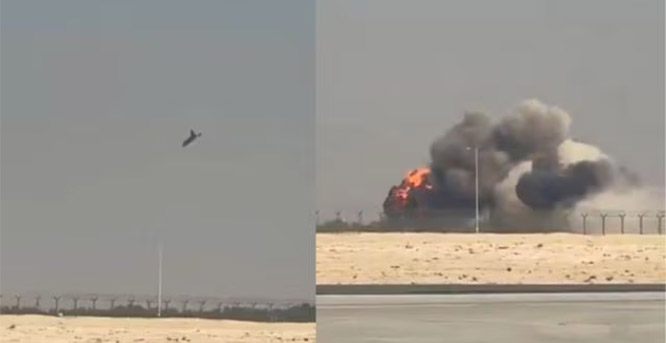
An Indian Air Force (IAF) Tejas fighter jet crashed on Friday, November 21, afternoon during its aerial demonstration at the Dubai Air Show, plunging to the ground at around 2:10 pm local time while performing a manoeuvre before thousands of spectators.

The IAF confirmed the incident, stating that a Tejas aircraft participating in the show had crashed and that further details were being gathered. An Air Force spokesperson said more information would be shared after initial assessments.

The crash sent thick black smoke billowing into the sky near the airport, causing panic among visitors, including families and children who had gathered to watch the display. Authorities have not yet confirmed whether the pilot managed to eject before the aircraft went down. Emergency response teams rushed to the scene, and officials have not released information on casualties or damage so far.

The Tejas is a 4.5-generation, multi-role fighter aircraft developed indigenously by Hindustan Aeronautics Limited (HAL). Designed for versatility, it is capable of offensive air support, close combat, ground attack missions and maritime operations. The aircraft family includes single-seat fighters and twin-seat trainers for both the Air Force and Navy.

HAL describes the latest version, the LCA Mk1A, as the most advanced in the series, featuring an AESA radar, an upgraded electronic warfare suite with radar-warning and self-protection jamming, smart multifunction displays, a digital map generator, a combined interrogator–transponder system and a modern radio altimeter. These enhancements significantly improve the aircraft’s combat capability and survivability.

Further updates from IAF and UAE authorities are awaited.

Comments

Add new comment

  • Coastaldigest.com reserves the right to delete or block any comments.
  • Coastaldigset.com is not responsible for its readers’ comments.
  • Comments that are abusive, incendiary or irrelevant are strictly prohibited.
  • Please use a genuine email ID and provide your name to avoid reject.
News Network
November 24,2025

lebanon.jpg

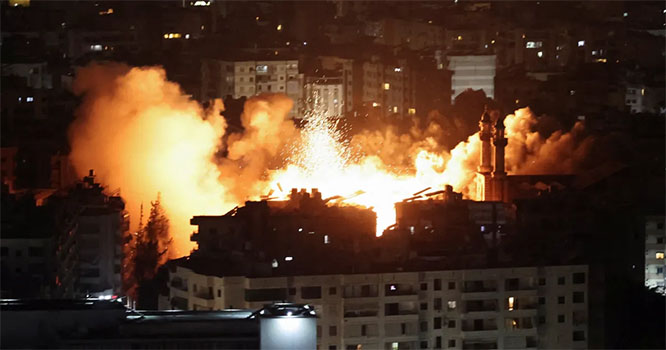
Israel has launched a new act of aggression on a residential neighborhood in Lebanon's capital, Beirut, killing and injuring about two dozen civilians.

The Israeli regime's military said in a statement that its forces carried out a so-called precise strike in a residential apartment in Dahiyeh in the southern suburbs of Beirut on Sunday.

The aggression targeted residential areas, killing at least five people and injuring more than 28 people, Lebanon's Health Ministry said. 

Hezbollah announced the martyrdom of senior Hezbollah commander Haytham Ali Tabatabai and four resistance fighters.

Lebanese President Michel Aoun condemned the airstrike, calling it a clear demonstration of Tel Aviv’s disregard for repeated international calls to halt violations on Lebanese soil.

“Israel refuses to implement international resolutions and all efforts aimed at ending the escalation and restoring stability,” Aoun said, urging the international community to take action to prevent further aggression.

The Palestinian Islamic Jihad movement also condemned the attack, holding the international community accountable. 

“The international community bears responsibility and continues to provide cover for these attacks as long as it does not restrain the occupiers,” said Ali Abu Shahin, a member of the group’s political bureau.

Israeli prime minister Benjamin Netanyahu’s office announced that the Israeli army carried out a strike “in the heart of Beirut."

Netanyahu reportedly approved the operation following recommendations from top Israeli security officials.

Two senior US officials commented on the Israeli strike.

The first official said that Israel did not notify Americans in advance about the attack. "We were informed immediately after the strike was carried out."

The second senior official said that the "US knew for several days that Israel was planning to escalate its strikes in Lebanon, but did not know in advance the timing, location, or target of the strike."

Speaking from the site of the Israeli strike, Lebanese MP Ali Ammar condemned the attack as part of a broader campaign of aggression that has targeted "all of Lebanon since the Washington-sponsored ceasefire."

He stated that "any attack on Lebanon is a violation of red lines; this aggression is part and parcel of the entity that targets Lebanon's dignity, sovereignty, and security of citizens."

Ammar went on to say the resistance is responding with "utmost wisdom, patience, and will confront the enemy at the appropriate time."

"Unfortunately, the enemy is emboldened to commit its aggression by voices within Lebanon that have turned themselves into tools that support its aggression," he added.

The Israeli attack on the southern suburbs of the Lebanese capital is the latest blatant violation of the ceasefire Israel signed with Hezbollah in November 2024, which was intended to end hostilities that had escalated into full-scale war.

An Israeli strike on the Ain al-Hilweh camp near Sidon in southern Lebanon late Tuesday killed at least 14 people. It wounded several others, including young students, according to the Lebanese health ministry.

The military claimed the attack targeted “a Hamas training compound” used to plan and carry out attacks against the regime -- a claim that has frequently been made without evidence.

Hamas rejected the allegations as “a blatant lie aimed at justifying the massacre,” stating it had “no military installations in the Palestinian camps in Lebanon” and that the targeted site was merely “an open sports field.”

According to Lebanese authorities, Israeli attacks have killed approximately 4,000 people and displaced more than 1.2 million residents across the country since October 2023.

Comments

Add new comment

  • Coastaldigest.com reserves the right to delete or block any comments.
  • Coastaldigset.com is not responsible for its readers’ comments.
  • Comments that are abusive, incendiary or irrelevant are strictly prohibited.
  • Please use a genuine email ID and provide your name to avoid reject.