Coronavirus airborne: What we should do now

International New York Times
July 7, 2020

The coronavirus can stay aloft for hours in tiny droplets in stagnant air, infecting people as they inhale, mounting scientific evidence suggests.

This risk is highest in crowded indoor spaces with poor ventilation, and may help explain superspreading events reported in meatpacking plants, churches and restaurants.

It’s unclear how often the virus is spread via these tiny droplets, or aerosols, compared with larger droplets that are expelled when a sick person coughs or sneezes, or transmitted through contact with contaminated surfaces, said Linsey Marr, an aerosol expert at Virginia Tech.

Follow latest updates on the Covid-19 pandemic here

Aerosols are released even when a person without symptoms exhales, talks or sings, according to Marr and more than 200 other experts, who have outlined the evidence in an open letter to the World Health Organization.

What is clear, they said, is that people should consider minimizing time indoors with people outside their families. Schools, nursing homes and businesses should consider adding powerful new air filters and ultraviolet lights that can kill airborne viruses.

What does it mean for a virus to be airborne?

For a virus to be airborne means that it can be carried through the air in a viable form. For most pathogens, this is a yes-no scenario. HIV, too delicate to survive outside the body, is not airborne. Measles is airborne, and dangerously so: It can survive in the air for up to two hours.

For the coronavirus, the definition has been more complicated. Experts agree that the virus does not travel long distances or remain viable outdoors. But evidence suggests it can traverse the length of a room and, in one set of experimental conditions, remain viable for perhaps three hours.

How are aerosols different from droplets?

Aerosols are droplets, droplets are aerosols — they do not differ except in size. Scientists sometimes refer to droplets fewer than 5 microns in diameter as aerosols. (By comparison, a red blood cell is about 5 microns in diameter; a human hair is about 50 microns wide.)

From the start of the pandemic, the WHO and other public health organizations have focused on the virus’s ability to spread through large droplets that are expelled when a symptomatic person coughs or sneezes.

These droplets are heavy, relatively speaking, and fall quickly to the floor or onto a surface that others might touch. This is why public health agencies have recommended maintaining a distance of at least 6 feet from others, and frequent hand washing.

But some experts have said for months that infected people also are releasing aerosols when they cough and sneeze. More important, they expel aerosols even when they breathe, talk or sing, especially with some exertion.

Scientists know now that people can spread the virus even in the absence of symptoms — without coughing or sneezing — and aerosols might explain that phenomenon.

Because aerosols are smaller, they contain much less virus than droplets do. But because they are lighter, they can linger in the air for hours, especially in the absence of fresh air. In a crowded indoor space, a single infected person can release enough aerosolized virus over time to infect many people, perhaps seeding a superspreader event.

For droplets to be responsible for that kind of spread, a single person would have to be within a few feet of all the other people, or to have contaminated an object that everyone else touched. All that seems unlikely to many experts: “I have to do too many mental gymnastics to explain those other routes of transmission compared to aerosol transmission, which is much simpler,” Marr said.

Can I stop worrying about physical distancing and washing my hands?

Physical distancing is still very important. The closer you are to an infected person, the more aerosols and droplets you may be exposed to. Washing your hands often is still a good idea.

What’s new is that those two things may not be enough. “We should be placing as much emphasis on masks and ventilation as we do with hand washing,” Marr said. “As far as we can tell, this is equally important, if not more important.”

Should I begin wearing a hospital-grade mask indoors? And how long is too long to stay indoors?

Health care workers may all need to wear N95 masks, which filter out most aerosols. At the moment, they are advised to do so only when engaged in certain medical procedures that are thought to produce aerosols.

For the rest of us, cloth face masks will still greatly reduce risk, as long as most people wear them. At home, when you’re with your own family or with roommates you know to be careful, masks are still not necessary. But it is a good idea to wear them in other indoor spaces, experts said.

As for how long is safe, that is frustratingly tough to answer. A lot depends on whether the room is too crowded to allow for a safe distance from others and whether there is fresh air circulating through the room.

What does airborne transmission mean for reopening schools and colleges?

This is a matter of intense debate. Many schools are poorly ventilated and are too poorly funded to invest in new filtration systems. “There is a huge vulnerability to infection transmission via aerosols in schools,” said Don Milton, an aerosol expert at the University of Maryland.

Most children younger than 12 seem to have only mild symptoms, if any, so elementary schools may get by. “So far, we don’t have evidence that elementary schools will be a problem, but the upper grades, I think, would be more likely to be a problem,” Milton said.

College dorms and classrooms are also cause for concern.

Milton said the government should think of long-term solutions for these problems. Having public schools closed “clogs up the whole economy, and it’s a major vulnerability,” he said.

“Until we understand how this is part of our national defense, and fund it appropriately, we’re going to remain extremely vulnerable to these kinds of biological threats.”

What are some things I can do to minimize the risks?

Do as much as you can outdoors. Despite the many photos of people at beaches, even a somewhat crowded beach, especially on a breezy day, is likely to be safer than a pub or an indoor restaurant with recycled air.

But even outdoors, wear a mask if you are likely to be close to others for an extended period.

When indoors, one simple thing people can do is to “open their windows and doors whenever possible,” Marr said. You can also upgrade the filters in your home air-conditioning systems, or adjust the settings to use more outdoor air rather than recirculated air.

Public buildings and businesses may want to invest in air purifiers and ultraviolet lights that can kill the virus. Despite their reputation, elevators may not be a big risk, Milton said, compared with public bathrooms or offices with stagnant air where you may spend a long time.

If none of those things are possible, try to minimize the time you spend in an indoor space, especially without a mask. The longer you spend inside, the greater the dose of virus you might inhale.


Comments

Add new comment

  • Coastaldigest.com reserves the right to delete or block any comments.
  • Coastaldigset.com is not responsible for its readers’ comments.
  • Comments that are abusive, incendiary or irrelevant are strictly prohibited.
  • Please use a genuine email ID and provide your name to avoid reject.
News Network
December 2,2025

DKSsiddu.jpg

Bengaluru: 'Nati koli saaru' (country chicken curry) considered one of Chief Minister Siddaramaiah’s favourites along with steaming hot idlis was on the breakfast menu at Deputy CM D K Shivakumar’s residence on Tuesday, according to official sources.

The spread also included 'nati koli' fry, vada and pongal, among other items, they said.

In an apparent show of unity, Siddaramaiah visited Shivakumar’s residence for breakfast, just days after the two leaders shared a meal amid a simmering power tussle in the state Congress.

Siddaramaiah drove to the Deputy CM’s residence in Sadashivanagar, where he was received by Shivakumar and his brother D K Suresh, who is a former Congress MP.

Suresh and Kunigal MLA H D Ranganath, a relative of Shivakumar, joined them for breakfast, which featured a mix of vegetarian and non-vegetarian dishes.

Speaking to reporters later, Siddaramaiah said Shivakumar had invited him during his visit to the CM’s residence for breakfast on Saturday.

Asked about the difference between the two meals, the chief minister said, "At his (Shivakumar’s) house it was non-veg, while at my house it was veg. He is a vegetarian, I am a non-vegetarian. I had not prepared non-veg. I told DK to get chicken from the village as you won’t get the original in Bengaluru."

Shivakumar said he had initially invited Siddaramaiah to his residence, but the CM had suggested visiting his place first and reciprocating later. "It was a vegetarian breakfast at the CM’s house on Saturday," he noted.

"Today, I invited him (the CM) to my house. He enjoyed the breakfast, which had his Mysuru taste," Shivakumar added. At this point, Siddaramaiah remarked that Shivakumar’s wife is also from Mysuru.

Saturday’s breakfast at Siddaramaiah’s official residence, held as part of efforts by the Congress high command to ease tensions in the leadership dispute between the two, reportedly included idlis and sambar, according to official sources.

Comments

Add new comment

  • Coastaldigest.com reserves the right to delete or block any comments.
  • Coastaldigset.com is not responsible for its readers’ comments.
  • Comments that are abusive, incendiary or irrelevant are strictly prohibited.
  • Please use a genuine email ID and provide your name to avoid reject.
News Network
December 5,2025

indigoCEO.jpg

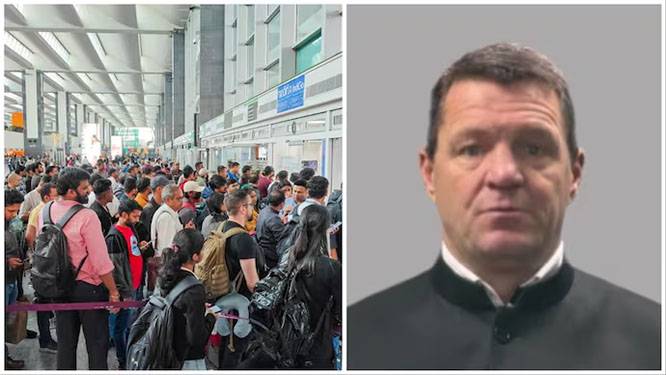
New Delhi, Dec 5: IndiGo CEO Pieter Elbers issued a public apology this evening after more than a thousand flights were cancelled today, making it the "most severely impacted day" in terms of cancellations. The biggest airline of the country cancelled "more than half" of its daily number of flights on Friday, said Elbers. He also said that even though the crisis will persist on Saturday, the airline anticipates fewer than 1,000 flight cancellations.

"Full normalisation is expected between December 10 and 15, though IndiGo cautions that recovery will take time due to the scale of operations," the IndiGo CEO said. 

IndiGo operates around 2,300 domestic and international flights daily.

Pieter Elbers, while apologising for the major inconvenience due to delays and cancellations, said the situation is a result of various causes.

The crisis at IndiGo stems from new regulations that boost pilots' weekly rest requirements by 12 hours to 48 and allow only two night-time landings per week, down from six. IndiGo has attributed the mass cancellations to "misjudgment and planning gaps".

Elbers also listed three lines of action that the airline will adopt to address the issue.

"Firstly, customer communication and addressing your needs, for this, messages have been sent on social media. And just now, a more detailed communication with information, refunds, cancellations and other customer support measures was sent," he said.

The airline has also stepped up its call centre capacity.

"Secondly, due to yesterday's situation, we had customers stranded mostly at the nation's largest airports. Our focus was for all of them to be able to travel today itself, which will be achieved. For this, we also ask customers whose flights are cancelled not to come to the airports as notifications are sent," the CEO said.

"Thirdly, cancellations were made for today to align our crew and planes to be where they need to start tomorrow morning afresh. Earlier measures of the last few days, regrettable, have proven not to be enough, but we have decided today to reboot all our systems and schedules, resulting in the highest numbers of cancellations so far, but imperative for progressive improvements starting from tomorrow," he added.

As airports witnessed chaotic scenes, the Directorate General of Civil Aviation (DGCA) stepped in to grant IndiGo a temporary exemption from stricter night duty rules for pilots. It also allowed substitution of leaves with a weekly rest period. 

Civil Aviation Minister Ram Mohan Naidu has said a high-level inquiry will be ordered and accountability will be fixed.

Comments

Add new comment

  • Coastaldigest.com reserves the right to delete or block any comments.
  • Coastaldigset.com is not responsible for its readers’ comments.
  • Comments that are abusive, incendiary or irrelevant are strictly prohibited.
  • Please use a genuine email ID and provide your name to avoid reject.
News Network
November 21,2025

Tejas.jpg

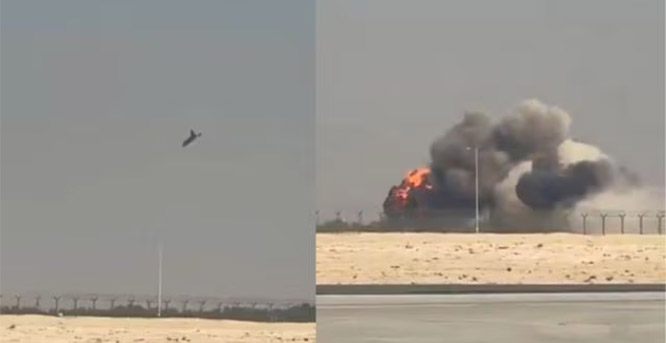
An Indian Air Force (IAF) Tejas fighter jet crashed on Friday, November 21, afternoon during its aerial demonstration at the Dubai Air Show, plunging to the ground at around 2:10 pm local time while performing a manoeuvre before thousands of spectators.

The IAF confirmed the incident, stating that a Tejas aircraft participating in the show had crashed and that further details were being gathered. An Air Force spokesperson said more information would be shared after initial assessments.

The crash sent thick black smoke billowing into the sky near the airport, causing panic among visitors, including families and children who had gathered to watch the display. Authorities have not yet confirmed whether the pilot managed to eject before the aircraft went down. Emergency response teams rushed to the scene, and officials have not released information on casualties or damage so far.

The Tejas is a 4.5-generation, multi-role fighter aircraft developed indigenously by Hindustan Aeronautics Limited (HAL). Designed for versatility, it is capable of offensive air support, close combat, ground attack missions and maritime operations. The aircraft family includes single-seat fighters and twin-seat trainers for both the Air Force and Navy.

HAL describes the latest version, the LCA Mk1A, as the most advanced in the series, featuring an AESA radar, an upgraded electronic warfare suite with radar-warning and self-protection jamming, smart multifunction displays, a digital map generator, a combined interrogator–transponder system and a modern radio altimeter. These enhancements significantly improve the aircraft’s combat capability and survivability.

Further updates from IAF and UAE authorities are awaited.

Comments

Add new comment

  • Coastaldigest.com reserves the right to delete or block any comments.
  • Coastaldigset.com is not responsible for its readers’ comments.
  • Comments that are abusive, incendiary or irrelevant are strictly prohibited.
  • Please use a genuine email ID and provide your name to avoid reject.