Coronavirus lockdown till May 3; areas with no hotspots to get conditional relief after April 20: PM Modi

Agencies
April 14, 2020

New Delhi, Apr 14: Prime Minister Narendra Modi has announced the extension of a nationwide lockdown till May 3 to contain the spread of Covid-19 as the number of novel coronavirus cases surged past 10,000-mark on Tuesday. Hinting at partial relief, however, the Prime Minister said there could be some relaxations after April 20 in places where there is no hotspot.

Lockdown 2.0 will come into force from April 14 till May 3, PM Modi said in a televised address to the nation on Tuesday. The 19-day extension of the lockdown till May 3 is an attempt to contain the spread of novel coronavirus which has affected over 10,000 people in India. 

Even before #COVID19 cases touched 100, India made it compulsory for foreign returnees to remain in 14 days isolation. We imposed 21-day lockdown when we had 550 cases: PM Narendra Modi https://t.co/qi8MgG8qPQ

— ANI (@ANI) April 14, 2020
PM Modi said the Centre will closely monitor hotspots in states across India and added that those areas where there are no hotspots will get partial relief. “Till April 20, all districts, localities, states will be closely monitored, as to how strictly they are implementing norms. States where hotspots are contained could be allowed to resume some important activities, but with certain conditions,” the PM said.

The Prime Minister, in his address to India on Tuesday, began by lauding the efforts of Indians in the fight against novel coronavirus. “Covid-19 is spreading fast but India’s fight against coronavirus is going strong. It is because of your efforts that we are able to put up a fight,” the PM said as he thanked people for their co-operation.

PM Modi said, “People have gone through hardships to save India. I know how many difficulties you faced. I respectfully bow to the people of India for their sacrifice.”

The national lockdown first came into force from March 25 when the PM took an unprecedented measure in the fight against Covid-19. The lockdown was scheduled to end today.

STATES PUSHED FOR LOCKDOWN 2.0

The decision to extend the lockdown followed after a broad consensus emerged that the national lockdown should be extended by at least two weeks following a meeting between PM Modi and state chief ministers on Saturday.

It was reportedly after this meet with the Prime Minister that it was decided that the nationwide lockdown will be extended to tackle the spread of Coivid-19. The extension request from states came despite concerns that the shutdown will put millions out of work.

PM has taken correct decision to extend lockdown. Today, India’s position is better than many developed countries because we started lockdown early. If it is stopped now, all gains would be lost. To consolidate, it is imp to extend it

— Arvind Kejriwal (@ArvindKejriwal) April 11, 2020
"If it is stopped now, all gains would be lost. To consolidate, it is imp (important) to extend it," Arvind Kejriwal had written on Twitter after the meeting while he added that PM Modi had "taken (a) correct decision to extend (the) lockdown”.

Several states had, however, pushed for resumption of some economic activities like in the farming sector in areas where no cases of the novel coronavirus have been reported.

ALL THAT HAS HAPPENED TILL NOW

Prime Minister Narendra Modi first addressed an anxious nation on March 19 as the coronavirus pandemic emerged as a serious concern for the country. In his televised address, the PM asked the people to observe ‘Janata Curfew’ for March 22.
The Prime Minister urged Indians to remain indoors as much as possible as he suggested ways to battle the coronavirus pandemic.

On March 24, the Prime Minister came back and announced a 21-day lockdown across the country. In his second address, PM Modi said the step was taken as it was the only way to break the chain of infection. The lockdown was to be in effect till April 14.

PM Modi later asked citizens to make noise at 5 pm to show their appreciation for medics, nurses and sanitation workers. This call was well received as Indians came out to clap, clang metal vessels and ring bells to cheer workers battling the spread of the coronavirus.

Ten days into the lockdown, the Prime Minister addressed the nation again and asked people to light candles, lamps and hold mobile phone torches for nine minutes from 9 pm on April 5 to demonstrate a collective will to fight coronavirus.

As of Tuesday morning, the death toll due to coronavirus has climbed to 339 with over 50 deaths within 24 hours. The number of cases in the country, meanwhile, had crossed the 10,000-mark, according to the Union Health Ministry. Over a thousand have been cured and discharged.


Comments

Add new comment

  • Coastaldigest.com reserves the right to delete or block any comments.
  • Coastaldigset.com is not responsible for its readers’ comments.
  • Comments that are abusive, incendiary or irrelevant are strictly prohibited.
  • Please use a genuine email ID and provide your name to avoid reject.
News Network
December 6,2025

pilot.jpg

New Delhi: IndiGo, India’s largest airline, faced major operational turbulence this week after failing to prepare for new pilot-fatigue regulations issued by the Directorate General of Civil Aviation (DGCA). The stricter rules—designed to improve flight safety—took effect in phases through 2024, with the latest implementation on November 1. IndiGo has acknowledged that inadequate roster planning led to widespread cancellations and delays.

Below are the key DGCA rules that affected IndiGo’s operations:

1. Longer Mandatory Weekly Rest

Weekly rest for pilots has been increased from 36 hours to 48 hours.

The government says the extended break is essential to curb cumulative fatigue. This rule remains in force despite the current crisis.

2. Cap on Night Landings

Pilots can now perform only two night landings per week—a steep reduction from the earlier limit of six.

Night hours, defined as midnight to early morning, are considered the least alert period for pilots.

Given the disruptions, this rule has been temporarily relaxed for IndiGo until February 10.

3. Reduced Maximum Night Flight Duty

Flight duty that stretches into the night is now capped at 10 hours.

This measure has also been kept on hold for IndiGo until February 10 to stabilize operations.

4. Weekly Rest Cannot Be Replaced With Personal Leave

Airlines can no longer count a pilot’s personal leave as part of the mandatory 48-hour rest.

Pilots say this closes a loophole that previously reduced actual rest time.

Currently, all airlines are exempt from this rule to normalise travel.

5. Mandatory Fatigue Monitoring

Airlines must submit quarterly fatigue reports along with corrective actions to DGCA.

This system aims to create a transparent fatigue-tracking framework across the industry.

The DGCA has stressed that these rules were crafted to strengthen flight safety and align India with global fatigue-management standards. The temporary relaxations are expected to remain until February 2025, giving IndiGo time to stabilise its schedules and restore normal air travel.

Comments

Add new comment

  • Coastaldigest.com reserves the right to delete or block any comments.
  • Coastaldigset.com is not responsible for its readers’ comments.
  • Comments that are abusive, incendiary or irrelevant are strictly prohibited.
  • Please use a genuine email ID and provide your name to avoid reject.
News Network
December 16,2025

bengal.jpg

The deletion of over 58 lakh names from West Bengal’s draft electoral rolls following a Special Intensive Revision (SIR) has sparked widespread concern and is likely to deepen political tensions in the poll-bound state.

According to the Election Commission, the revision exercise has identified 24 lakh voters as deceased, 19 lakh as relocated, 12 lakh as missing, and 1.3 lakh as duplicate entries. The draft list, published after the completion of the first phase of SIR, aims to remove errors and duplication from the electoral rolls.

However, the scale of deletions has raised fears that a large number of eligible voters may have been wrongly excluded. The Election Commission has said that individuals whose names are missing can file objections and seek corrections. The final voter list is scheduled to be published in February next year, after which the Assembly election announcement is expected. Notably, the last Special Intensive Revision in Bengal was conducted in 2002.

The development has intensified the political row over the SIR process. Chief Minister Mamata Banerjee and her Trinamool Congress have strongly opposed the exercise, accusing the Centre and the Election Commission of attempting to disenfranchise lakhs of voters ahead of the elections.

Addressing a rally in Krishnanagar earlier this month, Banerjee urged people to protest if their names were removed from the voter list, alleging intimidation during elections and warning of serious consequences if voting rights were taken away.

The BJP, meanwhile, has defended the revision and accused the Trinamool Congress of politicising the issue to protect what it claims is an illegal voter base. Leader of the Opposition Suvendu Adhikari alleged that the ruling party fears losing power due to the removal of deceased, fake, and illegal voters.

The controversy comes amid earlier allegations by the Trinamool Congress that excessive work pressure during the SIR led to the deaths by suicide of some Booth Level Officers (BLOs), for which the party blamed the Election Commission. With the draft list now out, another round of political confrontation appears imminent.

As objections begin to be filed, the focus will be on whether the correction mechanism is accessible, transparent, and timely—critical factors in ensuring that no eligible voter is denied their democratic right ahead of a crucial election.

Comments

Add new comment

  • Coastaldigest.com reserves the right to delete or block any comments.
  • Coastaldigset.com is not responsible for its readers’ comments.
  • Comments that are abusive, incendiary or irrelevant are strictly prohibited.
  • Please use a genuine email ID and provide your name to avoid reject.
News Network
December 5,2025

indigoCEO.jpg

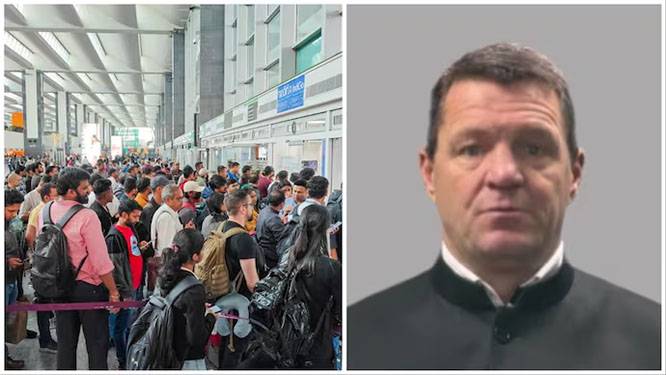
New Delhi, Dec 5: IndiGo CEO Pieter Elbers issued a public apology this evening after more than a thousand flights were cancelled today, making it the "most severely impacted day" in terms of cancellations. The biggest airline of the country cancelled "more than half" of its daily number of flights on Friday, said Elbers. He also said that even though the crisis will persist on Saturday, the airline anticipates fewer than 1,000 flight cancellations.

"Full normalisation is expected between December 10 and 15, though IndiGo cautions that recovery will take time due to the scale of operations," the IndiGo CEO said. 

IndiGo operates around 2,300 domestic and international flights daily.

Pieter Elbers, while apologising for the major inconvenience due to delays and cancellations, said the situation is a result of various causes.

The crisis at IndiGo stems from new regulations that boost pilots' weekly rest requirements by 12 hours to 48 and allow only two night-time landings per week, down from six. IndiGo has attributed the mass cancellations to "misjudgment and planning gaps".

Elbers also listed three lines of action that the airline will adopt to address the issue.

"Firstly, customer communication and addressing your needs, for this, messages have been sent on social media. And just now, a more detailed communication with information, refunds, cancellations and other customer support measures was sent," he said.

The airline has also stepped up its call centre capacity.

"Secondly, due to yesterday's situation, we had customers stranded mostly at the nation's largest airports. Our focus was for all of them to be able to travel today itself, which will be achieved. For this, we also ask customers whose flights are cancelled not to come to the airports as notifications are sent," the CEO said.

"Thirdly, cancellations were made for today to align our crew and planes to be where they need to start tomorrow morning afresh. Earlier measures of the last few days, regrettable, have proven not to be enough, but we have decided today to reboot all our systems and schedules, resulting in the highest numbers of cancellations so far, but imperative for progressive improvements starting from tomorrow," he added.

As airports witnessed chaotic scenes, the Directorate General of Civil Aviation (DGCA) stepped in to grant IndiGo a temporary exemption from stricter night duty rules for pilots. It also allowed substitution of leaves with a weekly rest period. 

Civil Aviation Minister Ram Mohan Naidu has said a high-level inquiry will be ordered and accountability will be fixed.

Comments

Add new comment

  • Coastaldigest.com reserves the right to delete or block any comments.
  • Coastaldigset.com is not responsible for its readers’ comments.
  • Comments that are abusive, incendiary or irrelevant are strictly prohibited.
  • Please use a genuine email ID and provide your name to avoid reject.