



Criminalising marital rape will destabilise marriage: govt

Agencies
August 29, 2017

New Delhi, Aug 29: Marital rape cannot be made a criminal offence as it could become a phenomenon which may destabilise the institution of marriage and an easy tool for harassing the husbands, government today submitted before the Delhi High Court.
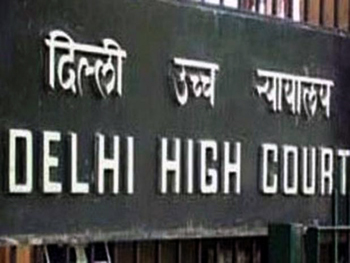
The Centre, in an affidavit filed in response to pleas seeking criminalising marital rape, said the Supreme Court and various High Courts have already observed the growing misuse of section 498A (harassment caused to a married woman by her husband and in-laws) of IPC.

The reply, filed before a bench of Acting Chief Justice Gita Mittal and Justice C Hari Shankar, also sought to implead state governments in the matter to know their opinion to avoid any complication at a later stage.

"It has to be ensured adequately that marital rape does not become a phenomenon which may destabilise the institution of marriage apart from being an easy tool for harassing the husbands," the affidavit, filed through central government standing counsel Monika Arora, said.

The government was responding to various petitions seeking declaration of Section 375 (offence of rape) of the IPC as unconstitutional on the ground that it discriminated against married women being sexually assaulted by their husbands.

During the day's hearing, senior advocate advocate Colin Gonsalves, appearing for one of the petitioners, argued that marriage cannot be viewed as giving a husband the right to coerced intercourse on demand.

He said a marriage licence cannot be viewed as licence for a husband to forcibly rape his wife with impunity and a married woman has the same right of full control over her body as an unmarried woman. He also referred to various judgments of foreign countries.
The hearing in the matter would continue tomorrow.

Marital rape (or spousal rape) is an act in which one of the spouses indulges in sexual intercourse without the consent of the other.

The Centre said in the affidavit that marital rape has not been defined in a statute or law, while the offence of rape is defined under section 375 IPC. Hence, defining marital rape would call for a broad based consensus of the society.

"What may appear to be marital rape to an individual wife, it may not appear so to others. As to what constitutes marital rape and what would constitute marital non-rape needs to be defined precisely before a view on its criminalisation is taken," it said.

It said merely deleting the exception which provides protection to husbands from prosecution for the offence of rape, may not stop marital rape. "Moral and social awareness" plays a vital role in stopping such an act, it added.

"If all sexual acts by a man with his own wife will qualify to be marital rape, then the judgment as to whether it is a marital rape or not will singularly rest with the wife.

"The question is what evidences the courts will rely upon in such circumstances, as there can be no lasting evidence in case of sexual acts between a man and his own wife," the affidavit read.

It also referred to the reports of Law Commission and Parliamentary Standing Committee on Home Affairs, saying they have examined the matter and did not recommend criminalisation of marital rape.

Citing the Justice J S Verma Committee Report on "Amendments to Criminal Law", it said it was recommended that the exception to marital rape be removed, but it also pointed out that it is also important that legal prohibition on marital rape is accompanied by changes in the attitude of the prosecutors, police officers and those in society generally.

Regarding the petitioners' submission that other countries, mostly western, have criminalised marital rape, the Centre said it does not necessarily mean India should also follow them blindly.

"This country has its own unique problems due to various factors like literacy, lack of financial empowerment of the majority of females, mindset of the society, vast diversity, poverty, etc. and these should be considered carefully before criminalising marital rape," it said.

The affidavit said that criminal law is in the Concurrent List and implemented by the states and there is a vast diversity in the cultures of these states.

The high court had earlier asked the Centre to spell out its stand on petitions seeking to make marital rape a criminal offence.

It has agreed to examine the issue raised in PILs by NGOs RIT Foundation, All India Democratic Women's Association, represented through advocate Karuna Nandy, and a man and a woman, who have sought striking down of the exception in the Indian penal law that did not consider sexual intercourse with a minor wife, above 15 years of age, as rape.

The court has also agreed to hear a plea by NGO Men Welfare Trust, representing men victimised by alleged misuse of gender laws, opposing the petitions to make marital rape a criminal offence.

Earlier, the Centre had defended its legislation, saying child marriages were taking place in India and the decision to retain a girl's minimum age as 15 years to marry was taken under the amended rape law to protect a couple against criminalisation of their sexual activity.

Comments

Add new comment

  • Coastaldigest.com reserves the right to delete or block any comments.
  • Coastaldigset.com is not responsible for its readers’ comments.
  • Comments that are abusive, incendiary or irrelevant are strictly prohibited.
  • Please use a genuine email ID and provide your name to avoid reject.
News Network
January 20,2026

DGP.jpg

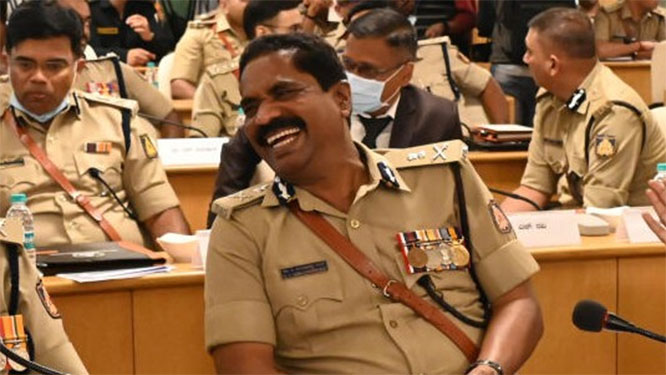
Karnataka DGP (Civil Rights Enforcement) K Ramachandra Rao was suspended with immediate effect, as per a state government order issued on Monday, 19 January. The order cited conduct unbecoming of a government servant and causing embarrassment to the state administration.

The Karnataka government suspended Rao after a purported video showed him in a compromising position with a woman inside his official chamber. The video went viral on social media. Rao rejected the videos outright, terming them "fabricated and false".

Who is K Ramachandra Rao?

Rao is a DGP-rank officer who was heading the Directorate of Civil Rights Enforcement until his suspension. He was promoted to DGP in September 2023 and assumed office in October 2023, the Sunday Guardian reported.

He also served as the Chairman and Managing Director of the Karnataka State Police Housing and Infrastructure Development Corporation Limited.

His stint as the Inspector General of Police (IGP) for the Southern Range was also marred by controversy. In 2014, during a cash seizure near Mysuru’s Yelwal, officials claimed the seized amount was ₹20 lakh, while the accused (Kerala-based merchants) claimed it was around ₹2.27 crore.

Rao, who was present during the seizure, denied all allegations. However, he was transferred soon after.

Allegations of collusion with a businessman surfaced, and a senior police officer was quoted by The Sunday Guardian as saying, “In Rao’s case, the CID has clearly mentioned that there was a great degree of lapse on the part of Rao and a deputy superintendent of police after it was brought to their notice that a few policemen, including a gunman attached to the IGP, were involved in the robbery.”

Rao had denied all wrongdoing in that incident. Despite past controversies, he rose to the state’s top police position, the Sunday Guardian reported.

Ranya Rao’s stepfather

Rao is the stepfather of Kannada actress Harshavardhini Ranya alias Ranya Rao, accused of orchestrating the illegal import of gold worth over ₹12.56 crore from Dubai to India along with two others — businessman Tarun Raju, and jewellery dealer Sahil Jain.

‘Obscene video’ controversy

A viral video showed Rao behaving inappropriately with a woman inside his office while in uniform.

The Karnataka government said in its Monday order that “vide videos and news reports widely broadcast on public news channels and media platforms, it is observed that Dr K Ramachandra Rao has acted in an obscene manner which is unbecoming of a Government Servant and also causing embarrassment to the Government.”

The order said the matter was examined by the state government, which found that the officer's conduct amounted to a violation of Rule 3 of the All India Services (Conduct) Rules, 1968.

The government said it is prima facie satisfied that "it is necessary to place Rao under suspension with immediate effect, pending inquiry".

During the suspension period, Rao will be entitled to subsistence allowance as per Rule 4 of the All India Services (Discipline and Appeal) Rules, 1969.

The order also places restrictions on his movement, stating that during the period of suspension, the officer must not leave headquarters under any circumstances without the written permission of the state government.

Comments

Add new comment

  • Coastaldigest.com reserves the right to delete or block any comments.
  • Coastaldigset.com is not responsible for its readers’ comments.
  • Comments that are abusive, incendiary or irrelevant are strictly prohibited.
  • Please use a genuine email ID and provide your name to avoid reject.
News Network
January 23,2026

Karnataka Governor Thaawarchand Gehlot read only three lines from the 122-paragraph address prepared by the Congress-led state government while addressing the joint session of the Legislature on Thursday, effectively bypassing large sections critical of the BJP-led Union government.

The omitted portions of the customary Governor’s address outlined what the state government described as a “suppressive situation in economic and policy matters” under India’s federal framework. The speech also sharply criticised the Centre’s move to replace the Mahatma Gandhi National Rural Employment Guarantee Act (MGNREGA) with the Viksit Bharat–Guarantee for Rozgar and Ajeevika Mission (Gramin) Act, commonly referred to as the VB-GRAM (G) Act.

Governor Gehlot had earlier conveyed his objection to several paragraphs that were explicitly critical of the Union government. On Thursday, he confined himself to the opening lines — “I extend a warm welcome to all of you to the joint session of the State legislature. I am extremely pleased to address this august House” — before jumping directly to the concluding sentence of the final paragraph.

He ended the address by reading the last line of paragraph 122: “Overall, my government is firmly committed to doubling the pace of the State’s economic, social and physical development. Jai Hind — Jai Karnataka.”

According to the prepared speech, the Karnataka government demanded the scrapping of the VB-GRAM (G) Act, describing it as “contractor-centric” and detrimental to rural livelihoods, and called for the full restoration of MGNREGA. The state government argued that the new law undermines decentralisation, weakens labour protections, and centralises decision-making in violation of constitutional norms.

Key points from the unread sections of the speech:

•    Karnataka facing a “suppressive” economic and policy environment within the federal system

•    Repeal of MGNREGA described as a blow to rural livelihoods

•    VB-GRAM (G) Act accused of protecting corporate and contractor interests

•    New law alleged to weaken decentralised governance

•    Decision-making said to be imposed by the Centre without consulting states

•    Rights of Adivasis, women, backward classes and agrarian communities curtailed

•    Labourers allegedly placed under contractor control

•    States facing mounting fiscal stress due to central policies

•    VB-GRAM (G) Act accused of enabling large-scale corruption

Comments

Add new comment

  • Coastaldigest.com reserves the right to delete or block any comments.
  • Coastaldigset.com is not responsible for its readers’ comments.
  • Comments that are abusive, incendiary or irrelevant are strictly prohibited.
  • Please use a genuine email ID and provide your name to avoid reject.
News Network
January 20,2026

Mangaluru: In a major step towards strengthening rural innovation, the Office of the Principal Scientific Adviser (PSA) to the Government of India is supporting the establishment of RuTAGe Smart Village Centres (RSVCs) across the country through collaborations with academic institutions, civil society organisations and philanthropic partners.

As part of this national initiative, Nitte (Deemed to be University) will set up the first RSVCs in the region at Nitte GP in Udupi district and at the Nitte Health Centre, Sevanjali Trust, Farangipete, in Dakshina Kannada district. The centres will be inaugurated on January 21. In South India, the programme is being implemented by the Section Infin-8 Foundation (SI-8).

Speaking to reporters on Monday, SI-8 founder-director Vishwas US said experts from Nitte University and SI-8 would work closely with farmers, students, youth and local entrepreneurs to adapt and deploy technologies tailored to local needs.

Project head Prof Iddya Karunasagar, representing Nitte DU, said the RSVCs at Nitte and Farangipete would serve as demonstration hubs for a wide range of agriculture, energy, skill-development and assistive technologies. These include solar dryers for fruits, vegetables and crops; soil-testing solutions; power weeders and women-friendly farm tools; wind-powered devices for rural artisans; grain storage systems; grass-cutting and tree-climbing equipment; and liquid fertiliser production using cowshed waste.

SI-8 CEO Aravind C Kumar said the centres would also provide access to digital and knowledge-based platforms such as ISRO applications, government scheme portals, market linkage tools and gamified learning resources, along with assistive technologies for persons with visual impairments.

Highlighting the broader impact of the initiative, Principal Scientific Adviser Prof Ajay Kumar Sood said it demonstrated how applied research could bridge the rural–urban divide and help create self-reliant, technology-enabled villages.

The initiative has been made possible through philanthropic support from Dr NC Murthy of ACM Business Solutions, LLC, USA. Dr Sapna Poti, Director (Strategic Alliances) at the Office of the Principal Scientific Adviser, said the long-term objective is to build self-sufficient, technology-driven communities capable of generating sustainable livelihoods on their own.

Comments

Add new comment

  • Coastaldigest.com reserves the right to delete or block any comments.
  • Coastaldigset.com is not responsible for its readers’ comments.
  • Comments that are abusive, incendiary or irrelevant are strictly prohibited.
  • Please use a genuine email ID and provide your name to avoid reject.