Crude output: US may soon knock down Saud Arabia from second to third place

Agencies
January 20, 2018

London, Jan 20: The rapid growth of US shale producers will shortly knock Saudi Arabia from second to third place among the world’s oil-producing titans, with only Russia ahead, the International Energy Agency said on Friday.

With Venezuelan output plummeting amid political and economic turmoil, the IEA indicated the Kingdom could lose its number two position in 2018.

“Very soon US crude production may overtake that of Saudi Arabia and also rival Russia’s,” it said.

The backdrop is a tightening market amid a significant fall in Venezuelan production, geopolitical uncertainty, continuing falls in inventory levels and OPEC/Russia supply cuts.

But the upshot, said the agency, is likely to be a sizeable pick-up in non-OPEC production. After adding in barrels from Brazil, Canada and other growth countries, and allowing for falls in Mexico, China and elsewhere, total non-OPEC production will increase by 1.7 million barrels per day (bpd), IEA said in its latest world oil market report.

The agency said: “This represents, after the downturn in 2016 and the steady recovery in 2017, a return to the heady days of 2013-2015 when US-led growth averaged 1.9 million bpd.

The factors contributing to investor interest in oil include the possible unraveling of the Iran nuclear deal and recent demonstrations in the country, disruption to the industry in Libya, and the closure of the Forties pipeline system.

Although these factors might have faded somewhat, there are others at work, said the IEA. “The general perception that the market has been tightening is clearly the overriding factor and, within this overall picture, there is mounting concern about Venezuela’s production.

A plunge in Venezuelan supply cut OPEC crude output to 32.23 million bpd in December, boosting compliance to 129 percent. Declines are accelerating in Venezuela, which posted the world’s biggest unplanned output fall in 2017.”

Said the IEA: “Venezuelan production is now about half the level inherited by president Chavez in 1999 - and in December output was 490,000 bpd a day lower than a year ago, having fallen to 1.61 million bpd.

The agency said it was reasonable to assume that the decline will continue, but it was impossible to say at what rate. But if output and exports sank further, it was fair to assume other producers would probably step in with the flexibility to deliver oil similar in quality to Venezuela’s shipments to the US and elsewhere, including China.

Market tightening in the final months of 2017 was evident and continued into 2018. OECD commercial stocks declined for the fourth consecutive month in November, by 17.9 million barrels, with a large fall in middle distillates, said IEA. Preliminary data for December suggested a further fall of 42.7 million barrels.

“Additionally, global crude oil markets saw an exceptionally tight fourth quarter in 2017 as the large draw in OECD crude stocks coincided with a decline in Chinese implied crude balances.”

On the demand side, estimates for 2017 and 2018 were roughly unchanged at 97.8 million bpd and 99.1 million bpd respectively.

“The slowdown in 2018 demand growth is mainly due to the impact of higher oil prices, changing patterns of oil use in China, recent weakness in OECD demand and the switch to natural gas in several non-OECD countries. Production was steady on a year ago as non-OPEC gains of nearly 1 mb/d offset declines in OPEC.”

The price of Brent crude oil closed earlier this week above $70 for the first time since Dec. 2, 2014, and money managers have placed record bets on the recent upward momentum continuing. Whether or not the recent price rise has run out of steam and “seventy really is plenty” remained to be seen, said the agency.

“However, such are the geopolitical uncertainties and the ever-dynamic prospects for US shale that we should expect a volatile year,” it added.

Comments

Add new comment

  • Coastaldigest.com reserves the right to delete or block any comments.
  • Coastaldigset.com is not responsible for its readers’ comments.
  • Comments that are abusive, incendiary or irrelevant are strictly prohibited.
  • Please use a genuine email ID and provide your name to avoid reject.
coastaldigest.com news network
November 29,2025

health1.jpg

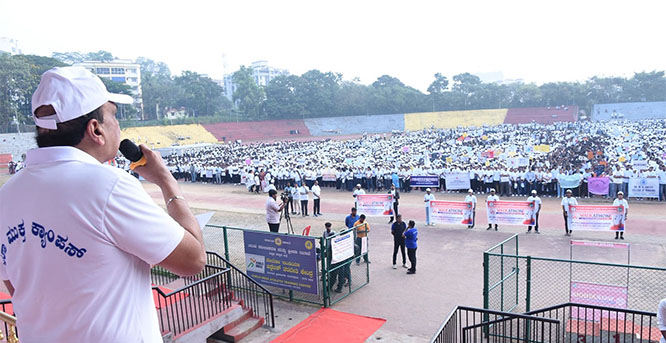
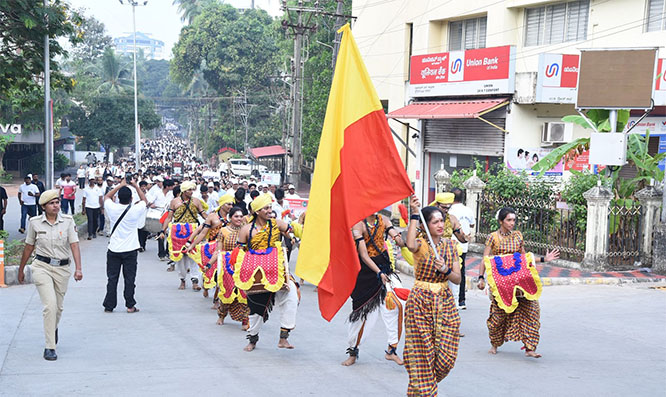
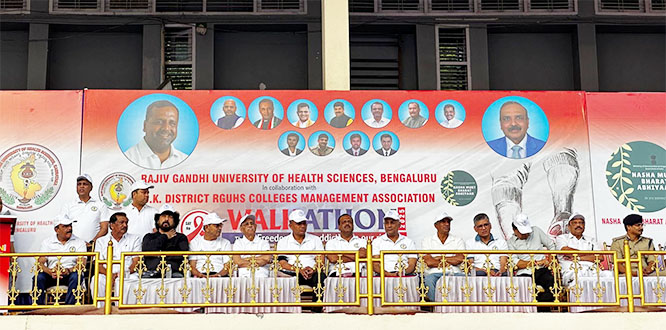
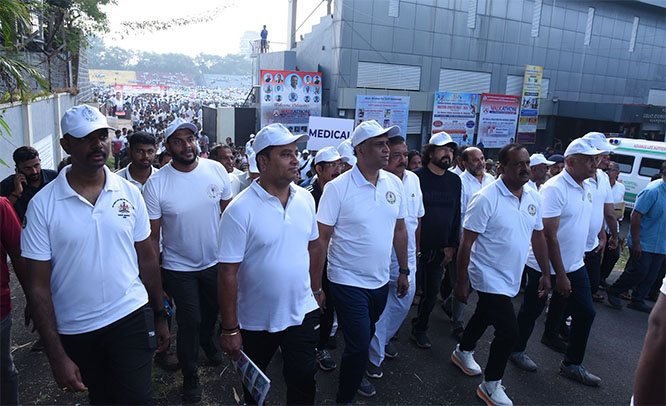
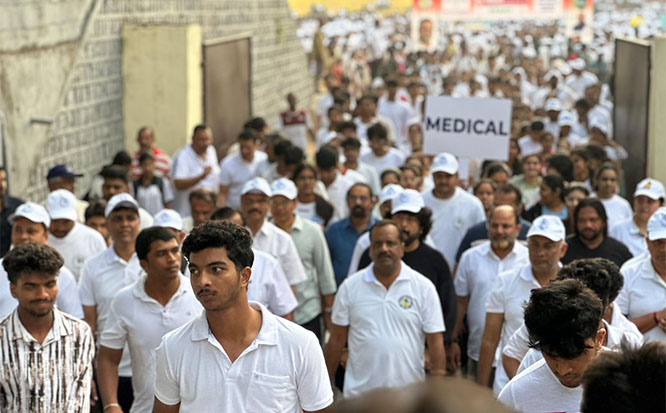
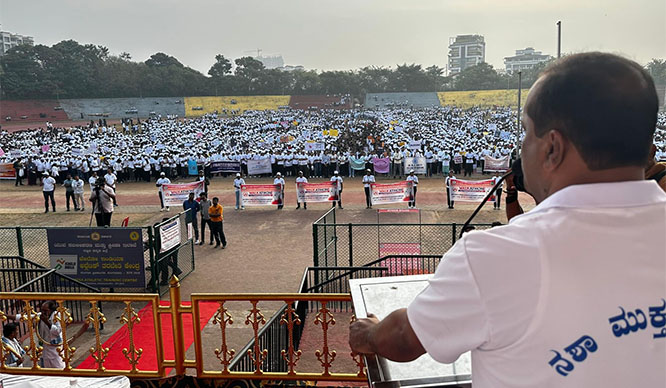
Mangaluru, Nov 29: Around 12,500 healthcare students from Medical, Dental, AYUSH, Pharmacy, Nursing, Physiotherapy and Allied Health Sciences colleges of Dakshina Kannada, affiliated to Rajiv Gandhi University of Health Sciences (RGUHS), took part in a massive walkathon to promote awareness on Organ Donation and Nasha Mukth Bharat.

The inaugural ceremony was held at Mangala Stadium. Dr Bhagavan B C, Hon’ble Vice-Chancellor of RGUHS, delivered the welcome address. The walkathon was flagged off by Shri U T Khader, Hon’ble Speaker of the Karnataka Legislative Assembly, and presided over by Shri Dinesh Gundu Rao, Hon’ble Minister for Health, Family Welfare and Dakshina Kannada District In-charge. Dakshina Kannada MP Shri Brijesh Chowta also addressed the students.

Music director Guru Kiran, MLA Dr Bharat Shetty (Mangalore North), Police Commissioner Shri Sudheer Kumar Reddy, Shri Manjunath Bhandary and Shri Harish Kumar were among those present.

Institution heads including Dr Haji U K Monu (Kanachur Colleges), Dr Shantharam Shetty (Tejaswini College), Dr Bhaskar Shetty (City Group of Colleges), Mr Abdul Rahiman (Kanachur Institute of Medical Sciences), and the District Health Officer, Mangalore, also participated.

The vote of thanks was delivered by Prof U T Ifthikar Fareed, Syndicate Member, RGUHS.

The event was organised by Dr U T Ifthikar Ali and Dr Shiva Sharan (Syndicate Members), Prof Vaishali (Senate Member), Prof Mohammad Suhail (Chairman, BOS Physiotherapy), Dr Sharan Shetty (Former Senate Member), along with principals and faculty of various colleges.

Students marched from Mangala Stadium to Karavali Grounds via MCC and Lalbagh signal. The event set a record as one of the largest gatherings of healthcare students for a social cause in the RGUHS Dakshina Kannada Zone.

health7.jpg

health6.jpg

health5.jpg

health4.jpg

health3.jpg

health2.jpg

Comments

Add new comment

  • Coastaldigest.com reserves the right to delete or block any comments.
  • Coastaldigset.com is not responsible for its readers’ comments.
  • Comments that are abusive, incendiary or irrelevant are strictly prohibited.
  • Please use a genuine email ID and provide your name to avoid reject.
Agencies
November 22,2025

indiapak.jpg

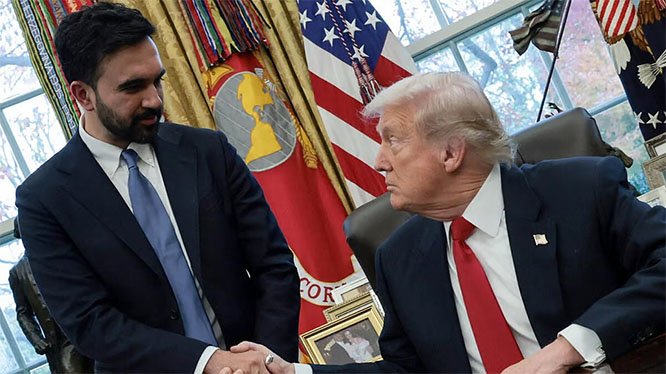
New York/Washington: US President Donald Trump has again claimed to have solved the conflict between India and Pakistan, repeating his assertion during a meeting with New York City Mayor-elect Zohran Mamdani in the Oval Office.

Mamdani flew to Washington DC for his first meeting with Trump in the White House on Friday. Trump said he “enjoyed” the meeting, which he described as “great.”

During remarks in the Oval Office, with Mamdani standing next to him, Trump repeated his claim that he solved the May conflict between India and Pakistan.

"I did eight peace deals of countries, including India and Pakistan,” he said.

On Wednesday, Trump had said he threatened to put 350 per cent tariffs on India and Pakistan if they did not end their conflict, repeating his claim that he solved the fighting between the nuclear-armed neighbours and that Prime Minister Narendra Modi had called him to say “we're not going to go to war.”

Since May 10, when Trump announced on social media that India and Pakistan had agreed to a “full and immediate” ceasefire after a “long night” of talks mediated by Washington, he has repeated his claim over 60 times that he “helped settle” the tensions between India and Pakistan.

India has consistently denied any third-party intervention. India launched Operation Sindoor on May 7, targeting terror infrastructure in Pakistan and Pakistan-occupied Kashmir in retaliation for the April 22 Pahalgam attack that killed 26 civilians. India and Pakistan reached an understanding on May 10 to end the conflict after four days of intense cross-border drone and missile strikes.

Mamdani emerged victorious in the closely-watched battle for New York City Mayor, becoming the first South Asian and Muslim to be elected to sit at the helm of the largest city in the US.

He had been the front-runner in the NYC Mayoral election for months and defeated Republican nominee Curtis Sliwa and political heavyweight former New York State Governor Andrew Cuomo, who ran as an independent candidate and was officially endorsed by Trump just hours before the elections.

Indian-descent Mamdani is the son of renowned filmmaker Mira Nair and Columbia University professor Mahmood Mamdani. He was born and raised in Kampala, Uganda and moved to New York City with his family when he was 7. Mamdani became a naturalised US citizen only recently, in 2018.

Comments

Add new comment

  • Coastaldigest.com reserves the right to delete or block any comments.
  • Coastaldigset.com is not responsible for its readers’ comments.
  • Comments that are abusive, incendiary or irrelevant are strictly prohibited.
  • Please use a genuine email ID and provide your name to avoid reject.
News Network
December 4,2025

Mangaluru: Chaos erupted at Mangaluru International Airport (MIA) after IndiGo flight 6E 5150, bound for Mumbai, was repeatedly delayed and ultimately cancelled, leaving around 100 passengers stranded overnight. The incident highlights the ongoing country-wide operational disruptions affecting the airline, largely due to the implementation of new Flight Duty Time Limitations (FDTL) norms for crew.

The flight was initially scheduled for 9:25 PM on Tuesday but was first postponed to 11:40 PM, then midnight, before being cancelled around 3:00 AM. Passengers expressed frustration over last-minute communication and the lack of clarity, with elderly and ailing travellers particularly affected. “Though the airline arranged food, there was no proper communication, leaving us confused,” said one family member.

An IndiGo executive at MIA cited the FDTL rules, designed to prevent pilot fatigue by limiting crew working hours, as the cause of the cancellation. While alternative arrangements, including hotel stays, were offered, about 100 passengers chose to remain at the airport, creating tension. A replacement flight was arranged but also faced delays due to the same constraints, finally departing for Mumbai around 1:45 PM on Wednesday. Passengers either flew, requested refunds, or postponed their travel.

The Mangaluru delay is part of a broader crisis for IndiGo. The airline has been forced to make “calibrated schedule adjustments”—a euphemism for widespread cancellations and delays—after stricter FDTL norms came into effect on November 1.

While an IndiGo spokesperson acknowledged unavoidable flight disruptions due to technology issues, operational requirements, and the updated crew rostering rules, the DGCA has intervened, summoning senior airline officials to explain the chaos and outline corrective measures.

The ripple effect has been felt across the country, with major hubs like Bengaluru and Mumbai reporting numerous cancellations. The Mangaluru incident underscores the systemic operational strain currently confronting India’s largest carrier, leaving passengers nationwide grappling with uncertainty and delays.

Comments

Add new comment

  • Coastaldigest.com reserves the right to delete or block any comments.
  • Coastaldigset.com is not responsible for its readers’ comments.
  • Comments that are abusive, incendiary or irrelevant are strictly prohibited.
  • Please use a genuine email ID and provide your name to avoid reject.