



Delhi's Air Quality in 2016 Reduced Life Expectancy by 10 Years: Study

Agencies
November 20, 2018

New Delhi, Nov 20: During the past two decades, Delhi's air quality was the "most deadly" in 2016 as it reduced the life expectancy of a resident by more than 10 years, a new study said Monday, asserting that the national capital was the second among 50 most polluted areas of the country.

India is today the world's second most-polluted country, trailing only Nepal, it said and pointed out that loss of life expectancy was the highest in Asia, exceeding six years in many parts of India and China.

According to air quality life index and accompanying report produced by the Energy Policy Institute at the University of Chicago (EPIC), globally particulate pollution reduces average life expectancy by 1.8 years, making it the greatest global threat to human health.

"By comparison, first-hand cigarette smoke leads to a reduction in global average life expectancy of about 1.6 years," it said.

"The impact of particulate pollution on life expectancy is comparable to that of smoking, twice that of alcohol and drug use, three times that of unsafe water, five times that of HIV/AIDS, and more than 25 times that of conflict and terrorism," it said.

The study pointed out that over the past two decades, the concentration of fine particulates increased by 69 per cent on an average across India, reducing the life expectancy of a typical Indian citizen by 4.3 years compared to 2.2 years in 1998.

It said concentrations of particulate pollution in India's northern states of Bihar, Uttar Pradesh, Haryana, Punjab, and the National Capital Territory of Delhi are "substantially higher" and the impact on life expectancy exceeds six years.

It said pollution is the "single greatest threat" to human health globally, with its effect on life expectancy exceeding that of devastating communicable diseases such as tuberculosis and HIV/AIDS, behavioral killers like cigarette smoking, and even war.

Seventy-five per cent of the global population or 5.5 billion people, live in areas where particulate pollution exceeds the WHO guideline.

"The AQLI reveals that India and China, which make up 36 per cent of the world's population, account for 73 per cent of all years of life lost due to particulate pollution," it said.

The study said particulate pollution is "so severe that it shortens the average Indian's life expectancy by more than four years relative to what it would be if WHO air quality guidelines were met".

Among the 50 most-polluted areas in the country, Delhi was second to Bulandshahr.

In Delhi, the PM 2.5 concentration (particles in the air with a diameter of less than 2.5 micrometres)  was 114 microgram/m3 in 2016 which is 1.6 times more than 70 microgram/m3 in 1998, the study said.

In Bulandshahr, the PM 2.5 concentration was 124 microgram/m3 in 2016, which is 1.6 times more than 70 microgram/m3 in 1998, it said.

Delhi's air pollution reduced the life expectancy by more than 10 years of a typical resident in 2016 in a span of 18 years between 1998-2016, the study said.

"In 1998, Delhi, Uttar Pradesh, Haryana, and Bihar already suffered from particulate concentrations that exceeded WHO safe levels by factors of 3 to 6 and reduced life expectancy of residents there by between 2 and 5 years," the study said.

"Over the ensuing two decades, pollution in these regions increased to as much as 10 times the WHO safe limit in the case of Uttar Pradesh, where air pollution levels now reduce life expectancy by 8.6 years," it said.

The AQLI is based on a pair of peer-reviewed studies that quantify the causal relationship between long-term human exposure to particulate pollution and life expectancy.

The results from these studies are then combined with hyper-localized, global particulate matter measurements, yielding unprecedented insight into the true cost of air pollution in communities around the world.

In 2016, the added life-years from compliance with the WHO guideline would raise the average life expectancy at birth from 69 to 73 years - a larger gain than from eliminating unsafe water and poor sanitation, perhaps the second-greatest environmental health risk in the country, it said.

Some residents of the United States still lose up to a year of life from pollution, it pointed out.

"Around the world today, people are breathing air that represents a serious risk to their health.

"But the way this risk is communicated is very often opaque and confusing, translating air pollution concentrations into colours, like red, brown, orange, and green. What those colours mean for people's wellbeing has always been unclear," said Michael Greenstone, the Milton Friedman Professor in Economics and director of EPIC.

Greenstone also noted, "My colleagues and I developed the AQLI, where the 'L' stands for 'life' to address these shortcomings. It takes particulate air pollution concentrations and converts them into perhaps the most important metric that exists - life expectancy."

Comments

Add new comment

  • Coastaldigest.com reserves the right to delete or block any comments.
  • Coastaldigset.com is not responsible for its readers’ comments.
  • Comments that are abusive, incendiary or irrelevant are strictly prohibited.
  • Please use a genuine email ID and provide your name to avoid reject.
News Network
December 15,2025

Udupi, Dec 15: What was meant to be a post-pilgrimage gathering turned tragic in Padukere village of Brahmavar taluk, Udupi district, late Sunday night, when a clash among youths escalated into a fatal assault, leaving one man dead.

The victim has been identified as 30-year-old Santosh Mogaveera, a resident of Padukere.

According to preliminary information, the incident took place during a late-night drinking party involving a group of local youths who had recently returned after completing their pilgrimage to the Sabarimala shrine. An argument reportedly broke out among the group and soon escalated into a violent confrontation.

During the ensuing brawl, Santosh Mogaveera was allegedly assaulted and collapsed at the spot after sustaining serious injuries. He was rushed by local residents to a private hospital in Brahmavar, where doctors declared him dead.

On receiving information, senior police officials, including Brahmavar Circle Inspector Gopikrishna, Kota Police Sub-Inspector Praveen Kumar T, Station ASI Manthesh Jabagoudar, and head constables Pradeep and Ashok, visited the spot and conducted an inspection.

Police have taken four youths into custody in connection with the incident. A case has been registered at the Kota police station, and further investigation is underway to ascertain the exact sequence of events leading to the death.

Comments

Add new comment

  • Coastaldigest.com reserves the right to delete or block any comments.
  • Coastaldigset.com is not responsible for its readers’ comments.
  • Comments that are abusive, incendiary or irrelevant are strictly prohibited.
  • Please use a genuine email ID and provide your name to avoid reject.
News Network
December 6,2025

indigoticket.jpg

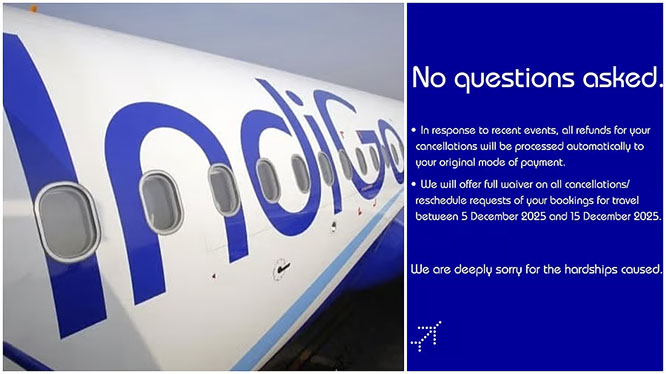
With IndiGo flight disruptions impacting thousands of passengers, the airline on Saturday said that it will offer full waiver on all cancellations/reschedule requests for travel bookings between December 5, 2025 and December 15, 2025.

Earlier in the day, the civil aviation ministry had directed the airline to complete the ticket refund process for the cancelled flights by Sunday evening, as well as ensure baggage separated from the travellers are delivered in the next two days.

In a post on X, titled 'No questions asked', IndiGo wrote, "In response to recent events, all refunds for your cancellations will be processed automatically to your original mode of payment."

"We are deeply sorry for the hardships caused," it further added.

Several passengers, however, complained of not getting full refund as promised by the airline.

Netizens have shared screenchots of getting charged for airline cancellation fee and convenience fee.

"Please tell me why u have did this airline cancellation charges when u say full amount will be refunded (sic)," a user wrote sharing a screenshot of the refund page.

"Well, but you have still debited the convenience charges," wrote another.

Passengers have also raised concerns about the "cancel" option being disabled on the IndiGo app. "First enable the 'Cancel' button on your App & offer full refund on tickets cancelled by customers between the said dates," wrote a user.

A day after the country's largest airline, IndiGo, cancelled more than 1,000 flights and caused disruptions for the fifth day on Saturday, the ministry said that any delay or non-compliance in refund processing will invite immediate regulatory action.

The refund process for all cancelled or disrupted flights must be completed by 8 pm on Sunday, the ministry said in a statement.

"Airlines have also been instructed not to levy any rescheduling charges for passengers whose travel plans were affected by cancellations," it said.

On Saturday, more than 400 flights were cancelled at various airports.

IndiGo has also been instructed to set up dedicated passenger support and refund facilitation cells.

Comments

Add new comment

  • Coastaldigest.com reserves the right to delete or block any comments.
  • Coastaldigset.com is not responsible for its readers’ comments.
  • Comments that are abusive, incendiary or irrelevant are strictly prohibited.
  • Please use a genuine email ID and provide your name to avoid reject.
News Network
December 6,2025

pilot.jpg

New Delhi: IndiGo, India’s largest airline, faced major operational turbulence this week after failing to prepare for new pilot-fatigue regulations issued by the Directorate General of Civil Aviation (DGCA). The stricter rules—designed to improve flight safety—took effect in phases through 2024, with the latest implementation on November 1. IndiGo has acknowledged that inadequate roster planning led to widespread cancellations and delays.

Below are the key DGCA rules that affected IndiGo’s operations:

1. Longer Mandatory Weekly Rest

Weekly rest for pilots has been increased from 36 hours to 48 hours.

The government says the extended break is essential to curb cumulative fatigue. This rule remains in force despite the current crisis.

2. Cap on Night Landings

Pilots can now perform only two night landings per week—a steep reduction from the earlier limit of six.

Night hours, defined as midnight to early morning, are considered the least alert period for pilots.

Given the disruptions, this rule has been temporarily relaxed for IndiGo until February 10.

3. Reduced Maximum Night Flight Duty

Flight duty that stretches into the night is now capped at 10 hours.

This measure has also been kept on hold for IndiGo until February 10 to stabilize operations.

4. Weekly Rest Cannot Be Replaced With Personal Leave

Airlines can no longer count a pilot’s personal leave as part of the mandatory 48-hour rest.

Pilots say this closes a loophole that previously reduced actual rest time.

Currently, all airlines are exempt from this rule to normalise travel.

5. Mandatory Fatigue Monitoring

Airlines must submit quarterly fatigue reports along with corrective actions to DGCA.

This system aims to create a transparent fatigue-tracking framework across the industry.

The DGCA has stressed that these rules were crafted to strengthen flight safety and align India with global fatigue-management standards. The temporary relaxations are expected to remain until February 2025, giving IndiGo time to stabilise its schedules and restore normal air travel.

Comments

Add new comment

  • Coastaldigest.com reserves the right to delete or block any comments.
  • Coastaldigset.com is not responsible for its readers’ comments.
  • Comments that are abusive, incendiary or irrelevant are strictly prohibited.
  • Please use a genuine email ID and provide your name to avoid reject.
