Delhi's Air Quality in 2016 Reduced Life Expectancy by 10 Years: Study

Agencies
November 20, 2018

New Delhi, Nov 20: During the past two decades, Delhi's air quality was the "most deadly" in 2016 as it reduced the life expectancy of a resident by more than 10 years, a new study said Monday, asserting that the national capital was the second among 50 most polluted areas of the country.

India is today the world's second most-polluted country, trailing only Nepal, it said and pointed out that loss of life expectancy was the highest in Asia, exceeding six years in many parts of India and China.

According to air quality life index and accompanying report produced by the Energy Policy Institute at the University of Chicago (EPIC), globally particulate pollution reduces average life expectancy by 1.8 years, making it the greatest global threat to human health.

"By comparison, first-hand cigarette smoke leads to a reduction in global average life expectancy of about 1.6 years," it said.

"The impact of particulate pollution on life expectancy is comparable to that of smoking, twice that of alcohol and drug use, three times that of unsafe water, five times that of HIV/AIDS, and more than 25 times that of conflict and terrorism," it said.

The study pointed out that over the past two decades, the concentration of fine particulates increased by 69 per cent on an average across India, reducing the life expectancy of a typical Indian citizen by 4.3 years compared to 2.2 years in 1998.

It said concentrations of particulate pollution in India's northern states of Bihar, Uttar Pradesh, Haryana, Punjab, and the National Capital Territory of Delhi are "substantially higher" and the impact on life expectancy exceeds six years.

It said pollution is the "single greatest threat" to human health globally, with its effect on life expectancy exceeding that of devastating communicable diseases such as tuberculosis and HIV/AIDS, behavioral killers like cigarette smoking, and even war.

Seventy-five per cent of the global population or 5.5 billion people, live in areas where particulate pollution exceeds the WHO guideline.

"The AQLI reveals that India and China, which make up 36 per cent of the world's population, account for 73 per cent of all years of life lost due to particulate pollution," it said.

The study said particulate pollution is "so severe that it shortens the average Indian's life expectancy by more than four years relative to what it would be if WHO air quality guidelines were met".

Among the 50 most-polluted areas in the country, Delhi was second to Bulandshahr.

In Delhi, the PM 2.5 concentration (particles in the air with a diameter of less than 2.5 micrometres)  was 114 microgram/m3 in 2016 which is 1.6 times more than 70 microgram/m3 in 1998, the study said.

In Bulandshahr, the PM 2.5 concentration was 124 microgram/m3 in 2016, which is 1.6 times more than 70 microgram/m3 in 1998, it said.

Delhi's air pollution reduced the life expectancy by more than 10 years of a typical resident in 2016 in a span of 18 years between 1998-2016, the study said.

"In 1998, Delhi, Uttar Pradesh, Haryana, and Bihar already suffered from particulate concentrations that exceeded WHO safe levels by factors of 3 to 6 and reduced life expectancy of residents there by between 2 and 5 years," the study said.

"Over the ensuing two decades, pollution in these regions increased to as much as 10 times the WHO safe limit in the case of Uttar Pradesh, where air pollution levels now reduce life expectancy by 8.6 years," it said.

The AQLI is based on a pair of peer-reviewed studies that quantify the causal relationship between long-term human exposure to particulate pollution and life expectancy.

The results from these studies are then combined with hyper-localized, global particulate matter measurements, yielding unprecedented insight into the true cost of air pollution in communities around the world.

In 2016, the added life-years from compliance with the WHO guideline would raise the average life expectancy at birth from 69 to 73 years - a larger gain than from eliminating unsafe water and poor sanitation, perhaps the second-greatest environmental health risk in the country, it said.

Some residents of the United States still lose up to a year of life from pollution, it pointed out.

"Around the world today, people are breathing air that represents a serious risk to their health.

"But the way this risk is communicated is very often opaque and confusing, translating air pollution concentrations into colours, like red, brown, orange, and green. What those colours mean for people's wellbeing has always been unclear," said Michael Greenstone, the Milton Friedman Professor in Economics and director of EPIC.

Greenstone also noted, "My colleagues and I developed the AQLI, where the 'L' stands for 'life' to address these shortcomings. It takes particulate air pollution concentrations and converts them into perhaps the most important metric that exists - life expectancy."


Comments

Add new comment

  • Coastaldigest.com reserves the right to delete or block any comments.
  • Coastaldigset.com is not responsible for its readers’ comments.
  • Comments that are abusive, incendiary or irrelevant are strictly prohibited.
  • Please use a genuine email ID and provide your name to avoid reject.
News Network
December 16,2025

bengal.jpg

The deletion of over 58 lakh names from West Bengal’s draft electoral rolls following a Special Intensive Revision (SIR) has sparked widespread concern and is likely to deepen political tensions in the poll-bound state.

According to the Election Commission, the revision exercise has identified 24 lakh voters as deceased, 19 lakh as relocated, 12 lakh as missing, and 1.3 lakh as duplicate entries. The draft list, published after the completion of the first phase of SIR, aims to remove errors and duplication from the electoral rolls.

However, the scale of deletions has raised fears that a large number of eligible voters may have been wrongly excluded. The Election Commission has said that individuals whose names are missing can file objections and seek corrections. The final voter list is scheduled to be published in February next year, after which the Assembly election announcement is expected. Notably, the last Special Intensive Revision in Bengal was conducted in 2002.

The development has intensified the political row over the SIR process. Chief Minister Mamata Banerjee and her Trinamool Congress have strongly opposed the exercise, accusing the Centre and the Election Commission of attempting to disenfranchise lakhs of voters ahead of the elections.

Addressing a rally in Krishnanagar earlier this month, Banerjee urged people to protest if their names were removed from the voter list, alleging intimidation during elections and warning of serious consequences if voting rights were taken away.

The BJP, meanwhile, has defended the revision and accused the Trinamool Congress of politicising the issue to protect what it claims is an illegal voter base. Leader of the Opposition Suvendu Adhikari alleged that the ruling party fears losing power due to the removal of deceased, fake, and illegal voters.

The controversy comes amid earlier allegations by the Trinamool Congress that excessive work pressure during the SIR led to the deaths by suicide of some Booth Level Officers (BLOs), for which the party blamed the Election Commission. With the draft list now out, another round of political confrontation appears imminent.

As objections begin to be filed, the focus will be on whether the correction mechanism is accessible, transparent, and timely—critical factors in ensuring that no eligible voter is denied their democratic right ahead of a crucial election.

Comments

Add new comment

  • Coastaldigest.com reserves the right to delete or block any comments.
  • Coastaldigset.com is not responsible for its readers’ comments.
  • Comments that are abusive, incendiary or irrelevant are strictly prohibited.
  • Please use a genuine email ID and provide your name to avoid reject.
News Network
December 17,2025

melkar1.jpg

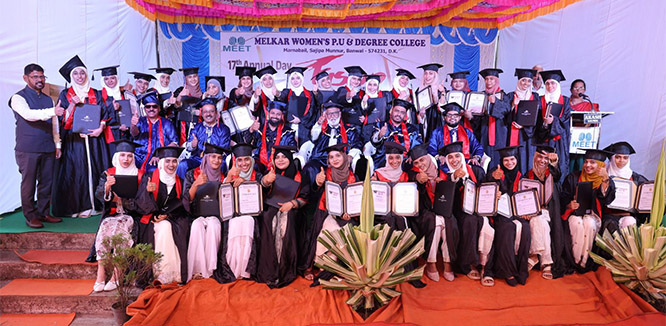
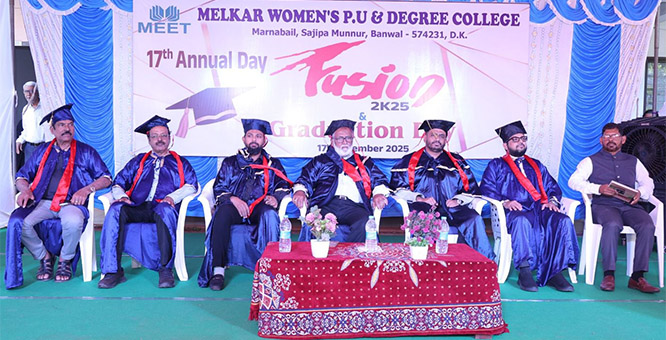
Melkar, Dec 17: The 17th Annual Day and Graduation Ceremony of Melkar Women’s PU and Degree College, themed “Fusion-2K25,” was celebrated with dignity and enthusiasm, marking a significant milestone in the institution’s academic journey. The programme reflected the college’s steadfast commitment to academic excellence, character building, and the holistic development of students.

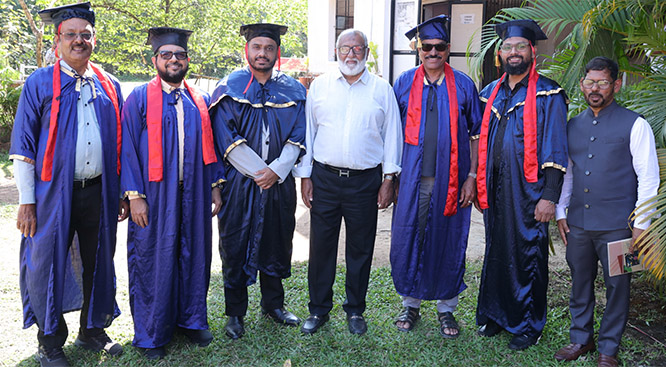
The event was inaugurated by Mr. Asif Mohammed, whose presence greatly enriched the occasion. The celebration was further graced by the chief guests Mr. P. B. Ahmed Mudassir and Mr. Nissar Fakeer Mohammed, along with the distinguished guests of honour Mr. B. A. Nazeer and Mr. Ibrahim Gadiyar. In their inspiring addresses, the guests encouraged the graduating students and appreciated the dedicated efforts of the management, faculty, and students.

The annual report was presented by the Principal, Mr. Abdul Majeed S, highlighting the institution’s academic progress, notable achievements, and extracurricular accomplishments during the academic year.

The presidential address was delivered by the esteemed Chairman of Melkar Women’s PU and Degree College, Dr. Haji S. M. Rasheed, who emphasized the vital role of education in empowering women and shaping responsible citizens. He also stressed the importance of discipline, dedication, and perseverance in achieving success.

Cultural programmes and academic recognitions formed an integral part of the celebration, showcasing the talents and achievements of the students. The graduation ceremony was a proud moment for the outgoing students as they were formally conferred degrees and wished success in their future endeavours.

Ms. Mashmooma Fathima served as the Master of Ceremonies. The welcome address was delivered by Ms. Fathima Nida, and the programme concluded with a vote of thanks proposed by Ms. Ayisha Suhana.

The event successfully achieved its objectives and was highly appreciated by the guests and attendees.

melkar3.jpg

melkar2.jpg

Comments

Add new comment

  • Coastaldigest.com reserves the right to delete or block any comments.
  • Coastaldigset.com is not responsible for its readers’ comments.
  • Comments that are abusive, incendiary or irrelevant are strictly prohibited.
  • Please use a genuine email ID and provide your name to avoid reject.
News Network
December 15,2025

Mangaluru police have arrested a 27-year-old NRI on his return from Saudi Arabia in connection with an Instagram post allegedly containing derogatory and provocative remarks about the Hindu religion, officials said on Monday.

The accused, Abdul Khader Nehad, a resident of Ulaibettu in Mangaluru, was working in Saudi Arabia when the post was uploaded, police said.

A suo motu case was registered at the Bajpe police station on October 11 after an allegedly offensive post circulated from the Instagram account ‘team_sdpi_2025’. Police said the content was flagged for being provocative and derogatory in nature.

During the investigation, technical analysis traced the Instagram post to Nehad, who was residing abroad at the time, a senior police officer said. Based on these findings, a Look Out Circular (LOC) was issued against him.

On December 14, Nehad arrived from Saudi Arabia at Calicut International Airport in Kerala, where he was taken into custody on arrival. Police said further investigation is underway.

Comments

Add new comment

  • Coastaldigest.com reserves the right to delete or block any comments.
  • Coastaldigset.com is not responsible for its readers’ comments.
  • Comments that are abusive, incendiary or irrelevant are strictly prohibited.
  • Please use a genuine email ID and provide your name to avoid reject.