



Diwali: All you need to know about the festival of lights

Charan Kumar
October 18, 2017

Diwali or Deepavali, the festival of lights, sees millions attend firework displays, prayers and celebratory events across the world every autumn. Celebrated by Hindus, Sikhs and Jains for a variety of reasons, the main theme is the triumph of light over darkness and good over evil.

Also known as Deepavali, a Sanskrit word meaning “rows of lighted lamps”, it is one of the most popular Hindu festivals celebrated across South Asia.  But it is also celebrated by Jains and Sikhs.

It sees millions of earthenware oil lamps, called diyas, light up people’s homes, shops, public spaces and places of worship as part of celebrations which marks the start of the Hindu new year.

Diwali is celebrated every year on the 15th day of Kartika. The celebrations last for five days. The night before Diwali, people clean and decorate their homes and offices. On Diwali night, people dress up in new clothes, light diyas and pray to goddess Lakshmi — the goddess of fertility and prosperity.

Why this celebration?

The mythical stories around Diwali vary regionally and within the traditions of Hinduism. It is believed to be the festival after the summer harvest in the month of Kartika. It is also associated with the legend of Yama and Nachiketa on Kartika Amavasya (Diwali night). The Nachiketa story — about right versus wrong, true wealth versus transient wealth, knowledge versus ignorance — is noted in the Katha Upanishad that was composed in 1st millennium BC.

In North India, Diwali is celebrated as the day when Lord Rama returned from his 14-year exile after defeating Ravana. People of Ayodhya light candles and diyas to celebrate his return to the kingdom. According to another legend, Pandavas from the Mahabharata returned to their homeland after 13 years, and the day is celebrated to commemorate their return. In South India, it is celebrated as the day Lord Krishna defeated the demon Narakasura. There are still other theories associated with Deepavali, such as Lord Mahavira attaining enlightenment on this day, the rising of goddess Lakshmi from the sea and the birth of goddess Kali.

Five days

There is significant variation in regional practices and rituals. Prayers are offered to one or more deities, with the most common being Lakshmi — the goddess of wealth and prosperity. Each day of Diwali has its own story and legends.

The first day of Deepavali is known as Dhanteras, which means the coming of wealth and prosperity to the home. People buy utensils, silver or gold coins to signify the welcoming of wealth to their homes.

The second day, today, is known as Naraka Chaturdasi, which is a celebration of Lord Krishna defeating the demon Narakasura.

The third day is Amavasya, at which Goddess Lakshmi is worshipped, as she fulfills all wishes.

The fourth day is known as Bali Pratipada, to mark the day when Lord Vishnu defeated the demon king Bali in his Vamana avatar. A Govardhan puja is also held on this day to mark the defeat of the proud Indra by Lord Krishna.

The fifth day is known as Yama Dvitiya or Bhai Dooj, which is when the lord of death Yama visits his sister, Yami.

Apart from this, another prevalent tradition is the worshipping of cattle by farmers. According to farmers, cows are their primary source of wealth, which is why they treat cattle like god. In some parts of the country, cows are worshipped as goddess Lakshmi.

Diyas, Kartik lamps and Rangoli

There cannot be Deepavali without diyas. A diya is an oil lamp usually made of clay, with a cotton wick dipped in ghee or vegetable oils. It is lit in households celebrating Deepavali to shed light on darkness. Lighting lamps are of utmost significance in the month of Kartika. There is a tradition of offering akash deep (hanging lamps) during this month.

During Deepavali, people clean their homes and decorate the courtyards, walls and entrances with hangings, torans and colorful rangolis to welcome goddess Lakshmi.

Comments

Add new comment

  • Coastaldigest.com reserves the right to delete or block any comments.
  • Coastaldigset.com is not responsible for its readers’ comments.
  • Comments that are abusive, incendiary or irrelevant are strictly prohibited.
  • Please use a genuine email ID and provide your name to avoid reject.
News Network
November 24,2025

Mangaluru, Nov 24: The original departure time of 11.10 pm was a distant memory for scores of Dammam-bound passengers at Mangaluru International Airport last Friday night, as their Air India Express flight was abruptly cancelled at the eleventh hour, sparking hours of frustration and chaos.

The flight, IX 885, initially scheduled to depart at 11.10 pm on November 22, was subject to two back-to-back reschedules—first pushed to 11.45 pm and then significantly postponed to 1.40 am—before the final, crushing announcement of cancellation was made. For the travellers, many of whom are likely expatriate workers with tight schedules, the last-minute change marked the beginning of a distressing ordeal.

"There was no drinking water, no food, and absolutely no proper guidance. We were left stranded like refugees," complained a stranded passenger.

According to multiple passenger accounts, the airline's ground staff failed to provide adequate support or essential amenities following the cancellation. Complaints poured in about the total absence of drinking water, food provisions, and any reliable guidance from the carrier's representatives. Travellers alleged they were left stranded for a considerable period, with no immediate arrangements or clear communication offered regarding accommodation or alternative travel to send them back home.

The incident has highlighted serious concerns over the carrier's contingency planning and customer service protocols during flight disruptions at one of India's key international gateways. The airline is yet to issue a comprehensive statement addressing the alleged lapse in passenger care.
 

Comments

Add new comment

  • Coastaldigest.com reserves the right to delete or block any comments.
  • Coastaldigset.com is not responsible for its readers’ comments.
  • Comments that are abusive, incendiary or irrelevant are strictly prohibited.
  • Please use a genuine email ID and provide your name to avoid reject.
News Network
December 4,2025

Mangaluru: Chaos erupted at Mangaluru International Airport (MIA) after IndiGo flight 6E 5150, bound for Mumbai, was repeatedly delayed and ultimately cancelled, leaving around 100 passengers stranded overnight. The incident highlights the ongoing country-wide operational disruptions affecting the airline, largely due to the implementation of new Flight Duty Time Limitations (FDTL) norms for crew.

The flight was initially scheduled for 9:25 PM on Tuesday but was first postponed to 11:40 PM, then midnight, before being cancelled around 3:00 AM. Passengers expressed frustration over last-minute communication and the lack of clarity, with elderly and ailing travellers particularly affected. “Though the airline arranged food, there was no proper communication, leaving us confused,” said one family member.

An IndiGo executive at MIA cited the FDTL rules, designed to prevent pilot fatigue by limiting crew working hours, as the cause of the cancellation. While alternative arrangements, including hotel stays, were offered, about 100 passengers chose to remain at the airport, creating tension. A replacement flight was arranged but also faced delays due to the same constraints, finally departing for Mumbai around 1:45 PM on Wednesday. Passengers either flew, requested refunds, or postponed their travel.

The Mangaluru delay is part of a broader crisis for IndiGo. The airline has been forced to make “calibrated schedule adjustments”—a euphemism for widespread cancellations and delays—after stricter FDTL norms came into effect on November 1.

While an IndiGo spokesperson acknowledged unavoidable flight disruptions due to technology issues, operational requirements, and the updated crew rostering rules, the DGCA has intervened, summoning senior airline officials to explain the chaos and outline corrective measures.

The ripple effect has been felt across the country, with major hubs like Bengaluru and Mumbai reporting numerous cancellations. The Mangaluru incident underscores the systemic operational strain currently confronting India’s largest carrier, leaving passengers nationwide grappling with uncertainty and delays.

Comments

Add new comment

  • Coastaldigest.com reserves the right to delete or block any comments.
  • Coastaldigset.com is not responsible for its readers’ comments.
  • Comments that are abusive, incendiary or irrelevant are strictly prohibited.
  • Please use a genuine email ID and provide your name to avoid reject.
News Network
December 3,2025

arrival.jpg

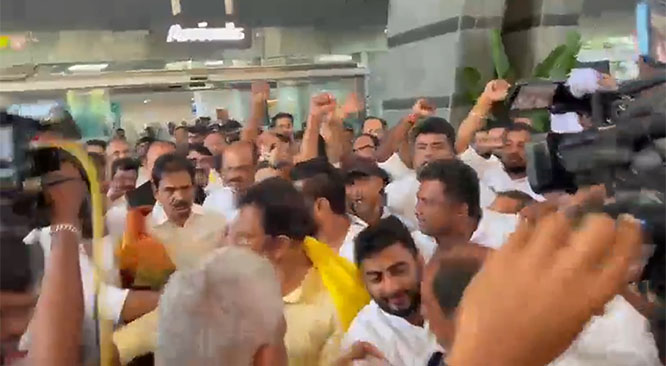
Mangaluru, Dec 3: A group of Congress workers gathered at the Mangaluru International Airport on Wednesday to welcome AICC general secretary K C Venugopal, but the reception quickly turned into a display of support for Deputy Chief Minister D K Shivakumar.

Venugopal arrived in the city to participate in the centenary commemoration of the historic dialogue between Mahatma Gandhi and Narayana Guru. The event, organised by the Sivagiri Mutt, Varkala, in association with the Mangalore University Sri Narayana Guru Study Chair, is being held on the university’s Konaje campus.

KPCC general secretary Mithun Rai and several party workers had assembled at the airport to receive Venugopal. However, the moment he stepped out, workers began raising slogans backing Shivakumar.

The university programme will be inaugurated by Chief Minister Siddaramaiah.

This show of support comes just a day after Siddaramaiah remarked that Shivakumar would lead the government “when the high command decides.” The chief minister made the comment after a breakfast meeting at Shivakumar’s residence—another public display of camaraderie between the two leaders amid ongoing attempts by the party high command to downplay their leadership rivalry.

Comments

Add new comment

  • Coastaldigest.com reserves the right to delete or block any comments.
  • Coastaldigset.com is not responsible for its readers’ comments.
  • Comments that are abusive, incendiary or irrelevant are strictly prohibited.
  • Please use a genuine email ID and provide your name to avoid reject.