



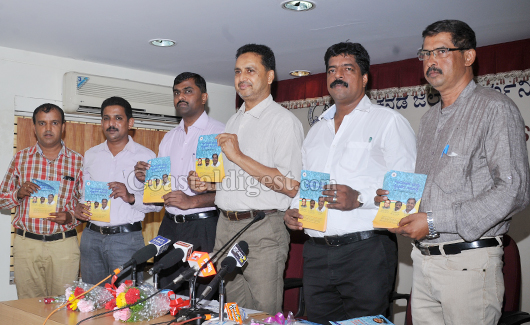
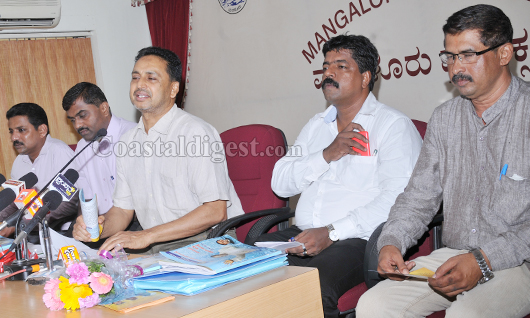
Mangaluru, Apr 2: The Socio Economic and Caste Census (SECC) 2015 will be the first caste-based survey in the State since 1931 and is expected to throw up the reality of the socio-economic status of communities in Karnataka, said Deputy Commissioner A B Ibrahim, who is responsible for overseeing the census in Dakshina Kannada.
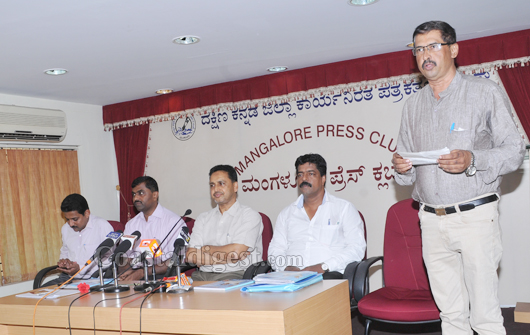
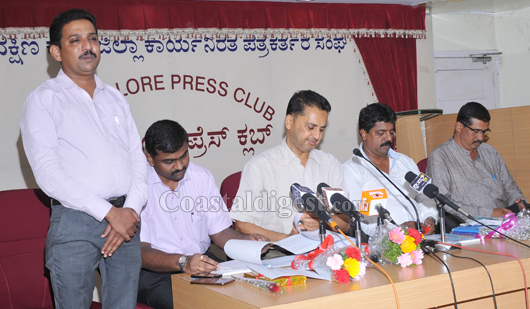
Interacting with media persons at Mangaluru Press Club here on Thursday, he said that the caste-based census would also focus on education and social status of communities in the state, with the aim of planning schemes for welfare of districts, regions and communities in the future. The main intention of the census is to analyse the socio-economic condition of each caste and ascertain the extent of the reach of the welfare programmes for socially and economically backward classes in the state, he said.
Mr Ibrahim said that there were around 4,60,000 homes in Dakshina Kannada and 4,125 enumerators including teachers, ASHA workers and government employees, had been roped in for the data collection process which would be held from April 11 to April 30. There will be 24 designated officers, 47 master trainers and two resource persons in the district, which is divided into 3,930 blocks. A pilot survey was conducted in selected blocks in each taluk in the month of February, he informed.
He said that the state government had allocated a sum of Rs 170 crores for the census work in the state budget, and approximately Rs 6 - 7 crore would be required for the census work in Dakshina Kannada.
District social welfare officer Santhosh Kumar said that each enumerator was expected to collect details of 120 -150 houses in 20 days. There are a total of 1,503 listed castes in the prepared list, including 101 castes under Scheduled Castes, 51 under Scheduled Tribes and 1,351 others, which have to be mentioned during data collection, he said.
Tie-up with BEL
For speedy data collection and interpretation, the state government has roped in Bharat Electronics Ltd (BEL). Enumerators in their 20-day data collection drive will have to collect data from houses in provided data sheets and submit it every day, after which, data entry operators will help feed the data on to the BEL developed software, he said.
The data collected should be accurate, and enumerators will be taken to task if incorrect data is entered during data collection process, he added.
District statistical officer Pradeep D’Souza and others were present on the occasion.


Comments
Add new comment