Eating leaves to survive in Myanmar's 'ethnic cleansing' zone

Agencies
September 27, 2017

Myanmar/Maungdaw, Sept 27: Along the main road that stretches nearly 40 kilometres north from Maungdaw town in Myanmar's violence-riven Rakhine State, all but one of the villages that were once home to tens of thousands of people have been turned into smouldering ash.

Hundreds of cows roam through deserted settlements and charred paddy fields. Hungry dogs eat small goats. The remains of local mosques, markets and schools - once bustling with Rohingya Muslims - are silent.

Despite strict controls on access to northern Rakhine, Reuters independently travelled to parts of the most-affected area in early September, the first detailed look by reporters inside the region where the United Nations says Myanmar's security forces have carried out ethnic cleansing.

Nearly 500 people have been killed and 480,000 Rohingya have fled since Aug. 25, when attacks on 30 police posts and a military base by Muslim militants provoked a fierce army crackdown. The government has rejected allegations of arson, rape and arbitrary killings levelled against its security forces.

"We were scared that the army and the police would shoot us if they found us ... so we ran away from the village," said Suyaid Islam, 32, from Yae Khat Chaung Gwa Son, near the area visited by Reuters north of Maungdaw. He was speaking by phone from a refugee camp in Bangladesh after leaving his village soon after the attacks.

Residents of his village told Reuters it had been burned down by security forces in an earlier operation against Rohingya insurgents late last year. Those that did not flee have been surviving since in makeshift shacks, eating food distributed by aid agencies.

Satellite photos showed that tens of thousands of homes in northern Rakhine have been destroyed in 214 villages, New York-based Human Rights Watch (HRW) said. The U.N. detected 20 sq km (8 sq miles) of destroyed structures.

The government said more than 6,800 houses have been set on fire. It blames the Rohingya villagers and the Arakan Rohingya Salvation Army (ARSA), which staged the Aug. 25 attacks.

"The information we obtained on this side is that terrorists did the burnings," said Zaw Htay, spokesman for national leader Aung San Suu Kyi.

Reuters reporters have made two trips to northern Rakhine, visiting the townships of Maungdaw, Buthidaung and Rathedaung, and driving from Maungdaw through the most affected area along the main road north to the town of Kyein Chaung.

The reporters talked briefly to residents but, because many were scared of being seen speaking to outsiders, most interviews were carried out by phone from outside the army operation area.

Food running low

Little aid has made it to northern Rakhine since the U.N. had to suspend operations because of the fighting and after the government suggested its food was sustaining insurgents. Convoys organised by the Red Cross have twice been stopped and searched by hostile ethnic Rakhines in the state capital Sittwe.

In U Shey Kya, where last October Rohingya residents accused the Myanmar army of raping several women, a teacher who spoke to Reuters from the village by phone said only about 100 families out of 800 households have stayed behind.

Those who remain are playing a cat-and-mouse game with the soldiers, who come to the village in the morning prompting the residents to hide in the forest and return at night.

"We don't even have food to eat for this evening. What can we do?" said the teacher. "We are close to the forest where we have leaves we can eat and find some water to survive." He refused to give his name because he had been warned by the authorities not to talk to reporters.

The man said escaping through bush in monsoon rain with his elderly parents, six children and pregnant wife was not an option.

Zaw Htay said the government has prioritised humanitarian assistance to the area.

"If there are any locations where aid has not reached yet, people should let us know, we will try to reach them as soon as we can," he said.

About 30,000 non-Muslim residents of northern Rakhine have also been displaced.

Before the latest exodus there were around 1.1 million Rohingya Muslims in Myanmar, mostly living in Rakhine, where they are denied citizenship and are regarded as interlopers from Bangladesh by the Buddhist majority.

"Happy they're gone now"

Rohingya who have fled to Bangladesh and human rights organisations say ethnic Rakhine vigilantes have aided the military in driving out the Muslim population.

Kamal Hussein, 22, from Alel Than Kyaw, south of Maungdaw town said his village was destroyed in early September, after which he fled to Bangladesh, where he spoke to Reuters.

Hussein said Rakhine mobs "poured petrol on the houses. Then, they came out and the military fired a grenade launcher at a house to set it alight".

Government spokesman Zaw Htay said some empty buildings in the area had been burned by ethnic Rakhines. "We told the regional government to take action on that," he said.

The damage caused by the fires, Reuters interviews and satellite pictures show, is by far the largest in Maungdaw, where the bulk of insurgent attacks took place. Across the mostly coastal area, stretching more than 100 km (60 miles) through thick bush and monsoon-swollen streams, most villages have been burned.

Maungdaw town itself, until recently ethnically mixed with Rakhine Buddhists, Muslims and some Hindus, is now segregated, with the remaining Rohingya shuttered in their homes. Some 450 houses in Rohingya parts of the town were burned down in the first week after the attacks, HRW said citing satellite photographs.

"Those who stored food, sold it and raised money to flee to Bangladesh," Mohammad Salem, 35, who used to sell cosmetics at the market, told Reuters by phone from the town.

In ethnically-mixed Rathedaung township, 16 out of 21 Rohingya villages have been burned, according to residents and humanitarian workers.

Of the remaining five, two villages in the south are now cut off from food and threatened by hostile Rakhine neighbours.

In many places people have no access to medicines, residents said.

Reuters talked to two Rakhine Buddhist officials who corroborated the scale of the damage.

Tin Tun Soe, a Rakhine administrator in Chein Khar Li, where a security post had come under attack, said the army response was rapid and all the Rohingya had been driven out. Nearly 1,600 houses were burned down a day after the attacks, he said, though he blamed the fires on the insurgents.

"They have so many people. If they are here, we're afraid to live," said Tin Tun Soe. "I am very happy that now all of them are gone."

Comments

Add new comment

  • Coastaldigest.com reserves the right to delete or block any comments.
  • Coastaldigset.com is not responsible for its readers’ comments.
  • Comments that are abusive, incendiary or irrelevant are strictly prohibited.
  • Please use a genuine email ID and provide your name to avoid reject.
News Network
January 23,2026

oscar.jpg

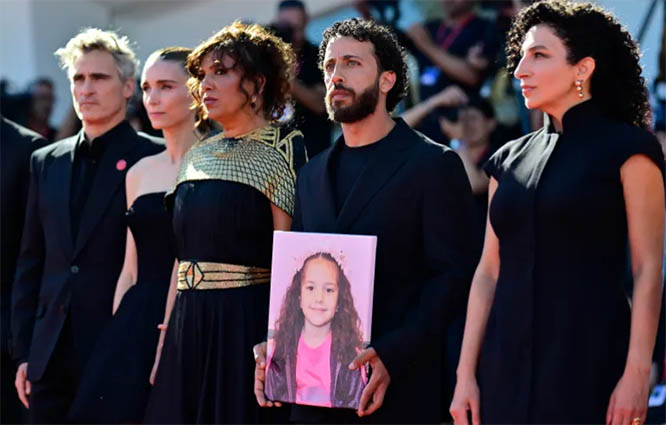
The Voice of Hind Rajab, inspired by the tragic final moments of a young Palestinian girl killed by Israeli fire in Gaza, has been nominated for an Academy Award in the Best International Feature Film category.

Directed by Tunisian filmmaker Kaouther Ben Hania, the film recounts the true story of five-year-old Hind Rajab, who lost her life in January 2024 while fleeing Israeli bombardment with her family.

The film features the real audio of Hind’s desperate call to the Palestinian Red Crescent Society, where she pleaded for help moments before the vehicle she was in was struck by 355 bullets.

The haunting narrative begins with a brief call made from the besieged Tel al-Hawa neighborhood of Gaza, where gunfire and armored vehicles drowned out every sound.

After witnessing the brutal killing of her family, she made a trembling call, her voice reduced to a whisper as she spoke of the massacre and her unbearable loneliness as the sole survivor.

Premiering at the Venice International Film Festival in September 2025, The Voice of Hind Rajab garnered widespread acclaim, receiving a record-setting 23-minute standing ovation and the Silver Lion Grand Jury Prize, the festival’s second-highest honor.

In her acceptance speech, Ben Hania dedicated the film to humanitarian workers and first responders in Gaza, emphasizing that Hind's voice symbolizes countless civilians affected by war.

She aims to give voice to victims often reduced to mere statistics, highlighting the broader suffering of civilians in war zones.

The film’s Oscar nomination underscores its powerful storytelling and ethical approach to depicting real-life tragedy, making it a crucial piece of contemporary cinema.

It serves not only as a narration of individual tragedy but also as an artistic and documentary response to the silence and censorship that often overshadow West Asian struggles and wars.

Using an innovative method she calls docufiction, Ben Hania bridges unvarnished reality and narrative structure, creating a work that is both artistically valuable and socially impactful.

Born in 1977 in Sidi Bouzid—later the epicenter of the Arab revolution—her background profoundly influenced her worldview and artistic approach.

She is a graduate of the Higher School of Audiovisual Arts of Tunis, Pantheon-Sorbonne University, and La Fémis in Paris, where her studies equipped her with the technical and theoretical tools needed to address complex subjects. 

Comments

Add new comment

  • Coastaldigest.com reserves the right to delete or block any comments.
  • Coastaldigset.com is not responsible for its readers’ comments.
  • Comments that are abusive, incendiary or irrelevant are strictly prohibited.
  • Please use a genuine email ID and provide your name to avoid reject.
coastaldigest.com news network
January 19,2026

rizwanzameer.jpg

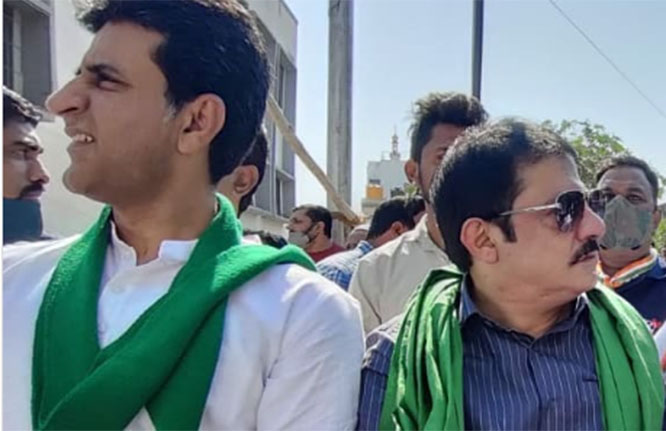
Bengaluru: As the dust settles on the recent legislative session, the corridors of Vidhana Soudha are buzzing with more than just policy talk. A high-stakes game of political musical chairs has begun, exposing a deepening rift within the Congress party’s Muslim leadership as a major Cabinet reshuffle looms.

With the party hierarchy signaling a "50% refresh" to gear up for the 2028 Assembly elections, the race to fill three projected Muslim ministerial berths has transformed from a strategic discussion into an all-out turf war.

The "Star Son" Spark

The internal friction turned public this week following provocative remarks by Zaid Khan, actor and son of Wakf Minister Zameer Ahmed Khan. Zaid’s claim—that his father "helped" secure a ticket for Shivajinagar MLA Rizwan Arshad in 2023—has acted as a lightning rod for resentment.

Rizwan’s camp was quick to fire back, dismissing the comment as a desperate attempt by Zameer to manufacture seniority. "Rizwan’s political pedigree was forged in the NSUI and Youth Congress long before Zameer even stepped into the party," a supporter noted, highlighting Rizwan’s tenure as an AICC secretary and his two-term presidency of the State Youth Congress.

A Tale of Two Loyalists

While both Zameer Ahmed Khan and Rizwan Arshad are staunch allies of Chief Minister Siddaramaiah and represent Bengaluru strongholds, their political DNA could not be more different:

•    Zameer Ahmed Khan: A four-time MLA who crossed over from JD(S) in 2018. Known for his "overzealous" and often polarizing outreach during communal flashpoints—from the DJ Halli riots to the recent Wakf land notice controversy—his style has frequently left the Congress high command in a state of "discomfort."

•    Rizwan Arshad: A homegrown organizational man. Seen as a "quiet performer," Arshad represents the sophisticated, moderate face of the party, preferred by those who find Zameer’s brand of politics too volatile.

The Outsiders Looking In

The bickering isn't limited to a duo. The "Beary" community, represented by leaders like N A Haris and Saleem Ahmed, is demanding its pound of flesh. Saleem Ahmed, the Chief Whip in the Legislative Council, has dropped the veil of diplomacy, openly declaring his ministerial aspirations.

"I was the only working president not included in the Cabinet last time," Saleem noted pointedly, signaling that the "loyalty quota" is no longer enough to keep the peace.

As Chief Minister Siddaramaiah prepares to finalize the list, he faces a delicate balancing act: rewarding the aggressive grassroots mobilization of Zameer’s camp without alienating the organizational stalwarts and minority sub-sects who feel increasingly sidelined by the "Chamarajpet-Shivajinagar" binary.

Comments

Add new comment

  • Coastaldigest.com reserves the right to delete or block any comments.
  • Coastaldigset.com is not responsible for its readers’ comments.
  • Comments that are abusive, incendiary or irrelevant are strictly prohibited.
  • Please use a genuine email ID and provide your name to avoid reject.
News Network
February 1,2026

Bengaluru, Feb 1: For travelers landing at Kempegowda International Airport (KIA), the sleek, wood-paneled curves of Terminal 2 promise a world-class welcome. But the famed “Garden City” charm quickly withers at the curb. As India’s aviation sector swells to record numbers—handling over 43 million passengers in Bengaluru alone this past year—the “last mile” has turned into a marathon of frustration.

The Bengaluru Logjam: Rules vs Reality

While the city awaits the 2027 completion of the Namma Metro Blue Line, the interim has been chaotic. Recent “decongestion” rules at Terminal 1 have pushed app-based cab pickups to distant parking zones, forcing weary passengers into a 20-minute walk with luggage.

“I landed after ten months away and felt like a stranger in my own city,” says Ruchitha Jain, a Koramangala resident. “My driver couldn’t find me, staff couldn’t guide me, and the so-called ‘Premium’ lane is just a fancy tax on convenience.”

•    The Cost of Distance: A 40-km cab ride can now easily cross ₹1,500, driven by demand pricing and airport surcharges.

•    The Bus Gap: While Vayu Vajra remains a lifeline, its ₹300–₹400 fare is often cited as the most expensive airport bus service in the country.

A National Pattern of Disconnect

The struggle is not unique to Karnataka. From Chennai’s coast to Hyderabad’s plateau, India’s airports tell a familiar story: brilliant runways, broken exits.

City:    Primary Issue   |    Recent Development

Bengaluru:    Cab pickup restrictions & distance  |    App-based taxis shifted to far parking zones; long walks and fare spikes reported

Chennai:    Multi-Level Parking (MLCP) hike  |    Passengers report 40-minute walks to reach cab pickup points

Hyderabad:    “Taxi mafia” & touting  |    Over 440 touting cases reported; security presence intensified

Mumbai:    Fare scams  |     Tourists charged ₹18,000 for just 400 metres, triggering police action

In Hyderabad, travelers continue to battle entrenched local groups that intimidate Uber and Ola drivers, pushing passengers toward overpriced private taxis. Chennai flyers, meanwhile, complain that reaching the designated pickup zones now takes longer than short-haul flights from cities like Coimbatore.

The ‘Budget Day’ Hope

As Finance Minister Nirmala Sitharaman presents the Union Budget 2026 today, the aviation sector is watching closely. With the government’s renewed emphasis on multimodal integration, there is cautious hope for funding toward seamless airport-metro-bus hubs.

The vision is clear: a future where planes, trains, and metros speak the same language. Until then, passengers at KIA—and airports across India—will continue to discover that the hardest part of flying isn’t the thousands of kilometres in the air, but the last few on the ground.

Comments

Add new comment

  • Coastaldigest.com reserves the right to delete or block any comments.
  • Coastaldigset.com is not responsible for its readers’ comments.
  • Comments that are abusive, incendiary or irrelevant are strictly prohibited.
  • Please use a genuine email ID and provide your name to avoid reject.