Eating leaves to survive in Myanmar's 'ethnic cleansing' zone

Agencies
September 27, 2017

Myanmar/Maungdaw, Sept 27: Along the main road that stretches nearly 40 kilometres north from Maungdaw town in Myanmar's violence-riven Rakhine State, all but one of the villages that were once home to tens of thousands of people have been turned into smouldering ash.

Hundreds of cows roam through deserted settlements and charred paddy fields. Hungry dogs eat small goats. The remains of local mosques, markets and schools - once bustling with Rohingya Muslims - are silent.

Despite strict controls on access to northern Rakhine, Reuters independently travelled to parts of the most-affected area in early September, the first detailed look by reporters inside the region where the United Nations says Myanmar's security forces have carried out ethnic cleansing.

Nearly 500 people have been killed and 480,000 Rohingya have fled since Aug. 25, when attacks on 30 police posts and a military base by Muslim militants provoked a fierce army crackdown. The government has rejected allegations of arson, rape and arbitrary killings levelled against its security forces.

"We were scared that the army and the police would shoot us if they found us ... so we ran away from the village," said Suyaid Islam, 32, from Yae Khat Chaung Gwa Son, near the area visited by Reuters north of Maungdaw. He was speaking by phone from a refugee camp in Bangladesh after leaving his village soon after the attacks.

Residents of his village told Reuters it had been burned down by security forces in an earlier operation against Rohingya insurgents late last year. Those that did not flee have been surviving since in makeshift shacks, eating food distributed by aid agencies.

Satellite photos showed that tens of thousands of homes in northern Rakhine have been destroyed in 214 villages, New York-based Human Rights Watch (HRW) said. The U.N. detected 20 sq km (8 sq miles) of destroyed structures.

The government said more than 6,800 houses have been set on fire. It blames the Rohingya villagers and the Arakan Rohingya Salvation Army (ARSA), which staged the Aug. 25 attacks.

"The information we obtained on this side is that terrorists did the burnings," said Zaw Htay, spokesman for national leader Aung San Suu Kyi.

Reuters reporters have made two trips to northern Rakhine, visiting the townships of Maungdaw, Buthidaung and Rathedaung, and driving from Maungdaw through the most affected area along the main road north to the town of Kyein Chaung.

The reporters talked briefly to residents but, because many were scared of being seen speaking to outsiders, most interviews were carried out by phone from outside the army operation area.

Food running low

Little aid has made it to northern Rakhine since the U.N. had to suspend operations because of the fighting and after the government suggested its food was sustaining insurgents. Convoys organised by the Red Cross have twice been stopped and searched by hostile ethnic Rakhines in the state capital Sittwe.

In U Shey Kya, where last October Rohingya residents accused the Myanmar army of raping several women, a teacher who spoke to Reuters from the village by phone said only about 100 families out of 800 households have stayed behind.

Those who remain are playing a cat-and-mouse game with the soldiers, who come to the village in the morning prompting the residents to hide in the forest and return at night.

"We don't even have food to eat for this evening. What can we do?" said the teacher. "We are close to the forest where we have leaves we can eat and find some water to survive." He refused to give his name because he had been warned by the authorities not to talk to reporters.

The man said escaping through bush in monsoon rain with his elderly parents, six children and pregnant wife was not an option.

Zaw Htay said the government has prioritised humanitarian assistance to the area.

"If there are any locations where aid has not reached yet, people should let us know, we will try to reach them as soon as we can," he said.

About 30,000 non-Muslim residents of northern Rakhine have also been displaced.

Before the latest exodus there were around 1.1 million Rohingya Muslims in Myanmar, mostly living in Rakhine, where they are denied citizenship and are regarded as interlopers from Bangladesh by the Buddhist majority.

"Happy they're gone now"

Rohingya who have fled to Bangladesh and human rights organisations say ethnic Rakhine vigilantes have aided the military in driving out the Muslim population.

Kamal Hussein, 22, from Alel Than Kyaw, south of Maungdaw town said his village was destroyed in early September, after which he fled to Bangladesh, where he spoke to Reuters.

Hussein said Rakhine mobs "poured petrol on the houses. Then, they came out and the military fired a grenade launcher at a house to set it alight".

Government spokesman Zaw Htay said some empty buildings in the area had been burned by ethnic Rakhines. "We told the regional government to take action on that," he said.

The damage caused by the fires, Reuters interviews and satellite pictures show, is by far the largest in Maungdaw, where the bulk of insurgent attacks took place. Across the mostly coastal area, stretching more than 100 km (60 miles) through thick bush and monsoon-swollen streams, most villages have been burned.

Maungdaw town itself, until recently ethnically mixed with Rakhine Buddhists, Muslims and some Hindus, is now segregated, with the remaining Rohingya shuttered in their homes. Some 450 houses in Rohingya parts of the town were burned down in the first week after the attacks, HRW said citing satellite photographs.

"Those who stored food, sold it and raised money to flee to Bangladesh," Mohammad Salem, 35, who used to sell cosmetics at the market, told Reuters by phone from the town.

In ethnically-mixed Rathedaung township, 16 out of 21 Rohingya villages have been burned, according to residents and humanitarian workers.

Of the remaining five, two villages in the south are now cut off from food and threatened by hostile Rakhine neighbours.

In many places people have no access to medicines, residents said.

Reuters talked to two Rakhine Buddhist officials who corroborated the scale of the damage.

Tin Tun Soe, a Rakhine administrator in Chein Khar Li, where a security post had come under attack, said the army response was rapid and all the Rohingya had been driven out. Nearly 1,600 houses were burned down a day after the attacks, he said, though he blamed the fires on the insurgents.

"They have so many people. If they are here, we're afraid to live," said Tin Tun Soe. "I am very happy that now all of them are gone."

Comments

Add new comment

  • Coastaldigest.com reserves the right to delete or block any comments.
  • Coastaldigset.com is not responsible for its readers’ comments.
  • Comments that are abusive, incendiary or irrelevant are strictly prohibited.
  • Please use a genuine email ID and provide your name to avoid reject.
News Network
November 21,2025

israel.jpg

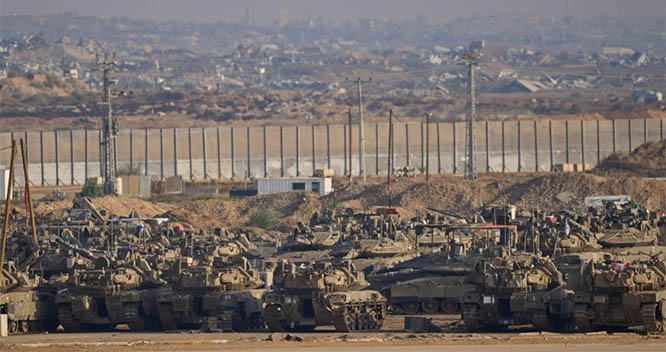
Local authorities say the Israeli military has expanded the so-called “yellow line” truce demarcation in Gaza City and repositioned its forces deeper into the territory in violation of a ceasefire agreement that came into force on October 10, besieging dozens of Palestinian families.

Gaza’s Government Media Office announced in a statement on Thursday that Israeli forces widened the boundary by shifting the markers, and advanced roughly 300 meters (984 feet) into the neighborhoods of Ash-Shaaf, An-Nazzaz and Baghdad Street.

The move pushed further into civilian areas, trapping families who were unable to flee as tanks rolled forward, it added.

“The fate of many of these families remains unknown amidst the shelling that targeted the area,” the office said, adding that the expansion of the yellow line shows a “blatant disregard” for the ceasefire deal.

On Friday, sources said the Israeli military carried out continued air and artillery strikes inside the so-called “yellow line” east of Khan Younis in the southern Gaza Strip.

According to the reports, Israeli warplanes and tanks targeted areas within the zone. One Palestinian was reported killed and several others wounded in the strikes, the sources said.

The fresh aggression came only a day after 25 Palestinians were killed in Israeli airstrikes on Gaza City and Khan Younis on Wednesday.

The media office reported that Israel has consistently violated the truce deal since its implementation last month, with near-daily attacks by air, artillery and direct shootings.

The office said over 400 violations have been documented. These breaches have resulted in the deaths of more than 300 Palestinians and left hundreds injured.

The Government Media Office in Gaza urged the guarantors of the ceasefire — the US, Egypt, Qatar and Turkey — to take swift action to halt the ongoing violations and facilitate the delivery of food, shelter materials, medical aid, and infrastructure equipment.

The so-called “yellow line,” set out in the agreement between Israel and Hamas resistance movement, refers to a non-physical partition where the Israeli military repositioned itself when the truce deal took effect.

It has allowed Israel, which routinely fires at Palestinians who approach the line, to retain control over more than half of the Gaza Strip.

International bodies, including the UN Independent International Commission of Inquiry, the International Association of Genocide Scholars, Amnesty International, Human Rights Watch, B’Tselem, and other rights groups, have concluded that the Israeli war on Gaza amounts to genocide.

In the attacks in Gaza since October 2023, Israel has killed at least 69,546 people and injured 170,833 others, leveling large swaths of the territory and displacing almost all of the population. 

Comments

Add new comment

  • Coastaldigest.com reserves the right to delete or block any comments.
  • Coastaldigset.com is not responsible for its readers’ comments.
  • Comments that are abusive, incendiary or irrelevant are strictly prohibited.
  • Please use a genuine email ID and provide your name to avoid reject.
News Network
November 29,2025

DKSsiddu.jpg

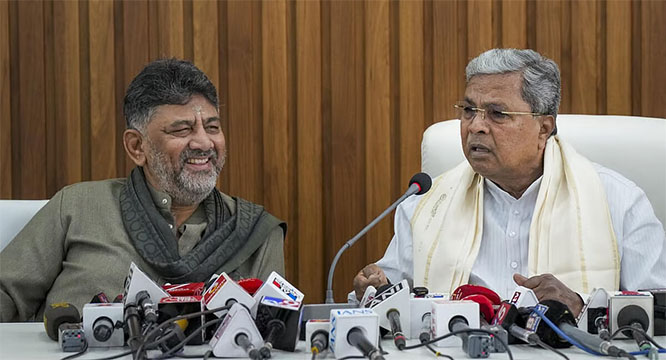
New Delhi: Karnataka chief minister Siddaramaiah and deputy CM DK Shivakumar on Saturday put up a dramatic display of unity at a closely watched joint press briefing, firmly dismissing weeks of speculation about a power-sharing tussle within the Congress. With the high command nudging both leaders to sit together and settle the dust, the meeting became a political spectacle, ending with the duo declaring that there was “no confusion, no differences.”

Calling the reports of a rift “manufactured confusion,” Siddaramaiah said the talks had gone smoothly, even joking about their breakfast. “Breakfast was very good. All three of us enjoyed it,” he said. “We want to end this confusion once and for all. For local elections and for 2028, our mission is clear — Congress must return to power. There is no difference between me and DKS, not now, not before.”

He blamed the media for fuelling rumours and reiterated absolute adherence to the party leadership. “From tomorrow, let there be no confusion. What the high command says, we will follow.”

Siddaramaiah also assured that the Assembly session starting December 8 would run smoothly and vowed that Congress would take on the BJP and JD(S) “together.”

Shivakumar echoed the chief minister word for word, stressing loyalty and discipline. “People have given us a massive mandate. It is our duty to deliver,” he said. “This government was formed under Siddaramaiah’s leadership. We both have complete trust in the high command. If they tell me to wait, I will wait.”

He added that the two leaders had discussed strategy for the 2028 Assembly elections. “Whatever the CM says, I agree. We are loyal soldiers of the party. The party may be facing challenges nationally, but we will keep it strong in Karnataka.”

Shivakumar also said Siddaramaiah would soon visit his home for lunch or dinner — another symbolic gesture meant to underline their unity.

Both leaders later posted on social media describing the breakfast meeting as “productive” and focused on “Karnataka’s priorities.”

The BJP, however, rejected the show of camaraderie as “pure bunkum,” accusing Congress of trying to paper over an internal power struggle. But Siddaramaiah and Shivakumar insisted their united front would continue — and that there was “no confusion” within the state leadership.

Comments

Add new comment

  • Coastaldigest.com reserves the right to delete or block any comments.
  • Coastaldigset.com is not responsible for its readers’ comments.
  • Comments that are abusive, incendiary or irrelevant are strictly prohibited.
  • Please use a genuine email ID and provide your name to avoid reject.
News Network
November 28,2025

ministerPM.jpg

Mangaluru, Nov 28: Karnataka Health Minister and Dakshina Kannada district in-charge minister Dinesh Gundu Rao on Friday handed over Chief Minister Siddaramaiah’s letter to Prime Minister Narendra Modi, highlighting the severe distress faced by farmers due to crashing crop prices.

PM Modi arrived at the Mangaluru International Airport en route to Udupi, where Gundu Rao welcomed him and submitted the letter. The chief minister’s message stressed that farmers are suffering heavy losses because maize and green gram are being bought far below the Minimum Support Price (MSP). The state urged the Centre to immediately begin procurement at MSP.

According to the letter, Karnataka has a bumper harvest this year—over 54.74 lakh metric tons of maize and 1.98 lakh metric tons of green gram—yet farmers are unable to secure fair prices. Against the MSP of ₹2,400/MT for maize and ₹8,768/MT for green gram, market rates have plunged to ₹1,600–₹1,800 and ₹5,400 respectively.

The chief minister has requested the Centre to:

• Direct NAFED, FCI and NCCF to start MSP procurement immediately.
• Ensure ethanol units purchase maize directly from farmers or FPOs.
• Increase Karnataka’s ethanol allocation, citing high production capacity.
• Stop maize imports, which have depressed domestic prices.
• Relax quality norms for green gram, allowing up to 10% discoloration due to rains.

The letter stresses that MSP is crucial for farmer dignity and income stability and calls for swift central intervention to prevent a deepening crisis.

Comments

Add new comment

  • Coastaldigest.com reserves the right to delete or block any comments.
  • Coastaldigset.com is not responsible for its readers’ comments.
  • Comments that are abusive, incendiary or irrelevant are strictly prohibited.
  • Please use a genuine email ID and provide your name to avoid reject.