Eid al-Adha: Celebration sweeps across the Muslim world

Agencies
August 11, 2019

Dubai, Aug 11: Joy and celebrations are sweeping across the UAE and the Muslim world as residents and visitors mark Eid Al Adha, the Festival of Sacrifice, on Sunday.

The annual Islamic festival, which this year begins on August 11 in the UAE, sees Muslims offer a sacrificial animal (typically a goat or sheep) in gratitude for Allah’s blessings.

Eid Al Adha is named after the sacrificial ritual, one of the rites of the Haj in Makkah, Saudi Arabia, where some 2 million Muslims from around the world have gathered for the annual occasion.

Public holiday

In the UAE, Eid Al Adha is being celebrated as a four-day public holiday, from Saturday (August 10) to Tuesday (August 13).

This is the moment when residents visit each other’s homes for Eid greetings and go out for a variety of dining, entertainment and shopping options.

Cattle markets and abattoirs had already prepared days in advance for the Eid rush to buy and sacrifice livestock.

It is common practice to gift some of the sacrificial meat, donate a part to charity and consume the rest at home. The sacrificial rite is preceded by the Eid congregational prayer held in large mosques and open areas shortly after sunrise.

‘Days of Eating’

The days of Eid Al Adha — the 10th, 11th, 12th and 13th of the month of Haj — are also known “as the days of eating and drinking”.

Family lunches as well as meals or tea parties with friends at home are a main part of the festivities. Traditionally, Muslims cook some of the meat from the sacrificial animal for lunch or dinner. Many people also like to head out to restaurants.

Sweets, too, are a major flavour of Eid and shops are brimming with treats. As usual, especially in demand are traditional stuffed dates, Arabic sweets, dry fruits and chocolates, shopkeepers said. A salesman at a sweetshop in Diyafah said customers keep shopping till 4am on the eve of Eid.

Richly-decorated special Eid packaging and trays laden with sweets can be seen at the shops. Some non-Muslims are also buying sweets as gifts for Muslim colleagues and friends.

Children are in for a double treat as elders present them cash gifts called ‘Eidiya’ or ‘Eidee’.

Events and attractions
The UAE, like other Muslim countries, has organised a range of Eid events and activities.

Dubai Festivals and Retail Establishment (DFRE) is rolling out its ‘Eid in Dubai — Al Adha’ calendar of events with a focus on family fun.

There will be stage performances and roaming shows at malls, including Ibn Battuta Mall, Mercato Mall, and City Centre Mirdif, among others.

A complete line up of things to do for Eid is available on www.eidindubai.ae and on @dssoscial accounts of DFRE.

There will be fireworks at Dubai Festival City Mall on Sunday and Monday, at 8pm and 10pm.

Also, from Sunday to Tuesday, IMG Worlds of Adventure will be hosting shows between 11am and 11pm. Meanwhile, Modhesh World, a free-to-enter entertainment park at Dubai World Trade Centre, will continue to provide games, rides and entertainment throughout the Eid break and beyond.

Play areas and activations will also be offered at Children’s City, at Creek Park Gate 1, on Monday and Tuesday from 11am to 1pm, and then 4pm to 6pm.

Despite the hot weather, some families will be heading to public parks, beaches and tourist spots for an Eid getaway; while others have planned staycations at UAE resorts for the long weekend.

Online shopping is in
Shopping for new clothes and gifts is also a main aspect of Eid and this year many residents logged in for online deals instead of heading to the mall.

“We start shopping for Eid about 10 days ahead, beginning with the gifts and the new outfits to the groceries,” Alexandre LeChef, a French-Syrian public relations director and father-of-two, told Gulf News.

“I don’t want to miss out on the latest toys and must-haves, so this is what I usually pick up first, including video games, consoles and toys. We’ve also managed to find our Eid outfits, but need to get matching shoes that will please my two daughters.”

LeChef said he likes to finish his shopping early, including picking up ingredients for the traditional sweets and pastries.

Like Le Chef, Ansar Babu, a 39-year-old marketing executive from India, said he prefers to shop with his wife.

“We have families on both sides living here, and Eid is very a family affair. So we spend quite a bit of our time getting clothes for the family, and also to present as gifts to our extended family. There were quite a few sales on last weekend, and we’ve managed to get everything we wanted,” Babu said.

This Eid, Babu and his family are also focusing on renovating their house, and they so ended up making a few household purchases.

Sara Mousa, a 25-year-old Canadian-Egyptian media executive, said she loves to dress to the nines on Eid.

“I love wearing new clothes and accessorising, but had put off my purchases till the last minute. Everything seemed a tad expensive despite the sales. If I don’t find what I’m looking for, online shopping is always an option,” she said.

LeChef agreed, saying he had found a number of bargains online.

“I was able to find a few things that I couldn’t find in stores, and they were delivered the very next day too,” he added.

To ensure the safety and security of residents in the Eid rush, police departments nationwide are deploying extra units and operating special 24-hour patrols. Public transport services have also been extended to meet high passenger demand during the festive season. Meanwhile, public parking has been made free for the Eid holidays.

What is Eid Al Adha?

The Muslim festival marks the completion of rite of sacrifice during the annual Haj pilgrimage to the holy city of Makkah, Saudi Arabia. Devotees globally also sacrifice an animal, usually a sheep or goat, to show gratitude for the blessings of Islam.

Muslims believe Allah accepted a ram as a sacrifice from Prophet Ebrahim (PBUH) after he had tested him with the order to sacrifice his son Prophet Ishmael (PBUH). When he obeyed, his son was replaced by a ram.

Eid routine

The first day of Eid Al Adha starts with group Eid prayers held in larges mosques and dedicated open spaces in each emirate shortly after sunrise. Many worshippers proceed to purchase a goat or sheep (or a camel or cow, in some cases) from the livestock market so they can offer the Eid sacrifice at abattoirs.

It is recommended to gift some of the sacrificial meat, donate a part in charity and consume the rest at home. Eid dishes are a main part of festivities, as the Eid days are known as “the days of eating and drinking” in Islam.

Muslims put on their best clothes for the occasion. They also gift money to children in a tradition called “Eidiya” or “Eidee”.

Comments

Add new comment

  • Coastaldigest.com reserves the right to delete or block any comments.
  • Coastaldigset.com is not responsible for its readers’ comments.
  • Comments that are abusive, incendiary or irrelevant are strictly prohibited.
  • Please use a genuine email ID and provide your name to avoid reject.
News Network
February 1,2026

Bengaluru, Feb 1: For travelers landing at Kempegowda International Airport (KIA), the sleek, wood-paneled curves of Terminal 2 promise a world-class welcome. But the famed “Garden City” charm quickly withers at the curb. As India’s aviation sector swells to record numbers—handling over 43 million passengers in Bengaluru alone this past year—the “last mile” has turned into a marathon of frustration.

The Bengaluru Logjam: Rules vs Reality

While the city awaits the 2027 completion of the Namma Metro Blue Line, the interim has been chaotic. Recent “decongestion” rules at Terminal 1 have pushed app-based cab pickups to distant parking zones, forcing weary passengers into a 20-minute walk with luggage.

“I landed after ten months away and felt like a stranger in my own city,” says Ruchitha Jain, a Koramangala resident. “My driver couldn’t find me, staff couldn’t guide me, and the so-called ‘Premium’ lane is just a fancy tax on convenience.”

•    The Cost of Distance: A 40-km cab ride can now easily cross ₹1,500, driven by demand pricing and airport surcharges.

•    The Bus Gap: While Vayu Vajra remains a lifeline, its ₹300–₹400 fare is often cited as the most expensive airport bus service in the country.

A National Pattern of Disconnect

The struggle is not unique to Karnataka. From Chennai’s coast to Hyderabad’s plateau, India’s airports tell a familiar story: brilliant runways, broken exits.

City:    Primary Issue   |    Recent Development

Bengaluru:    Cab pickup restrictions & distance  |    App-based taxis shifted to far parking zones; long walks and fare spikes reported

Chennai:    Multi-Level Parking (MLCP) hike  |    Passengers report 40-minute walks to reach cab pickup points

Hyderabad:    “Taxi mafia” & touting  |    Over 440 touting cases reported; security presence intensified

Mumbai:    Fare scams  |     Tourists charged ₹18,000 for just 400 metres, triggering police action

In Hyderabad, travelers continue to battle entrenched local groups that intimidate Uber and Ola drivers, pushing passengers toward overpriced private taxis. Chennai flyers, meanwhile, complain that reaching the designated pickup zones now takes longer than short-haul flights from cities like Coimbatore.

The ‘Budget Day’ Hope

As Finance Minister Nirmala Sitharaman presents the Union Budget 2026 today, the aviation sector is watching closely. With the government’s renewed emphasis on multimodal integration, there is cautious hope for funding toward seamless airport-metro-bus hubs.

The vision is clear: a future where planes, trains, and metros speak the same language. Until then, passengers at KIA—and airports across India—will continue to discover that the hardest part of flying isn’t the thousands of kilometres in the air, but the last few on the ground.

Comments

Add new comment

  • Coastaldigest.com reserves the right to delete or block any comments.
  • Coastaldigset.com is not responsible for its readers’ comments.
  • Comments that are abusive, incendiary or irrelevant are strictly prohibited.
  • Please use a genuine email ID and provide your name to avoid reject.
News Network
January 23,2026

Karnataka Governor Thaawarchand Gehlot read only three lines from the 122-paragraph address prepared by the Congress-led state government while addressing the joint session of the Legislature on Thursday, effectively bypassing large sections critical of the BJP-led Union government.

The omitted portions of the customary Governor’s address outlined what the state government described as a “suppressive situation in economic and policy matters” under India’s federal framework. The speech also sharply criticised the Centre’s move to replace the Mahatma Gandhi National Rural Employment Guarantee Act (MGNREGA) with the Viksit Bharat–Guarantee for Rozgar and Ajeevika Mission (Gramin) Act, commonly referred to as the VB-GRAM (G) Act.

Governor Gehlot had earlier conveyed his objection to several paragraphs that were explicitly critical of the Union government. On Thursday, he confined himself to the opening lines — “I extend a warm welcome to all of you to the joint session of the State legislature. I am extremely pleased to address this august House” — before jumping directly to the concluding sentence of the final paragraph.

He ended the address by reading the last line of paragraph 122: “Overall, my government is firmly committed to doubling the pace of the State’s economic, social and physical development. Jai Hind — Jai Karnataka.”

According to the prepared speech, the Karnataka government demanded the scrapping of the VB-GRAM (G) Act, describing it as “contractor-centric” and detrimental to rural livelihoods, and called for the full restoration of MGNREGA. The state government argued that the new law undermines decentralisation, weakens labour protections, and centralises decision-making in violation of constitutional norms.

Key points from the unread sections of the speech:

•    Karnataka facing a “suppressive” economic and policy environment within the federal system

•    Repeal of MGNREGA described as a blow to rural livelihoods

•    VB-GRAM (G) Act accused of protecting corporate and contractor interests

•    New law alleged to weaken decentralised governance

•    Decision-making said to be imposed by the Centre without consulting states

•    Rights of Adivasis, women, backward classes and agrarian communities curtailed

•    Labourers allegedly placed under contractor control

•    States facing mounting fiscal stress due to central policies

•    VB-GRAM (G) Act accused of enabling large-scale corruption

Comments

Add new comment

  • Coastaldigest.com reserves the right to delete or block any comments.
  • Coastaldigset.com is not responsible for its readers’ comments.
  • Comments that are abusive, incendiary or irrelevant are strictly prohibited.
  • Please use a genuine email ID and provide your name to avoid reject.
News Network
January 20,2026

KCFabudhabi.jpg

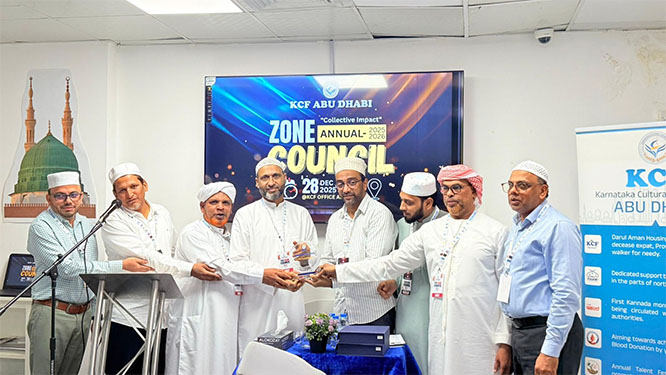
KCF, a global socio-cultural organisation of Karnataka expatriates, is actively involved in education, humanitarian initiatives and community well-being across several countries. The awardees were selected following a structured evaluation of nominations by the Annual Council Program Committee, based on the depth, consistency and long-term impact of their social service.

One of the award recipients, Abdul Razak Haji, a prominent UAE-based entrepreneur from the Qamcon Group of Companies, was honoured for his significant contributions to society. Through both his professional journey and personal initiatives, he has supported numerous employees and families, while also extending assistance in education, housing for the underprivileged and various charitable causes, largely carried out quietly over the years. His award was presented earlier during the Annual Council Program held at the KCF Abu Dhabi office.

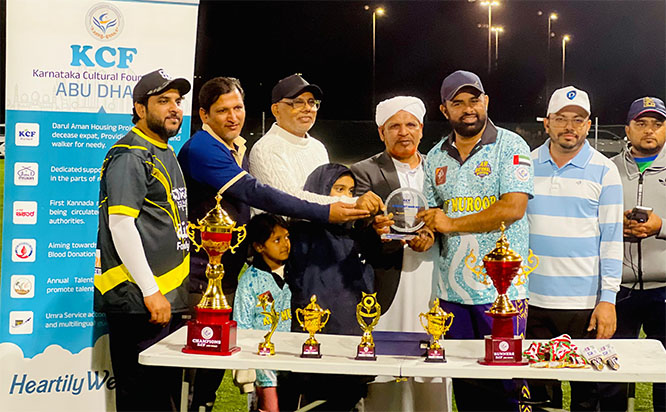
The second award was conferred on Latheef Kakkinje, a young social worker based in Abu Dhabi, in recognition of his active involvement in community engagement programmes, sports initiatives, talent festivals and family-oriented social activities. His consistent volunteering efforts and commitment to humanitarian causes were highly appreciated by the selection committee.

The award presentation ceremony for Latheef Kakkinje was held at the Zayed Cricket Stadium (Astro Turf Ground) in the presence of Kedumbady Ibrahim Saqafi, President of KCF UAE; Ibrahim, General Secretary; Kabeer Bayambady, President of KCF Abu Dhabi; Ummer Ishwaramangila, General Secretary; along with other members of the KCF Abu Dhabi cabinet.

Congratulating both awardees, KCF leaders reiterated the organisation’s commitment to recognising individuals who selflessly work for social upliftment and community service.

KCFabudhabi1.jpg

Comments

Add new comment

  • Coastaldigest.com reserves the right to delete or block any comments.
  • Coastaldigset.com is not responsible for its readers’ comments.
  • Comments that are abusive, incendiary or irrelevant are strictly prohibited.
  • Please use a genuine email ID and provide your name to avoid reject.