



Enough currency with RBI to last beyond Dec 30: Jaitley

December 20, 2016

New Delhi, Dec 20: The Reserve Bank was fully prepared to deal with currency shortages post demonetisation and has enough currency in its chests to last "far beyond" December 30, Finance Minister Arun Jaitley said today. "There was full preparedness. There was not a single day when RBI had not released adequate currency to banks. There was a certain level of currency that was to be released and there was full preparedness for it," Jaitley told reporters.
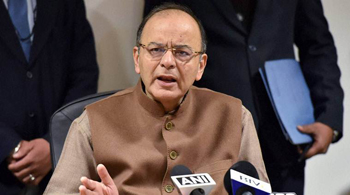
jaitly
He said RBI has maintained the stock of currency through advance as well as current printing level. "Today also RBI has more than adequate stock not only to last them for December 30 but to last them far beyond that," he said. Asked about the currency in circulation, Jaitley said the figures will be made public only after accurate calculation after December 30, the last date for depositing the scrapped currency in banks.

"The currency which got printed might have gone to Post Offices and from there to banks and again back to currency chest so there could be double counting and scope for inaccuracies. So we do not want to guess the figures (of currency in circulation)," he said. Economic Affairs Secretary Shaktikanta Das said the currency situation has considerably improved since November 8 and there is adequate currency with RBI to meet the demand till December 30.

While announcing the demonetising the Rs 500 and Rs 1,000 notes on November 8, Prime Minister Narendra Modi had asked holders of such notes to deposit them in banks. He said notes of Rs 500 and Rs 2,000 with new design and more security features were being introduced in the market. The scrapped currency made up for 86 per cent or over Rs 15.45 lakh crore of notes in circulation as on November 8.

Before the announcement of demonetisation, the government had already arranged for the printing of 200 crore Rs 2,000 notes, or roughly about Rs 4 lakh crore in value. They were the first set of notes to be circulated. Thereafter, a new Rs 500 note was introduced and now all the four printing presses of RBI at Dewas in Madhya Pradesh, Nashik in Maharashtra, Salboni in West Bengal and Mysuru in Karnataka are working overtime to replenish the exhausted currencies.

Post demonetisation use of all parallel and alternative modes of digital payments, credit/debit cards have increased significantly, Jaitley said. "There is significant jump in digital transactions, by over 300 per cent in some cases. Where base was low, it is 1,500 per cent".

Replying to queries on curbs on deposit of old currency notes by RBI, he said people should go and deposit the now- defunct notes in one go as repeat deposits raise doubts. He added: "Today there are no exemptions... Now there is no further scope of earning old currency so those who have got old currency must go and deposit in one go.

"Therefore if somebody goes everyday and deposit old currency it raises suspicion. How is he getting everyday? As long as exemptions existed there was scope for getting old currency, but once the exemptions have been lifted if you have old currency go and deposit in one go." With nearly Rs 13 lakh crore, out of the Rs 15.4 lakh crore worth of Rs 500 and Rs 1,000 notes junked, already deposited in banks, RBI yesterday changed rules to mandate that individuals can deposit over Rs 5,000 in old currency bills only once until December 30 and that too after explaining why it had not been done so far.

Clarifying the rules, Jaitley later in night had said no questions will be asked if any amount of junked currency is deposited in one go but repeated deposits may raise queries. "If they go and deposit with bank any amount of currency no questions are going to be asked to them and therefore the 5000 rupee limit does not apply to them if they go and deposit it once.

"But if they are going to go everyday and deposit some currency, same person, that gives rise to suspicion that where is he acquiring this currency from. In that event a person may have something to worry about. Therefore everyone is advised whatever old currency you have please go and deposit it now," Jaitley had said.


Comments

Add new comment

  • Coastaldigest.com reserves the right to delete or block any comments.
  • Coastaldigset.com is not responsible for its readers’ comments.
  • Comments that are abusive, incendiary or irrelevant are strictly prohibited.
  • Please use a genuine email ID and provide your name to avoid reject.
News Network
December 6,2025

pilot.jpg

New Delhi: IndiGo, India’s largest airline, faced major operational turbulence this week after failing to prepare for new pilot-fatigue regulations issued by the Directorate General of Civil Aviation (DGCA). The stricter rules—designed to improve flight safety—took effect in phases through 2024, with the latest implementation on November 1. IndiGo has acknowledged that inadequate roster planning led to widespread cancellations and delays.

Below are the key DGCA rules that affected IndiGo’s operations:

1. Longer Mandatory Weekly Rest

Weekly rest for pilots has been increased from 36 hours to 48 hours.

The government says the extended break is essential to curb cumulative fatigue. This rule remains in force despite the current crisis.

2. Cap on Night Landings

Pilots can now perform only two night landings per week—a steep reduction from the earlier limit of six.

Night hours, defined as midnight to early morning, are considered the least alert period for pilots.

Given the disruptions, this rule has been temporarily relaxed for IndiGo until February 10.

3. Reduced Maximum Night Flight Duty

Flight duty that stretches into the night is now capped at 10 hours.

This measure has also been kept on hold for IndiGo until February 10 to stabilize operations.

4. Weekly Rest Cannot Be Replaced With Personal Leave

Airlines can no longer count a pilot’s personal leave as part of the mandatory 48-hour rest.

Pilots say this closes a loophole that previously reduced actual rest time.

Currently, all airlines are exempt from this rule to normalise travel.

5. Mandatory Fatigue Monitoring

Airlines must submit quarterly fatigue reports along with corrective actions to DGCA.

This system aims to create a transparent fatigue-tracking framework across the industry.

The DGCA has stressed that these rules were crafted to strengthen flight safety and align India with global fatigue-management standards. The temporary relaxations are expected to remain until February 2025, giving IndiGo time to stabilise its schedules and restore normal air travel.

Comments

Add new comment

  • Coastaldigest.com reserves the right to delete or block any comments.
  • Coastaldigset.com is not responsible for its readers’ comments.
  • Comments that are abusive, incendiary or irrelevant are strictly prohibited.
  • Please use a genuine email ID and provide your name to avoid reject.
News Network
December 16,2025

jordan.jpg

Prime Minister Narendra Modi on Monday held talks with Jordan’s King Abdullah II in Amman, during which the two leaders discussed ways to further strengthen bilateral relations, with the Prime Minister outlining an eight-point vision covering key areas of cooperation.

Describing the meeting as “productive”, PM Modi said he shared a roadmap focused on trade and economy, fertilisers and agriculture, information technology, healthcare, infrastructure, critical and strategic minerals, civil nuclear cooperation, and people-to-people ties.

In a post on social media platform X, the Prime Minister praised King Abdullah II’s personal commitment to advancing India–Jordan relations, particularly as both countries mark the 75th anniversary of the establishment of diplomatic ties this year.

“Held productive discussions with His Majesty King Abdullah II in Amman. His personal commitment towards vibrant India-Jordan relations is noteworthy. This year, we are celebrating the 75th anniversary of our bilateral diplomatic relations,” PM Modi said.

The meeting took place at the Al Husseiniya Palace, where the two leaders also exchanged views on regional and global issues of mutual interest. According to the Ministry of External Affairs (MEA), both sides agreed to further deepen cooperation in areas including trade and investment, defence and security, counter-terrorism and de-radicalisation, fertilisers and agriculture, infrastructure, renewable energy, tourism, and heritage.

The MEA said both leaders reaffirmed their united stand against terrorism.

PM Modi arrived in Amman earlier on Monday and was received by Jordanian Prime Minister Jafar Hassan, who accorded him a formal welcome. Following the talks, King Abdullah II hosted a banquet dinner in honour of the Prime Minister, reflecting the warmth of bilateral ties.

Jordan is the first leg of PM Modi’s three-nation tour. From Amman, the Prime Minister will travel to Ethiopia at the invitation of Prime Minister Abiy Ahmed Ali, marking his first official visit to the African nation. The tour will conclude with a visit to Oman.

Comments

Add new comment

  • Coastaldigest.com reserves the right to delete or block any comments.
  • Coastaldigset.com is not responsible for its readers’ comments.
  • Comments that are abusive, incendiary or irrelevant are strictly prohibited.
  • Please use a genuine email ID and provide your name to avoid reject.
