



Govt mulls 2-kg LPG bottles; starts e-booking for connections

August 30, 2015

New Delhi, Aug 30: After providing LPG in easy-to- carry 5-kg cylinders, the government is planning to launch 2-kg bottles at local kirana stores even as it introduced online booking of new connections for subsidised cooking fuel.
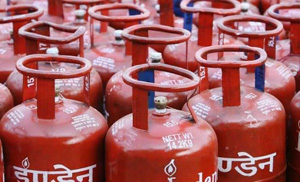
LPG

LPG is traditionally available in 14.2-kg cylinders, which are not very convenient to carry and its cost at Rs 418 is considered high for poor and rural population.

A 5-kg cylinder priced at Rs 155 was introduced in October 2013.

"We are now planning to introduce a 2-kg cylinder that can be easily carried... this will be particularly beneficial for the rural people and poor who cannot afford to pay the price of a 14.2-kg or even 5-kg cylinder," Oil Minister Dharmendra Pradhan said here.

To begin with, the penetration of 5-kg cylinder will be increased. New subsidised connections of 5-kg cylinders in rural as well as far flung areas will be issued in first place.

Pradhan was speaking at the launch of online booking of LPG connections.

"Consumers can now book a new connection online. It will be verified within 48 hours and a person from the nearest LPG agency will deliver a new connection at the door-step in next 3-4 days," he said.

He said the online booking will end hassles customers face in running to gas agencies for getting a new LPG connection. Already, a refill can be ordered online.

The 2-kg cylinder will cater to the LPG requirements for all sections of society including economically weaker families, students and migrant labourers who do not have proof of address due to acquiring residence on temporary basis. Such people can buy 5 Kg LPG cylinder at market price.

He also said about 25 lakh people have voluntarily given up subsidy on LPG, helping widen the reach the scarce fuel.

"On an average 50,000 people from all works of life are giving subsidy... the target set by Prime Minister Narendra Modi is one crore," he said.

Also, the scheme to pay subsidy directly in bank accounts of customers, called the Direct Benefit Transfer on LPG, has been recognised by the Guinness Book of World Records as the largest cash transfer programme in the world, he said adding it has eliminated "middle-men and black marketers" and ensured the fuel is delivered to right people.

Since the launch of DBTL, now named PAHAL, domestic LPG all over the country is sold at market price. Households get cash subsidy in their bank accounts to make good the difference between old subsidised rate and market price.

Out of 15.65 crore active domestic LPG consumers, 13.8 crore have joined the DBTL and are getting subsidy in their bank accounts.

The scheme was launched in 54 districts on November 15, 2014, and extended to all over the country from January 1, 2015 with a view to cut diversion and subsidised fuel being consumed by unintended segments like restaurants and other commercial establishments.

LPG subsidy payout from Union Budget in 2014-15 was Rs 40,591 crore as against Rs 52,231 crore in 2013-14, a saving of Rs 11,640 crore.

Pradhan said Modi had requested the well-off people who can afford to pay market price, to voluntarily give up their subsidy to help extend its reach to the most needy.

"About 25 lakh people have given up LPG subsidy voluntarily and against these 22 lakh new connections to the needy have already been issued," Pradhan said.

Assuming that each of these consume an average of eight cylinders per annum and at the average subsidy rate of Rs 200 per bottle, the saving amounts to about Rs 320 crore.

Presently, a household is entitled to receive subsidy to buy up to 12 cylinders of 14.2-kg each or 34 cylinders of 5-kg each every year. Cash advance is transfered into the beneficiary account on first enrolment and another instalment is given the moment it is used to buy a LPG refill.


Comments

Add new comment

  • Coastaldigest.com reserves the right to delete or block any comments.
  • Coastaldigset.com is not responsible for its readers’ comments.
  • Comments that are abusive, incendiary or irrelevant are strictly prohibited.
  • Please use a genuine email ID and provide your name to avoid reject.
News Network
December 16,2025

bengal.jpg

The deletion of over 58 lakh names from West Bengal’s draft electoral rolls following a Special Intensive Revision (SIR) has sparked widespread concern and is likely to deepen political tensions in the poll-bound state.

According to the Election Commission, the revision exercise has identified 24 lakh voters as deceased, 19 lakh as relocated, 12 lakh as missing, and 1.3 lakh as duplicate entries. The draft list, published after the completion of the first phase of SIR, aims to remove errors and duplication from the electoral rolls.

However, the scale of deletions has raised fears that a large number of eligible voters may have been wrongly excluded. The Election Commission has said that individuals whose names are missing can file objections and seek corrections. The final voter list is scheduled to be published in February next year, after which the Assembly election announcement is expected. Notably, the last Special Intensive Revision in Bengal was conducted in 2002.

The development has intensified the political row over the SIR process. Chief Minister Mamata Banerjee and her Trinamool Congress have strongly opposed the exercise, accusing the Centre and the Election Commission of attempting to disenfranchise lakhs of voters ahead of the elections.

Addressing a rally in Krishnanagar earlier this month, Banerjee urged people to protest if their names were removed from the voter list, alleging intimidation during elections and warning of serious consequences if voting rights were taken away.

The BJP, meanwhile, has defended the revision and accused the Trinamool Congress of politicising the issue to protect what it claims is an illegal voter base. Leader of the Opposition Suvendu Adhikari alleged that the ruling party fears losing power due to the removal of deceased, fake, and illegal voters.

The controversy comes amid earlier allegations by the Trinamool Congress that excessive work pressure during the SIR led to the deaths by suicide of some Booth Level Officers (BLOs), for which the party blamed the Election Commission. With the draft list now out, another round of political confrontation appears imminent.

As objections begin to be filed, the focus will be on whether the correction mechanism is accessible, transparent, and timely—critical factors in ensuring that no eligible voter is denied their democratic right ahead of a crucial election.

Comments

Add new comment

  • Coastaldigest.com reserves the right to delete or block any comments.
  • Coastaldigset.com is not responsible for its readers’ comments.
  • Comments that are abusive, incendiary or irrelevant are strictly prohibited.
  • Please use a genuine email ID and provide your name to avoid reject.
News Network
December 13,2025

New Delhi: School-going children are picking up drug and smoking habits and engaging in consumption of alcohol, with the average age of introduction to such harmful substances found to be around 13 years, suggesting a need for earlier interventions as early as primary school, a multi-city survey by AIIMS-Delhi said.

The findings also showed substance use increased in higher grades, with grade XI/XII students two times more likely to report use of substances when compared with grade VIII students. This emphasised the importance of continued prevention and intervention through middle and high school.

The study led by Dr Anju Dhawan of AIIMS's National Drug Dependence Treatment Centre, published in the National Medical Journal of India this month, looks at adolescent substance use across diverse regions.

The survey included 5,920 students from classes 8, 9, 11 and 12 in urban government, private and rural schools across 10 cities -- Bengaluru, Chandigarh, Delhi, Dibrugarh, Hyderabad, Imphal, Jammu, Lucknow, Mumbai, and Ranchi. The data were collected between May 2018 and June 2019.

The average age of initiation for any substance was 12.9 (2.8) years. It was lowest for inhalants (11.3 years) followed by heroin (12.3 years) and opioid pharmaceuticals (without prescription; 12.5 years).

Overall, 15.1 per cent of participants reported lifetime use, 10.3 per cent reported past year use, and 7.2 per cent reported use in the past month of any substance, the study found.

The most common substances used in the past year, after tobacco (4 per cent) and alcohol (3.8 per cent), were opioids (2.8 per cent), followed by cannabis (2 per cent) and inhalants (1.9 per cent). Use of non-prescribed pharmaceutical opioids was most common among opioid users (90.2 per cent).

On being asked, 'Do you think this substance is easily available for a person of your age' separately for each substance category, nearly half the students (46.3 per cent) endorsed that tobacco products and more than one-third of the students (36.5 per cent) agreed that a person of their age can easily procure alcohol products.

Similarly, for Bhang (21.9 per cent), ganja/charas (16.1 per cent), inhalants (15.2 per cent), sedatives (13.7 per cent), opium and heroin (10 per cent each), the students endorsed that these can be easily procured.

About 95 per cent of the children, irrespective of their grade, agreed with the statement that 'drug use is harmful'.

The rates of substance use (any) among boys were significantly higher than those of girls for substance use (ever), use in the past year and use in the past 30 days. Compared to grade VIII students, grade IX students were more likely, and grade XI/XII students were twice as likely to have used any substance (ever).

The likelihood of past-year use of any substance was also higher for grade IX students and for grade XI/XII students as compared to grade VIII students.

About 40 per cent of students mentioned that they had a family member who used tobacco or alcohol each. The use of cannabis (any product) and opioid (any product) by a family member was reported by 8.2 per cent and 3.9 per cent of students, respectively, while the use of other substances, such as inhalants/sedatives by family was 2-3 per cent, the study found.

A relatively smaller percentage of students reported use of tobacco or alcohol among peers as compared to among family members, while a higher percentage reported inhalants, sedatives, cannabis or opioid use among peers.

Children using substances (past year) compared to non-users reported significantly higher any substance use by their family members and peers.

There were 25.7 per cent students who replied 'yes' to the question 'conflicts/fights often occur in your family'. Most students also replied affirmatively to 'family members are aware of how their time is being spent' and 'damily members are aware of with whom they spend their time'.

Comments

Add new comment

  • Coastaldigest.com reserves the right to delete or block any comments.
  • Coastaldigset.com is not responsible for its readers’ comments.
  • Comments that are abusive, incendiary or irrelevant are strictly prohibited.
  • Please use a genuine email ID and provide your name to avoid reject.