



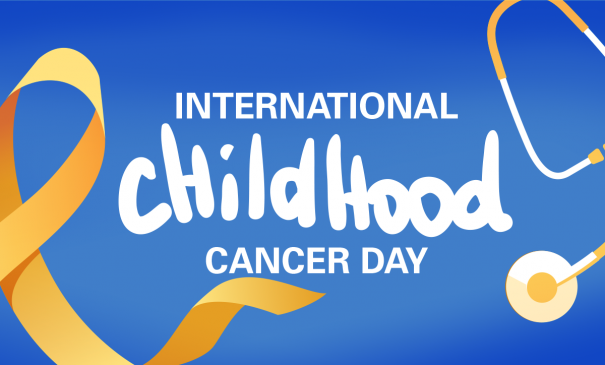
Over 80 per cent of childhood cancers are curable

Dr Parinitha Gutha
February 15, 2021

cancer.jpg

Children’s Cancers are rare compared to those in adults.

Worldwide, around 3 lakh children and adolescents are diagnosed with cancer every year and 80% of them live in developing countries.

As infectious diseases are becoming more controlled in children, cancer is emerging to be the leading cause of death after accidental deaths. 

The good news is that most of the children’s cancers are now curable, but many factors are acting against achieving this result. Because they have their uniqueness, both biologically and psychologically, they must be treated in dedicated Pediatric Cancer Units to achieve results.

Types of Childhood Cancers

More than a dozen kinds of childhood cancers and a hundred different subtypes exist. 

Blood cancers, brain cancers, and neuroblastomas account for more than half of the cancers in children.

The most common childhood cancer is Acute Lymphoblastic Leukemia (ALL). In the 1950s, almost every child with ALL died. But today, about 90% of children with ALL survive.

Causes

The cause is usually unknown and not linked to any environmental or genetic factors apart from a small proportion (5%) which is caused by an inherited genetic condition.

In adults, the mutations reflect the cumulative effects of aging, long-term exposure to cancer-causing agents. However, it has been difficult to identify potential environmental causes of childhood cancer.

The analogy is that most cancers develop as a result of mutations in genes that lead to uncontrolled cell growth.

Treatment

It is important to know that Children's cancers are not always treated like adult cancers.

Children should not only survive, but thrive. To achieve this, Cancer needs to be diagnosed early and treated in dedicated Paediatric Oncology Units where the team is focused and qualified to respond to children's needs. Many individuals are not aware that this expertise exists and that many childhood cancers are handled successfully.

The types of treatment that a child with cancer receives will depend on the type of cancer and how advanced it is. Common treatments include chemotherapy, surgery, radiation, immunotherapy, and bone marrow transplantation.

What is the outlook?

Most childhood cancers are highly curable, provided prompt and effective treatment is accessible. 

In resource-rich countries, three out of four children survive (about 80%).

The Survival gap…

Unfortunately, this is not the case in India. Around 80% of children with cancer live in developing countries and more than half die. There are no cancer registries to give us accurate statistics, children are often not diagnosed, or diagnosed too late, and limited access to information and life-saving treatment. 

However, the situation is becoming more hopeful with the availability of dedicated Paediatric cancer Units providing excellent standards of care.

Children’s Cancers are curable and they are no less important than children fighting malaria, dengue, malnutrition, and other causes of death.

Let us stand up to cancer and strive to save our children!


Dr Parinitha Gutha is a Senior Consultant, Paediatric Oncology/Hematology at American Oncology Institute, Hyderabad

Comments

Add new comment

  • Coastaldigest.com reserves the right to delete or block any comments.
  • Coastaldigset.com is not responsible for its readers’ comments.
  • Comments that are abusive, incendiary or irrelevant are strictly prohibited.
  • Please use a genuine email ID and provide your name to avoid reject.
News Network
November 21,2025

Bengaluru, Nov 21: The Karnataka government is facing pressure to overhaul its employment system after a high-level Cabinet sub-committee recommended the complete phase-out of job outsourcing in government offices, boards, and corporations by March 2028. The move is aimed at tackling a systemic issue that has led to the potential violation of constitutional reservation policies and the exploitation of workers.

The Call for Systemic Change

With over three lakh vacant posts currently being filled through private agencies on an outsource, insource, or daily wage basis, the sub-committee highlighted a significant lapse. "As a result, reservations are not being followed as per the Constitution and state laws. It’s an urgent need to take serious steps to change the system. It has been recommended to completely stop the system of outsourcing by March 2028," the panel stated in a document.

The practice of outsourcing involves private companies hiring workers to perform duties for a government agency. Critics argue this model results in lesser salaries, a lack of social security benefits (otherwise available to permanent government employees), and a failure to adhere to the provisions of Articles 14 and 15 of the Constitution, which guarantee equality before the law and prohibit discrimination.

The 'Bidar Model' as a Stop-Gap Solution

To regulate the current mode of employment and reduce worker exploitation until the 2028 deadline, the government plans to establish workers’ services multi-purpose cooperative societies across all districts, following the successful "Bidar Model."

The Bidar District Services of Labour Multi-purpose Cooperative Society Ltd., which operates under the District Commissioner, is cited as a successful example of providing a measure of social security to outsourced staff. Labour Department officials argue this society ensures workers receive their due wages and statutory facilities like ESI (Employees' State Insurance) and PF (Provident Fund), in exchange for a 1% service fee collected from the employees.

legislative push and Priority Insourcing

The recommendations, led by the sub-committee headed by Law and Parliamentary Affairs Minister H K Patil, are set to be discussed at the next Cabinet meeting. The committee has proposed the introduction of the Karnataka Outsourced Employees (Regulation, Placement and Welfare) Bill 2025.

In a move addressing immediate concerns, Labour Minister Santosh Lad, a member of the sub-committee, has reportedly assured that steps will be taken over the next 2-3 years to insource workers in "life-threatening services" on a priority basis. This includes essential personnel like pourakarmikas (sanitation workers), drivers, electrical staff in the Energy Department, and Health Department staff handling contagious diseases. The transition aims to grant these workers the long-term security and benefits they currently lack under the outsourcing system. 

Comments

Add new comment

  • Coastaldigest.com reserves the right to delete or block any comments.
  • Coastaldigset.com is not responsible for its readers’ comments.
  • Comments that are abusive, incendiary or irrelevant are strictly prohibited.
  • Please use a genuine email ID and provide your name to avoid reject.
P A Hameed Padubidri
November 26,2025

CD.jpg

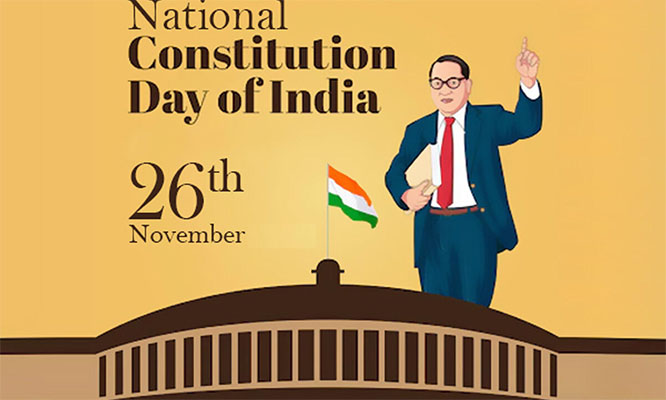
Constitution Day, also known as Samvidhan Divas, is observed every year on November 26 to honor the adoption of the Constitution of India and to recognize the visionary effort that shaped the world’s largest democracy.

Historical Background

It’s on November 26, 1949, the Constituent Assembly of India formally adopted the Constitution.This date is commemorated to acknowledge the completion of nearly three years of drafting, debate, and refinement.

On January 26, 1950, the Constitution came into force, marking India’s transition from a dominion to a sovereign republic.

The date 26 January was chosen to honor the “Purna Swaraj” declaration made in 1930 that marked the relentless efforts & sacrifices of the many. 

Why Constitution Day is Celebrated

* To honor & remember the framers of the Constitution, especially Dr. B. R. Ambedkar, the Chairman of the Drafting Committee, & many others. 

* To remind the citizens of the values, responsibilities, and rights enshrined in the Constitution.

* To promote constitutional values & literacy among students, institutions, and the general public.

* To reaffirm the nation’s commitment to justice, equality, liberty, fraternity and secular values. 

Vision and Significance of the Constitution

It establishes the fundamental political and legal framework for the nation.

Defines the structure, powers and functions of:
    •    The Executive
    •    The Legislature
    •    The Judiciary
    •    Guarantees a comprehensive set of Fundamental Rights, including:

-Equality before law
-Freedom of speech & expression
-Protection of life and personal liberty
-Freedom of religion
-Embeds Directive Principles of State Policy, guiding governance toward social justice and welfare.
-Introduces Fundamental Duties to ensure civic responsibility among citizens.

Key Features Celebrated on Constitution Day

-The Indian constitution is considered one of the longest written constitutions of the world. It’s systematically drafted considering almost all aspects that properly fits to the country. 

-Blend of multiple global constitutional principles while staying rooted in Indian values and realities.

-Framework that balances Federalism, Secularism, Democracy and Rule of Law. This makes everyone-from President to common man-below the law & are equal in the sight of law. 

-Another feature is that it’s based on built-in mechanisms for amendments, ensuring the Constitution grows with changing needs.

Message of the Day

The core ethos of this  Constitution Day is not merely about looking back at history-it’s a reminder of the continuous duty to protect democratic values, respect diversity and uphold the principles that define India as a sovereign, socialist, secular and democratic republic.

Happy Constitution Day to all my compatriots

Comments

Add new comment

  • Coastaldigest.com reserves the right to delete or block any comments.
  • Coastaldigset.com is not responsible for its readers’ comments.
  • Comments that are abusive, incendiary or irrelevant are strictly prohibited.
  • Please use a genuine email ID and provide your name to avoid reject.