



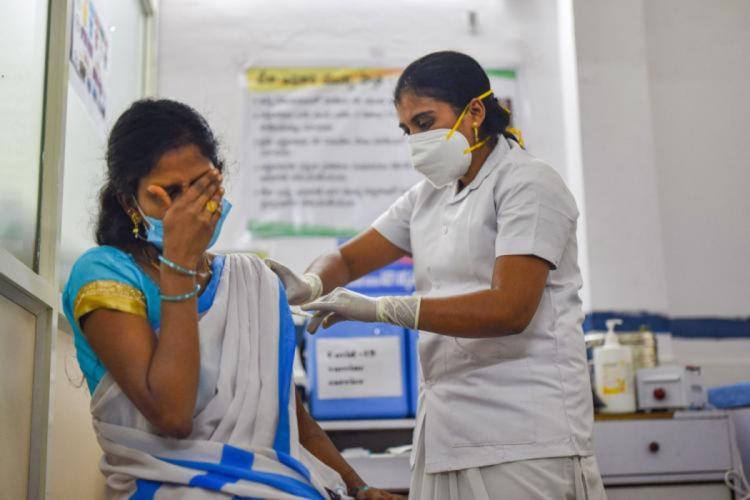
66% health workers had mild post-vaccination symptoms: Survey

Agencies
February 14, 2021

1200.jpg

New Delhi, Feb 14: Side-effects after COVID-19 vaccination — 'reactogenicity' in medical linguistic — was reported in 66% of the healthcare workers, which mostly subside within a day of their onset, said a survey conducted by noted public health experts for the Kochi chapter of the Indian Medical Association (IMA). A total of 5,396 healthcare professionals across India, who had received COVID-19 vaccines were surveyed for the study, which was led by Dr Rajeev Jayadevan, a gastroenterologist and former president of IMA Cochin.

In the survey, the respondents in the survey stated that the most commonly reported symptoms they experienced after immunisation were Myalgia or pain in the muscle (44%), fever (34%), headache (28%), local pain at the injection site (27%), joint pain (12%), nausea (8%) and Diarrhoea (3%). Tiredness (45%) was the most prevailing symptoms. "The occurrence of other symptoms such as sore throat, insomnia, giddiness, rigour, an allergic rash, chills, vomiting, syncope were reported 1% or less cases," study said.

It also noted that the symptoms reported by the respondents were not severe in nature or required hospitalisation. Besides, the survey also pointed out that in 90% of the cases, the symptoms were either milder than expected or met the expectation of the vaccine recipient. Experts have also pointed out that experiencing side-effects is normal in any vaccine.

My study on post vaccination symptoms among 5396 healthcare workers is available on medRxiv.

Symptoms were more among women and among younger people. Onset within 11 hours, duration mostly less than 48 hours.

Thanks Dr Ramesh Shenoy & Ms Anithadevi TS https://t.co/DzIaiAm2IN pic.twitter.com/wXKM6MU0Gr

— Rajeev Jayadevan (@RajeevJayadevan) February 13, 2021
 

Meanwhile, the survey illustrated that side effects among most of the respondents did not last beyond the duration of 24 hours of the onset. "Thirty-seven per cent (1,225) of the respondents revealed that their symptoms did not prolong more than a day while 31% showed that their symptoms lingered for 48 hours, while only 6% claimed that their symptoms stretched beyond the duration of 48 hours," the survey showed.

Speaking to IANS, Dr Rajeev Jayadevan, who is one of the researchers of the survey, said that one of the key takeaways from the survey is that vaccines are safe and there is no need to fear that it will harm ones' body.

"If over 5,000 people who took it (vaccines) and reported no serious problem, then that is a considerable reassurance that the general public can take the vaccine," he said.

Another key finding of the survey was the linear correlation between age and post-vaccination symptoms suggested that the reactogenicity of the vaccine declined with age; means the chance of having post-vaccination symptoms decreased with advancing of age.

The frequency of symptoms was found highest, 81.34%, in respondents aged between 20-29 years followed by 30-39 years (79.57%), 40-49 years (67.94%), 50-59 years (58.23%), 60-69 years (44.76%), 70-79 years (33.73%), and 80-89 years (7.43%).

Jayadevan said that younger people produce a lot of inflammatory cytokines, which elicit reactogenicity (symptoms). This is why they have a vigorous response to the vaccines, whereas it is found lower in the elder population. However, he added that the reactogenicity is not considered a reliable sign of producing antibodies.

"There is a misconception among people and even healthcare professionals who believe that the symptoms are associated with the development of antibodies. Everyone responds differently to the vaccines and elicit varied levels of reactogenicity depending upon age and other factors at play. It cannot be considered as a sign to determine that one's body is producing an immune response to the vaccines," Jayadevan explained.

Dr Ramesh Shenoy, another author of the survey, who is a senior radiologist at a hospital in Kochi, Kerala, said that the conclusions derived from the survey could be that the vaccines are safe while its side-effects are mild in nature and short-lived. "The testimonies of the two-third of the respondents vouch for it," he added.


Comments

Add new comment

  • Coastaldigest.com reserves the right to delete or block any comments.
  • Coastaldigset.com is not responsible for its readers’ comments.
  • Comments that are abusive, incendiary or irrelevant are strictly prohibited.
  • Please use a genuine email ID and provide your name to avoid reject.
News Network
December 13,2025

New Delhi: School-going children are picking up drug and smoking habits and engaging in consumption of alcohol, with the average age of introduction to such harmful substances found to be around 13 years, suggesting a need for earlier interventions as early as primary school, a multi-city survey by AIIMS-Delhi said.

The findings also showed substance use increased in higher grades, with grade XI/XII students two times more likely to report use of substances when compared with grade VIII students. This emphasised the importance of continued prevention and intervention through middle and high school.

The study led by Dr Anju Dhawan of AIIMS's National Drug Dependence Treatment Centre, published in the National Medical Journal of India this month, looks at adolescent substance use across diverse regions.

The survey included 5,920 students from classes 8, 9, 11 and 12 in urban government, private and rural schools across 10 cities -- Bengaluru, Chandigarh, Delhi, Dibrugarh, Hyderabad, Imphal, Jammu, Lucknow, Mumbai, and Ranchi. The data were collected between May 2018 and June 2019.

The average age of initiation for any substance was 12.9 (2.8) years. It was lowest for inhalants (11.3 years) followed by heroin (12.3 years) and opioid pharmaceuticals (without prescription; 12.5 years).

Overall, 15.1 per cent of participants reported lifetime use, 10.3 per cent reported past year use, and 7.2 per cent reported use in the past month of any substance, the study found.

The most common substances used in the past year, after tobacco (4 per cent) and alcohol (3.8 per cent), were opioids (2.8 per cent), followed by cannabis (2 per cent) and inhalants (1.9 per cent). Use of non-prescribed pharmaceutical opioids was most common among opioid users (90.2 per cent).

On being asked, 'Do you think this substance is easily available for a person of your age' separately for each substance category, nearly half the students (46.3 per cent) endorsed that tobacco products and more than one-third of the students (36.5 per cent) agreed that a person of their age can easily procure alcohol products.

Similarly, for Bhang (21.9 per cent), ganja/charas (16.1 per cent), inhalants (15.2 per cent), sedatives (13.7 per cent), opium and heroin (10 per cent each), the students endorsed that these can be easily procured.

About 95 per cent of the children, irrespective of their grade, agreed with the statement that 'drug use is harmful'.

The rates of substance use (any) among boys were significantly higher than those of girls for substance use (ever), use in the past year and use in the past 30 days. Compared to grade VIII students, grade IX students were more likely, and grade XI/XII students were twice as likely to have used any substance (ever).

The likelihood of past-year use of any substance was also higher for grade IX students and for grade XI/XII students as compared to grade VIII students.

About 40 per cent of students mentioned that they had a family member who used tobacco or alcohol each. The use of cannabis (any product) and opioid (any product) by a family member was reported by 8.2 per cent and 3.9 per cent of students, respectively, while the use of other substances, such as inhalants/sedatives by family was 2-3 per cent, the study found.

A relatively smaller percentage of students reported use of tobacco or alcohol among peers as compared to among family members, while a higher percentage reported inhalants, sedatives, cannabis or opioid use among peers.

Children using substances (past year) compared to non-users reported significantly higher any substance use by their family members and peers.

There were 25.7 per cent students who replied 'yes' to the question 'conflicts/fights often occur in your family'. Most students also replied affirmatively to 'family members are aware of how their time is being spent' and 'damily members are aware of with whom they spend their time'.

Comments

Add new comment

  • Coastaldigest.com reserves the right to delete or block any comments.
  • Coastaldigset.com is not responsible for its readers’ comments.
  • Comments that are abusive, incendiary or irrelevant are strictly prohibited.
  • Please use a genuine email ID and provide your name to avoid reject.
News Network
December 4,2025

Udupi: A 40-year-old NRI from Udupi has reportedly lost more than Rs 12.25 lakh in an online investment scam operated through Telegram.

According to a complaint filed at the CEN police station, Leo Jerome Mendonsa, who has been working in Dubai for the past 15 years in computer accessories sales, maintains NRI accounts in Karkala and Nitte.

On November 12, 2025, Mendonsa was added to a Telegram group called Instaflow Earnings by unknown individuals. Users identified as Priya and Dipannita persuaded him to invest in “Revenue Tasks.” Initially, Mendonsa transferred Rs 1,100 multiple times and received the promised returns, encouraging him to continue.

On November 14, another user, Nishmitha Shetty, directed him to register on a website, digitvisionuoce.cc, and invest Rs 4 lakh in various shares. Over the next few days, he made multiple transfers totaling Rs 12,25,000, including Rs 50,000 via Google Pay, believing the scheme was legitimate.

After receiving the money, the alleged handlers stopped responding, and neither the invested amount nor the promised profits were returned.

The CEN police have registered a case under Sections 66(C) and 66(D) of the IT Act and Section 318(4) of the Bharatiya Nyaya Sanhita (BNS), and investigations are ongoing.

Comments

Add new comment

  • Coastaldigest.com reserves the right to delete or block any comments.
  • Coastaldigset.com is not responsible for its readers’ comments.
  • Comments that are abusive, incendiary or irrelevant are strictly prohibited.
  • Please use a genuine email ID and provide your name to avoid reject.
News Network
December 6,2025

pilot.jpg

New Delhi: IndiGo, India’s largest airline, faced major operational turbulence this week after failing to prepare for new pilot-fatigue regulations issued by the Directorate General of Civil Aviation (DGCA). The stricter rules—designed to improve flight safety—took effect in phases through 2024, with the latest implementation on November 1. IndiGo has acknowledged that inadequate roster planning led to widespread cancellations and delays.

Below are the key DGCA rules that affected IndiGo’s operations:

1. Longer Mandatory Weekly Rest

Weekly rest for pilots has been increased from 36 hours to 48 hours.

The government says the extended break is essential to curb cumulative fatigue. This rule remains in force despite the current crisis.

2. Cap on Night Landings

Pilots can now perform only two night landings per week—a steep reduction from the earlier limit of six.

Night hours, defined as midnight to early morning, are considered the least alert period for pilots.

Given the disruptions, this rule has been temporarily relaxed for IndiGo until February 10.

3. Reduced Maximum Night Flight Duty

Flight duty that stretches into the night is now capped at 10 hours.

This measure has also been kept on hold for IndiGo until February 10 to stabilize operations.

4. Weekly Rest Cannot Be Replaced With Personal Leave

Airlines can no longer count a pilot’s personal leave as part of the mandatory 48-hour rest.

Pilots say this closes a loophole that previously reduced actual rest time.

Currently, all airlines are exempt from this rule to normalise travel.

5. Mandatory Fatigue Monitoring

Airlines must submit quarterly fatigue reports along with corrective actions to DGCA.

This system aims to create a transparent fatigue-tracking framework across the industry.

The DGCA has stressed that these rules were crafted to strengthen flight safety and align India with global fatigue-management standards. The temporary relaxations are expected to remain until February 2025, giving IndiGo time to stabilise its schedules and restore normal air travel.

Comments

Add new comment

  • Coastaldigest.com reserves the right to delete or block any comments.
  • Coastaldigset.com is not responsible for its readers’ comments.
  • Comments that are abusive, incendiary or irrelevant are strictly prohibited.
  • Please use a genuine email ID and provide your name to avoid reject.