Here is why vaccinated people still need to wear mask

News Network
December 9, 2020

vaccine.JPG

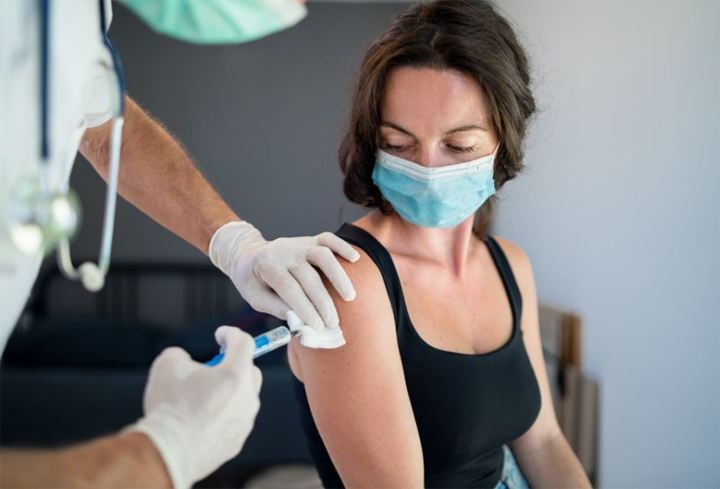
Dec 9: The new Covid-19 vaccines from Pfizer and Moderna seem to be remarkably good at preventing serious illness. But it’s unclear how well they will curb the spread of the coronavirus.

That’s because the Pfizer and Moderna trials tracked only how many vaccinated people became sick with Covid-19. That leaves open the possibility that some vaccinated people get infected without developing symptoms and could then silently transmit the virus — especially if they come in close contact with others or stop wearing masks.

If vaccinated people are silent spreaders of the virus, they may keep it circulating in their communities, putting unvaccinated people at risk.

“A lot of people are thinking that once they get vaccinated, they’re not going to have to wear masks anymore,” said Michal Tal, an immunologist at Stanford University. “It’s really going to be critical for them to know if they have to keep wearing masks because they could still be contagious.”

In most respiratory infections, including the new coronavirus, the nose is the main port of entry. The virus rapidly multiplies there, jolting the immune system to produce a type of antibodies that are specific to the mucosa, the moist tissue lining the nose, mouth, lungs and stomach. If the same person is exposed to the virus a second time, those antibodies, as well as immune cells that remember the virus, rapidly shut down the virus in the nose before it gets a chance to take hold elsewhere in the body.

The coronavirus vaccines, in contrast, are injected deep into the muscles and quickly absorbed into the blood, where they stimulate the immune system to produce antibodies. This appears to be enough protection to keep the vaccinated person from getting ill.

Some of those antibodies will circulate to the nasal mucosa and stand guard there, but it’s not clear how much of the antibody pool can be mobilized or how quickly. If the answer is not much, then viruses could bloom in the nose — and be sneezed or breathed out to infect others.

“It’s a race: It depends whether the virus can replicate faster, or the immune system can control it faster,” said Marion Pepper, an immunologist at the University of Washington in Seattle. “It’s a really important question.”

This is why mucosal vaccines, like nasal spray FluMist or the oral polio vaccine, are better than intramuscular injections at fending off respiratory viruses, experts said.

The next generation of coronavirus vaccines may elicit immunity in the nose and the rest of the respiratory tract, where it’s most needed. Or people could get an intramuscular injection followed by a mucosal boost that produces protective antibodies in the nose and throat.

The coronavirus vaccines have proved to be powerful shields against severe illness, but that is no guarantee of their efficacy in the nose. The lungs — the site of severe symptoms — are much more accessible to the circulating antibodies than the nose or throat, making them easier to safeguard.

“Preventing severe disease is easiest, preventing mild disease is harder, and preventing all infections is the hardest,” said Deepta Bhattacharya, an immunologist at the University of Arizona. “If it’s 95% effective at preventing symptomatic disease, it’s going to be something less than that in preventing all infections, for sure.”

Still, he and other experts said they were optimistic that the vaccines would suppress the virus enough even in the nose and throat to prevent immunized people from spreading it to others.

“My feeling is that once you develop some form of immunity with the vaccine, your ability to get infected will also go down,” said Akiko Iwasaki, an immunologist at Yale University. “Even if you’re infected, the level of virus that you replicate in your nose should be reduced.”

The vaccine trials have not produced data on how many vaccinated people were infected with the virus but did not have symptoms. Some hints are emerging, however.

AstraZeneca, which announced some of its trial results in November, said that volunteers had been testing themselves regularly for the virus and that those results suggested that the vaccine might prevent some infections.

Pfizer will test a subset of its trial participants for antibodies against a viral protein called N. Because the vaccines have nothing to do with this protein, N antibodies would reveal whether the volunteers had become infected with the virus after immunization, said Jerica Pitts, a spokeswoman for the company.

Moderna also plans to analyze blood from all its participants and test for N antibodies.

“It will take several weeks before we can expect to see those results,” said Colleen Hussey, a spokeswoman for Moderna.

The trials have so far analyzed only blood, but testing for antibodies in mucosa would confirm that the antibodies can travel to the nose and mouth. Tal’s team is planning to analyze matched blood and saliva samples from volunteers in the Johnson & Johnson trial to see how the two antibody levels compare.

In the meantime, Bhattacharya said, he was encouraged by recent work showing that people who received an intramuscular flu vaccine had abundant antibodies in the nose. And a study of Covid-19 patients found that antibody levels in saliva and blood were closely matched — suggesting that a strong immune response in the blood would also protect mucosal tissues.

Only people who have virus teeming in their nose and throat would be expected to transmit the virus, and the lack of symptoms in the immunized people who became infected suggests that the vaccine may have kept the virus levels in check.

But some studies have suggested that even people with no symptoms can have high amounts of coronavirus in their nose, noted Dr. Yvonne Maldonado, who represents the American Academy of Pediatrics at meetings of the Federal Advisory Committee on Immunization Practices. The first person confirmed to be reinfected with the coronavirus, a 33-year-old man in Hong Kong, also did not have symptoms but harboured enough virus to infect others.

Vaccinated people who have a high viral load but don’t have symptoms “would actually be, in some ways, even worse spreaders because they may be under a false sense of security,” Maldonado said.

Tal said she was concerned by monkey studies showing that some vaccinated animals did not get ill but still had virus in their nose.

But those monkeys were intentionally exposed to massive amounts of virus and still had less virus than unvaccinated animals, said John Moore, a virus expert at Weill Cornell Medicine in New York.

“The more you reduce viral load, the less likely you are to be transmissible,” Moore said. But “all of these are things where data trumps theory, and we need the data.”

Comments

Add new comment

  • Coastaldigest.com reserves the right to delete or block any comments.
  • Coastaldigset.com is not responsible for its readers’ comments.
  • Comments that are abusive, incendiary or irrelevant are strictly prohibited.
  • Please use a genuine email ID and provide your name to avoid reject.
News Network
November 26,2025

students.jpg

Bengaluru, Nov 26: Karnataka is taking its first concrete steps towards lifting a three-decade-old ban on student elections in colleges and universities. Deputy Chief Minister D.K. Shivakumar announced Wednesday that the state government will form a small committee to study the reintroduction of campus polls, a practice halted in 1989 following incidents of violence.

Speaking at a 'Constitution Day' event organised by the Karnataka Congress, Mr. Shivakumar underscored the move's aim: nurturing new political leadership from the grassroots.

"Recently, (Leader of the Opposition in Lok Sabha) Rahul Gandhi wrote a letter to me and Chief Minister (Siddaramaiah) asking us to think about restarting student elections," Shivakumar stated. "I'm announcing today that we'll form a small committee and seek a report on this."

Student elections were banned in Karnataka in 1989, largely due to concerns over violence and the infiltration of political party affiliates into campus life. The ban effectively extinguished vibrant student bodies and the pipeline of young leaders they often produced.

Mr. Shivakumar, who also serves as the Karnataka Congress president, said that former student leaders will be consulted to "study the pros and cons" of the re-introduction.

Acknowledging the history of the ban, he added, "There were many criminal activities taking place back then. We’ll see how we can conduct (student) elections by regulating such criminal activities."

The Deputy CM reminisced about his own journey, which began on campus. He recalled his political activism at Sri Jagadguru Renukacharya College leading to his first Assembly ticket in 1985 at the age of 23. "That's how student leadership was at the time. Such leadership has gone today. College elections have stopped," he lamented, adding that for many, college elections were "like a big movement" where leaders were forged.

The move, driven by the Congress high command's push to cultivate young talent, will face scrutiny from academics and university authorities who have, in the past, expressed concern that the return of polls could disrupt the peaceful academic environment and turn campuses into political battlegrounds.

Comments

Add new comment

  • Coastaldigest.com reserves the right to delete or block any comments.
  • Coastaldigset.com is not responsible for its readers’ comments.
  • Comments that are abusive, incendiary or irrelevant are strictly prohibited.
  • Please use a genuine email ID and provide your name to avoid reject.
News Network
December 2,2025

Puttur: The long-cherished dream of a government medical college in Puttur has moved a decisive step closer to reality, with the Karnataka State Finance Department granting its official approval for the construction of a new 300-bed hospital.

Puttur MLA Ashok Kumar Rai announced the crucial development to reporters on Monday, confirming that the official communication from the finance department was issued on November 27. This 300-bed facility is intended to be the cornerstone for the establishment of the government medical college, a project announced in the state budget.

Fast-Track Implementation

The MLA outlined an aggressive timeline for the project:

•    A Detailed Project Report (DPR) for the hospital is expected to be ready within 45 days.

•    The tender process for the construction will be completed within two months.

Following the completion of the tender process, Chief Minister Siddaramaiah is scheduled to lay the foundation stone for the project.

"Setting up a medical college in Puttur is a historical decision by the Congress government in Karnataka," Rai stated. The project has an estimated budget allocation of Rs 1,000 crore for the medical college.

Focus on Medical Education Department

The MLA highlighted a key strategic move: requesting the government to implement the hospital construction through the Medical Education Department instead of the Health and Family Welfare Department. This is intended to streamline the entire process of establishing the full medical college, ensuring the facilities—including labs, operation theatres, and other necessary infrastructure—adhere to the strict guidelines set by the Medical Council of India (MCI). The proposed site for the project is in Bannur.

Rai also took the opportunity to address political criticism, stating that the government has fulfilled its promise despite "apprehensions" and "mocking and criticising" from opposition parties who had failed to take similar initiatives when they were in power. "Chief Minister Siddaramaiah has kept his word," he added.

Comments

Add new comment

  • Coastaldigest.com reserves the right to delete or block any comments.
  • Coastaldigset.com is not responsible for its readers’ comments.
  • Comments that are abusive, incendiary or irrelevant are strictly prohibited.
  • Please use a genuine email ID and provide your name to avoid reject.
News Network
November 24,2025

israelsyra.jpg

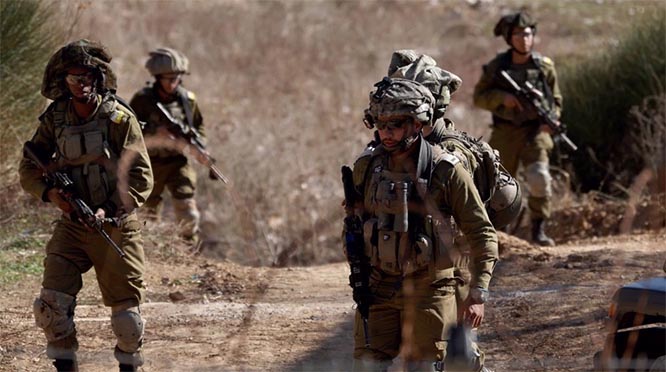
Israeli forces have pushed over the Syrian frontier, erecting a checkpoint and stopping vehicles in the southwestern city of Quneitra, in yet another breach of the Arab country’s sovereignty.

The violation took place on Sunday, when the troops made their way across the border, setting up the outpost near the Ain al-Bayda junction in northern Quneitra, Syrian outlets reported.

According to the al-Ikhbariya paper, an Israeli detachment positioned itself at the junction, halting cars and conducting searches.

The Syrian Arab News Agency (SANA) reported that three Israeli military vehicles then moved further into the northern countryside, deploying between the town of Jubata al-Khashab and the villages of Ofaniya and Ain al-Bayda. The agency added that a separate Israeli unit mounted a new incursion in the central region, approaching the villages of Umm Batina and al-Ajraf.

Residents said such activities have surged in recent months, pointing to Israeli advances onto farmland, leveling of extensive forested areas, arrests, and spread of mobile checkpoints.

The Israeli regime began markedly increasing its military aggression against Syria last year.

The escalation coincided with increasingly ferocious onslaughts throughout the country by the so-called Hay'at Tahrir al-Sham (HTS) Takfiri terrorist group, which the government of President Bashar al-Assad had confined to northwestern Syria. The HTS, however, managed to overthrow the government as the Israeli attacks would pummel the country’s civilian and defensive infrastructure.

Various reports have shown that, during the escalation, the regime conducted more than 1,000 airstrikes on the Syrian territory and over 400 ground raids into the south.

Following the collapse of the Assad government, Tel Aviv also widened its grip over the occupied Golan Heights by taking control of a demilitarized buffer zone, in defiance of a 1974 Disengagement Agreement. Earlier this month, senior Israeli officials, including Prime Minister Benjamin Netanyahu, visited the buffer zone, prompting expressions of alarm on the part of the United Nations.

The United States, the regime’s biggest ally, has, meanwhile, been fraternizing the HTS head Abu Mohammed al-Jolani amid the widely reported prospect of rapprochement with Tel Aviv.

Comments

Add new comment

  • Coastaldigest.com reserves the right to delete or block any comments.
  • Coastaldigset.com is not responsible for its readers’ comments.
  • Comments that are abusive, incendiary or irrelevant are strictly prohibited.
  • Please use a genuine email ID and provide your name to avoid reject.