Here is why vaccinated people still need to wear mask

News Network
December 9, 2020

vaccine.JPG

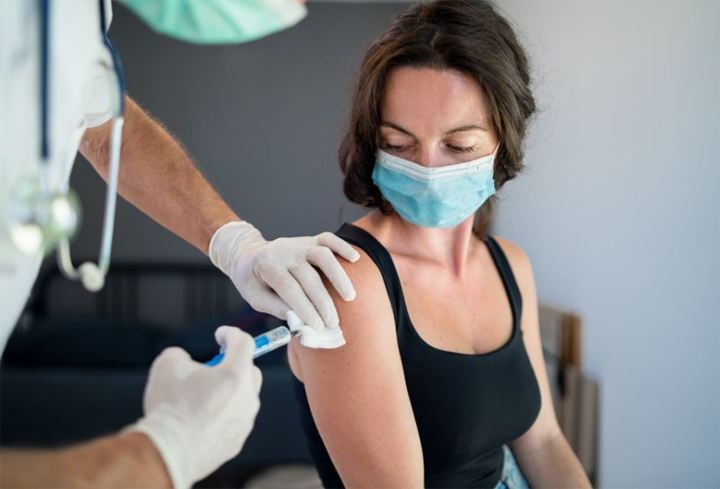
Dec 9: The new Covid-19 vaccines from Pfizer and Moderna seem to be remarkably good at preventing serious illness. But it’s unclear how well they will curb the spread of the coronavirus.

That’s because the Pfizer and Moderna trials tracked only how many vaccinated people became sick with Covid-19. That leaves open the possibility that some vaccinated people get infected without developing symptoms and could then silently transmit the virus — especially if they come in close contact with others or stop wearing masks.

If vaccinated people are silent spreaders of the virus, they may keep it circulating in their communities, putting unvaccinated people at risk.

“A lot of people are thinking that once they get vaccinated, they’re not going to have to wear masks anymore,” said Michal Tal, an immunologist at Stanford University. “It’s really going to be critical for them to know if they have to keep wearing masks because they could still be contagious.”

In most respiratory infections, including the new coronavirus, the nose is the main port of entry. The virus rapidly multiplies there, jolting the immune system to produce a type of antibodies that are specific to the mucosa, the moist tissue lining the nose, mouth, lungs and stomach. If the same person is exposed to the virus a second time, those antibodies, as well as immune cells that remember the virus, rapidly shut down the virus in the nose before it gets a chance to take hold elsewhere in the body.

The coronavirus vaccines, in contrast, are injected deep into the muscles and quickly absorbed into the blood, where they stimulate the immune system to produce antibodies. This appears to be enough protection to keep the vaccinated person from getting ill.

Some of those antibodies will circulate to the nasal mucosa and stand guard there, but it’s not clear how much of the antibody pool can be mobilized or how quickly. If the answer is not much, then viruses could bloom in the nose — and be sneezed or breathed out to infect others.

“It’s a race: It depends whether the virus can replicate faster, or the immune system can control it faster,” said Marion Pepper, an immunologist at the University of Washington in Seattle. “It’s a really important question.”

This is why mucosal vaccines, like nasal spray FluMist or the oral polio vaccine, are better than intramuscular injections at fending off respiratory viruses, experts said.

The next generation of coronavirus vaccines may elicit immunity in the nose and the rest of the respiratory tract, where it’s most needed. Or people could get an intramuscular injection followed by a mucosal boost that produces protective antibodies in the nose and throat.

The coronavirus vaccines have proved to be powerful shields against severe illness, but that is no guarantee of their efficacy in the nose. The lungs — the site of severe symptoms — are much more accessible to the circulating antibodies than the nose or throat, making them easier to safeguard.

“Preventing severe disease is easiest, preventing mild disease is harder, and preventing all infections is the hardest,” said Deepta Bhattacharya, an immunologist at the University of Arizona. “If it’s 95% effective at preventing symptomatic disease, it’s going to be something less than that in preventing all infections, for sure.”

Still, he and other experts said they were optimistic that the vaccines would suppress the virus enough even in the nose and throat to prevent immunized people from spreading it to others.

“My feeling is that once you develop some form of immunity with the vaccine, your ability to get infected will also go down,” said Akiko Iwasaki, an immunologist at Yale University. “Even if you’re infected, the level of virus that you replicate in your nose should be reduced.”

The vaccine trials have not produced data on how many vaccinated people were infected with the virus but did not have symptoms. Some hints are emerging, however.

AstraZeneca, which announced some of its trial results in November, said that volunteers had been testing themselves regularly for the virus and that those results suggested that the vaccine might prevent some infections.

Pfizer will test a subset of its trial participants for antibodies against a viral protein called N. Because the vaccines have nothing to do with this protein, N antibodies would reveal whether the volunteers had become infected with the virus after immunization, said Jerica Pitts, a spokeswoman for the company.

Moderna also plans to analyze blood from all its participants and test for N antibodies.

“It will take several weeks before we can expect to see those results,” said Colleen Hussey, a spokeswoman for Moderna.

The trials have so far analyzed only blood, but testing for antibodies in mucosa would confirm that the antibodies can travel to the nose and mouth. Tal’s team is planning to analyze matched blood and saliva samples from volunteers in the Johnson & Johnson trial to see how the two antibody levels compare.

In the meantime, Bhattacharya said, he was encouraged by recent work showing that people who received an intramuscular flu vaccine had abundant antibodies in the nose. And a study of Covid-19 patients found that antibody levels in saliva and blood were closely matched — suggesting that a strong immune response in the blood would also protect mucosal tissues.

Only people who have virus teeming in their nose and throat would be expected to transmit the virus, and the lack of symptoms in the immunized people who became infected suggests that the vaccine may have kept the virus levels in check.

But some studies have suggested that even people with no symptoms can have high amounts of coronavirus in their nose, noted Dr. Yvonne Maldonado, who represents the American Academy of Pediatrics at meetings of the Federal Advisory Committee on Immunization Practices. The first person confirmed to be reinfected with the coronavirus, a 33-year-old man in Hong Kong, also did not have symptoms but harboured enough virus to infect others.

Vaccinated people who have a high viral load but don’t have symptoms “would actually be, in some ways, even worse spreaders because they may be under a false sense of security,” Maldonado said.

Tal said she was concerned by monkey studies showing that some vaccinated animals did not get ill but still had virus in their nose.

But those monkeys were intentionally exposed to massive amounts of virus and still had less virus than unvaccinated animals, said John Moore, a virus expert at Weill Cornell Medicine in New York.

“The more you reduce viral load, the less likely you are to be transmissible,” Moore said. But “all of these are things where data trumps theory, and we need the data.”

Comments

Add new comment

  • Coastaldigest.com reserves the right to delete or block any comments.
  • Coastaldigset.com is not responsible for its readers’ comments.
  • Comments that are abusive, incendiary or irrelevant are strictly prohibited.
  • Please use a genuine email ID and provide your name to avoid reject.
News Network
December 15,2025

Udupi, Dec 15: What was meant to be a post-pilgrimage gathering turned tragic in Padukere village of Brahmavar taluk, Udupi district, late Sunday night, when a clash among youths escalated into a fatal assault, leaving one man dead.

The victim has been identified as 30-year-old Santosh Mogaveera, a resident of Padukere.

According to preliminary information, the incident took place during a late-night drinking party involving a group of local youths who had recently returned after completing their pilgrimage to the Sabarimala shrine. An argument reportedly broke out among the group and soon escalated into a violent confrontation.

During the ensuing brawl, Santosh Mogaveera was allegedly assaulted and collapsed at the spot after sustaining serious injuries. He was rushed by local residents to a private hospital in Brahmavar, where doctors declared him dead.

On receiving information, senior police officials, including Brahmavar Circle Inspector Gopikrishna, Kota Police Sub-Inspector Praveen Kumar T, Station ASI Manthesh Jabagoudar, and head constables Pradeep and Ashok, visited the spot and conducted an inspection.

Police have taken four youths into custody in connection with the incident. A case has been registered at the Kota police station, and further investigation is underway to ascertain the exact sequence of events leading to the death.

Comments

Add new comment

  • Coastaldigest.com reserves the right to delete or block any comments.
  • Coastaldigset.com is not responsible for its readers’ comments.
  • Comments that are abusive, incendiary or irrelevant are strictly prohibited.
  • Please use a genuine email ID and provide your name to avoid reject.
News Network
December 2,2025

DKSsiddu.jpg

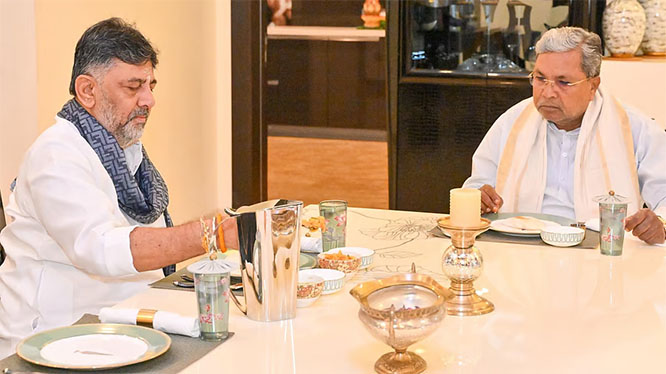
Bengaluru: 'Nati koli saaru' (country chicken curry) considered one of Chief Minister Siddaramaiah’s favourites along with steaming hot idlis was on the breakfast menu at Deputy CM D K Shivakumar’s residence on Tuesday, according to official sources.

The spread also included 'nati koli' fry, vada and pongal, among other items, they said.

In an apparent show of unity, Siddaramaiah visited Shivakumar’s residence for breakfast, just days after the two leaders shared a meal amid a simmering power tussle in the state Congress.

Siddaramaiah drove to the Deputy CM’s residence in Sadashivanagar, where he was received by Shivakumar and his brother D K Suresh, who is a former Congress MP.

Suresh and Kunigal MLA H D Ranganath, a relative of Shivakumar, joined them for breakfast, which featured a mix of vegetarian and non-vegetarian dishes.

Speaking to reporters later, Siddaramaiah said Shivakumar had invited him during his visit to the CM’s residence for breakfast on Saturday.

Asked about the difference between the two meals, the chief minister said, "At his (Shivakumar’s) house it was non-veg, while at my house it was veg. He is a vegetarian, I am a non-vegetarian. I had not prepared non-veg. I told DK to get chicken from the village as you won’t get the original in Bengaluru."

Shivakumar said he had initially invited Siddaramaiah to his residence, but the CM had suggested visiting his place first and reciprocating later. "It was a vegetarian breakfast at the CM’s house on Saturday," he noted.

"Today, I invited him (the CM) to my house. He enjoyed the breakfast, which had his Mysuru taste," Shivakumar added. At this point, Siddaramaiah remarked that Shivakumar’s wife is also from Mysuru.

Saturday’s breakfast at Siddaramaiah’s official residence, held as part of efforts by the Congress high command to ease tensions in the leadership dispute between the two, reportedly included idlis and sambar, according to official sources.

Comments

Add new comment

  • Coastaldigest.com reserves the right to delete or block any comments.
  • Coastaldigset.com is not responsible for its readers’ comments.
  • Comments that are abusive, incendiary or irrelevant are strictly prohibited.
  • Please use a genuine email ID and provide your name to avoid reject.
News Network
December 5,2025

indigoCEO.jpg

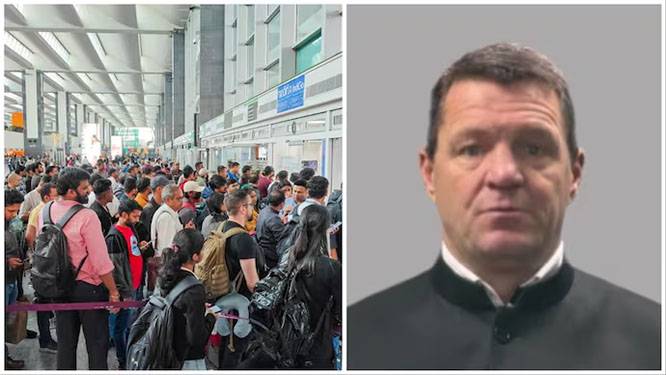
New Delhi, Dec 5: IndiGo CEO Pieter Elbers issued a public apology this evening after more than a thousand flights were cancelled today, making it the "most severely impacted day" in terms of cancellations. The biggest airline of the country cancelled "more than half" of its daily number of flights on Friday, said Elbers. He also said that even though the crisis will persist on Saturday, the airline anticipates fewer than 1,000 flight cancellations.

"Full normalisation is expected between December 10 and 15, though IndiGo cautions that recovery will take time due to the scale of operations," the IndiGo CEO said. 

IndiGo operates around 2,300 domestic and international flights daily.

Pieter Elbers, while apologising for the major inconvenience due to delays and cancellations, said the situation is a result of various causes.

The crisis at IndiGo stems from new regulations that boost pilots' weekly rest requirements by 12 hours to 48 and allow only two night-time landings per week, down from six. IndiGo has attributed the mass cancellations to "misjudgment and planning gaps".

Elbers also listed three lines of action that the airline will adopt to address the issue.

"Firstly, customer communication and addressing your needs, for this, messages have been sent on social media. And just now, a more detailed communication with information, refunds, cancellations and other customer support measures was sent," he said.

The airline has also stepped up its call centre capacity.

"Secondly, due to yesterday's situation, we had customers stranded mostly at the nation's largest airports. Our focus was for all of them to be able to travel today itself, which will be achieved. For this, we also ask customers whose flights are cancelled not to come to the airports as notifications are sent," the CEO said.

"Thirdly, cancellations were made for today to align our crew and planes to be where they need to start tomorrow morning afresh. Earlier measures of the last few days, regrettable, have proven not to be enough, but we have decided today to reboot all our systems and schedules, resulting in the highest numbers of cancellations so far, but imperative for progressive improvements starting from tomorrow," he added.

As airports witnessed chaotic scenes, the Directorate General of Civil Aviation (DGCA) stepped in to grant IndiGo a temporary exemption from stricter night duty rules for pilots. It also allowed substitution of leaves with a weekly rest period. 

Civil Aviation Minister Ram Mohan Naidu has said a high-level inquiry will be ordered and accountability will be fixed.

Comments

Add new comment

  • Coastaldigest.com reserves the right to delete or block any comments.
  • Coastaldigset.com is not responsible for its readers’ comments.
  • Comments that are abusive, incendiary or irrelevant are strictly prohibited.
  • Please use a genuine email ID and provide your name to avoid reject.