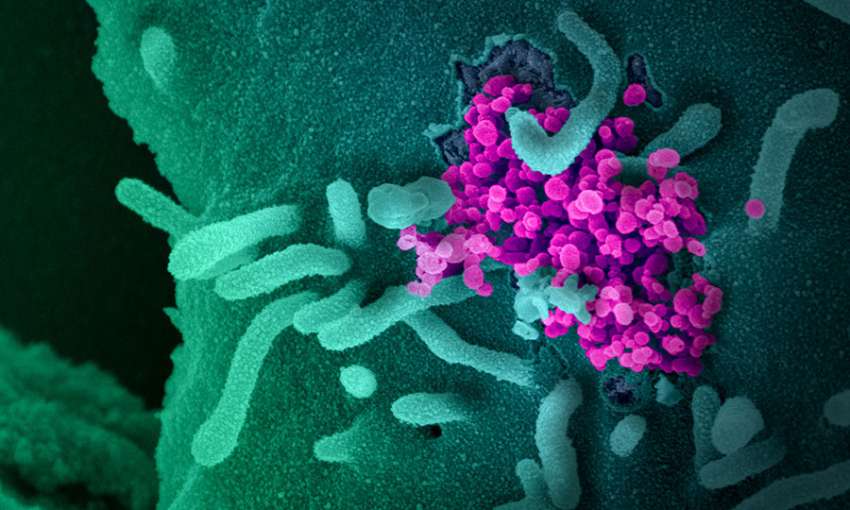
How does the new strain of novel coronavirus spread?

International New York Times
January 1, 2021

bsite.jpg

Washington, Jan 1: A more contagious form of the coronavirus has begun circulating in the United States.

In Britain, where it was first identified, the new variant became the predominant form of the coronavirus in just three months, accelerating that nation’s surge and filling its hospitals. It may do the same in the United States, exacerbating an unrelenting rise in deaths and overwhelming the already strained health care system, experts warned.

A variant that spreads more easily also means that people will need to religiously adhere to precautions like social distancing, mask-wearing, hand hygiene and improved ventilation — unwelcome news to many Americans already chafing against restrictions.

“The bottom line is that anything we do to reduce transmission will reduce transmission of any variants, including this one,” said Angela Rasmussen, a virus expert affiliated with Georgetown University. But “it may mean that the more targeted measures that are not like a full lockdown won’t be as effective.”

What does it mean for this variant to be more transmissible? What makes this variant more contagious than previous iterations of the virus? And why should we worry about a variant that spreads more easily but does not seem to make anyone sicker?

We asked experts to weigh in on the evolving research into this new version of the coronavirus.

The new variant seems to spread more easily between people

Many variants of the coronavirus have cropped up since the pandemic began. But all evidence so far suggests that the new mutant, called B.1.1.7, is more transmissible than previous forms. It first surfaced in September in Britain but already accounts for more than 60% of new cases in London and neighboring areas.

The new variant seems to infect more people than earlier versions of the coronavirus, even when the environments are the same. It’s not clear what gives the variant this advantage, although there are indications that it may infect cells more efficiently.

It’s also difficult to say exactly how much more transmissible the new variant may be, because scientists have not yet done the kind of lab experiments that are required. Most of the conclusions have been drawn from epidemiological observations, and “there’s so many possible biases in all the available data,” cautioned Muge Cevik, an infectious disease expert at the University of St. Andrews in Scotland and a scientific adviser to the British government.

Scientists initially estimated that the new variant was 70% more transmissible, but a recent modeling study pegged that number at 56%. Once researchers sift through all the data, it’s possible that the variant will turn out to be just 10% to 20% percent more transmissible, said Trevor Bedford, an evolutionary biologist at the Fred Hutchinson Cancer Research Center in Seattle.

Even so, Bedford said, it is likely to catch on rapidly and become the predominant form in the United States by March. Scientists like Bedford are tracking all the known variants closely to detect any further changes that might alter their behavior.

Apart from greater transmissibility, the variant behaves like earlier versions

The new mutant virus may spread more easily, but in every other way it seems little different than its predecessors.

The variant does not seem to make people any sicker or lead to more deaths. Still, there is cause for concern: A variant that is more transmissible will increase the death toll simply because it will spread faster and infect more people.

“In that sense, it’s just a numbers game,” Rasmussen said. The effect will be amplified “in places like the US and the UK, where the health care system is really at its breaking point.”

The routes of transmission — by large and small droplets, and tiny aerosolized particles adrift in crowded indoor spaces — have not changed. That means masks, limiting time with others and improving ventilation in indoor spaces will all help contain the variant’s spread, as these measures do with other variants of the virus.

“By minimizing your exposure to any virus, you’re going to reduce your risk of getting infected, and that’s going to reduce transmission overall,” Rasmussen said.

Infection with the new variant may increase the amount of virus in the body

Some preliminary evidence from Britain suggests that people infected with the new variant tend to carry greater amounts of the virus in their noses and throats than those infected with previous versions.

“We’re talking in the range between 10-fold greater and 10,000-fold greater,” said Michael Kidd, a clinical virologist at Public Health England and a clinical adviser to the British government who has studied the phenomenon.

There are other explanations for the finding — Kidd and his colleagues did not have access to information about when in their illness people were tested, for example, which could affect their so-called viral loads.

Still, the finding does offer one possible explanation for why the new variant spreads more easily. The more virus that infected people harbor in their noses and throats, the more they expel into the air and onto surfaces when they breathe, talk, sing, cough or sneeze.

As a result, situations that expose people to the virus carry a greater chance of seeding new infections. Some new data indicate that people infected with the new variant spread the virus to more of their contacts.

With previous versions of the virus, contact tracing suggested that about 10% of people who have close contact with an infected person — within 6 feet for at least 15 minutes — inhaled enough virus to become infected.

“With the variant, we might expect 15% of those,” Bedford said. “Currently risky activities become more risky.”

Scientists are still learning how the mutations have changed the virus

The variant has 23 mutations, compared with the version that erupted in Wuhan, China, a year ago. But 17 of those mutations appeared suddenly, after the virus diverged from its most recent ancestor.

Each infected person is a crucible, offering opportunities for the virus to mutate as it multiplies. With more than 83 million people infected worldwide, the coronavirus is amassing mutations faster than scientists expected at the start of the pandemic.

The vast majority of mutations provide no advantage to the virus and die out. But mutations that improve the virus’s fitness or transmissibility have a greater chance to catch on.

At least one of the 17 new mutations in the variant contributes to its greater contagiousness. The mechanism is not yet known. Some data suggest that the new variant may bind more tightly to a protein on the surface of human cells, allowing it to more readily infect them.

It’s possible that the variant blooms in an infected person’s nose and throat, but not in the lungs, for example — which may explain why patients spread it more easily but do not develop illnesses more severe than those caused by earlier versions of the virus. Some influenza viruses behave similarly, experts noted.

“We need to look at this evidence as preliminary and accumulating,” Cevik said of the growing data on the new variant.

Still, the research suggests an urgent need to cut down on transmission of the variant, she added: “We need to be much more careful overall, and look at the gaps in our mitigation measures.”


Comments

Add new comment

  • Coastaldigest.com reserves the right to delete or block any comments.
  • Coastaldigset.com is not responsible for its readers’ comments.
  • Comments that are abusive, incendiary or irrelevant are strictly prohibited.
  • Please use a genuine email ID and provide your name to avoid reject.
News Network
November 30,2025

girlnomore.jpg

Mangaluru, Nov 30: A 22-year-old college student succumbed to her injuries at a private hospital in Mangaluru today, days after she was hit by a goods tempo while crossing a road in Padubidri.

The deceased has been identified as Preksha, a resident of Nadsalu Billitota in Padubidri. The fatal incident occurred as Preksha, who was returning home after completing her examination, attempted to cross the service road towards Mangaluru. She was struck by a goods tempo approaching from the Udupi side, causing her to fall and sustain a severe head injury.

Prompt action from local residents ensured she received immediate first aid before being rushed to a hospital in Mangaluru for specialised treatment. Despite medical efforts, she passed away while undergoing care.

Preksha was a student at Karavali College, Vamanjoor on the outskirts of Mangaluru city. The tragedy is compounded by the fact that she belonged to a financially vulnerable family, having previously lost her father. She is survived by her mother and brother.

A case related to the accident has been registered at the Padubidri police station, and an investigation is underway to determine the exact circumstances that led to the collision. The incident highlights the growing concerns over road safety, particularly on busy service roads, and serves as a tragic reminder of the human cost of traffic accidents.

Comments

Add new comment

  • Coastaldigest.com reserves the right to delete or block any comments.
  • Coastaldigset.com is not responsible for its readers’ comments.
  • Comments that are abusive, incendiary or irrelevant are strictly prohibited.
  • Please use a genuine email ID and provide your name to avoid reject.
News Network
November 24,2025

lebanon.jpg

Israel has launched a new act of aggression on a residential neighborhood in Lebanon's capital, Beirut, killing and injuring about two dozen civilians.

The Israeli regime's military said in a statement that its forces carried out a so-called precise strike in a residential apartment in Dahiyeh in the southern suburbs of Beirut on Sunday.

The aggression targeted residential areas, killing at least five people and injuring more than 28 people, Lebanon's Health Ministry said. 

Hezbollah announced the martyrdom of senior Hezbollah commander Haytham Ali Tabatabai and four resistance fighters.

Lebanese President Michel Aoun condemned the airstrike, calling it a clear demonstration of Tel Aviv’s disregard for repeated international calls to halt violations on Lebanese soil.

“Israel refuses to implement international resolutions and all efforts aimed at ending the escalation and restoring stability,” Aoun said, urging the international community to take action to prevent further aggression.

The Palestinian Islamic Jihad movement also condemned the attack, holding the international community accountable. 

“The international community bears responsibility and continues to provide cover for these attacks as long as it does not restrain the occupiers,” said Ali Abu Shahin, a member of the group’s political bureau.

Israeli prime minister Benjamin Netanyahu’s office announced that the Israeli army carried out a strike “in the heart of Beirut."

Netanyahu reportedly approved the operation following recommendations from top Israeli security officials.

Two senior US officials commented on the Israeli strike.

The first official said that Israel did not notify Americans in advance about the attack. "We were informed immediately after the strike was carried out."

The second senior official said that the "US knew for several days that Israel was planning to escalate its strikes in Lebanon, but did not know in advance the timing, location, or target of the strike."

Speaking from the site of the Israeli strike, Lebanese MP Ali Ammar condemned the attack as part of a broader campaign of aggression that has targeted "all of Lebanon since the Washington-sponsored ceasefire."

He stated that "any attack on Lebanon is a violation of red lines; this aggression is part and parcel of the entity that targets Lebanon's dignity, sovereignty, and security of citizens."

Ammar went on to say the resistance is responding with "utmost wisdom, patience, and will confront the enemy at the appropriate time."

"Unfortunately, the enemy is emboldened to commit its aggression by voices within Lebanon that have turned themselves into tools that support its aggression," he added.

The Israeli attack on the southern suburbs of the Lebanese capital is the latest blatant violation of the ceasefire Israel signed with Hezbollah in November 2024, which was intended to end hostilities that had escalated into full-scale war.

An Israeli strike on the Ain al-Hilweh camp near Sidon in southern Lebanon late Tuesday killed at least 14 people. It wounded several others, including young students, according to the Lebanese health ministry.

The military claimed the attack targeted “a Hamas training compound” used to plan and carry out attacks against the regime -- a claim that has frequently been made without evidence.

Hamas rejected the allegations as “a blatant lie aimed at justifying the massacre,” stating it had “no military installations in the Palestinian camps in Lebanon” and that the targeted site was merely “an open sports field.”

According to Lebanese authorities, Israeli attacks have killed approximately 4,000 people and displaced more than 1.2 million residents across the country since October 2023.

Comments

Add new comment

  • Coastaldigest.com reserves the right to delete or block any comments.
  • Coastaldigset.com is not responsible for its readers’ comments.
  • Comments that are abusive, incendiary or irrelevant are strictly prohibited.
  • Please use a genuine email ID and provide your name to avoid reject.
News Network
November 21,2025

Bengaluru, Nov 21: The Karnataka government is facing pressure to overhaul its employment system after a high-level Cabinet sub-committee recommended the complete phase-out of job outsourcing in government offices, boards, and corporations by March 2028. The move is aimed at tackling a systemic issue that has led to the potential violation of constitutional reservation policies and the exploitation of workers.

The Call for Systemic Change

With over three lakh vacant posts currently being filled through private agencies on an outsource, insource, or daily wage basis, the sub-committee highlighted a significant lapse. "As a result, reservations are not being followed as per the Constitution and state laws. It’s an urgent need to take serious steps to change the system. It has been recommended to completely stop the system of outsourcing by March 2028," the panel stated in a document.

The practice of outsourcing involves private companies hiring workers to perform duties for a government agency. Critics argue this model results in lesser salaries, a lack of social security benefits (otherwise available to permanent government employees), and a failure to adhere to the provisions of Articles 14 and 15 of the Constitution, which guarantee equality before the law and prohibit discrimination.

The 'Bidar Model' as a Stop-Gap Solution

To regulate the current mode of employment and reduce worker exploitation until the 2028 deadline, the government plans to establish workers’ services multi-purpose cooperative societies across all districts, following the successful "Bidar Model."

The Bidar District Services of Labour Multi-purpose Cooperative Society Ltd., which operates under the District Commissioner, is cited as a successful example of providing a measure of social security to outsourced staff. Labour Department officials argue this society ensures workers receive their due wages and statutory facilities like ESI (Employees' State Insurance) and PF (Provident Fund), in exchange for a 1% service fee collected from the employees.

legislative push and Priority Insourcing

The recommendations, led by the sub-committee headed by Law and Parliamentary Affairs Minister H K Patil, are set to be discussed at the next Cabinet meeting. The committee has proposed the introduction of the Karnataka Outsourced Employees (Regulation, Placement and Welfare) Bill 2025.

In a move addressing immediate concerns, Labour Minister Santosh Lad, a member of the sub-committee, has reportedly assured that steps will be taken over the next 2-3 years to insource workers in "life-threatening services" on a priority basis. This includes essential personnel like pourakarmikas (sanitation workers), drivers, electrical staff in the Energy Department, and Health Department staff handling contagious diseases. The transition aims to grant these workers the long-term security and benefits they currently lack under the outsourcing system. 

Comments

Add new comment

  • Coastaldigest.com reserves the right to delete or block any comments.
  • Coastaldigset.com is not responsible for its readers’ comments.
  • Comments that are abusive, incendiary or irrelevant are strictly prohibited.
  • Please use a genuine email ID and provide your name to avoid reject.