



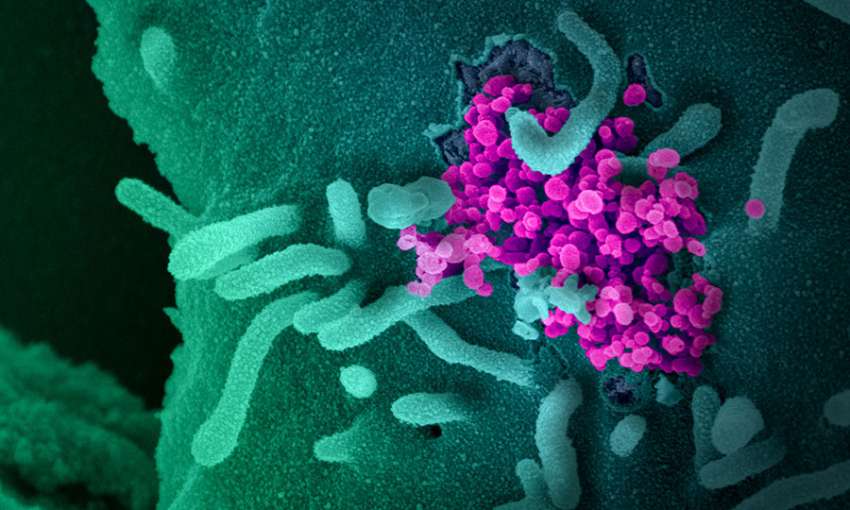
How does the new strain of novel coronavirus spread?

International New York Times
January 1, 2021

bsite.jpg

Washington, Jan 1: A more contagious form of the coronavirus has begun circulating in the United States.

In Britain, where it was first identified, the new variant became the predominant form of the coronavirus in just three months, accelerating that nation’s surge and filling its hospitals. It may do the same in the United States, exacerbating an unrelenting rise in deaths and overwhelming the already strained health care system, experts warned.

A variant that spreads more easily also means that people will need to religiously adhere to precautions like social distancing, mask-wearing, hand hygiene and improved ventilation — unwelcome news to many Americans already chafing against restrictions.

“The bottom line is that anything we do to reduce transmission will reduce transmission of any variants, including this one,” said Angela Rasmussen, a virus expert affiliated with Georgetown University. But “it may mean that the more targeted measures that are not like a full lockdown won’t be as effective.”

What does it mean for this variant to be more transmissible? What makes this variant more contagious than previous iterations of the virus? And why should we worry about a variant that spreads more easily but does not seem to make anyone sicker?

We asked experts to weigh in on the evolving research into this new version of the coronavirus.

The new variant seems to spread more easily between people

Many variants of the coronavirus have cropped up since the pandemic began. But all evidence so far suggests that the new mutant, called B.1.1.7, is more transmissible than previous forms. It first surfaced in September in Britain but already accounts for more than 60% of new cases in London and neighboring areas.

The new variant seems to infect more people than earlier versions of the coronavirus, even when the environments are the same. It’s not clear what gives the variant this advantage, although there are indications that it may infect cells more efficiently.

It’s also difficult to say exactly how much more transmissible the new variant may be, because scientists have not yet done the kind of lab experiments that are required. Most of the conclusions have been drawn from epidemiological observations, and “there’s so many possible biases in all the available data,” cautioned Muge Cevik, an infectious disease expert at the University of St. Andrews in Scotland and a scientific adviser to the British government.

Scientists initially estimated that the new variant was 70% more transmissible, but a recent modeling study pegged that number at 56%. Once researchers sift through all the data, it’s possible that the variant will turn out to be just 10% to 20% percent more transmissible, said Trevor Bedford, an evolutionary biologist at the Fred Hutchinson Cancer Research Center in Seattle.

Even so, Bedford said, it is likely to catch on rapidly and become the predominant form in the United States by March. Scientists like Bedford are tracking all the known variants closely to detect any further changes that might alter their behavior.

Apart from greater transmissibility, the variant behaves like earlier versions

The new mutant virus may spread more easily, but in every other way it seems little different than its predecessors.

The variant does not seem to make people any sicker or lead to more deaths. Still, there is cause for concern: A variant that is more transmissible will increase the death toll simply because it will spread faster and infect more people.

“In that sense, it’s just a numbers game,” Rasmussen said. The effect will be amplified “in places like the US and the UK, where the health care system is really at its breaking point.”

The routes of transmission — by large and small droplets, and tiny aerosolized particles adrift in crowded indoor spaces — have not changed. That means masks, limiting time with others and improving ventilation in indoor spaces will all help contain the variant’s spread, as these measures do with other variants of the virus.

“By minimizing your exposure to any virus, you’re going to reduce your risk of getting infected, and that’s going to reduce transmission overall,” Rasmussen said.

Infection with the new variant may increase the amount of virus in the body

Some preliminary evidence from Britain suggests that people infected with the new variant tend to carry greater amounts of the virus in their noses and throats than those infected with previous versions.

“We’re talking in the range between 10-fold greater and 10,000-fold greater,” said Michael Kidd, a clinical virologist at Public Health England and a clinical adviser to the British government who has studied the phenomenon.

There are other explanations for the finding — Kidd and his colleagues did not have access to information about when in their illness people were tested, for example, which could affect their so-called viral loads.

Still, the finding does offer one possible explanation for why the new variant spreads more easily. The more virus that infected people harbor in their noses and throats, the more they expel into the air and onto surfaces when they breathe, talk, sing, cough or sneeze.

As a result, situations that expose people to the virus carry a greater chance of seeding new infections. Some new data indicate that people infected with the new variant spread the virus to more of their contacts.

With previous versions of the virus, contact tracing suggested that about 10% of people who have close contact with an infected person — within 6 feet for at least 15 minutes — inhaled enough virus to become infected.

“With the variant, we might expect 15% of those,” Bedford said. “Currently risky activities become more risky.”

Scientists are still learning how the mutations have changed the virus

The variant has 23 mutations, compared with the version that erupted in Wuhan, China, a year ago. But 17 of those mutations appeared suddenly, after the virus diverged from its most recent ancestor.

Each infected person is a crucible, offering opportunities for the virus to mutate as it multiplies. With more than 83 million people infected worldwide, the coronavirus is amassing mutations faster than scientists expected at the start of the pandemic.

The vast majority of mutations provide no advantage to the virus and die out. But mutations that improve the virus’s fitness or transmissibility have a greater chance to catch on.

At least one of the 17 new mutations in the variant contributes to its greater contagiousness. The mechanism is not yet known. Some data suggest that the new variant may bind more tightly to a protein on the surface of human cells, allowing it to more readily infect them.

It’s possible that the variant blooms in an infected person’s nose and throat, but not in the lungs, for example — which may explain why patients spread it more easily but do not develop illnesses more severe than those caused by earlier versions of the virus. Some influenza viruses behave similarly, experts noted.

“We need to look at this evidence as preliminary and accumulating,” Cevik said of the growing data on the new variant.

Still, the research suggests an urgent need to cut down on transmission of the variant, she added: “We need to be much more careful overall, and look at the gaps in our mitigation measures.”


Comments

Add new comment

  • Coastaldigest.com reserves the right to delete or block any comments.
  • Coastaldigset.com is not responsible for its readers’ comments.
  • Comments that are abusive, incendiary or irrelevant are strictly prohibited.
  • Please use a genuine email ID and provide your name to avoid reject.
News Network
November 22,2025

The Karnataka government has announced a 50% rebate on pending traffic and transport fines. The discount is available from November 21 to December 12.

The rebate applies to all traffic e-challans and violation cases booked by the RTO between 1991–92 and 2019–20. Officials clarified that the offer is not applicable to pending tax dues and is restricted only to traffic-violation fines.

Across Karnataka, more than 4 lakh RTO cases remain pending, including those involving transport vehicles. While thousands of vehicle owners have already cleared their dues, the department expects to generate substantial revenue through this limited-period rebate.

How to Pay and Avail the Discount

There are three ways to check and pay your pending fines:

1. Through Mobile Apps
Available on both Play Store and App Store:
•    Karnataka State Police (KSP) app
•    KarnatakaOne app
•    ASTraM app

Steps:
•    Enter your vehicle number in any of the above apps
•    Verify the photo/details of your vehicle
•    Pay the fine with the 50% discount applied

2. Visit a Traffic Police Station

You can pay your pending fine at any nearby traffic police station.

3. Visit the Traffic Management Centre (TMC)

•    Location: First Floor, Infantry Road, near Indian Express, Bengaluru

Transport Commissioner Yogeesh A M said, “We don't issue e-challans, so there's no online payment system.”

The department estimates ₹52 crore in pending RTO fines up to March 2020. “With the 50% rebate, we expect to collect around ₹25 crore if all dues are cleared,” he added.

Comments

Add new comment

  • Coastaldigest.com reserves the right to delete or block any comments.
  • Coastaldigset.com is not responsible for its readers’ comments.
  • Comments that are abusive, incendiary or irrelevant are strictly prohibited.
  • Please use a genuine email ID and provide your name to avoid reject.
News Network
December 3,2025

indigo.jpg

IndiGo, India’s largest airline, is battling one of its worst operational disruptions in recent years, with hundreds of delays and cancellations throwing domestic travel into chaos.

Government data on Tuesday showed its on-time performance plunging to 35%, an unusual dip for a carrier long associated with punctuality.

By Wednesday afternoon, airports in Delhi, Mumbai, Bengaluru and Hyderabad had collectively reported close to 200 cancellations, stranding travellers across the country.

Crew Shortage After New Duty Norms

A major trigger behind the meltdown is a severe crew shortage, especially among pilots, following the rollout of revised Flight Duty Time Limitation (FDTL) norms last month.

The rules mandate longer rest hours and more humane rosters — a shift IndiGo has struggled to incorporate across its vast network.

Sources said several flights were grounded due to lack of cabin crew, while some delays stretched upwards of eight hours.

With IndiGo controlling over 60% of India’s domestic aviation market, the ripple effect has impacted airports nationwide.

IndiGo Issues Apology, Lists “Compounding Factors”

In a statement, IndiGo acknowledged the large-scale disruption:

“We sincerely apologise to customers. A series of unforeseen operational challenges — technology glitches, winter schedule changes, adverse weather, system congestion and updated FDTL norms — created a compounding impact that could not have been anticipated.”

To stabilise operations, the airline has begun calibrated schedule adjustments for the next 48 hours, aiming to restore punctuality. Affected passengers are being offered refunds or alternate travel arrangements, IndiGo said.

What the FDTL Rules Require

The FDTL norms, designed to reduce pilot fatigue, cap duty and flying hours as follows:
•    Maximum 8 hours of flying per day
•    35 hours per week
•    125 hours per month
•    1,000 hours per year

Crew must also receive rest equalling twice the flight duration, with a minimum 10-hour rest period in any 24-hour window.

The DGCA introduced these limits to enhance flight safety.

Hyderabad: 33 Flights Cancelled, Long Queues Reported

Hyderabad’s Rajiv Gandhi International Airport saw heavy early-morning crowds as 33 IndiGo flights (arrivals and departures) were cancelled.

The airport clarified on X that operations were normal, advising passengers to contact IndiGo directly for latest flight status.

Cancellations included flights to and from Visakhapatnam, Goa, Ahmedabad, Delhi, Bengaluru, Chennai, Madurai, Hubli, Bhopal and Bhubaneswar.

Bengaluru: 42 Flights Disrupted

Bengaluru’s Kempegowda International Airport recorded 42 cancellations — 22 arrivals and 20 departures — affecting routes to Delhi, Mumbai, Chennai, Hyderabad, Goa, Kolkata and Lucknow.

Passengers Vent on Social Media

Irate travellers took to X to share their experiences. One passenger stranded in Hyderabad wrote: “I have been here since 3 a.m. and missed an important meeting.”

Another said: “My flight was pushed from 1:55 PM to 2:55 PM and now 4:35 PM. I was informed only three minutes before entering the airport.”

Delhi Airport Hit by Tech Glitch

At Delhi Airport, the disruption deepened due to a slowdown in the Amadeus system — used for reservations, check-ins and departure control.

The technical issue led to longer queues and sluggish processing, adding to delays already worsened by staff shortages.

Comments

Add new comment

  • Coastaldigest.com reserves the right to delete or block any comments.
  • Coastaldigset.com is not responsible for its readers’ comments.
  • Comments that are abusive, incendiary or irrelevant are strictly prohibited.
  • Please use a genuine email ID and provide your name to avoid reject.
News Network
December 2,2025

Puttur: The long-cherished dream of a government medical college in Puttur has moved a decisive step closer to reality, with the Karnataka State Finance Department granting its official approval for the construction of a new 300-bed hospital.

Puttur MLA Ashok Kumar Rai announced the crucial development to reporters on Monday, confirming that the official communication from the finance department was issued on November 27. This 300-bed facility is intended to be the cornerstone for the establishment of the government medical college, a project announced in the state budget.

Fast-Track Implementation

The MLA outlined an aggressive timeline for the project:

•    A Detailed Project Report (DPR) for the hospital is expected to be ready within 45 days.

•    The tender process for the construction will be completed within two months.

Following the completion of the tender process, Chief Minister Siddaramaiah is scheduled to lay the foundation stone for the project.

"Setting up a medical college in Puttur is a historical decision by the Congress government in Karnataka," Rai stated. The project has an estimated budget allocation of Rs 1,000 crore for the medical college.

Focus on Medical Education Department

The MLA highlighted a key strategic move: requesting the government to implement the hospital construction through the Medical Education Department instead of the Health and Family Welfare Department. This is intended to streamline the entire process of establishing the full medical college, ensuring the facilities—including labs, operation theatres, and other necessary infrastructure—adhere to the strict guidelines set by the Medical Council of India (MCI). The proposed site for the project is in Bannur.

Rai also took the opportunity to address political criticism, stating that the government has fulfilled its promise despite "apprehensions" and "mocking and criticising" from opposition parties who had failed to take similar initiatives when they were in power. "Chief Minister Siddaramaiah has kept his word," he added.

Comments

Add new comment

  • Coastaldigest.com reserves the right to delete or block any comments.
  • Coastaldigset.com is not responsible for its readers’ comments.
  • Comments that are abusive, incendiary or irrelevant are strictly prohibited.
  • Please use a genuine email ID and provide your name to avoid reject.