India successfully launches communication satellite in textbook style

August 27, 2015

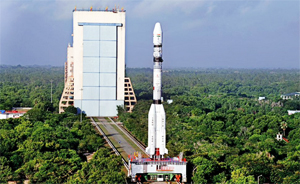
Sriharikota (Andhra Pradesh), Aug 27: India successfully launched its communication satellite GSAT-6, which has several strategic applications, in textbook style on Thursday using its heavy rocket geosynchronous satellite launch vehicle (GSLV-D6).
gslv6

The GSLV rocket, with a cryogenic engine, slung the satellite in a geosynchronous transfer orbit (GTO) from where it would be taken up to its final geostationary orbit.

The successful flight of GSLV rocket gives the Indian space programme a much-needed booster as getting the more-efficient cryogenic engine (which provides more thrust for every kilogram of propellant burnt) right is important for its future space programmes.

Indian space scientists have spent around two decades in conceiving the cryogenic technology and spent around Rs.400 crore in developing it.

Precisely at 4.52 p.m., the Geosynchronous Satellite Launch Vehicle-Development 5 (GSLV D6) rose from the second launch pad here at Satish Dhawan Space Centre.

The 49.1 metre tall rocket weighing 416 tonnes slung the 2,117 kg GSAT-6 communication satellite in the geosynchronous transfer orbit (GTO) around 17 minutes into the flight.

As the whole mission concluded successfully, ISRO scientists at the mission control centre were visibly happy, back-slapping and hugging each other once the rocket ejected the GSAT-6 satellite into the intended orbit.

Speaking about the launch, ISRO chairman A.S.Kiran Kumar said: "Today's performance of launch vehicle was normal. The intricacies of cryogenic engine has been understood."

This is the first successful GSLV rocket launch that placed a satellite in orbit in Kiran Kumar's tenure.

The Indian space agency flew the GSLV rocket with its own cryogenic engine for the second time on Thursday after the successful launch of a similar rocket in January 2014 that put into orbit GSAT-14.

This was the second mission of GSLV during the last five years after two such rockets failed in 2010.

One of the GSLV rockets flew with Indian cryogenic engine and the other one with a Russian engine.

The GSLV is a three stage/engine rocket. The core of first stage is fired with solid fuel while the four strap-on motors by liquid fuel. The second is the liquid fuel and the third is the cryogenic engine.

For the country, ISRO's perfection of cryogenic engine technology is crucial as precious foreign exchange can be saved by launching communication satellites by itself.

Currently ISRO flies its heavy communication satellites by European space agency Ariane.

ISRO officials told IANS earlier that the country pays around $85-90 million or around Rs.500 crore as launch fee for sending up a 3.5 tonne communication satellites. The cost of satellite is separate.

The ISRO can send smaller communication satellites - weighing around two tonnes - till such time it gets ready an advanced GSLV variant-GSLV-Mark III- that can lug satellites weighing around four tonnes.

The space agency will be launching satellites like GSAT-7, 9 using a similar rocket.

One of the notable aspect of the successful launch is the rocket's weight lift capacity. The current GSLV rocket that ISRO flies has a carrying capacity of around 2.2 tonnes.

Earlier attempts to carry slightly over two tonne satellite ended in partial/total failures.

The GSAT-6 is India's 25th geostationary communication satellite and twelfth in the GSAT series.

Five of GSAT-6's predecessors were launched by GSLV during 2001, 2003, 2004, 2007 and 2014 respectively.

After its commissioning, GSAT-6 will join the group of India's other operational geostationary satellites.

The satellite provides communication through five spot beams in S-band and a national beam in C-band for strategic users.

One of the advanced features of GSAT-6 satellite is its S-Band Unfurlable Antenna of six metre diameter - the largest satellite antenna realised by ISRO. This antenna is utilised for five spot beams over the Indian mainland, which exploit the frequency reuse scheme to increase frequency spectrum utilisation efficiency.

The satellite's life expectancy is nine years.

Comments

Add new comment

  • Coastaldigest.com reserves the right to delete or block any comments.
  • Coastaldigset.com is not responsible for its readers’ comments.
  • Comments that are abusive, incendiary or irrelevant are strictly prohibited.
  • Please use a genuine email ID and provide your name to avoid reject.
News Network
December 5,2025

indigoCEO.jpg

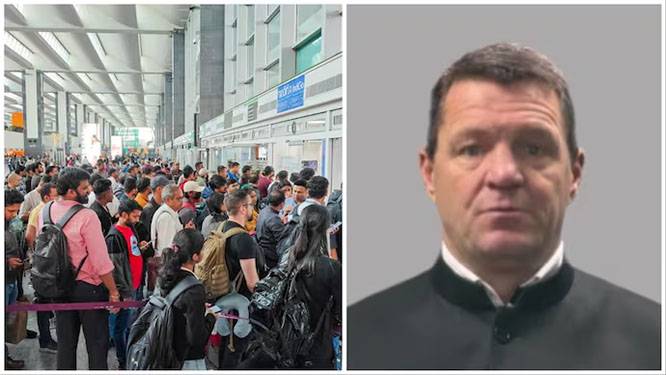
New Delhi, Dec 5: IndiGo CEO Pieter Elbers issued a public apology this evening after more than a thousand flights were cancelled today, making it the "most severely impacted day" in terms of cancellations. The biggest airline of the country cancelled "more than half" of its daily number of flights on Friday, said Elbers. He also said that even though the crisis will persist on Saturday, the airline anticipates fewer than 1,000 flight cancellations.

"Full normalisation is expected between December 10 and 15, though IndiGo cautions that recovery will take time due to the scale of operations," the IndiGo CEO said. 

IndiGo operates around 2,300 domestic and international flights daily.

Pieter Elbers, while apologising for the major inconvenience due to delays and cancellations, said the situation is a result of various causes.

The crisis at IndiGo stems from new regulations that boost pilots' weekly rest requirements by 12 hours to 48 and allow only two night-time landings per week, down from six. IndiGo has attributed the mass cancellations to "misjudgment and planning gaps".

Elbers also listed three lines of action that the airline will adopt to address the issue.

"Firstly, customer communication and addressing your needs, for this, messages have been sent on social media. And just now, a more detailed communication with information, refunds, cancellations and other customer support measures was sent," he said.

The airline has also stepped up its call centre capacity.

"Secondly, due to yesterday's situation, we had customers stranded mostly at the nation's largest airports. Our focus was for all of them to be able to travel today itself, which will be achieved. For this, we also ask customers whose flights are cancelled not to come to the airports as notifications are sent," the CEO said.

"Thirdly, cancellations were made for today to align our crew and planes to be where they need to start tomorrow morning afresh. Earlier measures of the last few days, regrettable, have proven not to be enough, but we have decided today to reboot all our systems and schedules, resulting in the highest numbers of cancellations so far, but imperative for progressive improvements starting from tomorrow," he added.

As airports witnessed chaotic scenes, the Directorate General of Civil Aviation (DGCA) stepped in to grant IndiGo a temporary exemption from stricter night duty rules for pilots. It also allowed substitution of leaves with a weekly rest period. 

Civil Aviation Minister Ram Mohan Naidu has said a high-level inquiry will be ordered and accountability will be fixed.

Comments

Add new comment

  • Coastaldigest.com reserves the right to delete or block any comments.
  • Coastaldigset.com is not responsible for its readers’ comments.
  • Comments that are abusive, incendiary or irrelevant are strictly prohibited.
  • Please use a genuine email ID and provide your name to avoid reject.
News Network
December 6,2025

pilot.jpg

New Delhi: IndiGo, India’s largest airline, faced major operational turbulence this week after failing to prepare for new pilot-fatigue regulations issued by the Directorate General of Civil Aviation (DGCA). The stricter rules—designed to improve flight safety—took effect in phases through 2024, with the latest implementation on November 1. IndiGo has acknowledged that inadequate roster planning led to widespread cancellations and delays.

Below are the key DGCA rules that affected IndiGo’s operations:

1. Longer Mandatory Weekly Rest

Weekly rest for pilots has been increased from 36 hours to 48 hours.

The government says the extended break is essential to curb cumulative fatigue. This rule remains in force despite the current crisis.

2. Cap on Night Landings

Pilots can now perform only two night landings per week—a steep reduction from the earlier limit of six.

Night hours, defined as midnight to early morning, are considered the least alert period for pilots.

Given the disruptions, this rule has been temporarily relaxed for IndiGo until February 10.

3. Reduced Maximum Night Flight Duty

Flight duty that stretches into the night is now capped at 10 hours.

This measure has also been kept on hold for IndiGo until February 10 to stabilize operations.

4. Weekly Rest Cannot Be Replaced With Personal Leave

Airlines can no longer count a pilot’s personal leave as part of the mandatory 48-hour rest.

Pilots say this closes a loophole that previously reduced actual rest time.

Currently, all airlines are exempt from this rule to normalise travel.

5. Mandatory Fatigue Monitoring

Airlines must submit quarterly fatigue reports along with corrective actions to DGCA.

This system aims to create a transparent fatigue-tracking framework across the industry.

The DGCA has stressed that these rules were crafted to strengthen flight safety and align India with global fatigue-management standards. The temporary relaxations are expected to remain until February 2025, giving IndiGo time to stabilise its schedules and restore normal air travel.

Comments

Add new comment

  • Coastaldigest.com reserves the right to delete or block any comments.
  • Coastaldigset.com is not responsible for its readers’ comments.
  • Comments that are abusive, incendiary or irrelevant are strictly prohibited.
  • Please use a genuine email ID and provide your name to avoid reject.