



2020: A year of struggle and innovation for teachers

Agencies
December 26, 2020

649874569.jpg

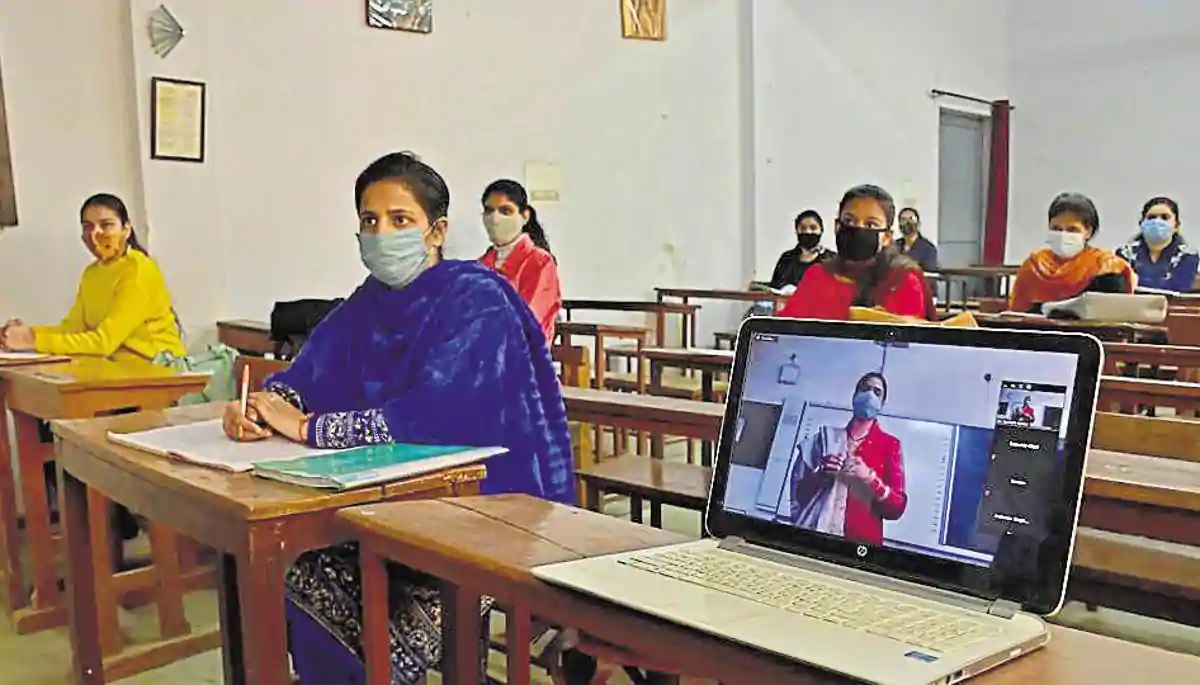
New Delhi, Dec 26: From turning walls of mud houses into blackboards to taking classes through loudspeakers on moving carts, from 'mohalla' classes to using public announcement system of panchayat bhawans, 2020 was full of struggle and innovation for teachers to ensure learning was not disrupted as schools remained closed due to COVID-19.

The over 10-month-long shutdown inspired creative ways to teach thousands of students who could not log on to online classes because they did not have access to smartphones and computers in several villages across the country.

Government school teachers in Dumka's Dumarthar village in Jharkhand found a new way to impart education to students who do not have access to smartphones.

They created blackboards on the walls of students' houses to teach them while maintaining social distancing.

"We started with an initiative called 'shiksha aapke dwaar' (education at your doorstep) to provide education to children who did not have access to smartphones and internet. More than 100 blackboards have been created on walls to teach students at their houses," said Tapan Kumar, a teacher in Dumarthar.

Every day, Indra Mukhi Chhetri, a maths and science teacher in Sikkim's Ravangala, visited homes of several students she identified and reached out to around 40 students in a week from class 1 to 5.

"Even if I take online classes, these students either do not have devices or Internet connectivity. Some of them may have access but then how do I maintain equality, others might feel left out. So I used to spend about 20 minutes with each student in a week.

"I collected their notebooks and write lessons for them, which they have to finish over the course of the week. I also brief the parents on what needs to be done," she said.

Ghanshyambhai, a teacher in Gujarat's Janan village, used the public announcement system of the village panchayat to share stories, songs, guidelines for parents on how to deal with children during the lockdown period, importance of exercising and much more.

"I also announced when I will be at Panchayat Bhawan so students or parents who want to clear any doubts or to interact can see me there, while maintaining social distancing," he added.

Teachers in Chhattisgarh conducted Mohalla (neighbourhood) classes in areas with low infection rates.

"We set up mini classrooms, with small groups of students, in community spaces. The teachers spent a couple of hours in each room, engaging with all students at least twice a week," one of the teachers said.

Another teacher in Chhattisgarh, Rudra Rana, used his motorcycle to conduct classes.

"The children were not able to go to study as schools were closed. So I thought why not bring the school to them. Even though schools continue to be shut, online classes are not viable for most rural students. I used a portable umbrella and a chalk board to take classes when I went to the village," he said.

In Haryana's Kanwarsika village, the morning bell announcing the start of a teaching session used to ring, not in the local school, but from a van equipped with a loudspeaker.

"Students settled down inside homes and in courtyards facing the street. First they recited a prayer following the teacher on loudspeaker and then they attended lessons of one subject each day," Noor Bano, a teacher with the government school in Nuh district, said.

In a newly-acquired daily practice, students in Haryana's Jhamri village opened their textbooks at the sight of the cart that arrived near their homes, filling the vacuum left by closure of schools due to the lockdown and lack of digital infrastructure such as feeble internet connectivity.

"I arranged for a loudspeaker system on a cart. The teachers were asked to turn-wise go with the cart and park it at a feasible location and impart lessons from there. It doesn't match up to the classroom learning levels but will at least ensure that students' don't drop out," said Satyanarayan Sharma, who runs a school in the village in Jhajjar district.

The lockdown induced by COVID-19 in March prompted schools and colleges to move to the virtual world for teaching and learning activities and exposed the existing digital divide in the country.

Comments

Add new comment

  • Coastaldigest.com reserves the right to delete or block any comments.
  • Coastaldigset.com is not responsible for its readers’ comments.
  • Comments that are abusive, incendiary or irrelevant are strictly prohibited.
  • Please use a genuine email ID and provide your name to avoid reject.
News Network
December 5,2025

indigoCEO.jpg

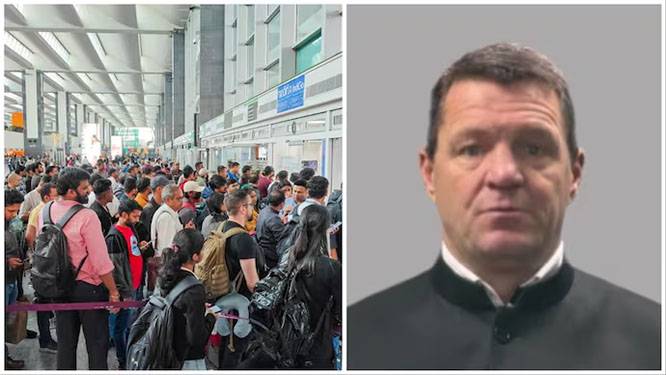
New Delhi, Dec 5: IndiGo CEO Pieter Elbers issued a public apology this evening after more than a thousand flights were cancelled today, making it the "most severely impacted day" in terms of cancellations. The biggest airline of the country cancelled "more than half" of its daily number of flights on Friday, said Elbers. He also said that even though the crisis will persist on Saturday, the airline anticipates fewer than 1,000 flight cancellations.

"Full normalisation is expected between December 10 and 15, though IndiGo cautions that recovery will take time due to the scale of operations," the IndiGo CEO said. 

IndiGo operates around 2,300 domestic and international flights daily.

Pieter Elbers, while apologising for the major inconvenience due to delays and cancellations, said the situation is a result of various causes.

The crisis at IndiGo stems from new regulations that boost pilots' weekly rest requirements by 12 hours to 48 and allow only two night-time landings per week, down from six. IndiGo has attributed the mass cancellations to "misjudgment and planning gaps".

Elbers also listed three lines of action that the airline will adopt to address the issue.

"Firstly, customer communication and addressing your needs, for this, messages have been sent on social media. And just now, a more detailed communication with information, refunds, cancellations and other customer support measures was sent," he said.

The airline has also stepped up its call centre capacity.

"Secondly, due to yesterday's situation, we had customers stranded mostly at the nation's largest airports. Our focus was for all of them to be able to travel today itself, which will be achieved. For this, we also ask customers whose flights are cancelled not to come to the airports as notifications are sent," the CEO said.

"Thirdly, cancellations were made for today to align our crew and planes to be where they need to start tomorrow morning afresh. Earlier measures of the last few days, regrettable, have proven not to be enough, but we have decided today to reboot all our systems and schedules, resulting in the highest numbers of cancellations so far, but imperative for progressive improvements starting from tomorrow," he added.

As airports witnessed chaotic scenes, the Directorate General of Civil Aviation (DGCA) stepped in to grant IndiGo a temporary exemption from stricter night duty rules for pilots. It also allowed substitution of leaves with a weekly rest period. 

Civil Aviation Minister Ram Mohan Naidu has said a high-level inquiry will be ordered and accountability will be fixed.

Comments

Add new comment

  • Coastaldigest.com reserves the right to delete or block any comments.
  • Coastaldigset.com is not responsible for its readers’ comments.
  • Comments that are abusive, incendiary or irrelevant are strictly prohibited.
  • Please use a genuine email ID and provide your name to avoid reject.
News Network
December 5,2025

Mangaluru: In a significant step to curb online hate and intimidation, Mangaluru City Police have registered a suo motu case against multiple Instagram accounts accused of circulating alleged provocative and threatening content.

While monitoring social media activity on Tuesday, Kankanady Town PSI Anitha Nikkam identified the Instagram handle ‘team_targetttt_900’ for posting a hate message alongside images of lethal weapons. Another account, ‘team_nagara_900’, allegedly shared a threatening post targeting activist Bharath Kumdelu, tagging additional pages such as KARAVALI-OFFICIAL.

Several other accounts — including ‘immu_bhai.fan’, ‘target_boy_900’, ‘kings_of_manglore’, ‘team_target_boys.900’, ‘arshad_mangalore’, ‘target_ka19_ullal’, ‘team_target__’, ‘troll_tigersz_900’, ‘tr_group_900’, and ‘team_target_900’ — are also under scrutiny for spreading similar inflammatory material, police said.

Authorities have urged citizens, especially young social media users, to report suspicious pages and avoid engaging with groups that glorify violence or threaten individuals. Online hate can quickly escalate into real-world harm, and police stress that sharing or promoting such content can attract legal consequences.

Comments

Add new comment

  • Coastaldigest.com reserves the right to delete or block any comments.
  • Coastaldigset.com is not responsible for its readers’ comments.
  • Comments that are abusive, incendiary or irrelevant are strictly prohibited.
  • Please use a genuine email ID and provide your name to avoid reject.
News Network
November 26,2025

students.jpg

Bengaluru, Nov 26: Karnataka is taking its first concrete steps towards lifting a three-decade-old ban on student elections in colleges and universities. Deputy Chief Minister D.K. Shivakumar announced Wednesday that the state government will form a small committee to study the reintroduction of campus polls, a practice halted in 1989 following incidents of violence.

Speaking at a 'Constitution Day' event organised by the Karnataka Congress, Mr. Shivakumar underscored the move's aim: nurturing new political leadership from the grassroots.

"Recently, (Leader of the Opposition in Lok Sabha) Rahul Gandhi wrote a letter to me and Chief Minister (Siddaramaiah) asking us to think about restarting student elections," Shivakumar stated. "I'm announcing today that we'll form a small committee and seek a report on this."

Student elections were banned in Karnataka in 1989, largely due to concerns over violence and the infiltration of political party affiliates into campus life. The ban effectively extinguished vibrant student bodies and the pipeline of young leaders they often produced.

Mr. Shivakumar, who also serves as the Karnataka Congress president, said that former student leaders will be consulted to "study the pros and cons" of the re-introduction.

Acknowledging the history of the ban, he added, "There were many criminal activities taking place back then. We’ll see how we can conduct (student) elections by regulating such criminal activities."

The Deputy CM reminisced about his own journey, which began on campus. He recalled his political activism at Sri Jagadguru Renukacharya College leading to his first Assembly ticket in 1985 at the age of 23. "That's how student leadership was at the time. Such leadership has gone today. College elections have stopped," he lamented, adding that for many, college elections were "like a big movement" where leaders were forged.

The move, driven by the Congress high command's push to cultivate young talent, will face scrutiny from academics and university authorities who have, in the past, expressed concern that the return of polls could disrupt the peaceful academic environment and turn campuses into political battlegrounds.

Comments

Add new comment

  • Coastaldigest.com reserves the right to delete or block any comments.
  • Coastaldigset.com is not responsible for its readers’ comments.
  • Comments that are abusive, incendiary or irrelevant are strictly prohibited.
  • Please use a genuine email ID and provide your name to avoid reject.