



‘Aadhaar, voter, ration cards just ID, not proof of citizenship’: EC defends SIR in Bihar

Agencies
July 22, 2025

EC.jpg

New Delhi, July 22: Facing legal scrutiny over its latest Special Intensive Revision (SIR) of electoral rolls in Bihar, the Election Commission of India (ECI) has defended the exercise as essential to "purifying" voter lists by weeding out ineligible names—using Aadhaar, ration cards, and voter IDs for identification.

In an affidavit filed before the court in response to a plea challenging the June 24 order for a pan-India SIR rollout starting with Bihar, the ECI argued that documents like Aadhaar are already being used—"for identification only"—not as proof of citizenship or domicile.

“The SIR exercise adds to the purity of elections by removing ineligible persons,” the EC stated, citing Article 326 of the Constitution and the Representation of the People Acts (1950 & 1951) to reinforce that only qualified citizens have the right to vote.

While critics have raised red flags over potential misuse of Aadhaar and the exclusion of genuine voters, the EC maintained that Aadhaar details are voluntary and only used in line with Section 23(4) of the RPA, 1950, and Section 9 of the Aadhaar Act, 2016—which itself clarifies that Aadhaar is not proof of citizenship.

The EC also referenced the Supreme Court’s July 17 observation suggesting Aadhaar, voter ID, and ration card may be used for SIR-2025 purposes—strengthening its legal stance.

Massive Voter Verification in Bihar

As of July 18, enumeration forms from 7.11 crore out of 7.89 crore voters (90.12%) in Bihar have already been collected, the EC revealed—adding that once deceased, duplicate, or relocated voters are factored in, the process has already reached 94.68% coverage.

Only 5.2% of voters remain to submit forms before the July 25 deadline. Booth Level Officers (BLOs) are delivering pre-filled forms and assisting voters across the state.

“No voter is being burdened unfairly. The same approach has been used in earlier revisions,” the EC said, dismissing allegations of selective targeting.

Critics Raise Alarm

Despite the EC’s clarification, rights groups and some political voices worry that the exercise could lead to disenfranchisement of marginalized communities, especially if Aadhaar or other documents are treated as de facto requirements.

As the Supreme Court weighs the issue, the debate over the balance between electoral integrity and inclusion continues to intensify.

Comments

Add new comment

  • Coastaldigest.com reserves the right to delete or block any comments.
  • Coastaldigset.com is not responsible for its readers’ comments.
  • Comments that are abusive, incendiary or irrelevant are strictly prohibited.
  • Please use a genuine email ID and provide your name to avoid reject.
News Network
January 23,2026

modIKERALA.jpg

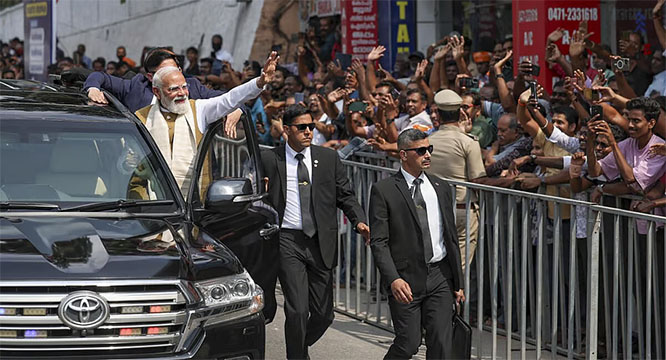
Prime Minister Narendra Modi, during his visit to Thiruvananthapuram on Friday, January 23, indicated that the Bharatiya Janata Party (BJP) is aiming to expand its political footprint in Kerala ahead of the Assembly elections scheduled in the coming months.

Speaking at a BJP-organised public meeting, Modi drew parallels between the party’s early electoral gains in Gujarat and its recent victory in the Thiruvananthapuram Municipal Corporation. The civic body win, which ended decades of Left control, was cited by the Prime Minister as a possible starting point for the party’s broader ambitions in the state.

Recalling BJP’s political trajectory in Gujarat, Modi said the party was largely insignificant before 1987 and received little media attention. He pointed out that the BJP’s first major breakthrough came with its victory in the Ahmedabad Municipal Corporation that year.

“Just as our journey in Gujarat began with one city, Kerala’s journey has also started with a single city,” Modi said, suggesting that the party’s municipal-level success could translate into wider electoral acceptance.

The Prime Minister alleged that successive governments led by the Left Democratic Front (LDF) and the United Democratic Front (UDF) had failed to adequately develop Thiruvananthapuram. He accused both fronts of corruption and neglect, claiming that basic infrastructure and facilities were denied to the capital city for decades.

According to Modi, the BJP’s control of the civic body represents a shift driven by public dissatisfaction with the existing political alternatives. He asserted that the BJP administration in Thiruvananthapuram had begun working towards development, though no specific details or timelines were outlined.

Addressing the gathering at Putharikandam Maidan, Modi said the BJP intended to project Thiruvananthapuram as a “model city,” reiterating his party’s commitment to governance-led change.

The Prime Minister’s visit to Kerala also included the inauguration of several development projects and the flagging off of new train services, as the BJP intensifies its political outreach in the poll-bound state.

Comments

Add new comment

  • Coastaldigest.com reserves the right to delete or block any comments.
  • Coastaldigset.com is not responsible for its readers’ comments.
  • Comments that are abusive, incendiary or irrelevant are strictly prohibited.
  • Please use a genuine email ID and provide your name to avoid reject.