




Bharat Bandh: Life hit in some states as farmers take national centerstage

News Network
December 8, 2020

massive.jpg

Shops and commercial establishments were closed, transport affected and traffic disrupted as protesters squatted on roads and train tracks in several parts of the country on Tuesday in response to ‘Bharat Bandh’ called by farmers demanding a repeal of the new agri laws.

Emergency services were exempted and banks, too, continued operations as the pan-India shutdown, backed by most opposition parties and many trade unions, came into effect with the maximum impact expected in states such as Punjab, Haryana and Delhi, the epicentre of the snowballing protests.

Security was stepped up across the country, noisy demonstrations were held in many places and the numbers swelled at Delhi’s border points where thousands of farmers have been camping for the last 11 days.

Protesters blocked railway tracks at several places in West Bengal, Bihar and Odisha. From the Rajasthan capital Jaipur, where ‘mandis’ were closed but shops open, there were reports of clashes between workers of the state’s ruling Congress and the BJP.

However, the protest was mostly peaceful in other parts of the country. In the national capital Delhi, where most main markets were open but app-based cabs off the roads, tension spiralled with the ruling Aam Aadmi Party (AAP) alleging that Delhi Police had put Chief Minister Arvind Kejriwal under house arrest.

City police denied the claim but the party stuck to its guns and said the move was a response to Kejriwal meeting protesting farmers at the Singhu border, the main access point for those coming to the city from Punjab. "No one has been permitted to leave or enter his residence... When our MLAs went to meet the chief minister they were beaten and thrown on the streets,” said party leader Saurabh Bhardwaj.

Joining the 'Bharat Bandh' call, some auto-rickshaw and taxi unions also took their vehicles off the roads in the city.

Farmer unions have threatened to block national highways and occupy toll plazas across the country during a 'chakka jam' protest from 11 am to 3 pm, part of the ‘bandh’ that comes a day before the Centre meets representatives of the farmers for another round of talks on Wednesday in a bid to resolve the impasse. All India Kisan Sabha general secretary Hannan Mollah described the shutdown as a show of strength by the farmers.

"We are standing by our demand that we want a complete repeal of the three laws and will not accept any cosmetic changes… If our demands are not met, we are ready to take our agitation to the next level," Mollah said.

The protesting farmers fear the new laws will pave the way for eliminating the safety of the Minimum Support Price cushion and do away with 'mandis', leaving them at the mercy of big corporates. The government maintains the new laws will bring farmers better opportunities and usher in new technologies in agriculture.

Farmers from Punjab and also Haryana have been the drivers of the movement. In Punjab, shops and commercial establishments were closed as were 3,400 fuel pumps. From morning, farmer leaders appealed to shopkeepers and traders to keep their shutters down.

All major parties in Punjab — the ruling Congress, AAP and the Shiromani Akali Dal -- have also extended their support.

Over 50,000 government employees have taken mass casual leave in support of farmers, said Punjab Civil Secretariat Staff Association president Sukhchain Khaira. In neighbouring BJP-JJP ruled Haryana, opposition parties Congress and Indian National Lok Dal extended their support. Farmers assembled on highways and other key roads in both states since morning.

"Everyone should hold a peaceful protest," Haryana BKU chief Gurnam Singh Charuni said in a video message.

The Haryana Police traffic advisory warned that main national highways would be closed and the peak time of impact is expected to be between 12 noon to 3 pm. In West Bengal, where the ruling Trinamool Congress has joined the Congress and the Left in supporting the shutdown but has stayed away from enforcing it, the response was mixed.

Life was disrupted with the railway tracks being blocked in several places and sit-ins on major roads and private vehicles off the roads in many parts of the state. However, public transport, including buses and taxis, operated though in fewer numbers. Life was hit in Bihar too with train tracks, highways and inner roads teeming with protesters as opposition parties extended their support.

RJD supporters, and workers of Pappu Yadav's Jan Adhikar Party fanned out to various parts of Patna, forcing shopkeepers to down their shutters and deflating tyres of vehicles plying on the roads. In Jehanabad, the movement of Patna-Palamu Express was obstructed for a few minutes until the bandh supporters, squatting on the tracks, were chased away by the police.

Train services were also affected in Odisha as activists of farmers' organisations, trade unions and political parties held sit-ins on tracks in Bhubaneswar, Cuttack, Bhadrak and Balasore. Elsewhere in the state, ruled by the Biju Janata Dal, normal life was hit with markets and offices shut and Congress and Left supporters blocking major roads. Major cities in Congress-ruled Chhattisgarh, including its capital Raipur, wore a deserted look too with most business establishments closed and public transport keeping away.

 "At least 36 farmers, labourers and social organisations led by the Chhattisgarh Kisan Majdoor Mahasangh (CKMM) have been staging protests at various locations in the state in support of the shutdown," said CKMM's Sanket Thakur.

Neighbouring Madhya Pradesh saw sporadic demonstrations, particularly in Seoni-Malwa in Hoshangabad district where protesters under the banner of the Krantikari Kisan Mazdoor Sangthan (KKMS) raised slogans and demanded a rollback of the laws. In Maharashtra, where the ruling Shiv Sena-NCP-Congress combine has extended its support, wholesale markets in major cities like Pune, Nashik, Nagpur and Aurangabad were shut. Retail shops also downed shutters in many cities.

Agriculture Produce Market Committees (APMCs) also remained closed in many parts of the state.

The state government appealed to protesters to not disrupt public transport services and buses and local trains were unaffected till afternoon.

“…The situation needs to be created to put pressure on the government, and to achieve this, farmers need to hit the streets. But no one should resort to violence," said social activist Anna Hazare who went on daylong fast in his village Ralegan Siddhi village in Maharashtra’s Ahmednagar district. In several parts of the country, including in Meghalaya and Arunachal Pradesh, life continued unimpeded.

In BJP-ruled Go as well, markets remained open and public transport was also normal. The three contentious laws at the centre of the farmer protests are the Farmers’ Produce Trade and Commerce (Promotion and Facilitation) Act, 2020, The Farmers (Empowerment and Protection) Agreement of Price Assurance and Farm Services Act, 2020 and The Essential Commodities (Amendment) Act, 2020.

Comments

Add new comment

  • Coastaldigest.com reserves the right to delete or block any comments.
  • Coastaldigset.com is not responsible for its readers’ comments.
  • Comments that are abusive, incendiary or irrelevant are strictly prohibited.
  • Please use a genuine email ID and provide your name to avoid reject.
News Network
December 4,2025

Mangaluru: Chaos erupted at Mangaluru International Airport (MIA) after IndiGo flight 6E 5150, bound for Mumbai, was repeatedly delayed and ultimately cancelled, leaving around 100 passengers stranded overnight. The incident highlights the ongoing country-wide operational disruptions affecting the airline, largely due to the implementation of new Flight Duty Time Limitations (FDTL) norms for crew.

The flight was initially scheduled for 9:25 PM on Tuesday but was first postponed to 11:40 PM, then midnight, before being cancelled around 3:00 AM. Passengers expressed frustration over last-minute communication and the lack of clarity, with elderly and ailing travellers particularly affected. “Though the airline arranged food, there was no proper communication, leaving us confused,” said one family member.

An IndiGo executive at MIA cited the FDTL rules, designed to prevent pilot fatigue by limiting crew working hours, as the cause of the cancellation. While alternative arrangements, including hotel stays, were offered, about 100 passengers chose to remain at the airport, creating tension. A replacement flight was arranged but also faced delays due to the same constraints, finally departing for Mumbai around 1:45 PM on Wednesday. Passengers either flew, requested refunds, or postponed their travel.

The Mangaluru delay is part of a broader crisis for IndiGo. The airline has been forced to make “calibrated schedule adjustments”—a euphemism for widespread cancellations and delays—after stricter FDTL norms came into effect on November 1.

While an IndiGo spokesperson acknowledged unavoidable flight disruptions due to technology issues, operational requirements, and the updated crew rostering rules, the DGCA has intervened, summoning senior airline officials to explain the chaos and outline corrective measures.

The ripple effect has been felt across the country, with major hubs like Bengaluru and Mumbai reporting numerous cancellations. The Mangaluru incident underscores the systemic operational strain currently confronting India’s largest carrier, leaving passengers nationwide grappling with uncertainty and delays.

Comments

Add new comment

  • Coastaldigest.com reserves the right to delete or block any comments.
  • Coastaldigset.com is not responsible for its readers’ comments.
  • Comments that are abusive, incendiary or irrelevant are strictly prohibited.
  • Please use a genuine email ID and provide your name to avoid reject.
News Network
November 27,2025

Bengaluru, Nov 27: Karnataka Chief Minister Siddaramaiah’s camp is reportedly on alert as the Congress leadership tussle in the state intensifies, particularly amid speculation over the potential promotion of Deputy Chief Minister D.K. Shivakumar. Siddaramaiah is said to be in a “wait-and-watch” mode after admitting to “confusion” earlier this week and urging the party to “put a full stop” to it.

Sources say his supporters are ready to act if senior leaders — including party chief Mallikarjun Kharge, Sonia Gandhi, and Rahul Gandhi — give any indication of backing Shivakumar. If the party insists on a leadership change, Siddaramaiah’s camp has a list of alternatives, underscoring the deep rift between the two leaders. One possible candidate is Home Minister G. Parameshwara, a Siddaramaiah loyalist and influential Dalit leader.

The strategy was reportedly finalized at a meeting led by PWD Minister Satish Jarkiholi, another Siddaramaiah supporter, who stressed that Delhi leaders need to resolve the issue. Kharge and the Gandhis are expected to meet soon, after which Siddaramaiah and Shivakumar may be summoned to Delhi.

Shivakumar has largely stayed non-confrontational, publicly endorsing Siddaramaiah and downplaying speculation about his own ambitions. However, he has made pointed comments emphasizing the importance of honoring promises, directed at Siddaramaiah.

The feud traces back to the 2023 state election, when Siddaramaiah was chosen as Chief Minister while Shivakumar, who led the party’s campaign, was made Deputy CM and state party chief — a departure from the Congress’ usual “one post per person” rule.

There were also hints of a prior understanding that Siddaramaiah would step down midway through the term. As the halfway mark passed last week, Shivakumar-aligned lawmakers have ramped up pressure on the party for a leadership change, with Shivakumar himself hinting at stepping down as state party chief to pursue the top job.

Comments

Add new comment

  • Coastaldigest.com reserves the right to delete or block any comments.
  • Coastaldigset.com is not responsible for its readers’ comments.
  • Comments that are abusive, incendiary or irrelevant are strictly prohibited.
  • Please use a genuine email ID and provide your name to avoid reject.
News Network
December 4,2025

indigocrisis.jpg

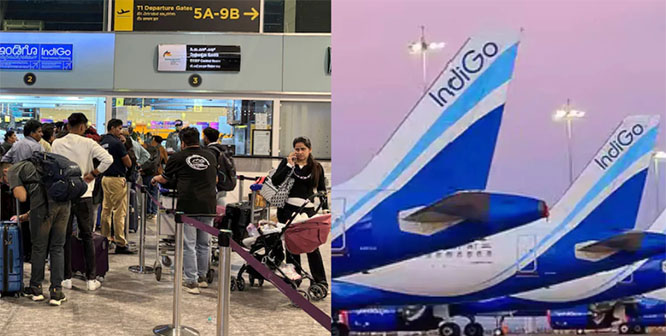
Angry outbursts, long queues, and desperate appeals filled airports across India today as IndiGo grappled with a severe operational breakdown. Hundreds of flights have been cancelled or delayed, leaving thousands of passengers stranded through the night and forcing many to spend long hours at helpdesks.

Social media was flooded with videos of fliers pleading for assistance, accusing the airline of misleading updates, and demanding accommodation after being stuck for 10 to 12 hours at airports such as Hyderabad and Bengaluru.

What Triggered the Meltdown?

IndiGo has attributed the widespread disruption to “a multitude of unforeseen operational challenges.” These include:

•    Minor technology glitches
•    Winter-season schedule adjustments
•    Bad weather
•    Congestion in the aviation network
•    New crew rostering rules (Flight Duty Time Limitations or FDTL)

Among these, the most disruptive has been the implementation of the updated FDTL norms introduced by the Directorate General of Civil Aviation (DGCA) in January 2024.

These rules were designed to reduce pilot fatigue and improve passenger safety. Key changes include:

•    Longer weekly rest periods for flight crew
•    A revised definition of “night,” extending it by an extra hour
•    Tighter caps on flight duty timing and night landings
•    Cutting night shifts for pilots and crew from six per roster cycle to just two

Once these norms became fully enforceable, airlines were required to overhaul rosters well in advance. For IndiGo, this triggered a sudden shortage of crew available for duty, leading to cascading delays and cancellations.

Why IndiGo Was Hit the Hardest

IndiGo is India’s largest airline by a wide margin, operating over 2,200 flights daily. That’s roughly double the number operated by Air India.

When an airline of this size experiences even a 10–20% disruption, it translates to 200–400 flights being delayed or grounded — producing massive spillover effects across the country.

IndiGo also relies heavily on high-frequency overnight operations, a model typical of low-cost carriers that aim to maximise aircraft utilisation and reduce downtime. The stricter FDTL norms clash with these overnight-heavy schedules, forcing the airline to pull back services.

Aviation bodies have also criticised IndiGo’s preparedness. The Airline Pilots' Association of India (ALPA) said airlines were given a two-year window to plan for the new rules but “started preparing rather late.” IndiGo, it said, failed to rebuild crew rosters 15 days in advance as required.

The Federation of Indian Pilots (FIP) went further, calling the crisis the result of IndiGo’s “prolonged and unorthodox lean manpower strategy,” and alleging that the airline adopted a hiring freeze even as it knew the new rules would require more careful staffing.

How Many Flights Are Affected?

In the past 48 hours, over 300 flights have been cancelled. At least 100 more are expected to be cancelled today.

City-wise impact:

•    Hyderabad: 33 expected cancellations; several fliers stranded overnight
•    Bengaluru: over 70 expected cancellations
•    Delhi, Mumbai, Chennai, Kolkata: widespread delays and missed connections

Passengers shared distressing accounts online.

One customer at Hyderabad airport said they waited from 6 PM to 9 AM with “no action taken” regarding their delayed Pune flight. Another said IndiGo repeatedly told them the crew was “arriving soon,” only for the delay to stretch over 12 hours.

IndiGo has apologised for the disruption and promised that operations will stabilise within 48 hours, adding that “calibrated adjustments” are being made to contain the chaos.

What Should Passengers Do Now?

For those flying in the next few days, especially with IndiGo, here are key precautions:

1. Keep Checking Flight Status
Monitor your flight closely before leaving for the airport, as delays may be announced last-minute.

2. Arrive Early
Expect long queues at counters and security due to crowding and rescheduling.

3. Carry Essentials
Pack snacks, water, basic medicines, chargers, and items for children or senior citizens. Extended waiting times should be anticipated.

4. Use Flexible Booking Options
If you booked tickets with a free-date-change or cancellation option, consider using them.
If you haven’t booked yet, prefer refundable or flexible fares, or even consider alternate airlines.

5. Follow IndiGo’s Updates
Keep an eye on IndiGo’s official social media channels and contact customer support for rebooking and refund queries.

What Needs to Change?

Pilot groups have raised concerns not just about staffing but also the planning practices behind it.
The Federation of Indian Pilots accused IndiGo of:

•    Imposing an unexplained hiring freeze despite knowing the FDTL changes were coming
•    Entering non-poaching agreements that limited talent movement
•    Keeping pilot pay frozen
•    Underestimating the need to restructure operations in advance

They have urged DGCA to approve seasonal schedules only after airlines prove they have adequate pilot strength under the new norms.

ALPA also warned that some airlines might be using the delays as an “immature pressure tactic” to push DGCA for relaxations in the new rules — which, if granted, could compromise the very safety standards the norms were meant to protect.

Both pilot bodies stressed that no exemption should dilute safety, and any deviations should be based solely on scientific risk assessment.

Is a Solution in Sight?

While IndiGo says normalcy will return within two days, aviation experts believe that fully stabilising operations could take longer, depending on how quickly the airline can:
•    Re-align rosters
•    Mobilise rested crew
•    Boost staffing
•    Adjust its winter schedule to match regulatory requirements
Passengers are advised to remain prepared for continued delays over the next few days as the airline works through its backlog. 

Comments

Add new comment

  • Coastaldigest.com reserves the right to delete or block any comments.
  • Coastaldigset.com is not responsible for its readers’ comments.
  • Comments that are abusive, incendiary or irrelevant are strictly prohibited.
  • Please use a genuine email ID and provide your name to avoid reject.