‘Billionaire Raj’: India now more unequal than in British Raj; top 1% income, wealth shares reach historical highs

News Network
March 21, 2024

billionairs.jpg

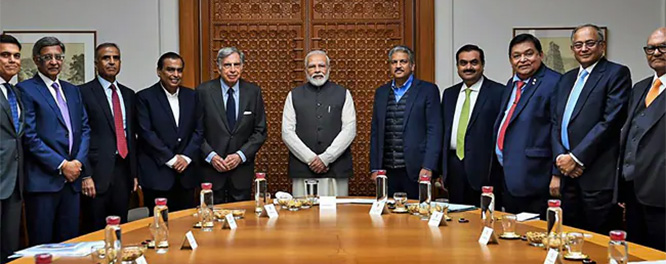
New Delhi: India has now become more unequal in terms of wealth concentration than the British colonial period as income and wealth of the top 1% of the country’s population have hit historical highs, according to a paper released by World Inequality Lab.

By 2022-23, the top 1 per cent income share in India was 22.6 per cent and the top 1 per cent wealth share rose to 40.1 per cent, with India’s top 1 per cent income share among the very highest in the world, higher than even South Africa, Brazil and the US.

Co-authored by economists Nitin Kumar Bharti, Lucas Chancel, Thomas Piketty, and Anmol Somanchi, the paper stated that the “Billionaire Raj” headed by “India’s modern bourgeoisie” is now more unequal than the British Raj headed by the colonialist forces. 

The paper said there is evidence to suggest the Indian tax system might be “regressive when viewed from the lens of net wealth”. A restructuring of the tax code is needed, the paper said, adding that a levy of a “super tax” of 2 per cent on the net wealth of 167 wealthiest families would yield 0.5 per cent of national income in revenues and create space for investments.

“A restructuring of the tax code to account for both income and wealth, and broad-based public investments in health, education and nutrition are needed to enable the average Indian, and not just the elites, to meaningfully benefit from the ongoing wave of globalisation. Besides serving as a tool to fight inequality, a “super tax” of 2% on the net wealth of the 167 wealthiest families in 2022-23 would yield 0.5% of national income in revenues and create valuable fiscal space to facilitate such investments,” the paper said. 

The paper has analysed data based on the annual tax tabulations published by the Indian income tax authorities to extract the distribution of top income earners between 1922-2020.

The share of national income going to the top 10 per cent fell from 37 per cent in 1951 to 30 per cent by 1982 after which it began steadily rising. From the early 1990s onwards, the top 10 per cent share increased substantially over the next three decades, nearly touching 60 per cent in the most recent years, the paper said. This compares with the bottom 50 per cent getting only 15 per cent of India’s national income in 2022-23.

 The top 1 per cent earn on average Rs 5.3 million, 23 times the average Indian (Rs 0.23 million). Average incomes for the bottom 50 per cent and the middle 40 per cent stood at Rs 71,000 (0.3 times national average) and Rs 1,65,000 (0.7 times national average), respectively.
The richest, nearly 10,000 individuals (of 92 million Indian adults) earn on average Rs 480 million (2,069 times the average Indian). “To get a sense of just how skewed the distribution is, one would have to be at nearly the 90th percentile to earn the average income in India,” the paper said.

In 2022, just the top 0.1 per cent in India earned nearly 10 per cent of the national income, while the top 0.01 per cent earned 4.3 per cent share of the national income and top 0.001 per cent earned 2.1 per cent of the national income.

Enlisting the probable reasons for sharp rise in top 1 per cent income shares, the paper said public and private sector wage growth could have played a part till the late 1990s, adding that there are good reasons to believe capital incomes likely played a role in subsequent years. For the shares of the bottom 50 per cent and middle 40 per cent remaining depressed, the paper said, the primary reason has been the lack of quality broad-based education, focused on the masses and not just the elites.

“One reason to be concerned with such high levels of inequality is that extreme concentration of incomes and wealth is likely to facilitate disproportionate influence on society and government. This is even more so in contexts with weak democratic institutions. After largely being a role model among post-colonial nations in this regard, the integrity of various key institutions in India appears to have been compromised in recent years. This makes the possibility of India’s slide towards plutocracy even more real. If only for this reason, income and wealth inequality in India must be closely tracked and challenged,” it said.

Comments

Add new comment

  • Coastaldigest.com reserves the right to delete or block any comments.
  • Coastaldigset.com is not responsible for its readers’ comments.
  • Comments that are abusive, incendiary or irrelevant are strictly prohibited.
  • Please use a genuine email ID and provide your name to avoid reject.
News Network
December 2,2025

Mangaluru, Dec 2: Mangaluru International Airport responded to a medical emergency late on Monday night. Air India Express flight IX 522, travelling from Riyadh to Thiruvananthapuram, was diverted to Mangaluru Airport after a passenger in his late 30s experienced a medical emergency on board.

The Airport’s Operations Control Centre received an alert regarding the passenger’s health condition. The airport activated its emergency response protocol, mobilising the airport medical team and coordinating with stakeholders including CISF, immigration, and customs. 

Upon landing, airport medical personnel attended to the passenger, assessed his condition, and arranged to shift him to a local tertiary-care hospital for further treatment. The passenger’s relatives accompanied the passenger, who incidentally received necessary medical care on board, which helped stabilise the situation.

Following the handling of the emergency, the flight departed for Thiruvananthapuram at 2:05 am on Tuesday.

"We appreciate the cooperation of all parties involved, and this incident reaffirms our ongoing commitment to prioritising passenger safety and readiness to respond to unforeseen emergencies with professionalism and care," the Airport spokesperson said. 

Comments

Add new comment

  • Coastaldigest.com reserves the right to delete or block any comments.
  • Coastaldigset.com is not responsible for its readers’ comments.
  • Comments that are abusive, incendiary or irrelevant are strictly prohibited.
  • Please use a genuine email ID and provide your name to avoid reject.
News Network
November 21,2025

israel.jpg

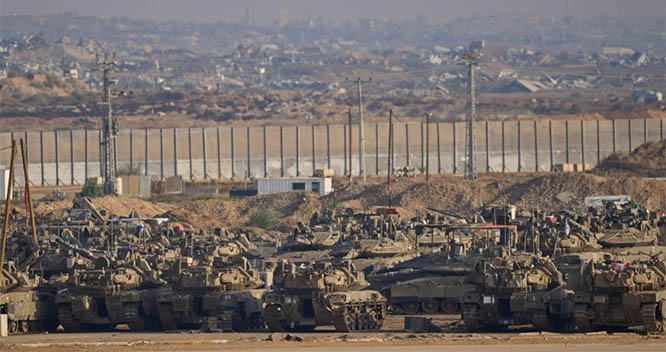
Local authorities say the Israeli military has expanded the so-called “yellow line” truce demarcation in Gaza City and repositioned its forces deeper into the territory in violation of a ceasefire agreement that came into force on October 10, besieging dozens of Palestinian families.

Gaza’s Government Media Office announced in a statement on Thursday that Israeli forces widened the boundary by shifting the markers, and advanced roughly 300 meters (984 feet) into the neighborhoods of Ash-Shaaf, An-Nazzaz and Baghdad Street.

The move pushed further into civilian areas, trapping families who were unable to flee as tanks rolled forward, it added.

“The fate of many of these families remains unknown amidst the shelling that targeted the area,” the office said, adding that the expansion of the yellow line shows a “blatant disregard” for the ceasefire deal.

On Friday, sources said the Israeli military carried out continued air and artillery strikes inside the so-called “yellow line” east of Khan Younis in the southern Gaza Strip.

According to the reports, Israeli warplanes and tanks targeted areas within the zone. One Palestinian was reported killed and several others wounded in the strikes, the sources said.

The fresh aggression came only a day after 25 Palestinians were killed in Israeli airstrikes on Gaza City and Khan Younis on Wednesday.

The media office reported that Israel has consistently violated the truce deal since its implementation last month, with near-daily attacks by air, artillery and direct shootings.

The office said over 400 violations have been documented. These breaches have resulted in the deaths of more than 300 Palestinians and left hundreds injured.

The Government Media Office in Gaza urged the guarantors of the ceasefire — the US, Egypt, Qatar and Turkey — to take swift action to halt the ongoing violations and facilitate the delivery of food, shelter materials, medical aid, and infrastructure equipment.

The so-called “yellow line,” set out in the agreement between Israel and Hamas resistance movement, refers to a non-physical partition where the Israeli military repositioned itself when the truce deal took effect.

It has allowed Israel, which routinely fires at Palestinians who approach the line, to retain control over more than half of the Gaza Strip.

International bodies, including the UN Independent International Commission of Inquiry, the International Association of Genocide Scholars, Amnesty International, Human Rights Watch, B’Tselem, and other rights groups, have concluded that the Israeli war on Gaza amounts to genocide.

In the attacks in Gaza since October 2023, Israel has killed at least 69,546 people and injured 170,833 others, leveling large swaths of the territory and displacing almost all of the population. 

Comments

Add new comment

  • Coastaldigest.com reserves the right to delete or block any comments.
  • Coastaldigset.com is not responsible for its readers’ comments.
  • Comments that are abusive, incendiary or irrelevant are strictly prohibited.
  • Please use a genuine email ID and provide your name to avoid reject.
News Network
December 1,2025

hindutvaboy.jpg

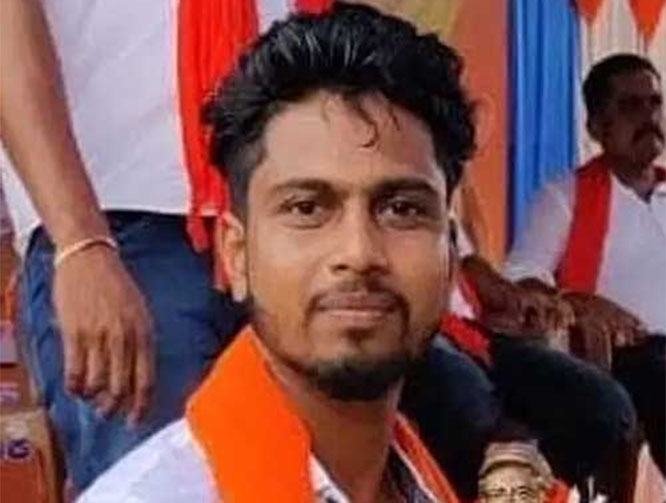
Udupi, Dec 1: A horrific case of alleged rape has unfolded in Udupi, where a worker from a Hindutva organisation, previously arrested and released on bail for harassing a young woman, is now accused of waylaying and sexually assaulting her.

The arrested individual has been identified as Pradeep Poojary (26), a member of the Hindu Jagarana Vedike's Nairkode unit in Perdur.

Poojary had allegedly been relentlessly harassing the young woman, pressuring her to marry him. When she bravely stood up to him and refused his demands, she filed a formal complaint at the Hiriyadka police station. He was subsequently arrested in that initial harassment case but was later granted bail.

According to police reports, driven by the same malicious grudge, Poojary allegedly intercepted the woman again on November 29. While she was walking through a deserted area, the accused is claimed to have threatened her by grabbing her neck. When she again refused to marry him, he allegedly proceeded to rape her.

The survivor immediately informed her family about the traumatic assault. Following this, her parents lodged a complaint at the Udupi women’s police station.

Police arrested Poojary again and produced him before the court. He has since been remanded to judicial custody.

Comments

Add new comment

  • Coastaldigest.com reserves the right to delete or block any comments.
  • Coastaldigset.com is not responsible for its readers’ comments.
  • Comments that are abusive, incendiary or irrelevant are strictly prohibited.
  • Please use a genuine email ID and provide your name to avoid reject.