Canada alleges Modi govt link to assassination of Sikh citizen on its soil, expels Indian diplomat

News Network
September 19, 2023

CanadaIndia.jpg

New Delhi, Sept 19: In a major embarrassment to India, the Prime Minister Justin Trudeau told the Canadian parliament on Monday that his country’s security agencies had “credible” intelligence that the Prime Minister Narendra Modi-led government of India was behind the June 2023 murder of a pro-Khalistan leader in British Columbia, Hardeep Singh Nijjar.

Trudeau’s charge was followed up by an official announcement from foreign minister Melanie Joly that Canada had expelled a senior Indian diplomat.

“Over the past number of weeks, Canadian security agencies have been actively pursuing credible allegations of a potential link between agents of the Government of India and the killing of a Canadian citizen, Hardeep Singh Nijjar,” Trudeau told the House of Commons, adding that he raised the issue with Indian Prime Minister Narendra Modi in “no uncertain terms”.

He asserted that “any involvement of a foreign government in the killing of a Canadian citizen on Canadian soil is an unacceptable violation of our sovereignty”.

So far, the Canadian government has not made public any of the evidence it has for its claim of an Indian government hand in Nijjar’s killing.

Joly’s office said that the expelled Indian diplomat is Pavan Kumar Rai, identified by them as the head of the Research and Analysis Wing (RAW), India’s foreign intelligence agency, in Canada. A 1997 batch Indian Police Service officer, he was posted to Ottawa as minister (eco, coordination, community affairs) in the Indian high commission.

It is likely that India will also expel a Canadian diplomat in a reciprocal move.

In a statement on Tuesday morning, the Indian Ministry of External Affairs said it rejected the allegations made by Canada’s prime minister and foreign minister. “Allegations of Government of India’s involvement in any act of violence in Canada are absurd and motivated,” the statement said.

The statement also confirmed Trudeau’s claim that he had brought up this allegation with Modi. “Similar allegations were made by the Canadian Prime Minister to our Prime Minister, and were completely rejected,” MEA’s statement said.
India also alleged that Canada had sympathised with Khalistani terrorists and was trying to deflect from the real issue with these allegations. “Such unsubstantiated allegations seek to shift the focus from Khalistani terrorists and extremists, who have been provided shelter in Canada and continue to threaten India’s sovereignty and territorial integrity. The inaction of the Canadian Government on this matter has been a long-standing and continuing concern,” the statement reads. “That Canadian political figures have openly expressed sympathy for such elements remains a matter of deep concern.”

India’s statement 

CBC News reported that Trudeau had already briefed “the leaders of some of Canada’s closest allies about the case, including British Prime Minister Rishi Sunak, French President Emmanuel Macron and U.S. President Joe Biden.”

Joly also stated that she will be raising the assassination issue with her G7 counterparts at the United Nations in New York on Monday evening.

White House National Security Council spokesperson Adrienne Watson said the US is “deeply concerned” about Canada’s allegations. “We remain in regular contact with our Canadian partners. It is critical that Canada’s investigation proceed and the perpetrators be brought to justice,” Watson said.

Before the Ministry of External Affairs’ public statement, the Globe and Mail reported that the Indian government had denied all responsibility for Nijjar’s shooting and was insisting that pro-Khalistan activists in Canada had misled Canadian investigators. The newspaper said it had learned of this Indian response from sources that it was unable to identify “as they could face prosecution under the Security of Information Act” for discussing the issue.

Earlier in June, Hardeep Singh Nijjar, who headed the pro-Khalistan outfits Khalistan Tiger Force and the Canadian arm of Sikhs For Justice (SFJ), was shot dead at a parking lot of a gurdwara in Surrey, Canada. He was wanted for the shooting of a priest in Punjab and was the third pro-Khalistan activist to die abroad in a month and half. Immediately after his death, his supporters had claimed that the Indian government was behind the killing.

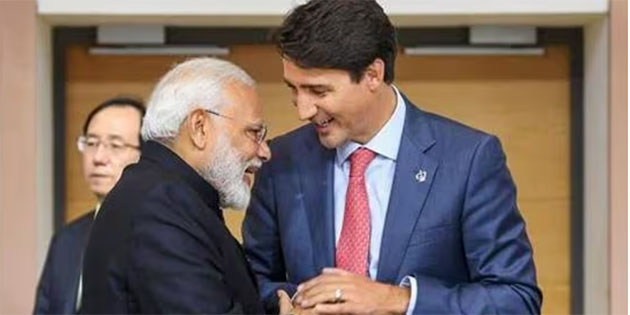
Relations between India and Canada have been tense over the activities of pro-Khalistian groups in Canada and Ottawa’s perception that New Delhi was interfering in its internal affairs. The meeting between Trudeau and Modi last week at the G20 was visibly frosty, going by the scowls on display during the photo-op and the divergent statements each side issued.

This is the first time in recent memory that any foreign government, barring Pakistan, has directly accused New Delhi of being involved in an act of violence on their territory, let alone a murder.

At the same time, allegations that Indian security forces and intelligence agents have acted abroad in contravention of international law have been made recently in two high profile cases. 
The first concerned the capture and rendition of Sheikha Latifa, daughter of the ruler of Dubai, by Indian special forces on the high seas off Goa in March 2018, and the second the attempted abduction of fugitive diamantaire Mehul Choksi in Antigua in May 2021.

Trudeau’s appeal

Government sources cited by the Globe and Mail newspaper in Canada privately ruled out the severing of diplomatic relations with India but said Ottawa was considering measures to respond to what it considers a serious violation of Canadian sovereignty.

Trudeau also told Canadian MPs that India was urged “to get to the bottom of the matter” when top Canada’s intelligence and security officials “declared [their]–  deep concerns” to New Delhi.

“I also expect it (India) to reiterate that its position on extra-judicial operations in another country is clearly and unequivocally in line with international law,” he said. “It is contrary to the fundamental rules by which free, open, and democratic societies conduct themselves.”

Trudeau told parliament that he had already briefed Canada’s opposition leaders about the Indian government’s involvement. The opposition in Canada has stood by the Canadian government in its stance.

“These allegations, if true, are an outrageous violation of Canada’s sovereignty. More disturbing is that this was perpetrated by another democracy,” shadow foreign affairs minister Michael Chong said.

“If these allegations are true, they represent an outrageous affront to Canada, to Canada’s sovereignty. Our citizens must be safe from extrajudicial killings of all kinds, most of all, from foreign governments,” Conservative leader Pierre Poilievre was quoted by the Globe and Mail as saying.  “Canadians deserve to be protected on Canadian soil. We call on the Indian government to act with utmost transparency as authorities investigate this murder, because the truth must come out.” “Let us lock arms and join hands in condemning this murder, standing with the family and the friends of this victim. Let’s put aside our difference to stand up for the rule of law. One law for all our people,” CBC reported him saying.

New Democratic Party leader Jagmeet Singh reacted to Trudeau’s disclosure by saying the Modi government has pursued “division, violence, persecution” and was “attacking those who are critical” of it.

Canada’s public safety minister Dominic LeBlanc announced that David Vigneault, director of the Canadian Security Intelligence Service, and Trudeau’s national security adviser, Jody Thomas, had also recently visited India several times to discuss the assassination.

The Canadian prime minister was in India for the G-20 summit, during which he had short and tense meeting with the Indian Prime Minister Narendra Modi. He was the only leader who didn’t attend the official banquet hosted by the Indian president on Saturday evening.

During the meeting on Sunday (September 10), the Indian readout said that Modi raised “strong concerns” over the activities of pro-Khalistan extremist groups. Trudeau told reporters that he had raised the issue of “foreign interference” with the Indian leader.

Earlier this month, the Indian ambassador to Canada had revealed that Ottawa had sought a pause “within the last month” on negotiation for a free trade agreement, but had refused to give any reasons.

Last week, Canada postponed a pre-scheduled trade mission which was to be led by Minister Mary Ng for five days from October 9 in Mumbai. There was no official explanation given for the postponement.

Quoting a Canadian government source, CBC reports that Trudeau’s NSA, who was in Delhi for the G20, “quietly” flew to London instead of Ottawa where she “informed the UK government that Canada’s relations with India were about to get worse now that Canada had credible evidence linking India’s government to Nijjar’s death, the source said.”

India has summoned the Canadian high commissioner at least twice this year to protest the activities of Khalistan activists in Canada. In March, India protested the “actions of separatist and extremist elements against our diplomatic Mission and Consulates in Canada” after rallies organised by them. In July, the Ministry of External Affairs again summoned the Canadian high commissioner over the issue of pro-Khalistan posters – bearing photos of Indian diplomats – that accused the Indian government of being behind the killing of H Nijjar.

Comments

Add new comment

  • Coastaldigest.com reserves the right to delete or block any comments.
  • Coastaldigset.com is not responsible for its readers’ comments.
  • Comments that are abusive, incendiary or irrelevant are strictly prohibited.
  • Please use a genuine email ID and provide your name to avoid reject.
News Network
December 4,2025

indigocrisis.jpg

Angry outbursts, long queues, and desperate appeals filled airports across India today as IndiGo grappled with a severe operational breakdown. Hundreds of flights have been cancelled or delayed, leaving thousands of passengers stranded through the night and forcing many to spend long hours at helpdesks.

Social media was flooded with videos of fliers pleading for assistance, accusing the airline of misleading updates, and demanding accommodation after being stuck for 10 to 12 hours at airports such as Hyderabad and Bengaluru.

What Triggered the Meltdown?

IndiGo has attributed the widespread disruption to “a multitude of unforeseen operational challenges.” These include:

•    Minor technology glitches
•    Winter-season schedule adjustments
•    Bad weather
•    Congestion in the aviation network
•    New crew rostering rules (Flight Duty Time Limitations or FDTL)

Among these, the most disruptive has been the implementation of the updated FDTL norms introduced by the Directorate General of Civil Aviation (DGCA) in January 2024.

These rules were designed to reduce pilot fatigue and improve passenger safety. Key changes include:

•    Longer weekly rest periods for flight crew
•    A revised definition of “night,” extending it by an extra hour
•    Tighter caps on flight duty timing and night landings
•    Cutting night shifts for pilots and crew from six per roster cycle to just two

Once these norms became fully enforceable, airlines were required to overhaul rosters well in advance. For IndiGo, this triggered a sudden shortage of crew available for duty, leading to cascading delays and cancellations.

Why IndiGo Was Hit the Hardest

IndiGo is India’s largest airline by a wide margin, operating over 2,200 flights daily. That’s roughly double the number operated by Air India.

When an airline of this size experiences even a 10–20% disruption, it translates to 200–400 flights being delayed or grounded — producing massive spillover effects across the country.

IndiGo also relies heavily on high-frequency overnight operations, a model typical of low-cost carriers that aim to maximise aircraft utilisation and reduce downtime. The stricter FDTL norms clash with these overnight-heavy schedules, forcing the airline to pull back services.

Aviation bodies have also criticised IndiGo’s preparedness. The Airline Pilots' Association of India (ALPA) said airlines were given a two-year window to plan for the new rules but “started preparing rather late.” IndiGo, it said, failed to rebuild crew rosters 15 days in advance as required.

The Federation of Indian Pilots (FIP) went further, calling the crisis the result of IndiGo’s “prolonged and unorthodox lean manpower strategy,” and alleging that the airline adopted a hiring freeze even as it knew the new rules would require more careful staffing.

How Many Flights Are Affected?

In the past 48 hours, over 300 flights have been cancelled. At least 100 more are expected to be cancelled today.

City-wise impact:

•    Hyderabad: 33 expected cancellations; several fliers stranded overnight
•    Bengaluru: over 70 expected cancellations
•    Delhi, Mumbai, Chennai, Kolkata: widespread delays and missed connections

Passengers shared distressing accounts online.

One customer at Hyderabad airport said they waited from 6 PM to 9 AM with “no action taken” regarding their delayed Pune flight. Another said IndiGo repeatedly told them the crew was “arriving soon,” only for the delay to stretch over 12 hours.

IndiGo has apologised for the disruption and promised that operations will stabilise within 48 hours, adding that “calibrated adjustments” are being made to contain the chaos.

What Should Passengers Do Now?

For those flying in the next few days, especially with IndiGo, here are key precautions:

1. Keep Checking Flight Status
Monitor your flight closely before leaving for the airport, as delays may be announced last-minute.

2. Arrive Early
Expect long queues at counters and security due to crowding and rescheduling.

3. Carry Essentials
Pack snacks, water, basic medicines, chargers, and items for children or senior citizens. Extended waiting times should be anticipated.

4. Use Flexible Booking Options
If you booked tickets with a free-date-change or cancellation option, consider using them.
If you haven’t booked yet, prefer refundable or flexible fares, or even consider alternate airlines.

5. Follow IndiGo’s Updates
Keep an eye on IndiGo’s official social media channels and contact customer support for rebooking and refund queries.

What Needs to Change?

Pilot groups have raised concerns not just about staffing but also the planning practices behind it.
The Federation of Indian Pilots accused IndiGo of:

•    Imposing an unexplained hiring freeze despite knowing the FDTL changes were coming
•    Entering non-poaching agreements that limited talent movement
•    Keeping pilot pay frozen
•    Underestimating the need to restructure operations in advance

They have urged DGCA to approve seasonal schedules only after airlines prove they have adequate pilot strength under the new norms.

ALPA also warned that some airlines might be using the delays as an “immature pressure tactic” to push DGCA for relaxations in the new rules — which, if granted, could compromise the very safety standards the norms were meant to protect.

Both pilot bodies stressed that no exemption should dilute safety, and any deviations should be based solely on scientific risk assessment.

Is a Solution in Sight?

While IndiGo says normalcy will return within two days, aviation experts believe that fully stabilising operations could take longer, depending on how quickly the airline can:
•    Re-align rosters
•    Mobilise rested crew
•    Boost staffing
•    Adjust its winter schedule to match regulatory requirements
Passengers are advised to remain prepared for continued delays over the next few days as the airline works through its backlog. 

Comments

Add new comment

  • Coastaldigest.com reserves the right to delete or block any comments.
  • Coastaldigset.com is not responsible for its readers’ comments.
  • Comments that are abusive, incendiary or irrelevant are strictly prohibited.
  • Please use a genuine email ID and provide your name to avoid reject.
News Network
December 6,2025

pilot.jpg

New Delhi: IndiGo, India’s largest airline, faced major operational turbulence this week after failing to prepare for new pilot-fatigue regulations issued by the Directorate General of Civil Aviation (DGCA). The stricter rules—designed to improve flight safety—took effect in phases through 2024, with the latest implementation on November 1. IndiGo has acknowledged that inadequate roster planning led to widespread cancellations and delays.

Below are the key DGCA rules that affected IndiGo’s operations:

1. Longer Mandatory Weekly Rest

Weekly rest for pilots has been increased from 36 hours to 48 hours.

The government says the extended break is essential to curb cumulative fatigue. This rule remains in force despite the current crisis.

2. Cap on Night Landings

Pilots can now perform only two night landings per week—a steep reduction from the earlier limit of six.

Night hours, defined as midnight to early morning, are considered the least alert period for pilots.

Given the disruptions, this rule has been temporarily relaxed for IndiGo until February 10.

3. Reduced Maximum Night Flight Duty

Flight duty that stretches into the night is now capped at 10 hours.

This measure has also been kept on hold for IndiGo until February 10 to stabilize operations.

4. Weekly Rest Cannot Be Replaced With Personal Leave

Airlines can no longer count a pilot’s personal leave as part of the mandatory 48-hour rest.

Pilots say this closes a loophole that previously reduced actual rest time.

Currently, all airlines are exempt from this rule to normalise travel.

5. Mandatory Fatigue Monitoring

Airlines must submit quarterly fatigue reports along with corrective actions to DGCA.

This system aims to create a transparent fatigue-tracking framework across the industry.

The DGCA has stressed that these rules were crafted to strengthen flight safety and align India with global fatigue-management standards. The temporary relaxations are expected to remain until February 2025, giving IndiGo time to stabilise its schedules and restore normal air travel.

Comments

Add new comment

  • Coastaldigest.com reserves the right to delete or block any comments.
  • Coastaldigset.com is not responsible for its readers’ comments.
  • Comments that are abusive, incendiary or irrelevant are strictly prohibited.
  • Please use a genuine email ID and provide your name to avoid reject.
News Network
December 16,2025

bengal.jpg

The deletion of over 58 lakh names from West Bengal’s draft electoral rolls following a Special Intensive Revision (SIR) has sparked widespread concern and is likely to deepen political tensions in the poll-bound state.

According to the Election Commission, the revision exercise has identified 24 lakh voters as deceased, 19 lakh as relocated, 12 lakh as missing, and 1.3 lakh as duplicate entries. The draft list, published after the completion of the first phase of SIR, aims to remove errors and duplication from the electoral rolls.

However, the scale of deletions has raised fears that a large number of eligible voters may have been wrongly excluded. The Election Commission has said that individuals whose names are missing can file objections and seek corrections. The final voter list is scheduled to be published in February next year, after which the Assembly election announcement is expected. Notably, the last Special Intensive Revision in Bengal was conducted in 2002.

The development has intensified the political row over the SIR process. Chief Minister Mamata Banerjee and her Trinamool Congress have strongly opposed the exercise, accusing the Centre and the Election Commission of attempting to disenfranchise lakhs of voters ahead of the elections.

Addressing a rally in Krishnanagar earlier this month, Banerjee urged people to protest if their names were removed from the voter list, alleging intimidation during elections and warning of serious consequences if voting rights were taken away.

The BJP, meanwhile, has defended the revision and accused the Trinamool Congress of politicising the issue to protect what it claims is an illegal voter base. Leader of the Opposition Suvendu Adhikari alleged that the ruling party fears losing power due to the removal of deceased, fake, and illegal voters.

The controversy comes amid earlier allegations by the Trinamool Congress that excessive work pressure during the SIR led to the deaths by suicide of some Booth Level Officers (BLOs), for which the party blamed the Election Commission. With the draft list now out, another round of political confrontation appears imminent.

As objections begin to be filed, the focus will be on whether the correction mechanism is accessible, transparent, and timely—critical factors in ensuring that no eligible voter is denied their democratic right ahead of a crucial election.

Comments

Add new comment

  • Coastaldigest.com reserves the right to delete or block any comments.
  • Coastaldigset.com is not responsible for its readers’ comments.
  • Comments that are abusive, incendiary or irrelevant are strictly prohibited.
  • Please use a genuine email ID and provide your name to avoid reject.