



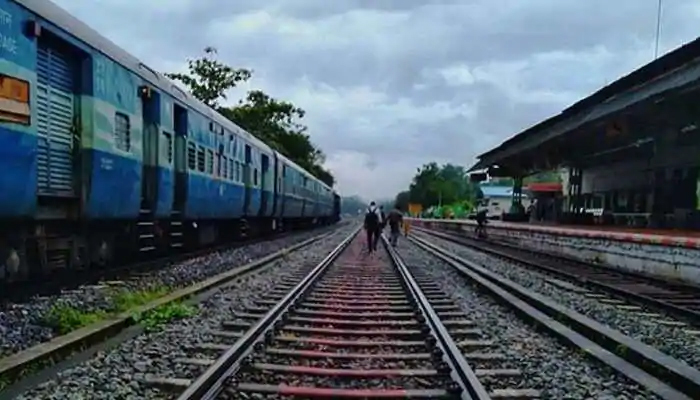
Can't give definite date for resumption of normal train services: Railway Board chairman

Agencies
December 18, 2020

456.jpg

New Delhi, Dec 18: The railways on Friday said it is not possible to provide a definite date for the resumption of normal train services and pointed out that it has seen an 87-per cent drop in the earnings from the passenger segment so far this year, compared to the last year.

Addressing a press conference, Railway Board Chairman VK Yadav said so far in the current fiscal, the railways' earnings from passenger revenue have been Rs 4,600 crore and estimates show that by March 2021, the figure is expected to rise to Rs 15,000 crore.

Yadav, however, said the loss in the passenger segment will be overcome from the earnings through freight, which is expected to cross last year's figures. He said by December, the national transporter had already achieved 97 per cent of last year's loading.

Yadav said the railways has suffered massive losses in passenger revenue due to the suspension of train services because of the coronavirus pandemic.

"It is not possible to give a definite date for the resumption of normal train services. The general managers have been in discussion with the state governments and we will resume the services when and where we get the go-ahead. Even now, the situation is not normal.

"So far, our earnings from passenger revenue are Rs 4,600 crore and by the year-end, our aim is to take our total earnings from the passenger segment to Rs 15,000 crore. In the last fiscal, our earnings from this segment were Rs 53,000 crore. This makes our earnings 87 per cent less than the last year," Yadav said.

He pointed out that even the trains that are currently in operation are witnessing around 30-40 per cent occupancy on an average, reflecting that the fear of the pandemic is still there.

Yadav said the railways is currently operating 1,089 special trains, while the Kolkata Metro is running 60 per cent of its services, the Mumbai suburban is running 88 per cent trains and 50 per cent of the Chennai suburban services are in operation.

Yadav said senior railway officials are closely monitoring the situation and normal train services will be resumed "slowly" in a phased manner.


Comments

Add new comment

  • Coastaldigest.com reserves the right to delete or block any comments.
  • Coastaldigset.com is not responsible for its readers’ comments.
  • Comments that are abusive, incendiary or irrelevant are strictly prohibited.
  • Please use a genuine email ID and provide your name to avoid reject.
News Network
December 6,2025

pilot.jpg

New Delhi: IndiGo, India’s largest airline, faced major operational turbulence this week after failing to prepare for new pilot-fatigue regulations issued by the Directorate General of Civil Aviation (DGCA). The stricter rules—designed to improve flight safety—took effect in phases through 2024, with the latest implementation on November 1. IndiGo has acknowledged that inadequate roster planning led to widespread cancellations and delays.

Below are the key DGCA rules that affected IndiGo’s operations:

1. Longer Mandatory Weekly Rest

Weekly rest for pilots has been increased from 36 hours to 48 hours.

The government says the extended break is essential to curb cumulative fatigue. This rule remains in force despite the current crisis.

2. Cap on Night Landings

Pilots can now perform only two night landings per week—a steep reduction from the earlier limit of six.

Night hours, defined as midnight to early morning, are considered the least alert period for pilots.

Given the disruptions, this rule has been temporarily relaxed for IndiGo until February 10.

3. Reduced Maximum Night Flight Duty

Flight duty that stretches into the night is now capped at 10 hours.

This measure has also been kept on hold for IndiGo until February 10 to stabilize operations.

4. Weekly Rest Cannot Be Replaced With Personal Leave

Airlines can no longer count a pilot’s personal leave as part of the mandatory 48-hour rest.

Pilots say this closes a loophole that previously reduced actual rest time.

Currently, all airlines are exempt from this rule to normalise travel.

5. Mandatory Fatigue Monitoring

Airlines must submit quarterly fatigue reports along with corrective actions to DGCA.

This system aims to create a transparent fatigue-tracking framework across the industry.

The DGCA has stressed that these rules were crafted to strengthen flight safety and align India with global fatigue-management standards. The temporary relaxations are expected to remain until February 2025, giving IndiGo time to stabilise its schedules and restore normal air travel.

Comments

Add new comment

  • Coastaldigest.com reserves the right to delete or block any comments.
  • Coastaldigset.com is not responsible for its readers’ comments.
  • Comments that are abusive, incendiary or irrelevant are strictly prohibited.
  • Please use a genuine email ID and provide your name to avoid reject.