Delhi roads turn into rivers as Yamuna water swells to record level

News Network
July 13, 2023

delhi.jpg

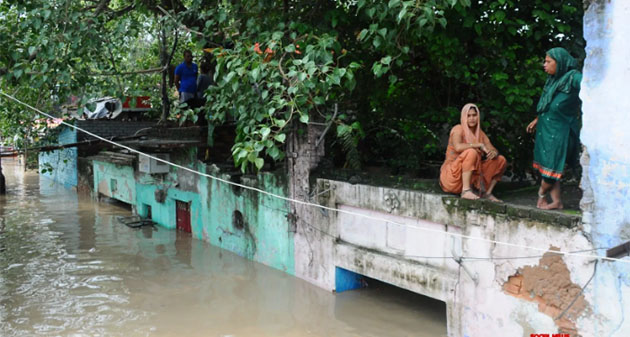
New Delhi, July 13: The torrential Yamuna in Delhi swelled to a staggering 208.48 metres Thursday morning, inundating nearby streets and public and private infrastructure, and causing immense hardships to people living in close proximity to the river.

The water level at the Old Railway Bridge crossed the 208-metre mark Wednesday night and rose to 208.48 metres by 8 am on Thursday. It is expected to rise further, according to the Central Water Commission, which has termed it an "extreme situation".

With the situation deteriorating every passing hour, Chief Minister Arvind Kejriwal urged the Centre to intervene and the city police imposed Section 144 of the CrPC in flood-prone areas to prevent unlawful assembly of four or more people and public movement in groups.

Lt Governor V K Saxena has also called a meeting of the Delhi Disaster Management Authority on Thursday.

In a letter to Union Home Minister Amit Shah, Kejriwal requested that the water from Hathnikund barrage in Haryana be released slowly and pointed out that Delhi is set to host the G20 Summit meeting in a few weeks.

"The news of flooding in the capital of the country will not send a good message to the world. Together we will have to save the people of Delhi from this situation," he said.

There are two major barrages on the Yamuna -- Dakpathar in Dehradun and Hathnikund in Yamunanagar, upstream of Delhi. There are no dams on the river and, therefore, most of the monsoon flow remains unutilised, resulting in floods during the season.

Delhi recorded a rapid increase in the Yamuna's water level over the past three days.

It shot up from 203.14 metres at 11 am on Sunday to 205.4 metres at 5 pm on Monday, breaching the danger mark of 205.33 metres 18 hours earlier than expected.

The river exceeded the evacuation mark of 206 metres Monday night, prompting the relocation of people residing in flood-prone areas to safer locations and the closure of the Old Railway Bridge for road and rail traffic. The water level breached the previous all-time record of 207.49 metres by 1 pm on Wednesday and the 208-metre mark by 10 pm.

Major floods in Delhi occurred in 1924, 1977, 1978, 1988, 1995, 1998, 2010 and 2013. An analysis of flood data from 1963 to 2010 indicate an increasing trend for floods occurring in September, and a decreasing trend in July, according to research.

According to the CWC, the flow rate at the Hathnikund barrage remained above 1.5 cusecs at night.

Normally, the flow rate at the barrage is 352 cusecs, but heavy rainfall in the catchment areas increases the discharge. One cusec is equivalent to 28.32 litres per second.

The India Meteorological Department has predicted heavy rain in Uttarakhand and Uttar Pradesh on Thursday and Friday, raising concern about a further rise in the water level in the rivers.

Jammu and Kashmir, Himachal Pradesh, Punjab and Haryana recorded "heavy to extremely heavy" rainfall over three days from Saturday. This resulted in overflowing rivers, creeks and drains that have massively damaged infrastructure and disrupted essential services.

Delhi witnessed its highest rainfall (153 mm) in a single day in July since 1982 in the 24-hour period ending at 8.30 am on Sunday. The city received an additional 107 mm rainfall in the subsequent 24 hours, exacerbating the situation. The heavy rain transformed roads into gushing streams, parks into watery labyrinths and marketplaces into submerged realms.

The Yamuna river system's catchment covers parts of Uttar Pradesh, Uttarakhand, Himachal Pradesh, Haryana, Rajasthan, Madhya Pradesh and Delhi.

The low-lying areas near the river in Delhi, inhabited by around 41,000 people, are considered prone to flooding. Encroachments on the river's floodplain have occurred over the years, despite the land belonging to the Delhi Development Authority, the revenue department and private individuals.

The city's northeast, east, central, and southeast districts are most affected by floods in the city. A study on 'Urban Flooding and its Management' by the Irrigation and Flood Control Department identifies east Delhi under the floodplain region and highly vulnerable to floods.

The Yamuna breached the danger mark twice in September last year, with the water level reaching 206.38 metres.

In 2019, the river witnessed a peak flow rate of 8.28 lakh cusecs on August 18-19 and the water level rose to 206.6 metres. In 2013, it reached a level of 207.32 metres.

Comments

Add new comment

  • Coastaldigest.com reserves the right to delete or block any comments.
  • Coastaldigset.com is not responsible for its readers’ comments.
  • Comments that are abusive, incendiary or irrelevant are strictly prohibited.
  • Please use a genuine email ID and provide your name to avoid reject.
News Network
December 5,2025

indigoCEO.jpg

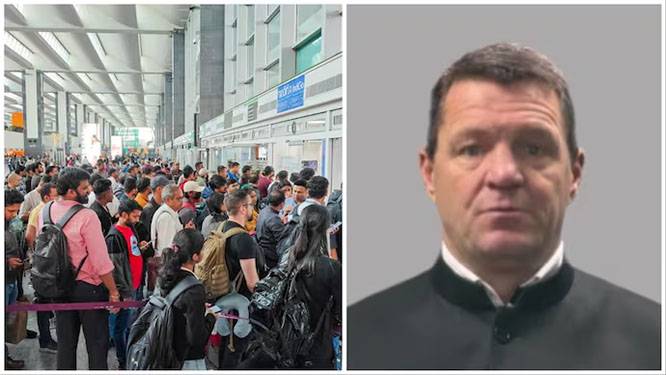
New Delhi, Dec 5: IndiGo CEO Pieter Elbers issued a public apology this evening after more than a thousand flights were cancelled today, making it the "most severely impacted day" in terms of cancellations. The biggest airline of the country cancelled "more than half" of its daily number of flights on Friday, said Elbers. He also said that even though the crisis will persist on Saturday, the airline anticipates fewer than 1,000 flight cancellations.

"Full normalisation is expected between December 10 and 15, though IndiGo cautions that recovery will take time due to the scale of operations," the IndiGo CEO said. 

IndiGo operates around 2,300 domestic and international flights daily.

Pieter Elbers, while apologising for the major inconvenience due to delays and cancellations, said the situation is a result of various causes.

The crisis at IndiGo stems from new regulations that boost pilots' weekly rest requirements by 12 hours to 48 and allow only two night-time landings per week, down from six. IndiGo has attributed the mass cancellations to "misjudgment and planning gaps".

Elbers also listed three lines of action that the airline will adopt to address the issue.

"Firstly, customer communication and addressing your needs, for this, messages have been sent on social media. And just now, a more detailed communication with information, refunds, cancellations and other customer support measures was sent," he said.

The airline has also stepped up its call centre capacity.

"Secondly, due to yesterday's situation, we had customers stranded mostly at the nation's largest airports. Our focus was for all of them to be able to travel today itself, which will be achieved. For this, we also ask customers whose flights are cancelled not to come to the airports as notifications are sent," the CEO said.

"Thirdly, cancellations were made for today to align our crew and planes to be where they need to start tomorrow morning afresh. Earlier measures of the last few days, regrettable, have proven not to be enough, but we have decided today to reboot all our systems and schedules, resulting in the highest numbers of cancellations so far, but imperative for progressive improvements starting from tomorrow," he added.

As airports witnessed chaotic scenes, the Directorate General of Civil Aviation (DGCA) stepped in to grant IndiGo a temporary exemption from stricter night duty rules for pilots. It also allowed substitution of leaves with a weekly rest period. 

Civil Aviation Minister Ram Mohan Naidu has said a high-level inquiry will be ordered and accountability will be fixed.

Comments

Add new comment

  • Coastaldigest.com reserves the right to delete or block any comments.
  • Coastaldigset.com is not responsible for its readers’ comments.
  • Comments that are abusive, incendiary or irrelevant are strictly prohibited.
  • Please use a genuine email ID and provide your name to avoid reject.
News Network
December 4,2025

Mangaluru: Chaos erupted at Mangaluru International Airport (MIA) after IndiGo flight 6E 5150, bound for Mumbai, was repeatedly delayed and ultimately cancelled, leaving around 100 passengers stranded overnight. The incident highlights the ongoing country-wide operational disruptions affecting the airline, largely due to the implementation of new Flight Duty Time Limitations (FDTL) norms for crew.

The flight was initially scheduled for 9:25 PM on Tuesday but was first postponed to 11:40 PM, then midnight, before being cancelled around 3:00 AM. Passengers expressed frustration over last-minute communication and the lack of clarity, with elderly and ailing travellers particularly affected. “Though the airline arranged food, there was no proper communication, leaving us confused,” said one family member.

An IndiGo executive at MIA cited the FDTL rules, designed to prevent pilot fatigue by limiting crew working hours, as the cause of the cancellation. While alternative arrangements, including hotel stays, were offered, about 100 passengers chose to remain at the airport, creating tension. A replacement flight was arranged but also faced delays due to the same constraints, finally departing for Mumbai around 1:45 PM on Wednesday. Passengers either flew, requested refunds, or postponed their travel.

The Mangaluru delay is part of a broader crisis for IndiGo. The airline has been forced to make “calibrated schedule adjustments”—a euphemism for widespread cancellations and delays—after stricter FDTL norms came into effect on November 1.

While an IndiGo spokesperson acknowledged unavoidable flight disruptions due to technology issues, operational requirements, and the updated crew rostering rules, the DGCA has intervened, summoning senior airline officials to explain the chaos and outline corrective measures.

The ripple effect has been felt across the country, with major hubs like Bengaluru and Mumbai reporting numerous cancellations. The Mangaluru incident underscores the systemic operational strain currently confronting India’s largest carrier, leaving passengers nationwide grappling with uncertainty and delays.

Comments

Add new comment

  • Coastaldigest.com reserves the right to delete or block any comments.
  • Coastaldigset.com is not responsible for its readers’ comments.
  • Comments that are abusive, incendiary or irrelevant are strictly prohibited.
  • Please use a genuine email ID and provide your name to avoid reject.
News Network
November 21,2025

Tejas.jpg

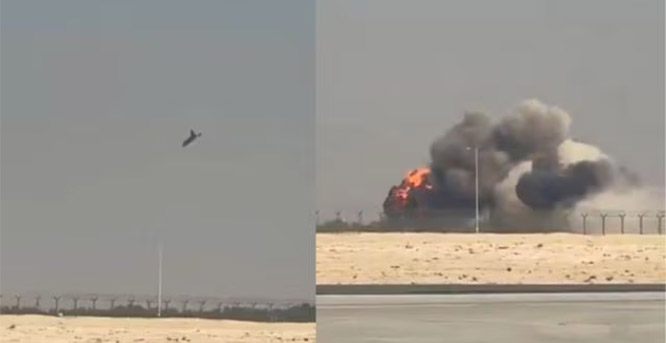
An Indian Air Force (IAF) Tejas fighter jet crashed on Friday, November 21, afternoon during its aerial demonstration at the Dubai Air Show, plunging to the ground at around 2:10 pm local time while performing a manoeuvre before thousands of spectators.

The IAF confirmed the incident, stating that a Tejas aircraft participating in the show had crashed and that further details were being gathered. An Air Force spokesperson said more information would be shared after initial assessments.

The crash sent thick black smoke billowing into the sky near the airport, causing panic among visitors, including families and children who had gathered to watch the display. Authorities have not yet confirmed whether the pilot managed to eject before the aircraft went down. Emergency response teams rushed to the scene, and officials have not released information on casualties or damage so far.

The Tejas is a 4.5-generation, multi-role fighter aircraft developed indigenously by Hindustan Aeronautics Limited (HAL). Designed for versatility, it is capable of offensive air support, close combat, ground attack missions and maritime operations. The aircraft family includes single-seat fighters and twin-seat trainers for both the Air Force and Navy.

HAL describes the latest version, the LCA Mk1A, as the most advanced in the series, featuring an AESA radar, an upgraded electronic warfare suite with radar-warning and self-protection jamming, smart multifunction displays, a digital map generator, a combined interrogator–transponder system and a modern radio altimeter. These enhancements significantly improve the aircraft’s combat capability and survivability.

Further updates from IAF and UAE authorities are awaited.

Comments

Add new comment

  • Coastaldigest.com reserves the right to delete or block any comments.
  • Coastaldigset.com is not responsible for its readers’ comments.
  • Comments that are abusive, incendiary or irrelevant are strictly prohibited.
  • Please use a genuine email ID and provide your name to avoid reject.