Fauci suggests few weeks’ lockdown in India to break chain of covid transmission

Agencies
May 1, 2021

fa.jpg

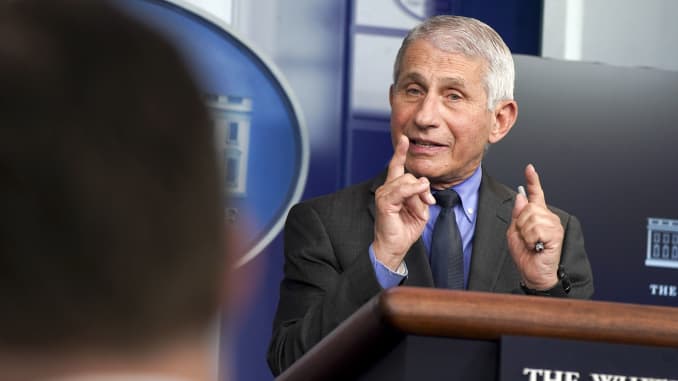
Top US epidemiologist Anthony Fauci has suggested a lockdown for a few weeks in India as an immediate step to contain the spread of the coronavirus as its deadly second wave shows no signs of ebbing.

Fauci, in an interview with The Indian Express, said another most important thing in the immediate is to get supplies of oxygen, medication, PPEs.

He said looking at the magnitude of the crisis, India should look at putting together a crisis group that would meet and start getting things organised.

Without naming any government, he said one of the things that should have been recognised that "victory was declared maybe too prematurely".

"Well, one of the things you really need to do, to the extent that you can, is shut down temporarily the country, I think is important. If we want to time out and go back to what I said: there is the immediate, the intermediate, and the long-range (measures to contain the virus). 

"I think the most important thing in the immediate is to get oxygen, get supplies, get medication, get PPE, those kinds of things but also, one of the immediate things to do is to essentially call a shutdown of the country," said Fauci, who is the chief medical adviser to the Biden administration.

He said when China had a big explosion of coronavirus cases a year ago, they completely shut down.

Fauci said it is not necessary to shut down for six months, but it can be a temporary one to put an end to the cycle of transmission.

So one of the things to be considered is to temporarily shut down, he said.

"Literally, lock down so that you wind up having less spread. No one likes to lock down the country. Well, that's a problem when you do it for six months," he said.

But just for a few weeks of lockdown could have a significant impact on the dynamics of the outbreak.

Some states have imposed a lockdown. Last month, Prime Minister Narendra Modi said lockdown should be the "last resort" to deal with the raging pandemic and asked states to convince migrant workers to stay put at their places of work with a guarantee for their lives and livelihood.

Breaching its all previous records, India on Saturday hit a record daily high with over 4 lakh new infections, while the active cases crossed the 32-lakh mark.

The second wave of the coronavirus has been wreaking havoc, infecting lakhs and killing thousands every day for the past few days. There have been cases where people have died due to lack of medical facilities, including oxygen. In many cases, families have to arrange oxygen for their patients as they are not able to get admission in hospitals.

"I heard from some of the people in the street bringing their mothers and their fathers and their sisters and their brothers searching for oxygen. They seem to think there really was not any organisation, any central organisation,” Fauci said.

Underlining that vaccination plays a crucial role in handling the coronavirus situation, Fauci said if India, a country of 1.4 billion people, has fully vaccinated only two per cent of its total population, then it has a very long way to go.

"You've got to get supplies. You've got to make contractual arrangements with the various companies that are out there in the world. There are many companies that now have vaccines. I think you have to negotiate with them to try and get a commitment," he said.

"And also, India is the largest vaccine-producing country in the world. That's the thing — you should rev up your own capabilities to make vaccines,” he added.

Comments

Add new comment

  • Coastaldigest.com reserves the right to delete or block any comments.
  • Coastaldigset.com is not responsible for its readers’ comments.
  • Comments that are abusive, incendiary or irrelevant are strictly prohibited.
  • Please use a genuine email ID and provide your name to avoid reject.
News Network
December 7,2025

SHRIMP.jpg

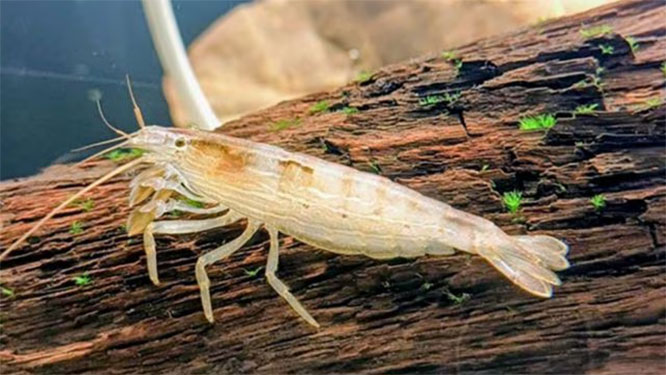
Mangaluru, Dec 7: A rare bamboo shrimp has been rediscovered on mainland India more than 70 years after it was last reported, confirming for the first time the presence of Atyopsis spinipes in the country. The find was made by researchers from the Centre for Climate Change Studies at Sathyabama Institute of Science and Technology, Chennai, during surveys in Karnataka and Odisha.

The team — shrimp expert Dr S Prakash, PhD scholar K Kunjulakshmi, and Mangaluru-based researcher Maclean Antony Santos — combined field surveys, ecological assessments and DNA analysis to identify the elusive species. Their findings, published in Zootaxa, resolve decades of taxonomic confusion stemming from a 1951 report that misidentified the species as Atyopsis moluccensis without strong evidence.

The shrimp has now been confirmed at two locations: the Mulki–Pavanje estuary near Mangaluru and the Kuakhai River in Bhubaneswar. Historical specimens from the Andaman Islands, previously labelled as A. moluccensis, were also found to be misidentified and actually belong to A. spinipes.

The rediscovery began after an aquarium hobbyist in Odisha spotted a shrimp in 2022, prompting systematic surveys across Udupi, Karwar and Mangaluru. Four female specimens were collected in Mulki and one in Odisha, all genetically matching.

Researchers warn the species may exist in very small, vulnerable populations as freshwater habitats face increasing pressure from pollution, sand mining and infrastructure development. All verified specimens have been deposited with the Zoological Survey of India for future reference.

Comments

Add new comment

  • Coastaldigest.com reserves the right to delete or block any comments.
  • Coastaldigset.com is not responsible for its readers’ comments.
  • Comments that are abusive, incendiary or irrelevant are strictly prohibited.
  • Please use a genuine email ID and provide your name to avoid reject.
News Network
December 16,2025

bengal.jpg

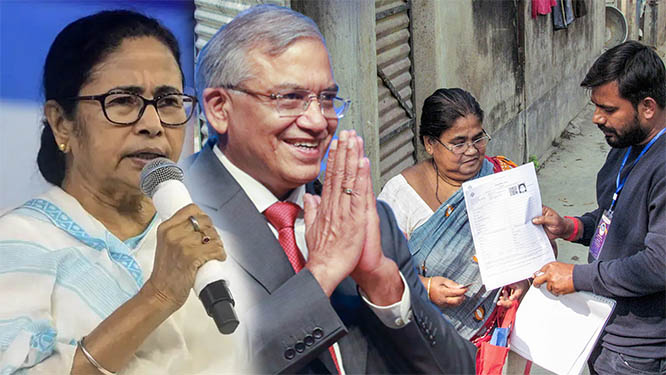
The deletion of over 58 lakh names from West Bengal’s draft electoral rolls following a Special Intensive Revision (SIR) has sparked widespread concern and is likely to deepen political tensions in the poll-bound state.

According to the Election Commission, the revision exercise has identified 24 lakh voters as deceased, 19 lakh as relocated, 12 lakh as missing, and 1.3 lakh as duplicate entries. The draft list, published after the completion of the first phase of SIR, aims to remove errors and duplication from the electoral rolls.

However, the scale of deletions has raised fears that a large number of eligible voters may have been wrongly excluded. The Election Commission has said that individuals whose names are missing can file objections and seek corrections. The final voter list is scheduled to be published in February next year, after which the Assembly election announcement is expected. Notably, the last Special Intensive Revision in Bengal was conducted in 2002.

The development has intensified the political row over the SIR process. Chief Minister Mamata Banerjee and her Trinamool Congress have strongly opposed the exercise, accusing the Centre and the Election Commission of attempting to disenfranchise lakhs of voters ahead of the elections.

Addressing a rally in Krishnanagar earlier this month, Banerjee urged people to protest if their names were removed from the voter list, alleging intimidation during elections and warning of serious consequences if voting rights were taken away.

The BJP, meanwhile, has defended the revision and accused the Trinamool Congress of politicising the issue to protect what it claims is an illegal voter base. Leader of the Opposition Suvendu Adhikari alleged that the ruling party fears losing power due to the removal of deceased, fake, and illegal voters.

The controversy comes amid earlier allegations by the Trinamool Congress that excessive work pressure during the SIR led to the deaths by suicide of some Booth Level Officers (BLOs), for which the party blamed the Election Commission. With the draft list now out, another round of political confrontation appears imminent.

As objections begin to be filed, the focus will be on whether the correction mechanism is accessible, transparent, and timely—critical factors in ensuring that no eligible voter is denied their democratic right ahead of a crucial election.

Comments

Add new comment

  • Coastaldigest.com reserves the right to delete or block any comments.
  • Coastaldigset.com is not responsible for its readers’ comments.
  • Comments that are abusive, incendiary or irrelevant are strictly prohibited.
  • Please use a genuine email ID and provide your name to avoid reject.
News Network
December 16,2025

jordan.jpg

Prime Minister Narendra Modi on Monday held talks with Jordan’s King Abdullah II in Amman, during which the two leaders discussed ways to further strengthen bilateral relations, with the Prime Minister outlining an eight-point vision covering key areas of cooperation.

Describing the meeting as “productive”, PM Modi said he shared a roadmap focused on trade and economy, fertilisers and agriculture, information technology, healthcare, infrastructure, critical and strategic minerals, civil nuclear cooperation, and people-to-people ties.

In a post on social media platform X, the Prime Minister praised King Abdullah II’s personal commitment to advancing India–Jordan relations, particularly as both countries mark the 75th anniversary of the establishment of diplomatic ties this year.

“Held productive discussions with His Majesty King Abdullah II in Amman. His personal commitment towards vibrant India-Jordan relations is noteworthy. This year, we are celebrating the 75th anniversary of our bilateral diplomatic relations,” PM Modi said.

The meeting took place at the Al Husseiniya Palace, where the two leaders also exchanged views on regional and global issues of mutual interest. According to the Ministry of External Affairs (MEA), both sides agreed to further deepen cooperation in areas including trade and investment, defence and security, counter-terrorism and de-radicalisation, fertilisers and agriculture, infrastructure, renewable energy, tourism, and heritage.

The MEA said both leaders reaffirmed their united stand against terrorism.

PM Modi arrived in Amman earlier on Monday and was received by Jordanian Prime Minister Jafar Hassan, who accorded him a formal welcome. Following the talks, King Abdullah II hosted a banquet dinner in honour of the Prime Minister, reflecting the warmth of bilateral ties.

Jordan is the first leg of PM Modi’s three-nation tour. From Amman, the Prime Minister will travel to Ethiopia at the invitation of Prime Minister Abiy Ahmed Ali, marking his first official visit to the African nation. The tour will conclude with a visit to Oman.

Comments

Add new comment

  • Coastaldigest.com reserves the right to delete or block any comments.
  • Coastaldigset.com is not responsible for its readers’ comments.
  • Comments that are abusive, incendiary or irrelevant are strictly prohibited.
  • Please use a genuine email ID and provide your name to avoid reject.