Foreign Tablighis were made ‘scapegoats’, says High Court, quashes FIRs; slams media propaganda

News Network
August 22, 2020

images (1).jpeg

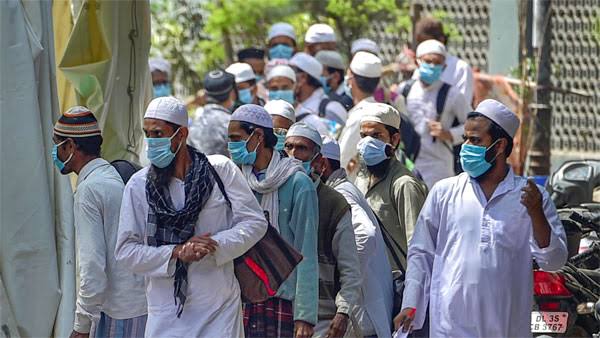
In a strongly-worded judgment, the Bombay High Court on Friday quashed the FIRs filed against a total of 29 foreign nationals who were booked under various provisions of IPC, Epidemic Diseases Act, Maharashtra Police Act, Disaster Management Act and Foreigner's Act for allegedly violating their Tourist Visa conditions by attending the Tablighi Jamaat congregation at Nizamuddin in Delhi.

Apart from the foreign nationals, police also booked six Indian nationals and trustees of the Masjids for giving shelter to the petitioners.

A Division Bench of Justice TV Nalawade and Justice MG Sewlikar of the Aurangabad bench heard the three separate petitions filed by petitioners who belong to countries like Ivory Coast, Ghana, Tanzania, Djibouti, Benin and Indonesia. All the petitioners were booked after police claimed to have received secret information about them residing at the respective masjids in different areas and offering prayers in violation of lockdown orders.

According to the petitioners, they came to India on a valid visa issued by the Government of India and they have come to experience Indian culture, tradition, hospitality and Indian food. It is their contention that on their arrival at the airport, they were screened and tested for Covid-19 virus and only when they were found negative for the virus, they were allowed to leave the airport.

Moreover, they had informed the District Superintendent of Police about their arrival in Ahmednagar district. Due to the lockdown imposed since March 23, vehicular movement was stopped, hotels and lodges were closed and consequently the Masjid had given shelter to them. They were not involved in illegal activity including the breach of order of the District Collector, petitioners argued.

In fact, they contended that even at Markaz, they had observed norms of physical distancing. It is their contention that while being granted a visa, they were not asked to inform local authorities about their visit to those places, but they had informed local officers. Also, under the conditions of visa, there was no prohibition to visit religious places like Masjids, petitioners argued.

On the other hand, the District Superintendent of Police, Ahmednagar, filed a reply contending that the petitioners were found visiting places for preaching Islam religion and so, crimes are registered against them. He also contended that five foreign nationals from three different cases were found infected by the virus. It is contended that after the quarantine period was over all the petitioners were shown to be formally arrested.

The DSP submitted that the District Magistrate had issued prohibitory orders and directions were given to close all public places. However, in spite of prohibitory orders and conditions of visa, the petitioners indulged in Tabligh activity. Moreover, announcements were made at public places to ask the persons who had attended Markaz Masjid to come forward voluntarily for testing them in respect of the virus, but they did not come forward voluntarily and they had created a threat of spreading Covid-19 virus.

Petitioners were booked for offences punishable under sections 188, 269, 270, 290 of Indian Penal Code, sections 37 (1)(3) r/w. 135 of Maharashtra Police Act, 1951 and section 11 of Maharashtra Covid-19 Measures and Rules, 2020, sections 2, 3 and 4 of Epidemic Diseases Act, 1897, section 14 (b) of Foreigners Act, 1946 and section 51(b) of the Disaster Management Act, 2005.

After going through the visa conditions that petitioners are governed by, Justice Nalawade, who authored the judgment, noted-

"The aforesaid material produced on the record shows that even under recent updated Manual of Visa, there is no restriction on foreigners for visiting religious places and attending normal religious activities like attending religious discourses. Ordinarily, a tourist is not expected to follow the procedure laid down in para No. 19.8 if he does not want to preach the religious ideologies etc."

APP MM Nerlikar contended that a writ petition is pending before the Supreme Court and in that matter relief is claimed by some similar foreigners to declare that blacklisting of 950 foreigners by the Central Government via decision dated April 2 as unconstitutional and void as due process of law was not followed before making such declaration by the Central Government. Thus, it is not desirable to decide the present proceeding as the Supreme Court is yet to decide the issue. However, Court refused to accept the said contention.

Justice Nalawade observed-

"The material on the record shows that Tabligh Jamamat is not a separate sect of Muslim, but it is only movement for reformation of religion. Every religion has evolved over the years due to reformation as reformation is always necessary due to the changes in the society and the development achieved in the material world. In any case, even from the record, it cannot be inferred that the foreigners were spreading Islam religion by converting persons of other religion to Islam. The record shows that the foreigners were not talking Indian languages like Hindi or Urdu and they were talking languages like Arabian, French etc. In view of the aforesaid discussion, it can be said that the foreigners may have intention to know the ideas of Tabligh Jamamat about the reformation.

The allegations are very vague in nature and from these allegations inference is not possible at any stage that they were spreading Islam religion and there was intention of conversion. It is also not the case that there was an element of persuasion on any point from these foreigners."

Criticising the media's portrayal of foreign nationals who attended Tablighi Jamaat, Justice Nalawade specified-

"There was big propaganda in print media and electronic media against the foreigners who had come to Markaz Delhi and an attempt was made to create a picture that these foreigners were responsible for spreading COVID-19 virus in India. There was virtually persecution against these foreigners.

A political Government tries to find the scapegoat when there is pandemic or calamity and the circumstances show that there is probability that these foreigners were chosen to make them scapegoats. The aforesaid circumstances and the latest figures of infection in India show that such action against present petitioners should not have been taken. It is now high time for the concerned to repent about this action taken against the foreigners and to take some positive steps to repair the damage done by such action."

Finally, referring to the old Indian saying 'Atithi Devo Bhava' meaning 'Our Guest Is Our God', Justice Nalawade said-

"The circumstances of the present matter create a question as to whether we are really acting as per our great tradition and culture. During the situation created by covid-19 pandemic, we need to show more tolerance and we need to be more sensitive towards our guests particularly like the present petitioners. The allegations made show that instead of helping them we lodged them in jails by making allegations that they are responsible for violation of travel documents, they are responsible for spreading of virus etc."

Background Of Malice

Importantly, the Court referred to CAA and NRC protest all over the country and said-

"There were protests by taking processions, holding Dharna at many places in India from atleast from prior to January 2020. Most of the persons participating in the protest were Muslims. It is their contention that the Citizenship Amendment Act, 2019 is discriminatory against the Muslims. They believe that Indian citizenship will not be granted to Muslim refugees and migrants. They were protesting against National Registration of Citizenship (NRC).

It can be said that due to the present action taken fear was created in the minds of those Muslims. This action indirectly gave warning to Indian Muslims that action in any form and for any thing can be taken against Muslims. It was indicated that even for keeping contact with Muslims of other countries, action will be taken against them. Thus, there is smell of malice to the action taken against these foreigners and Muslim for their alleged activities. The circumstances like malice is important consideration when relief is claimed of quashing of F.I.R. and the case itself."

Thus, the Court concluded that the state government acted under political compulsion and action against the foreign nationals can be inferred as malice. Thus, all petitions were allowed and FIRs were quashed.

Justice Sewlikar concurred with the operative part of the judgment but noted that the State's request to grant a stay cannot be allowed.

Notably, the same bench had in February 2020 quashed Sec 144 orders after observing that ant-CAA protesters cannot be called "anti-nationals or traitors".

In June, the Madras HC had quashed the FIRs against Tablighi Jamaat foreigners after observing that they have "suffered enough" and urged the Centre to consider their request to return to their native places.

Comments

Add new comment

  • Coastaldigest.com reserves the right to delete or block any comments.
  • Coastaldigset.com is not responsible for its readers’ comments.
  • Comments that are abusive, incendiary or irrelevant are strictly prohibited.
  • Please use a genuine email ID and provide your name to avoid reject.
News Network
December 16,2025

IPL.jpg

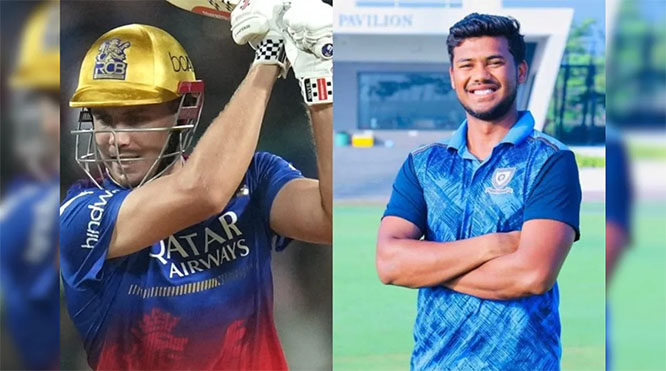
The IPL 2026 auction has seen uncapped Indian stars laugh their way to the bank. While Cameron Green set a world record as he was roped in by Kolkata Knight Riders for Rs 25.20 crore, making him the costliest overseas player ever in any franchise competition across the world, CSK roped in Prashant Veer and Kartik Sharma for a record bid of Rs 14.20 crore each. Sri Lanka's Matheesha Pathirana was picked up for Rs 18 crore by KKR. 

However, top names like Liam Livingstone, Prithvi Shaw, and Sarfaraz Khan have gone unsold. The mini-auction for IPL 2026 is being held in Abu Dhabi, with three-time winners Kolkata Knight Riders coming in with the biggest purse (Rs 64.30 crore). Chennai Super Kings entered the auction with the second-biggest purse (Rs 43.40 crore). The upcoming edition of the Indian Premier League will be held between March 26 and May 31.

Here is the full list of sold and unsold players:

Jake Fraser-McGurk - Base Price Rs 2 crore - Unsold
David Miller - Base Price Rs 2 crore - Delhi Capitals - Rs 2 crore
Prithvi Shaw - Base Price Rs 75 lakh - Unsold
Devon Conway - Base Price Rs 2 crore - Unsold
Cameron Green - Base Price Rs 2 crore - Kolkata Knight Riders - Rs 25.20 crore
Sarfaraz Khan - Base Price Rs 75 lakh - Unsold
Gus Atkinson - Base Price Rs 2 crore - Unsold
Rachin Ravindra - Base Price Rs 2 crore - Unsold
Liam Livingtone - Base Price Rs 2 crore - Unsold
Wiaan Mulder - Base Price Rs 1 crore - Unsold
Wanindu Hasaranga - Base Price Rs 2 crore - LSG - Rs 2 crore
Venkatesh Iyer - Base Price Rs 2 crore - RCB - Rs 7 crore
Deepak Hooda - Base Price Rs 75 lakh - Unsold
KS Bharat - Base Price Rs 75 lakh - Unsold
Quinton De Kock - Base Price Rs 1 crore - Mumbai Indians - Rs 1 crore
Rahmanullah Gurbaz - Base Price Rs 1.50 crore - Unsold
Jonny Bairstow - Base Price Rs 1 crore - Unsold
Jamie Smith - Base Price Rs 2 crore - Unsold
Ben Duckett - Base Price Rs 2 crore - Delhi Capitals - Rs 2 crore
Finn Allen - Base Price Rs 2 crore - KKR - Rs 2 crore
Matt Henry - Base Price Rs 2 crore - Unsold
Akash Deep - Base Price Rs 1 crore - Unsold
Jacob Duffy - Base Price Rs 2 crore - RCB - Rs 2 crore
Shivam Mavi - Base Price Rs 75 lakh - Unsold
Gerald Coetze - Base Price Rs 2 crore - Unsold
Matheesha Pathirana - Base Price Rs 2 crore - KKR - Rs 18 crore
Spencer Johnson - Base Price Rs 1.50 crore - Unsold
Anrich Nortje - Base Price Rs 2.00 crore - LSG Rs 2 crore
Fazalhaq Farooqui - Base Price Rs 1.00 crore - Unsold
Rahul Chahar - Base Price Rs 1.00 crore - Unsold
Ravi Bishnoi - Base Price Rs 2.00 crore - RR - Rs 7.20 crore
Maheesh Theekshana - Base Price Rs 2.00 crore - Unsold
Mujeeb Ur Rahman - Base Price Rs 2.00 crore - Unsold
Akeal Hosein - Base Price Rs 2.00 crore - CSK - Rs 2 crore
Atharva Taide - Base Price Rs 30 lakh - Unsold
Anmolprteet SIngh - Base Price Rs 30 lakh - Unsold
Abhinav Tejrana - Base Price Rs 30 lakh - Unsold
Abhinav Manohar - Base Price Rs 30 lakh - Unsold
Yash Dhull - Base Price Rs 30 lakh - Unsold
Aarya Desai - Base Price Rs 30 lakh - Unsold
Auqib Dar - Base Price Rs 30 lakh - DC - Rs 8.40 crore
Vijay Shankar - Base Price Rs 30 lakh - Unsold
Rajvardhan Hangargekar - Base Price Rs 40 lakh - Unsold
Mahipal Lomror - Base Price Rs 50 lakh - Unsold
Eden Apple Tom - Base Price Rs 30 lakh - Unsold
Prashant Veer - Base Price Rs 30 lakh - CSK Rs 14.20 crore
Shivang Kumar - Base Price Rs 30 lakh - SRH - Rs 30 lakh
Tanush Kotian - Base Price Rs 30 lakh - Unsold
Kamlesh Nagarkoti - Base Price Rs 30 lakh - Unsold
Sanvir Singh - Base Price Rs 30 lakh - Unsold
Rouchit Ahir - Base Price Rs 30 lakh - Unsold
Kartik Sharma - Base Price Rs 30 lakh - CSK Rs 14.20 crore
Mukul Choudhary - Base Price Rs 30 lakh - LSG Rs 2.60 crore
Tejasvi Singh - Base Price Rs 30 lakh - KKR - Rs 3 crore
Vansh Bedi - Base Price Rs 30 lakh - Unsold
Tushar Raheja - Base Price Rs 30 lakh - Unsold
Ashok Sharma - Base Price Rs 30 lakh - GT - Rs 90 lakh
Raj Limbani - Base Price Rs 30 lakh - Unsold
Kartik Tyagi - Base Price Rs 30 lakh - KKR - Rs 30 Lakh
Simarjeet Singh - Base Price Rs 30 lakh - Unsold
Aarya Desai - Base Price Rs 30 lakh - Unsold
Naman Tiwari - Base Price Rs 30 lakh - LSG - Rs 1 crore
Aakash Madhwal - Base Price Rs 30 lakh - Unsold
Sushant Mishra - Base Price Rs 30 lakh - RR - Rs 90 lakh
Wahidullah Zadran - Base Price Rs 30 lakh - Unsold
Shivam Shukla - Base Price Rs 30 lakh - Unsold
Yash Raj Punja - Base Price Rs 30 lakh - RR - Rs 30 Lakh
Prashant Solanki - Base Price Rs 30 lakh - KKR - Rs 30 Lakh
Vignesh Puthur - Base Price Rs 30 lakh - RR - Rs 30 lakh
Karn Sharma - Base Price Rs 50 lakh - Unsold
Kumar Kartikeya Singh - Base Price Rs 30 lakh - Unsold
Sediqullah Atal - Base Price Rs 75 lakh - Unsold
Pathum NIssanka - Base Price Rs 75 lakh - DC - Rs 4 Crore
Rahul Tripathi - Base Price Rs 75 lakh - KKR - Rs 75 lakh
Sean Abbott - Base Price Rs 2 crore - Unsold
Michael Bracewell - Base Price Rs 2 crore - Unsold
Ben Dwarshuis - Base Price Rs 1 crore - Unsold
Jason Holder - Base Price Rs 2 crore - GT Rs 7 crore
Dashun Shanaka - Base Price Rs 75 lakh - Unsold
Daryll Mitchell - Base Price Rs 2 crore - Unsold
Matthew Short - Base Price Rs 1.50 crore - CSK - Rs 1.50 crore
Tom Banton - Base Price Rs 2 crore - Unsold
Jordan Cox - Base Price Rs 75 lakh - Unsold
Josh Inglis - Base Price Rs 2 crore - Unsold
Tim Seifert - Base Price Rs 1.50 crore - KKR - Rs 1.50 Crore
Kyle Jamieson - Base Price Rs 2 crore - Unsold
Adam Milne - Base Price Rs 2 crore - Unsold
Lungi Ngidi - Base Price Rs 2 crore - Unsold
Mustafizur Rahman - Base Price Rs 2 crore - KKR - Rs 9.2 crore
Chetan Sakariya - Base Price Rs 75 lakh - Unsold
Kuldeep Sen - Base Price Rs 75 lakh - Unsold
Waqar Salamkheil - Base Price Rs 1 crore - Unsold
Danish Malewar - Base Price Rs 30 lakh - MI - Rs 30 lakh
Salman Nizar - Base Price Rs 30 lakh - Unsold
Akshat Raghuwanshi - Base Price Rs 30 lakh - LSG - Rs 2.2 crore 
Satvik Deswak - Base Price Rs 30 lakh - RCB - Rs 30 lakh
Aman Khan - Base Price Rs 30 lakh - CSK - Rs 40 lakh
Vicky Ostwal - Base Price Rs 30 lakh - Unsold
Mayank Rawat - Base Price Rs 30 lakh - Unsold
Mangesh Yadav - Base Price Rs 30 lakh - RCB - Rs 5.20 crore
Salil Arora - Base Price Rs 30 lakh - SRH - Rs 1.40 crore
Ravi Singh - Base Price Rs 30 lakh - RR - Rs 95 lakh
KM Asif - Base Price Rs 40 lakh - Unsold
Sakib Hussain - Base Price Rs 30 lakh - SRH - Rs 30 lakh 
Mohammad Izhar - Base Price Rs 30 lakh - MI - Rs 30 lakh 
Onkar Tarmale - Base Price Rs 30 lakh - SRH - Rs 30 Lakh
Murugan Ashwin - Base Price Rs 30 lakh - Unsold
Tejas Baroke - Base Price Rs 30 lakh - Unsold
KC Cariappa - Base Price Rs 30 lakh - Unsold
Mohit Rathee - Base Price Rs 30 lakh - Unsold
Cooper Connolly - Base Price Rs 2 Crore - PBKS - Rs 3 crore
Dan Lawrence - Base Price Rs 2 crore - Unsold
Taskin Ahmed - Base Price Rs 75 lakh - Unsold
Richard Gleeson - Base Price Rs 75 lakh - Unsold
Alzarri Joseph - Base Price Rs 2 crore - Unsold
Riley Meredith - Base Price Rs 1.50 crore - Unsold
Jhye Richardson - Base Price Rs 1.50 crore - Unsold
Dheeraj Kumar - Base Price Rs 30 lakh - Unsold
Tanay Thyagarajan - Base Price Rs 30 lakh - Unsold
Connor E. - Base Price Rs 30 lakh - Unsold
Irfan Umair - Base Price Rs 30 lakh - Unsold
Chintal Gandhi - Base Price Rs 30 lakh - Unsold
Amit Kumar - Base Price Rs 30 lakh - SRH - Rs 30 lakh 
Vishal Nishad - Base Price Rs 30 lakh - Unsold 
Nathan Smith - Base Price Rs 75 lakh - Unsold 
Daniel Lategan - Base Price Rs 30 lakh - Unsold 
Atharva Ankolekar - Base Price Rs 30 lakh - MI - Rs 30 Lakh
Karan Lal - Base Price Rs 30 lakh - Unsold 
Utkarsh Singh - Base Price Rs 30 lakh - Unsold 
Ayush Vartak - Base Price Rs 30 lakh - Unsold
Ayush Hinge - Base Price Rs 30 lakh - SRH - Rs 30 Lakh
Jikku Bright - Base Price Rs 30 lakh - Unsold
Izaz Sawariya - Base Price Rs 30 lakh - Unsold
Krains Fuletra - Base Price Rs 30 lakh - SRH - Rs 30 lakh
Sarthak Ranjan - Base Price Rs 30 lakh - KKR - Rs 30 lakh
Daksh Kamra - Base Price Rs 30 lakh - KKR - Rs 30 lakh
Manishankar Murasingh - Base Price Rs 30 lakh - Unsold

Comments

Add new comment

  • Coastaldigest.com reserves the right to delete or block any comments.
  • Coastaldigset.com is not responsible for its readers’ comments.
  • Comments that are abusive, incendiary or irrelevant are strictly prohibited.
  • Please use a genuine email ID and provide your name to avoid reject.
News Network
December 13,2025

New Delhi: School-going children are picking up drug and smoking habits and engaging in consumption of alcohol, with the average age of introduction to such harmful substances found to be around 13 years, suggesting a need for earlier interventions as early as primary school, a multi-city survey by AIIMS-Delhi said.

The findings also showed substance use increased in higher grades, with grade XI/XII students two times more likely to report use of substances when compared with grade VIII students. This emphasised the importance of continued prevention and intervention through middle and high school.

The study led by Dr Anju Dhawan of AIIMS's National Drug Dependence Treatment Centre, published in the National Medical Journal of India this month, looks at adolescent substance use across diverse regions.

The survey included 5,920 students from classes 8, 9, 11 and 12 in urban government, private and rural schools across 10 cities -- Bengaluru, Chandigarh, Delhi, Dibrugarh, Hyderabad, Imphal, Jammu, Lucknow, Mumbai, and Ranchi. The data were collected between May 2018 and June 2019.

The average age of initiation for any substance was 12.9 (2.8) years. It was lowest for inhalants (11.3 years) followed by heroin (12.3 years) and opioid pharmaceuticals (without prescription; 12.5 years).

Overall, 15.1 per cent of participants reported lifetime use, 10.3 per cent reported past year use, and 7.2 per cent reported use in the past month of any substance, the study found.

The most common substances used in the past year, after tobacco (4 per cent) and alcohol (3.8 per cent), were opioids (2.8 per cent), followed by cannabis (2 per cent) and inhalants (1.9 per cent). Use of non-prescribed pharmaceutical opioids was most common among opioid users (90.2 per cent).

On being asked, 'Do you think this substance is easily available for a person of your age' separately for each substance category, nearly half the students (46.3 per cent) endorsed that tobacco products and more than one-third of the students (36.5 per cent) agreed that a person of their age can easily procure alcohol products.

Similarly, for Bhang (21.9 per cent), ganja/charas (16.1 per cent), inhalants (15.2 per cent), sedatives (13.7 per cent), opium and heroin (10 per cent each), the students endorsed that these can be easily procured.

About 95 per cent of the children, irrespective of their grade, agreed with the statement that 'drug use is harmful'.

The rates of substance use (any) among boys were significantly higher than those of girls for substance use (ever), use in the past year and use in the past 30 days. Compared to grade VIII students, grade IX students were more likely, and grade XI/XII students were twice as likely to have used any substance (ever).

The likelihood of past-year use of any substance was also higher for grade IX students and for grade XI/XII students as compared to grade VIII students.

About 40 per cent of students mentioned that they had a family member who used tobacco or alcohol each. The use of cannabis (any product) and opioid (any product) by a family member was reported by 8.2 per cent and 3.9 per cent of students, respectively, while the use of other substances, such as inhalants/sedatives by family was 2-3 per cent, the study found.

A relatively smaller percentage of students reported use of tobacco or alcohol among peers as compared to among family members, while a higher percentage reported inhalants, sedatives, cannabis or opioid use among peers.

Children using substances (past year) compared to non-users reported significantly higher any substance use by their family members and peers.

There were 25.7 per cent students who replied 'yes' to the question 'conflicts/fights often occur in your family'. Most students also replied affirmatively to 'family members are aware of how their time is being spent' and 'damily members are aware of with whom they spend their time'.

Comments

Add new comment

  • Coastaldigest.com reserves the right to delete or block any comments.
  • Coastaldigset.com is not responsible for its readers’ comments.
  • Comments that are abusive, incendiary or irrelevant are strictly prohibited.
  • Please use a genuine email ID and provide your name to avoid reject.
News Network
December 4,2025

indigocrisis.jpg

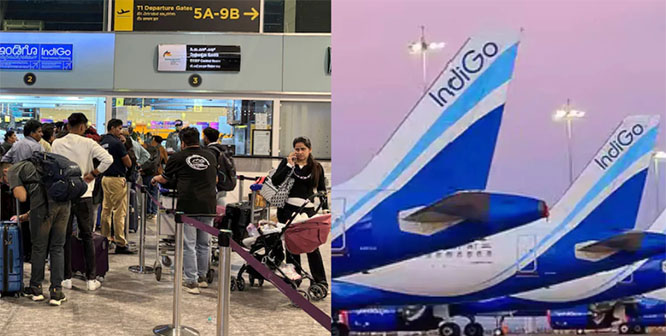
Angry outbursts, long queues, and desperate appeals filled airports across India today as IndiGo grappled with a severe operational breakdown. Hundreds of flights have been cancelled or delayed, leaving thousands of passengers stranded through the night and forcing many to spend long hours at helpdesks.

Social media was flooded with videos of fliers pleading for assistance, accusing the airline of misleading updates, and demanding accommodation after being stuck for 10 to 12 hours at airports such as Hyderabad and Bengaluru.

What Triggered the Meltdown?

IndiGo has attributed the widespread disruption to “a multitude of unforeseen operational challenges.” These include:

•    Minor technology glitches
•    Winter-season schedule adjustments
•    Bad weather
•    Congestion in the aviation network
•    New crew rostering rules (Flight Duty Time Limitations or FDTL)

Among these, the most disruptive has been the implementation of the updated FDTL norms introduced by the Directorate General of Civil Aviation (DGCA) in January 2024.

These rules were designed to reduce pilot fatigue and improve passenger safety. Key changes include:

•    Longer weekly rest periods for flight crew
•    A revised definition of “night,” extending it by an extra hour
•    Tighter caps on flight duty timing and night landings
•    Cutting night shifts for pilots and crew from six per roster cycle to just two

Once these norms became fully enforceable, airlines were required to overhaul rosters well in advance. For IndiGo, this triggered a sudden shortage of crew available for duty, leading to cascading delays and cancellations.

Why IndiGo Was Hit the Hardest

IndiGo is India’s largest airline by a wide margin, operating over 2,200 flights daily. That’s roughly double the number operated by Air India.

When an airline of this size experiences even a 10–20% disruption, it translates to 200–400 flights being delayed or grounded — producing massive spillover effects across the country.

IndiGo also relies heavily on high-frequency overnight operations, a model typical of low-cost carriers that aim to maximise aircraft utilisation and reduce downtime. The stricter FDTL norms clash with these overnight-heavy schedules, forcing the airline to pull back services.

Aviation bodies have also criticised IndiGo’s preparedness. The Airline Pilots' Association of India (ALPA) said airlines were given a two-year window to plan for the new rules but “started preparing rather late.” IndiGo, it said, failed to rebuild crew rosters 15 days in advance as required.

The Federation of Indian Pilots (FIP) went further, calling the crisis the result of IndiGo’s “prolonged and unorthodox lean manpower strategy,” and alleging that the airline adopted a hiring freeze even as it knew the new rules would require more careful staffing.

How Many Flights Are Affected?

In the past 48 hours, over 300 flights have been cancelled. At least 100 more are expected to be cancelled today.

City-wise impact:

•    Hyderabad: 33 expected cancellations; several fliers stranded overnight
•    Bengaluru: over 70 expected cancellations
•    Delhi, Mumbai, Chennai, Kolkata: widespread delays and missed connections

Passengers shared distressing accounts online.

One customer at Hyderabad airport said they waited from 6 PM to 9 AM with “no action taken” regarding their delayed Pune flight. Another said IndiGo repeatedly told them the crew was “arriving soon,” only for the delay to stretch over 12 hours.

IndiGo has apologised for the disruption and promised that operations will stabilise within 48 hours, adding that “calibrated adjustments” are being made to contain the chaos.

What Should Passengers Do Now?

For those flying in the next few days, especially with IndiGo, here are key precautions:

1. Keep Checking Flight Status
Monitor your flight closely before leaving for the airport, as delays may be announced last-minute.

2. Arrive Early
Expect long queues at counters and security due to crowding and rescheduling.

3. Carry Essentials
Pack snacks, water, basic medicines, chargers, and items for children or senior citizens. Extended waiting times should be anticipated.

4. Use Flexible Booking Options
If you booked tickets with a free-date-change or cancellation option, consider using them.
If you haven’t booked yet, prefer refundable or flexible fares, or even consider alternate airlines.

5. Follow IndiGo’s Updates
Keep an eye on IndiGo’s official social media channels and contact customer support for rebooking and refund queries.

What Needs to Change?

Pilot groups have raised concerns not just about staffing but also the planning practices behind it.
The Federation of Indian Pilots accused IndiGo of:

•    Imposing an unexplained hiring freeze despite knowing the FDTL changes were coming
•    Entering non-poaching agreements that limited talent movement
•    Keeping pilot pay frozen
•    Underestimating the need to restructure operations in advance

They have urged DGCA to approve seasonal schedules only after airlines prove they have adequate pilot strength under the new norms.

ALPA also warned that some airlines might be using the delays as an “immature pressure tactic” to push DGCA for relaxations in the new rules — which, if granted, could compromise the very safety standards the norms were meant to protect.

Both pilot bodies stressed that no exemption should dilute safety, and any deviations should be based solely on scientific risk assessment.

Is a Solution in Sight?

While IndiGo says normalcy will return within two days, aviation experts believe that fully stabilising operations could take longer, depending on how quickly the airline can:
•    Re-align rosters
•    Mobilise rested crew
•    Boost staffing
•    Adjust its winter schedule to match regulatory requirements
Passengers are advised to remain prepared for continued delays over the next few days as the airline works through its backlog. 

Comments

Add new comment

  • Coastaldigest.com reserves the right to delete or block any comments.
  • Coastaldigset.com is not responsible for its readers’ comments.
  • Comments that are abusive, incendiary or irrelevant are strictly prohibited.
  • Please use a genuine email ID and provide your name to avoid reject.