Full list of 93 Lok Sabha seats voting in Phase 3 on May 7: check key constituencies

News Network
May 6, 2024

india.jpg

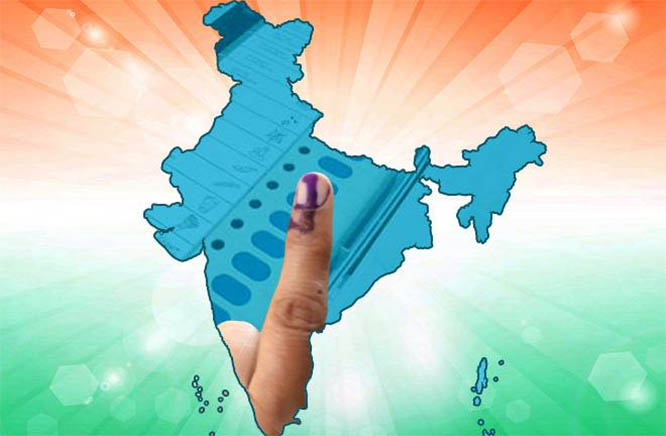
The stage is all set for the third phase of voting for the Lok Sabha election, which will take place on Tuesday, May 7. The polling will take place across 94 Lok Sabha constituencies covering ten states and two union territories.

Jammu and Kashmir's Anantnag-Rajouri Lok Sabha seats were also to vote in the third phase of polling. However, due to several connectivity issues, the Election Commission of India rescheduled it to May 25.

The voting in the third phase of the Lok Sabha election will begin at 7 am on Tuesday and conclude at 5 pm. The results will be declared on June 4.

Lok Sabha election Phase 3: List of states and constituencies:

Karnataka Chikkodi, Belgaum, Bagalkot, Bijapur, Gulbarga, Raichur, Bidar, Koppal, Bellary, Haveri, Dharwad, Uttara Kannada, Davangere, Shimoga 
Assam Dhubri, Kokrajhar, Barpeta, Gauhati
Chhattisgarh Sarguja, Raigarh, Janjgir-Champa, Korba, Bilaspur, Durg, Raipur
Bihar Jhanjharpur, Supaul, Araria, Madhepura, Khagaria
West Bengal  Maldaha Uttar, Maldaha Dakshin, Jangipur, Murshidabad
Goa North Goa, South Goa
Gujarat  Kachchh, Banaskantha, Patan, Mahesana, Sabarkantha, Gandhinagar, Ahmedabad East, Ahmedabad West, Surendranagar, Rajkot, Porbandar, Jamnagar, Junagadh, Amreli, Bhavnagar, Anand, Kheda, Panchmahal, Dahod, Vadodara, Chhota Udaipur, Bharuch, Bardoli, Surat, Navsari, Valsad    
Uttar Pradesh Sambhal, Hathras, Agra (SC), Fatehpur Sikri, Firozabad, Mainpuri, Etah, Budaun, Aonla, Bareilly
Madhya Pradesh Bhind, Bhopal, Guna, Gwalior, Morena, Rajgarh, Sagar, Vidisha, Betul
Maharashtra  Baramati, Raigad, Osmanabad, Latur (SC), Solapur (SC), Madha, Sangli, Satara, Ratnagiri-Sindhudurg, Kolhapur, Hatkanangle
Dadra and Nagar Haveli Dadra and Nagar Haveli
Daman and Diu Daman and Diu

Over 1,300 candidates, including 120 women, are in the fray in the third phase of the Lok Sabha election. Some of the key candidates include bigwigs such as union ministers Amit Shah, Jyotiraditya Scindia, Mansukh Mandaviya, Parshottam Rupala, Pralhad Joshi, and SP Singh Baghel. Former Madhya Pradesh chief ministers Shivraj Singh Chouhan and Digvijaya Singh are also contesting the election in Madhya Pradesh. At the same time, the fate of former Karnataka chief minister Basavaraj Bommai will also be decided in the third phase. Meanwhile, several members of Mulayam Singh Yadav's family are also contesting in this phase in Uttar Pradesh.

List of key candidates and their constituencies

Amit Shah (BJP) - Gandhi Nagar, Gujarat

Digvijaya Singh (Congress) - Rajgarh, Madhya Pradesh

Shivraj Singh Chouhan (BJP) - Vidisha, Madhya Pradesh

Dimple Yadav (SP) - Mainpuri, Uttar Pradesh

Supriya Sule (NCP) - Baramati, Maharashtra

Purshottam Rupala (BJP) - Rajkot, Gujarat

Jyotiraditya Scindia (BJP) - Guna, Madhya Pradesh

Pralhad Joshi (BJP) - Dharwad, Karnataka

KS Eshwarappa (BJP) - Shimoga, Karnataka

Praniti Shinde (Congress) - Solapur, Maharashtra

Hasmukbhai Patel (BJP) - Ahmedabad East, Gujarat

Pallavi Dempo (BJP) - South Goa, Goa

Adhir Ranjan Chowdhury (Congress) - Berhampore, West Bengal

The Lok Sabha elections are being held in seven phases - with the first phases concluded on April 19 and April 26. The third phase will be held on May 7; the fourth phase will be held on May 13; the fifth phase will be on May 20; the sixth phase will be on May 25; and the seventh phase on June 1.

Comments

Add new comment

  • Coastaldigest.com reserves the right to delete or block any comments.
  • Coastaldigset.com is not responsible for its readers’ comments.
  • Comments that are abusive, incendiary or irrelevant are strictly prohibited.
  • Please use a genuine email ID and provide your name to avoid reject.
News Network
November 26,2025

students.jpg

Bengaluru, Nov 26: Karnataka is taking its first concrete steps towards lifting a three-decade-old ban on student elections in colleges and universities. Deputy Chief Minister D.K. Shivakumar announced Wednesday that the state government will form a small committee to study the reintroduction of campus polls, a practice halted in 1989 following incidents of violence.

Speaking at a 'Constitution Day' event organised by the Karnataka Congress, Mr. Shivakumar underscored the move's aim: nurturing new political leadership from the grassroots.

"Recently, (Leader of the Opposition in Lok Sabha) Rahul Gandhi wrote a letter to me and Chief Minister (Siddaramaiah) asking us to think about restarting student elections," Shivakumar stated. "I'm announcing today that we'll form a small committee and seek a report on this."

Student elections were banned in Karnataka in 1989, largely due to concerns over violence and the infiltration of political party affiliates into campus life. The ban effectively extinguished vibrant student bodies and the pipeline of young leaders they often produced.

Mr. Shivakumar, who also serves as the Karnataka Congress president, said that former student leaders will be consulted to "study the pros and cons" of the re-introduction.

Acknowledging the history of the ban, he added, "There were many criminal activities taking place back then. We’ll see how we can conduct (student) elections by regulating such criminal activities."

The Deputy CM reminisced about his own journey, which began on campus. He recalled his political activism at Sri Jagadguru Renukacharya College leading to his first Assembly ticket in 1985 at the age of 23. "That's how student leadership was at the time. Such leadership has gone today. College elections have stopped," he lamented, adding that for many, college elections were "like a big movement" where leaders were forged.

The move, driven by the Congress high command's push to cultivate young talent, will face scrutiny from academics and university authorities who have, in the past, expressed concern that the return of polls could disrupt the peaceful academic environment and turn campuses into political battlegrounds.

Comments

Add new comment

  • Coastaldigest.com reserves the right to delete or block any comments.
  • Coastaldigset.com is not responsible for its readers’ comments.
  • Comments that are abusive, incendiary or irrelevant are strictly prohibited.
  • Please use a genuine email ID and provide your name to avoid reject.
News Network
December 2,2025

A major upgrade in safety and monitoring is planned for Haj 2026, with every Indian pilgrim set to receive a Haj Suvidha smart wristband linked to the official Haj Suvidha mobile app. The initiative aims to support pilgrims—especially senior citizens—who may struggle with smartphones during the 45-day journey.

What the Smart Wristband Will Do

Officials said the device will come with:
•    Location tracking
•    Pedometer
•    SOS emergency button
•    Qibla compass
•    Prayer timings
•    Basic health monitoring

SP Tiwari, secretary of the UP State Haj Committee, said the goal is to make the pilgrimage safer and more comfortable.

“Most Hajis are elderly and not comfortable with mobile apps,” he said. “The smartwatch will help locate pilgrims who forget their way or cannot communicate their location.”

The wristbands will be monitored by the Consulate General of India in Saudi Arabia, similar to mobile tracking via the Haj Suvidha App.

Free Distribution and Training

•    Smart wristbands will be given free of cost.
•    Training for pilgrims will be conducted between January and February 2026.
•    Sample units will reach state Haj committees soon.
•    Final devices will be distributed as pilgrims begin their journey.

New Rules for Accommodation

Two major decisions have also been finalised for Haj 2026:
1.    Separate rooms for men and women – including married couples. They may stay on the same floor but must occupy different rooms, following stricter Saudi guidelines.
2.    Cooking banned – gas cylinders will not be allowed; all meals will be provided through official catering services arranged by the Haj Committee of India.

These decisions were finalised during a meeting of the Haj Committee of India and state representatives in Mumbai.

Haj Suvidha App Launched Earlier

The government launched the Haj Suvidha App in 2024, offering:

•    Training modules
•    Accommodation and flight details
•    Baggage information
•    SOS and translation tools
•    Grievance redressal

Haj 2026 Quota and Key States

•    India’s total Haj quota for 2026: 1,75,025 pilgrims
•    70% (1,25,000) allotted to the Haj Committee of India
•    30% (around 50,000) reserved for Haj Group Organisers

Uttar Pradesh has the largest allocation (around 30,000 seats), though approximately 18,000 pilgrims are expected to go this year. States with high pilgrim numbers include Kerala, Maharashtra and Gujarat.

Dates of Haj 2026

The pilgrimage is scheduled to take place from 24 May to 29 May, 2026 (tentative).
Haj is one of the five pillars of Islam and is mandatory for Muslims who meet the required conditions.

Comments

Add new comment

  • Coastaldigest.com reserves the right to delete or block any comments.
  • Coastaldigset.com is not responsible for its readers’ comments.
  • Comments that are abusive, incendiary or irrelevant are strictly prohibited.
  • Please use a genuine email ID and provide your name to avoid reject.
News Network
November 24,2025

israelsyra.jpg

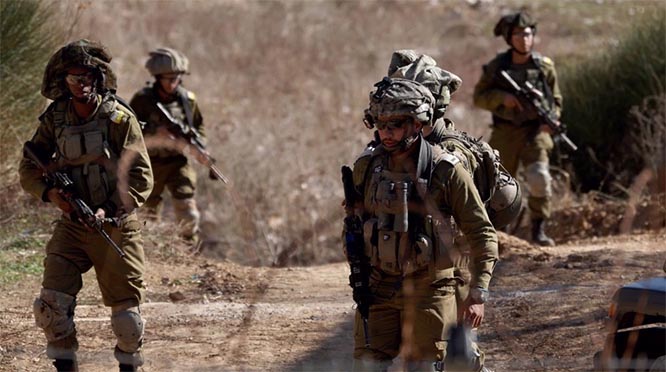
Israeli forces have pushed over the Syrian frontier, erecting a checkpoint and stopping vehicles in the southwestern city of Quneitra, in yet another breach of the Arab country’s sovereignty.

The violation took place on Sunday, when the troops made their way across the border, setting up the outpost near the Ain al-Bayda junction in northern Quneitra, Syrian outlets reported.

According to the al-Ikhbariya paper, an Israeli detachment positioned itself at the junction, halting cars and conducting searches.

The Syrian Arab News Agency (SANA) reported that three Israeli military vehicles then moved further into the northern countryside, deploying between the town of Jubata al-Khashab and the villages of Ofaniya and Ain al-Bayda. The agency added that a separate Israeli unit mounted a new incursion in the central region, approaching the villages of Umm Batina and al-Ajraf.

Residents said such activities have surged in recent months, pointing to Israeli advances onto farmland, leveling of extensive forested areas, arrests, and spread of mobile checkpoints.

The Israeli regime began markedly increasing its military aggression against Syria last year.

The escalation coincided with increasingly ferocious onslaughts throughout the country by the so-called Hay'at Tahrir al-Sham (HTS) Takfiri terrorist group, which the government of President Bashar al-Assad had confined to northwestern Syria. The HTS, however, managed to overthrow the government as the Israeli attacks would pummel the country’s civilian and defensive infrastructure.

Various reports have shown that, during the escalation, the regime conducted more than 1,000 airstrikes on the Syrian territory and over 400 ground raids into the south.

Following the collapse of the Assad government, Tel Aviv also widened its grip over the occupied Golan Heights by taking control of a demilitarized buffer zone, in defiance of a 1974 Disengagement Agreement. Earlier this month, senior Israeli officials, including Prime Minister Benjamin Netanyahu, visited the buffer zone, prompting expressions of alarm on the part of the United Nations.

The United States, the regime’s biggest ally, has, meanwhile, been fraternizing the HTS head Abu Mohammed al-Jolani amid the widely reported prospect of rapprochement with Tel Aviv.

Comments

Add new comment

  • Coastaldigest.com reserves the right to delete or block any comments.
  • Coastaldigset.com is not responsible for its readers’ comments.
  • Comments that are abusive, incendiary or irrelevant are strictly prohibited.
  • Please use a genuine email ID and provide your name to avoid reject.