For how many generations will reservations continue, asks Supreme Court

News Network
March 20, 2021

New Delhi, Mar 20: For how many generations would reservations in jobs and education continue, the Supreme Court sought to know during the Maratha quota case hearing on Friday and raised concerns over “resultant inequality” in case the overall 50 per cent limit was to be removed.

A five-judge Constitution bench headed by Justice Ashok Bhushan was vehemently told by senior advocate Mukul Rohatgi, appearing for Maharashtra, that the Mandal judgement on capping the quota needed a re-look in changed circumstances.

He said the courts should leave it to states to fix reservation quotas in view of the changed circumstances and the Mandal judgement was premised on census of 1931.

Arguing in favour of the Maharashtra law granting quota to Marathas, Rohatgi referred to various aspects of the Mandal judgement, also known as Indra Sawhney case, and said the Centre's decision to grant 10 per cent quota to people from economically weaker section also breached the 50 per cent cap.

“If there is no 50 per cent or no limit, as you are suggesting, what is the concept of equality then. We will ultimately have to deal with it. What is your reflection on that... What about the resultant inequality. How many generations will you continue,” observed the bench, which also comprised Justices L Nageswara Rao, S Abdul Nazeer, Hemant Gupta and S Ravindra Bhat.

Rohatgi said there were many reasons for the re-look of the Mandal judgment which was premised on the census of 1931 and moreover, the population has increased many fold and reached to 135 crore.

The bench said 70 years have passed since independence and the states have been carrying on so many beneficial schemes and “can we accept that no development has taken place, that no backward caste has moved forward”.

It also observed that the purpose of reviewing the Mandal judgement was that those who have come out from backwardness must be eliminated.

“Yes, we have moved forward. But it is not that backward classes have gone down from 50 to 20 per cent. We still have starvation deaths in this country... I am not trying to say that Indra Sawhney is completely wrong, throw it in the dustbin. I am raising issues that 30 years have gone by, the law has changed, the population has grown, backward persons may also have increased,” Rohatgi said.

He referred to amendments made in the Constitution and said they are the indicators that the country has not reached “anywhere near the emancipation” it required for its backwards classes.

“The fact of the matter is Parliament should know what is going on in the country. If Parliament knows it is more than 50 per cent and has given 10 per cent to a class of economically backward section, no warrant from court should say it cannot go over 50 per cent,” he argued.

When a number of states have reservations exceeding 50 per cent and in this situation, it cannot be said that this is not “a burning issue” and does not require a relook after 30 years, he said.

The arguments in the case remained inconclusive and would resume on Monday.

On Thursday, Attorney General K K Venugopal had told the apex court that the 102nd amendment to the Constitution does not deprive state legislatures to enact law determining the Socially and Educationally Backward Classes (SEBC) and conferring benefits on them.

The 102nd Constitution amendment Act of 2018 inserted Articles 338B, which deals with the structure, duties and powers of the National Commission for Backward Class (NCBC), and 342A dealing with power of the President to notify a particular caste as SEBC as also of Parliament to change the list.

On Wednesday, the top court was told that Marathas have been dominant “socially and politically” as almost 40 per cent of MPs and MLAs of Maharashtra are from this community and the entire hypothesis that they have been left behind, faced historical injustice is completely flawed.

The top court has been hearing a clutch of cases challenging the Bombay High Court verdict which upheld the grant of quota to Marathas in admissions and government jobs in the state. 

Comments

Add new comment

  • Coastaldigest.com reserves the right to delete or block any comments.
  • Coastaldigset.com is not responsible for its readers’ comments.
  • Comments that are abusive, incendiary or irrelevant are strictly prohibited.
  • Please use a genuine email ID and provide your name to avoid reject.
News Network
November 24,2025

israelsyra.jpg

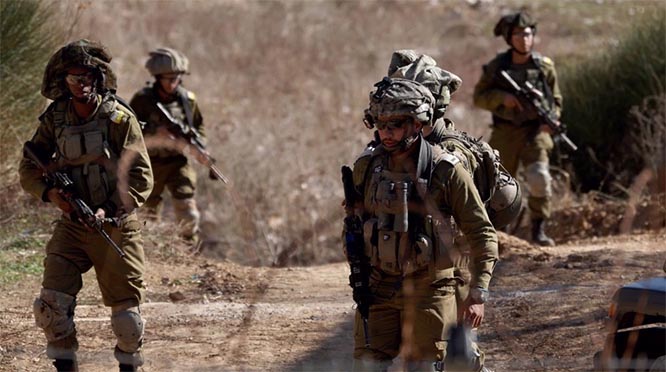
Israeli forces have pushed over the Syrian frontier, erecting a checkpoint and stopping vehicles in the southwestern city of Quneitra, in yet another breach of the Arab country’s sovereignty.

The violation took place on Sunday, when the troops made their way across the border, setting up the outpost near the Ain al-Bayda junction in northern Quneitra, Syrian outlets reported.

According to the al-Ikhbariya paper, an Israeli detachment positioned itself at the junction, halting cars and conducting searches.

The Syrian Arab News Agency (SANA) reported that three Israeli military vehicles then moved further into the northern countryside, deploying between the town of Jubata al-Khashab and the villages of Ofaniya and Ain al-Bayda. The agency added that a separate Israeli unit mounted a new incursion in the central region, approaching the villages of Umm Batina and al-Ajraf.

Residents said such activities have surged in recent months, pointing to Israeli advances onto farmland, leveling of extensive forested areas, arrests, and spread of mobile checkpoints.

The Israeli regime began markedly increasing its military aggression against Syria last year.

The escalation coincided with increasingly ferocious onslaughts throughout the country by the so-called Hay'at Tahrir al-Sham (HTS) Takfiri terrorist group, which the government of President Bashar al-Assad had confined to northwestern Syria. The HTS, however, managed to overthrow the government as the Israeli attacks would pummel the country’s civilian and defensive infrastructure.

Various reports have shown that, during the escalation, the regime conducted more than 1,000 airstrikes on the Syrian territory and over 400 ground raids into the south.

Following the collapse of the Assad government, Tel Aviv also widened its grip over the occupied Golan Heights by taking control of a demilitarized buffer zone, in defiance of a 1974 Disengagement Agreement. Earlier this month, senior Israeli officials, including Prime Minister Benjamin Netanyahu, visited the buffer zone, prompting expressions of alarm on the part of the United Nations.

The United States, the regime’s biggest ally, has, meanwhile, been fraternizing the HTS head Abu Mohammed al-Jolani amid the widely reported prospect of rapprochement with Tel Aviv.

Comments

Add new comment

  • Coastaldigest.com reserves the right to delete or block any comments.
  • Coastaldigset.com is not responsible for its readers’ comments.
  • Comments that are abusive, incendiary or irrelevant are strictly prohibited.
  • Please use a genuine email ID and provide your name to avoid reject.
News Network
December 5,2025

Mangaluru: In a significant step to curb online hate and intimidation, Mangaluru City Police have registered a suo motu case against multiple Instagram accounts accused of circulating alleged provocative and threatening content.

While monitoring social media activity on Tuesday, Kankanady Town PSI Anitha Nikkam identified the Instagram handle ‘team_targetttt_900’ for posting a hate message alongside images of lethal weapons. Another account, ‘team_nagara_900’, allegedly shared a threatening post targeting activist Bharath Kumdelu, tagging additional pages such as KARAVALI-OFFICIAL.

Several other accounts — including ‘immu_bhai.fan’, ‘target_boy_900’, ‘kings_of_manglore’, ‘team_target_boys.900’, ‘arshad_mangalore’, ‘target_ka19_ullal’, ‘team_target__’, ‘troll_tigersz_900’, ‘tr_group_900’, and ‘team_target_900’ — are also under scrutiny for spreading similar inflammatory material, police said.

Authorities have urged citizens, especially young social media users, to report suspicious pages and avoid engaging with groups that glorify violence or threaten individuals. Online hate can quickly escalate into real-world harm, and police stress that sharing or promoting such content can attract legal consequences.

Comments

Add new comment

  • Coastaldigest.com reserves the right to delete or block any comments.
  • Coastaldigset.com is not responsible for its readers’ comments.
  • Comments that are abusive, incendiary or irrelevant are strictly prohibited.
  • Please use a genuine email ID and provide your name to avoid reject.
News Network
November 26,2025

students.jpg

Bengaluru, Nov 26: Karnataka is taking its first concrete steps towards lifting a three-decade-old ban on student elections in colleges and universities. Deputy Chief Minister D.K. Shivakumar announced Wednesday that the state government will form a small committee to study the reintroduction of campus polls, a practice halted in 1989 following incidents of violence.

Speaking at a 'Constitution Day' event organised by the Karnataka Congress, Mr. Shivakumar underscored the move's aim: nurturing new political leadership from the grassroots.

"Recently, (Leader of the Opposition in Lok Sabha) Rahul Gandhi wrote a letter to me and Chief Minister (Siddaramaiah) asking us to think about restarting student elections," Shivakumar stated. "I'm announcing today that we'll form a small committee and seek a report on this."

Student elections were banned in Karnataka in 1989, largely due to concerns over violence and the infiltration of political party affiliates into campus life. The ban effectively extinguished vibrant student bodies and the pipeline of young leaders they often produced.

Mr. Shivakumar, who also serves as the Karnataka Congress president, said that former student leaders will be consulted to "study the pros and cons" of the re-introduction.

Acknowledging the history of the ban, he added, "There were many criminal activities taking place back then. We’ll see how we can conduct (student) elections by regulating such criminal activities."

The Deputy CM reminisced about his own journey, which began on campus. He recalled his political activism at Sri Jagadguru Renukacharya College leading to his first Assembly ticket in 1985 at the age of 23. "That's how student leadership was at the time. Such leadership has gone today. College elections have stopped," he lamented, adding that for many, college elections were "like a big movement" where leaders were forged.

The move, driven by the Congress high command's push to cultivate young talent, will face scrutiny from academics and university authorities who have, in the past, expressed concern that the return of polls could disrupt the peaceful academic environment and turn campuses into political battlegrounds.

Comments

Add new comment

  • Coastaldigest.com reserves the right to delete or block any comments.
  • Coastaldigset.com is not responsible for its readers’ comments.
  • Comments that are abusive, incendiary or irrelevant are strictly prohibited.
  • Please use a genuine email ID and provide your name to avoid reject.