



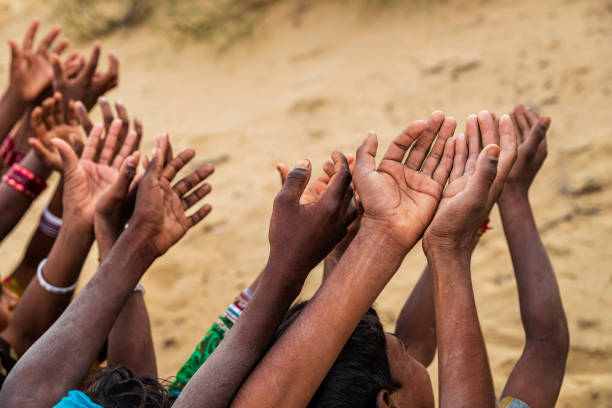
India is hungry as Modi talks of feeding the world

Agencies
May 26, 2022

hungryindia.jpg

The only thing India can possibly do during this year’s global food crisis is to not make it any worse for its own poor. As the cost of basic nutrition balloons everywhere, the second-most-populous nation’s best bet is to fall back on its extensive system of state procurement and public distribution to soften the blow.

But, around mid-April, Prime Minister Narendra Modi promised US President Joe Biden that India could feed the world. If the World Trade Organisation allowed it, “India is ready to supply food stocks to the world from tomorrow,” Modi said, recalling the conversation.

Modi’s ministers and advisers ought to have known better. Just as the Indian leader was talking to Biden, the north Indian wheat crop was being scorched by a deadly heat wave. The Ukraine war and the resulting grain shortage may have presented India with an opportunity to script a role for itself in international trade, but climate change and a brewing chapati crisis should have been reasons to curb the enthusiasm.

Eventually it had to do just that: In mid-May, India imposed a hasty ban on wheat exports to ensure its own food security. It was a repeat of the Covid-19 fiasco when Modi bragged about how India, the world’s pharmacy, will save humanity. But a vicious outbreak of the delta variant forced it to backtrack. By March 31, India’s share of the global vaccine trade was just 2.3 per cent. Just as with the pandemic, the ripples of New Delhi’s wheat flip-flop are being felt internationally. The Group of Seven nations criticized the embargo. "If everyone starts to impose export restrictions or to close markets, that would worsen the crisis," German agriculture minister Cem Ozdemir said.

Actually, the opposite might be true. From Indonesia’s restrictions on palm-oil shipments to Malaysia’s ban on chicken exports, some 30 countries have resorted to such measures. Had India not closed its markets, the country might have faced a shortage of chapatis — India’s ubiquitous, unleavened daily bread. People, rich or poor, don’t consume wheat; they buy flour to make chapatis. And this year, there may be 6.5 per cent fewer chapatis for the same crop as previous harvests, while wheat output itself will likely see its first dip in seven years. 

In a nutshell, the problem is this: Last year, one kilo of Indian wheat resulted in about 770 grams of flour. This year, that might go down to 720 grams. The hottest March in 122 years has stunted grain formation. In fact, traders are buying wheat that is below their normal flour-yield cut-off level — that would be a score below 76 on a hectoliter test. Now, inferior readings of 72 are acceptable because of the scarcity of good wheat, according to industry sources.

Blame can be laid to the unusually early heat wave that engulfed India and Pakistan, weather that was made at least 30 times more likely by human-caused climate change, according to scientists at the World Weather Attribution initiative. India’s crop will be lucky to exceed 100 million tons this year, a steep decline from the initial government estimate of a record 111 million-ton harvest.

Taking 15 million metric tons from this total to export to the world — as the government boasted — was more than a little shortsighted. For one, the Food Corporation of India, the state-buying agency, has neglected to fill out its granaries. Last year, it bought 43 million metric tons for its stockpiles. This year’s target has been slashed to less than half of that. Those 19.5 million tons of purchases, plus the 30 million tons currently in FCI storage will mostly go into public distribution if the Modi administration extends the free grain program it started during the pandemic. There will be little left in the state’s wheat pool to tamp down any speculative fervor in the domestic open market.

The government isn’t without tools. If prices skyrocket, New Delhi can impose stock limits to force traders to release their hoards. The FCI could also offload more rice than wheat into the subsidised public distribution system. Most Indian diets nowadays can accommodate both. This could free up about 10 million tons of wheat to accommodate government-to-government supply deals such as with Egypt.

Still, these are stopgap solutions. The premise of Modi’s failed farm-reform legislation was to give more freedom to farmers to discover free-market prices for their produce. The about-face over wheat shows that when it comes to India’s agriculture, primacy of markets remains a pipe dream. A limit on sugar exports has also come up. Unlike wheat, where India is a bit player in global trade, the country is No. 2 in sugar shipments after Brazil. That’s a perfidy in itself because the sweetener guzzles water — and by selling it overseas, India exports its precious rain.

Maybe the current wheat shortage will ease if, as Lithuania has proposed, a protective corridor for grain shipments from Ukraine ends up breaking a Russian blockade of the Black Sea. With that, the pressure to feed India’s 1.4 billion people may also lift. But the long-term threat of climate change won’t go away. As global temperatures rise 2 degrees Celsius or more above pre-industrial levels, the country’s chapati challenge is only going to become more urgent.

Comments

Add new comment

  • Coastaldigest.com reserves the right to delete or block any comments.
  • Coastaldigset.com is not responsible for its readers’ comments.
  • Comments that are abusive, incendiary or irrelevant are strictly prohibited.
  • Please use a genuine email ID and provide your name to avoid reject.
News Network
December 2,2025

Mangaluru, Dec 2: Mangaluru International Airport responded to a medical emergency late on Monday night. Air India Express flight IX 522, travelling from Riyadh to Thiruvananthapuram, was diverted to Mangaluru Airport after a passenger in his late 30s experienced a medical emergency on board.

The Airport’s Operations Control Centre received an alert regarding the passenger’s health condition. The airport activated its emergency response protocol, mobilising the airport medical team and coordinating with stakeholders including CISF, immigration, and customs. 

Upon landing, airport medical personnel attended to the passenger, assessed his condition, and arranged to shift him to a local tertiary-care hospital for further treatment. The passenger’s relatives accompanied the passenger, who incidentally received necessary medical care on board, which helped stabilise the situation.

Following the handling of the emergency, the flight departed for Thiruvananthapuram at 2:05 am on Tuesday.

"We appreciate the cooperation of all parties involved, and this incident reaffirms our ongoing commitment to prioritising passenger safety and readiness to respond to unforeseen emergencies with professionalism and care," the Airport spokesperson said. 

Comments

Add new comment

  • Coastaldigest.com reserves the right to delete or block any comments.
  • Coastaldigset.com is not responsible for its readers’ comments.
  • Comments that are abusive, incendiary or irrelevant are strictly prohibited.
  • Please use a genuine email ID and provide your name to avoid reject.
News Network
November 22,2025

The Karnataka government has announced a 50% rebate on pending traffic and transport fines. The discount is available from November 21 to December 12.

The rebate applies to all traffic e-challans and violation cases booked by the RTO between 1991–92 and 2019–20. Officials clarified that the offer is not applicable to pending tax dues and is restricted only to traffic-violation fines.

Across Karnataka, more than 4 lakh RTO cases remain pending, including those involving transport vehicles. While thousands of vehicle owners have already cleared their dues, the department expects to generate substantial revenue through this limited-period rebate.

How to Pay and Avail the Discount

There are three ways to check and pay your pending fines:

1. Through Mobile Apps
Available on both Play Store and App Store:
•    Karnataka State Police (KSP) app
•    KarnatakaOne app
•    ASTraM app

Steps:
•    Enter your vehicle number in any of the above apps
•    Verify the photo/details of your vehicle
•    Pay the fine with the 50% discount applied

2. Visit a Traffic Police Station

You can pay your pending fine at any nearby traffic police station.

3. Visit the Traffic Management Centre (TMC)

•    Location: First Floor, Infantry Road, near Indian Express, Bengaluru

Transport Commissioner Yogeesh A M said, “We don't issue e-challans, so there's no online payment system.”

The department estimates ₹52 crore in pending RTO fines up to March 2020. “With the 50% rebate, we expect to collect around ₹25 crore if all dues are cleared,” he added.

Comments

Add new comment

  • Coastaldigest.com reserves the right to delete or block any comments.
  • Coastaldigset.com is not responsible for its readers’ comments.
  • Comments that are abusive, incendiary or irrelevant are strictly prohibited.
  • Please use a genuine email ID and provide your name to avoid reject.
News Network
November 22,2025

gaza.jpg

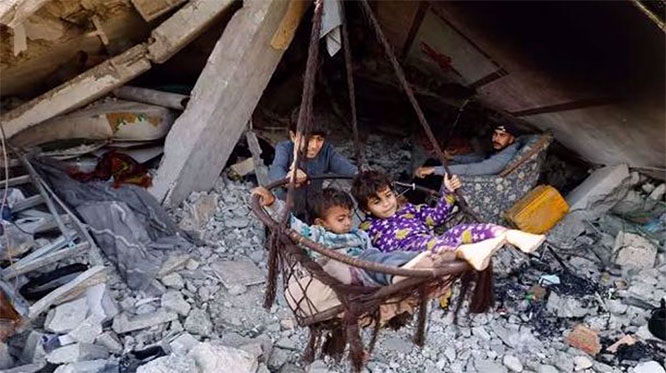
The Israeli regime’s forces have killed two Palestinian children in the Gaza Strip every day since the ceasefire began in early October, UNICEF has warned.

The UN children’s agency said on Friday that Israeli forces continue to attack Palestinians in Gaza even though the agreement was meant to stop the killing.

“Since 11 October, while the ceasefire has been in effect, at least 67 children have been killed in conflict-related incidents in the Gaza Strip. Dozens more have been injured. That is an average of almost two children killed every day since the ceasefire took effect,” UNICEF spokesperson Ricardo Pires said in Geneva, reminding that each number in the statistics represents a child whose life had ended violently.

“These are not statistics,” he said. “Each child had a story, a family, and a future that was stolen from them.”

Data from Palestinian factions, human rights groups, and government bodies recorded since the US-brokered ceasefire deal went into effect on October 10 show that Israeli forces have carried out numerous attacks, each constituting a separate ceasefire violation.

UNICEF teams say they repeatedly continue to witness heart-wrenching scenes of fearful Palestinian children sleeping outdoors with amputated limbs, while others live as orphans in flooded, makeshift shelters.

“I saw this myself in August. There is no safe place for them. The world cannot normalize their suffering,” Pires said, lamenting that the UN could “do a lot more if the aid that is really needed was entering faster.”

The UNICEF spokesperson warned that with the advent of winter, the risks for hundreds of thousands of displaced children will increase.

He warned, “The stakes are incredibly high” for children as winter acts as a threat multiplier, where children have no heating, no insulation, and few blankets. He said respiratory infections rise.

“Too many children have already paid the highest price,” Pires said. “Too many are still paying it, even under a ceasefire. The world promised them it would stop and that we would protect them.”

“Now we must act like it,” the UNICEF spokesperson added.

Since the Israeli regime launched its genocidal war against Palestinians in Gaza in October 2023, it has killed nearly 70,000 people in the territory, most of them women and children, and injured over 170,000 more, while reducing most of the structures in the enclave to rubble.

Comments

Add new comment

  • Coastaldigest.com reserves the right to delete or block any comments.
  • Coastaldigset.com is not responsible for its readers’ comments.
  • Comments that are abusive, incendiary or irrelevant are strictly prohibited.
  • Please use a genuine email ID and provide your name to avoid reject.