India is hungry as Modi talks of feeding the world

Agencies
May 26, 2022

hungryindia.jpg

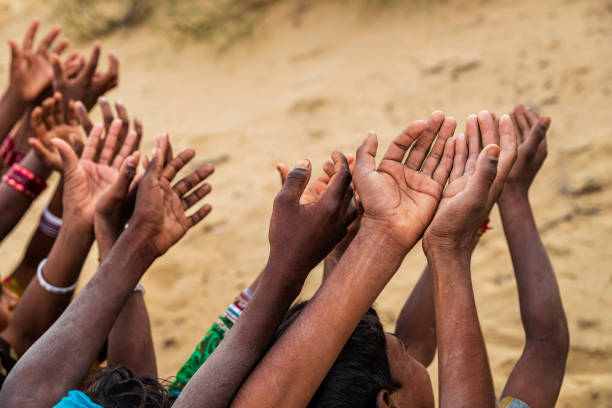
The only thing India can possibly do during this year’s global food crisis is to not make it any worse for its own poor. As the cost of basic nutrition balloons everywhere, the second-most-populous nation’s best bet is to fall back on its extensive system of state procurement and public distribution to soften the blow.

But, around mid-April, Prime Minister Narendra Modi promised US President Joe Biden that India could feed the world. If the World Trade Organisation allowed it, “India is ready to supply food stocks to the world from tomorrow,” Modi said, recalling the conversation.

Modi’s ministers and advisers ought to have known better. Just as the Indian leader was talking to Biden, the north Indian wheat crop was being scorched by a deadly heat wave. The Ukraine war and the resulting grain shortage may have presented India with an opportunity to script a role for itself in international trade, but climate change and a brewing chapati crisis should have been reasons to curb the enthusiasm.

Eventually it had to do just that: In mid-May, India imposed a hasty ban on wheat exports to ensure its own food security. It was a repeat of the Covid-19 fiasco when Modi bragged about how India, the world’s pharmacy, will save humanity. But a vicious outbreak of the delta variant forced it to backtrack. By March 31, India’s share of the global vaccine trade was just 2.3 per cent. Just as with the pandemic, the ripples of New Delhi’s wheat flip-flop are being felt internationally. The Group of Seven nations criticized the embargo. "If everyone starts to impose export restrictions or to close markets, that would worsen the crisis," German agriculture minister Cem Ozdemir said.

Actually, the opposite might be true. From Indonesia’s restrictions on palm-oil shipments to Malaysia’s ban on chicken exports, some 30 countries have resorted to such measures. Had India not closed its markets, the country might have faced a shortage of chapatis — India’s ubiquitous, unleavened daily bread. People, rich or poor, don’t consume wheat; they buy flour to make chapatis. And this year, there may be 6.5 per cent fewer chapatis for the same crop as previous harvests, while wheat output itself will likely see its first dip in seven years. 

In a nutshell, the problem is this: Last year, one kilo of Indian wheat resulted in about 770 grams of flour. This year, that might go down to 720 grams. The hottest March in 122 years has stunted grain formation. In fact, traders are buying wheat that is below their normal flour-yield cut-off level — that would be a score below 76 on a hectoliter test. Now, inferior readings of 72 are acceptable because of the scarcity of good wheat, according to industry sources.

Blame can be laid to the unusually early heat wave that engulfed India and Pakistan, weather that was made at least 30 times more likely by human-caused climate change, according to scientists at the World Weather Attribution initiative. India’s crop will be lucky to exceed 100 million tons this year, a steep decline from the initial government estimate of a record 111 million-ton harvest.

Taking 15 million metric tons from this total to export to the world — as the government boasted — was more than a little shortsighted. For one, the Food Corporation of India, the state-buying agency, has neglected to fill out its granaries. Last year, it bought 43 million metric tons for its stockpiles. This year’s target has been slashed to less than half of that. Those 19.5 million tons of purchases, plus the 30 million tons currently in FCI storage will mostly go into public distribution if the Modi administration extends the free grain program it started during the pandemic. There will be little left in the state’s wheat pool to tamp down any speculative fervor in the domestic open market.

The government isn’t without tools. If prices skyrocket, New Delhi can impose stock limits to force traders to release their hoards. The FCI could also offload more rice than wheat into the subsidised public distribution system. Most Indian diets nowadays can accommodate both. This could free up about 10 million tons of wheat to accommodate government-to-government supply deals such as with Egypt.

Still, these are stopgap solutions. The premise of Modi’s failed farm-reform legislation was to give more freedom to farmers to discover free-market prices for their produce. The about-face over wheat shows that when it comes to India’s agriculture, primacy of markets remains a pipe dream. A limit on sugar exports has also come up. Unlike wheat, where India is a bit player in global trade, the country is No. 2 in sugar shipments after Brazil. That’s a perfidy in itself because the sweetener guzzles water — and by selling it overseas, India exports its precious rain.

Maybe the current wheat shortage will ease if, as Lithuania has proposed, a protective corridor for grain shipments from Ukraine ends up breaking a Russian blockade of the Black Sea. With that, the pressure to feed India’s 1.4 billion people may also lift. But the long-term threat of climate change won’t go away. As global temperatures rise 2 degrees Celsius or more above pre-industrial levels, the country’s chapati challenge is only going to become more urgent.

Comments

Add new comment

  • Coastaldigest.com reserves the right to delete or block any comments.
  • Coastaldigset.com is not responsible for its readers’ comments.
  • Comments that are abusive, incendiary or irrelevant are strictly prohibited.
  • Please use a genuine email ID and provide your name to avoid reject.
News Network
November 21,2025

malpe.jpg

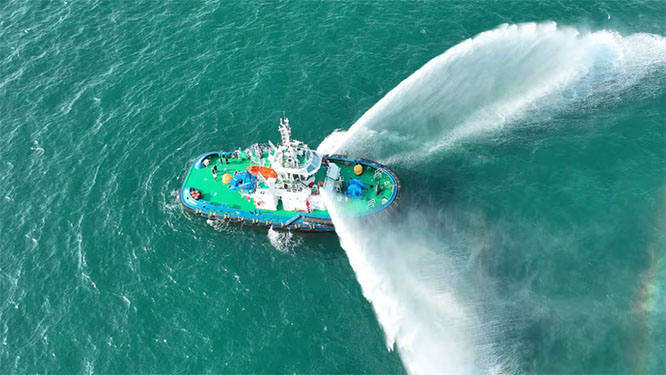
Udupi: The Malpe Police have arrested two men from Uttar Pradesh for allegedly sharing classified information related to Indian Navy vessels with individuals in Pakistan, posing a serious threat to national security.

According to a complaint filed by the CEO of Udupi Cochin Shipyard, Malpe—an institution under the Union Ministry of Ports, Shipping and Waterways—the prime accused, Rohit (29), was working as an insulator through subcontractor M/S Shushma Marine Pvt Ltd. He had earlier served at Cochin Shipyard Limited in Kochi, Kerala, where naval ships are under construction.

Udupi SP Hariram Shankar said the accused had unlawfully shared, via WhatsApp, confidential identification numbers of Navy-related ships and other classified details while working in Kerala, allegedly for illegal gains.

After joining the Malpe shipyard unit, Rohit reportedly continued collecting sensitive information through a friend in Kochi and circulated it to unauthorised individuals, violating national security protocols and potentially endangering India’s sovereignty, unity, and integrity.

Based on the complaint, Malpe Police registered a case under Section 152 of the Bharatiya Nyaya Sanhita (BNS) and Sections 3 and 5 of the Official Secrets Act, 1923.

A police team led by Karkala Subdivision Assistant Superintendent of Police Harsha Priyamvada—along with PSI Anil Kumar D, ASI Harish, and PC Ravi Jadhav—conducted the investigation and arrested the two accused, identified as Rohit (29) and Santri (37), both residents of Sultanpur district, Uttar Pradesh.

The duo was produced before the court, which remanded them in judicial custody till December 3. Further investigation is in progress.

Comments

Add new comment

  • Coastaldigest.com reserves the right to delete or block any comments.
  • Coastaldigset.com is not responsible for its readers’ comments.
  • Comments that are abusive, incendiary or irrelevant are strictly prohibited.
  • Please use a genuine email ID and provide your name to avoid reject.
coastaldigest.com news network
November 28,2025

roadshow.jpg

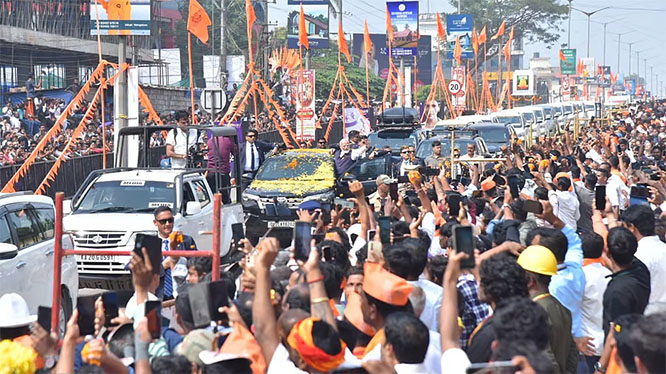
Udupi district transformed into a sea of saffron and celebration on Friday, November 28, as Prime Minister Narendra Modi’s roadshow swept through the coastal temple town. Thousands of residents lined the streets, turning the event into a vibrant public spectacle filled with cheers, flags, and festive energy.

The procession route—from the helipad to the historic Sri Krishna Math—was decked with buntings, saffron flags, and multilayered security barricades. One of the district’s largest-ever security deployments was put in place for the high-profile visit, with over 3,000 police personnel on duty. The arrangement included ten SPs, 27 DSPs, 49 inspectors, 127 sub-inspectors, 232 assistant sub-inspectors, 1,608 constables, and 39 women staff.

Six platoons of the Karnataka State Reserve Police, six Quick Response Teams, bomb detection units, and dog squads were stationed across Udupi. Enhanced surveillance covered Adi Udupi, Bannanje bus stand, and the Sri Krishna Math parking zone, with combing operations carried out along the roadshow corridor.

At the 800-year-old Sri Krishna Math, preparations reached a ceremonial peak. Paryaya Puttige Math seer Sugunendra Teertha Swamiji said the Prime Minister would take part in the Laksha Kantha Geetha Parayana, a mass chanting of the Bhagavad Gita by one lakh devotees, and inaugurate the new Suvarna Teertha Mantapa.

“He will first offer floral tributes to saint-poet Kanakadasa and then unveil the golden covering over the Kanakana Kindi,” the seer said.

The Prime Minister will also receive a Poorna Kumbha welcome and have darshan of Lord Sri Krishna, Mukhyaprana Devaru, and the Suvarna Paduke. Union Minister Pralhad Joshi, Karnataka Governor Thaawarchand Gehlot, Minister Bairathi Suresh, Dharmadhikari D. Veerendra Heggade, and seers from the Ashta Maths are expected to join the ceremony.

Ahead of his arrival, the Prime Minister posted on X that he felt “honoured” to attend the spiritually significant gathering. “This is a special occasion that brings together people from different sections of society for a recital of the Gita. This Matha has a very special significance in our cultural life,” he wrote, noting the institution’s long-standing legacy rooted in the teachings of Sri Madhvacharya.

roadshow2.jpg

Comments

Add new comment

  • Coastaldigest.com reserves the right to delete or block any comments.
  • Coastaldigset.com is not responsible for its readers’ comments.
  • Comments that are abusive, incendiary or irrelevant are strictly prohibited.
  • Please use a genuine email ID and provide your name to avoid reject.
coastaldigest.com news network
December 2,2025

karkala.jpg

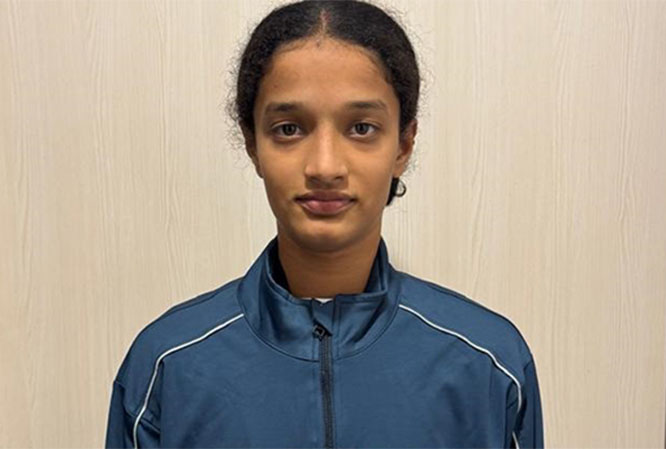
Udupi, Dec 2: A wave of regional pride is sweeping through Udupi district as Shagun S Verma Hegde, a talented Class 9 student from Christ King English Medium High School, Karkala, has been named the captain of the Indian National Team for the Under-15 Girls’ Volleyball Championship.

Shagun holds the unique distinction of being the sole player from Karnataka selected to represent the country in the prestigious international tournament. The championship, organized by the School Games Federation, is scheduled to take place in Shangluo, China, from December 3 to 13, where Shagun will lead the national squad.

A Remarkable Journey to the Top

Shagun’s selection is a testament to her dedication and exceptional skill on the court. Her journey included several rigorous rounds of selection:

•    She was the only player from Udupi district to qualify for the state-level selection camp.

•    Out of eight players from Karnataka who advanced to the national selection camp in Pune, Maharashtra, Shagun was the only one to secure a place in the final national squad.

•    The national camp saw participation from approximately 200 players, which was shortlisted to 23. Shagun not only made the final cut but was also ranked as the second-best player overall, solidifying her leadership role.

Shagun, who is the daughter of Sandesh Verma and Shruthiraj of Kallotte, Karkala, has trained under experienced coaches Santosh D’Souza, Jeevan D’Silva, Jairaj Poojary, and Ramesh. Her selection as the team captain has brought profound honour to her family, school, the Udupi district, and the entire state of Karnataka.

Comments

Add new comment

  • Coastaldigest.com reserves the right to delete or block any comments.
  • Coastaldigset.com is not responsible for its readers’ comments.
  • Comments that are abusive, incendiary or irrelevant are strictly prohibited.
  • Please use a genuine email ID and provide your name to avoid reject.