India might see 'serious livelihood crisis': Economist Jean Dreze

Agencies
May 11, 2021

crisis.jpg

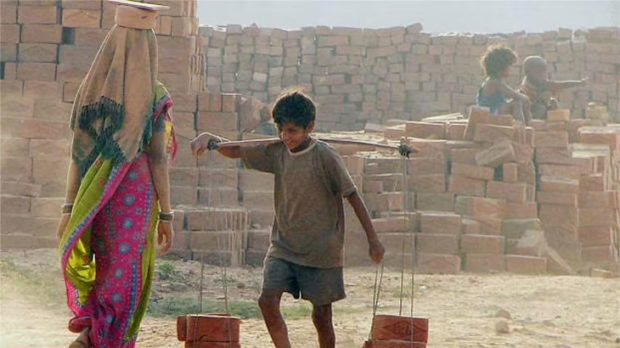
India might be heading towards a "serious livelihood crisis" as the situation seems to be worse this time for the working class amid the Covid crisis and local restrictions by states already add up to something close to a nationwide lockdown, according to noted economist Jean Dreze.

In an interview, he also said the Narendra Modi government's target to make India a USD 5 trillion economy by 2024-25 was never a "feasible target" and was just to pander to the "super-power ambitions" of the Indian elite.

About the impact of the second wave of Covid on the Indian economy, the eminent economist said the situation today is not very different from what it was around this time last year as far as working people are concerned.

"The economic consequences of local lockdowns may not be as destructive as those of a national lockdown. But in some respects, things are worse this time for the working class," he opined.

Further, the eminent economist said the fear of infection is more widespread and that will make it hard to revive economic activity.

"Despite mass vaccination, there is a serious possibility that intermittent crises will continue for a long time, perhaps years.

"Compared with last year, many people have depleted savings and larger debts. Those who borrowed their way through last year's crisis may not be able to do it again this time," he observed.

Dreze also pointed out that last year there was a relief package and today relief measures are not even being discussed.

"On top of all this, local lockdowns may give way to a national lockdown relatively soon. In fact, they already add up to something close to a country-wide lockdown.

"In short, we are heading towards a serious livelihood crisis," he said.

On how the government could have missed seeing the second Covid-19 wave coming, Dreze said the Indian government has been in denial all along.

"Remember, the government refused to admit about any 'community transmission' of Covid for a long time, even as recorded cases were counted in millions.

"When an early analysis of official data exposed the collapse of health services, the government retracted the data," he said.

He pointed out that misleading statistics have been routinely invoked to reassure the public that all is well. "Denying a crisis is the surest way to make it worse. We are now paying the price of this complacency".

India has been reporting more than three lakh new Covid cases daily in recent weeks and the death toll due to the infection is also rising.

Noting that India is also paying the price of a long history of neglect of the health sector, especially public health, Dreze said nothing is more important than health for the quality of life, yet public expenditure on health in India has hovered around a measly 1 per cent of GDP for decades.
When asked about the sort of relief measures that could be put in place to deal with possible livelihood crisis, he said as a starter, the central government could replay the 2020 relief package.

"But it is important to go beyond that, and to consolidate the social security system on a durable basis," the eminent economist said, adding that ad-hoc, short-term relief measures tend to breed confusion, corruption and waste.

Dreze, who was also part of the National Advisory Council (NAC) that had advised the previous UPA government, said much can be done within the framework of existing social security schemes and laws such as the public distribution system, the National Rural Employment Guarantee Act (NREGA), the National Social Assistance Programme, and the Integrated Child Development Services.

He also noted it would be easy to provide supplementary food rations to all ration-card holders for much longer than the proposed two months, and also to expand the coverage of the public distribution system.

"Going beyond existing schemes, I think that a well-designed, inclusive cash-transfer programme would be useful," Dreze opined.

According to him, if intermittent crises are going to continue for years, which is very possible, it would really help to have a well-functioning system of cash relief that can be activated whenever the need arises.

"Turning India into a USD 5 trillion economy by 2024-25 was never a feasible target, and it is a useless target in any case. The function of this target is to pander to the super-power ambitions of the Indian elite," the Belgian-born Indian economist said. In 2019, Prime Minister Narendra Modi envisioned to make India a USD 5 trillion economy and global power house by 2024-25.

According to Dreze, even if we accept GDP as a valid development indicator, the standard approach is to look at GDP at its per capita terms.

"But then India looks like one of the poorer countries in the world, which it is. Looking at aggregate GDP, which is naturally quite large because of India's large population, creates an illusion of prosperity and power," he argued.

Dreze pointed out that actually it is not entirely an illusion because if the government's interest is in power on the world stage rather than in the living conditions of the people, then, yes, aggregate GDP would matter.

"For instance, it would enable you maintain a large army. But this has nothing to do with development," he observed. 

Comments

Add new comment

  • Coastaldigest.com reserves the right to delete or block any comments.
  • Coastaldigset.com is not responsible for its readers’ comments.
  • Comments that are abusive, incendiary or irrelevant are strictly prohibited.
  • Please use a genuine email ID and provide your name to avoid reject.
Agencies
November 22,2025

indiapak.jpg

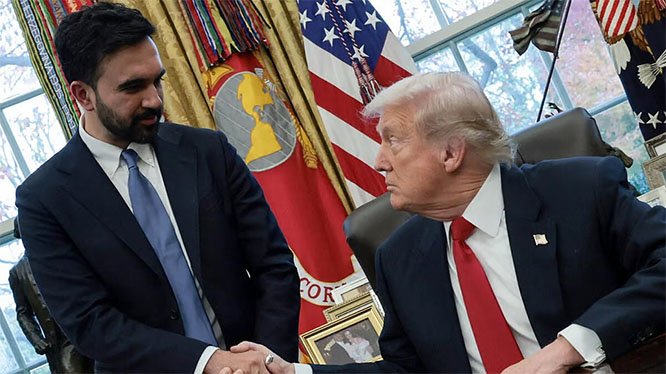
New York/Washington: US President Donald Trump has again claimed to have solved the conflict between India and Pakistan, repeating his assertion during a meeting with New York City Mayor-elect Zohran Mamdani in the Oval Office.

Mamdani flew to Washington DC for his first meeting with Trump in the White House on Friday. Trump said he “enjoyed” the meeting, which he described as “great.”

During remarks in the Oval Office, with Mamdani standing next to him, Trump repeated his claim that he solved the May conflict between India and Pakistan.

"I did eight peace deals of countries, including India and Pakistan,” he said.

On Wednesday, Trump had said he threatened to put 350 per cent tariffs on India and Pakistan if they did not end their conflict, repeating his claim that he solved the fighting between the nuclear-armed neighbours and that Prime Minister Narendra Modi had called him to say “we're not going to go to war.”

Since May 10, when Trump announced on social media that India and Pakistan had agreed to a “full and immediate” ceasefire after a “long night” of talks mediated by Washington, he has repeated his claim over 60 times that he “helped settle” the tensions between India and Pakistan.

India has consistently denied any third-party intervention. India launched Operation Sindoor on May 7, targeting terror infrastructure in Pakistan and Pakistan-occupied Kashmir in retaliation for the April 22 Pahalgam attack that killed 26 civilians. India and Pakistan reached an understanding on May 10 to end the conflict after four days of intense cross-border drone and missile strikes.

Mamdani emerged victorious in the closely-watched battle for New York City Mayor, becoming the first South Asian and Muslim to be elected to sit at the helm of the largest city in the US.

He had been the front-runner in the NYC Mayoral election for months and defeated Republican nominee Curtis Sliwa and political heavyweight former New York State Governor Andrew Cuomo, who ran as an independent candidate and was officially endorsed by Trump just hours before the elections.

Indian-descent Mamdani is the son of renowned filmmaker Mira Nair and Columbia University professor Mahmood Mamdani. He was born and raised in Kampala, Uganda and moved to New York City with his family when he was 7. Mamdani became a naturalised US citizen only recently, in 2018.

Comments

Add new comment

  • Coastaldigest.com reserves the right to delete or block any comments.
  • Coastaldigset.com is not responsible for its readers’ comments.
  • Comments that are abusive, incendiary or irrelevant are strictly prohibited.
  • Please use a genuine email ID and provide your name to avoid reject.
News Network
November 22,2025

gaza.jpg

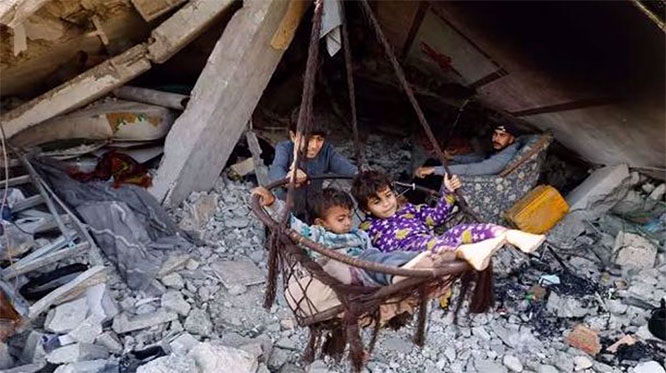
The Israeli regime’s forces have killed two Palestinian children in the Gaza Strip every day since the ceasefire began in early October, UNICEF has warned.

The UN children’s agency said on Friday that Israeli forces continue to attack Palestinians in Gaza even though the agreement was meant to stop the killing.

“Since 11 October, while the ceasefire has been in effect, at least 67 children have been killed in conflict-related incidents in the Gaza Strip. Dozens more have been injured. That is an average of almost two children killed every day since the ceasefire took effect,” UNICEF spokesperson Ricardo Pires said in Geneva, reminding that each number in the statistics represents a child whose life had ended violently.

“These are not statistics,” he said. “Each child had a story, a family, and a future that was stolen from them.”

Data from Palestinian factions, human rights groups, and government bodies recorded since the US-brokered ceasefire deal went into effect on October 10 show that Israeli forces have carried out numerous attacks, each constituting a separate ceasefire violation.

UNICEF teams say they repeatedly continue to witness heart-wrenching scenes of fearful Palestinian children sleeping outdoors with amputated limbs, while others live as orphans in flooded, makeshift shelters.

“I saw this myself in August. There is no safe place for them. The world cannot normalize their suffering,” Pires said, lamenting that the UN could “do a lot more if the aid that is really needed was entering faster.”

The UNICEF spokesperson warned that with the advent of winter, the risks for hundreds of thousands of displaced children will increase.

He warned, “The stakes are incredibly high” for children as winter acts as a threat multiplier, where children have no heating, no insulation, and few blankets. He said respiratory infections rise.

“Too many children have already paid the highest price,” Pires said. “Too many are still paying it, even under a ceasefire. The world promised them it would stop and that we would protect them.”

“Now we must act like it,” the UNICEF spokesperson added.

Since the Israeli regime launched its genocidal war against Palestinians in Gaza in October 2023, it has killed nearly 70,000 people in the territory, most of them women and children, and injured over 170,000 more, while reducing most of the structures in the enclave to rubble.

Comments

Add new comment

  • Coastaldigest.com reserves the right to delete or block any comments.
  • Coastaldigset.com is not responsible for its readers’ comments.
  • Comments that are abusive, incendiary or irrelevant are strictly prohibited.
  • Please use a genuine email ID and provide your name to avoid reject.
News Network
December 2,2025

A major upgrade in safety and monitoring is planned for Haj 2026, with every Indian pilgrim set to receive a Haj Suvidha smart wristband linked to the official Haj Suvidha mobile app. The initiative aims to support pilgrims—especially senior citizens—who may struggle with smartphones during the 45-day journey.

What the Smart Wristband Will Do

Officials said the device will come with:
•    Location tracking
•    Pedometer
•    SOS emergency button
•    Qibla compass
•    Prayer timings
•    Basic health monitoring

SP Tiwari, secretary of the UP State Haj Committee, said the goal is to make the pilgrimage safer and more comfortable.

“Most Hajis are elderly and not comfortable with mobile apps,” he said. “The smartwatch will help locate pilgrims who forget their way or cannot communicate their location.”

The wristbands will be monitored by the Consulate General of India in Saudi Arabia, similar to mobile tracking via the Haj Suvidha App.

Free Distribution and Training

•    Smart wristbands will be given free of cost.
•    Training for pilgrims will be conducted between January and February 2026.
•    Sample units will reach state Haj committees soon.
•    Final devices will be distributed as pilgrims begin their journey.

New Rules for Accommodation

Two major decisions have also been finalised for Haj 2026:
1.    Separate rooms for men and women – including married couples. They may stay on the same floor but must occupy different rooms, following stricter Saudi guidelines.
2.    Cooking banned – gas cylinders will not be allowed; all meals will be provided through official catering services arranged by the Haj Committee of India.

These decisions were finalised during a meeting of the Haj Committee of India and state representatives in Mumbai.

Haj Suvidha App Launched Earlier

The government launched the Haj Suvidha App in 2024, offering:

•    Training modules
•    Accommodation and flight details
•    Baggage information
•    SOS and translation tools
•    Grievance redressal

Haj 2026 Quota and Key States

•    India’s total Haj quota for 2026: 1,75,025 pilgrims
•    70% (1,25,000) allotted to the Haj Committee of India
•    30% (around 50,000) reserved for Haj Group Organisers

Uttar Pradesh has the largest allocation (around 30,000 seats), though approximately 18,000 pilgrims are expected to go this year. States with high pilgrim numbers include Kerala, Maharashtra and Gujarat.

Dates of Haj 2026

The pilgrimage is scheduled to take place from 24 May to 29 May, 2026 (tentative).
Haj is one of the five pillars of Islam and is mandatory for Muslims who meet the required conditions.

Comments

Add new comment

  • Coastaldigest.com reserves the right to delete or block any comments.
  • Coastaldigset.com is not responsible for its readers’ comments.
  • Comments that are abusive, incendiary or irrelevant are strictly prohibited.
  • Please use a genuine email ID and provide your name to avoid reject.