India might see 'serious livelihood crisis': Economist Jean Dreze

Agencies
May 11, 2021

crisis.jpg

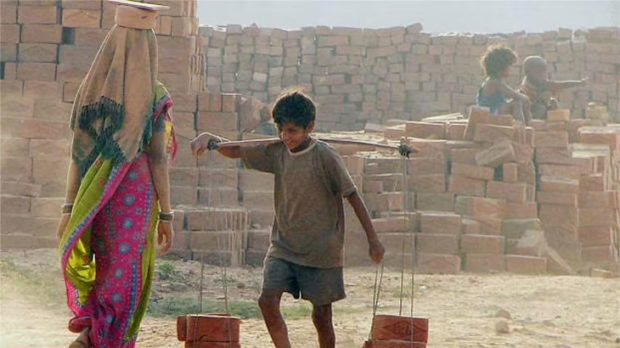
India might be heading towards a "serious livelihood crisis" as the situation seems to be worse this time for the working class amid the Covid crisis and local restrictions by states already add up to something close to a nationwide lockdown, according to noted economist Jean Dreze.

In an interview, he also said the Narendra Modi government's target to make India a USD 5 trillion economy by 2024-25 was never a "feasible target" and was just to pander to the "super-power ambitions" of the Indian elite.

About the impact of the second wave of Covid on the Indian economy, the eminent economist said the situation today is not very different from what it was around this time last year as far as working people are concerned.

"The economic consequences of local lockdowns may not be as destructive as those of a national lockdown. But in some respects, things are worse this time for the working class," he opined.

Further, the eminent economist said the fear of infection is more widespread and that will make it hard to revive economic activity.

"Despite mass vaccination, there is a serious possibility that intermittent crises will continue for a long time, perhaps years.

"Compared with last year, many people have depleted savings and larger debts. Those who borrowed their way through last year's crisis may not be able to do it again this time," he observed.

Dreze also pointed out that last year there was a relief package and today relief measures are not even being discussed.

"On top of all this, local lockdowns may give way to a national lockdown relatively soon. In fact, they already add up to something close to a country-wide lockdown.

"In short, we are heading towards a serious livelihood crisis," he said.

On how the government could have missed seeing the second Covid-19 wave coming, Dreze said the Indian government has been in denial all along.

"Remember, the government refused to admit about any 'community transmission' of Covid for a long time, even as recorded cases were counted in millions.

"When an early analysis of official data exposed the collapse of health services, the government retracted the data," he said.

He pointed out that misleading statistics have been routinely invoked to reassure the public that all is well. "Denying a crisis is the surest way to make it worse. We are now paying the price of this complacency".

India has been reporting more than three lakh new Covid cases daily in recent weeks and the death toll due to the infection is also rising.

Noting that India is also paying the price of a long history of neglect of the health sector, especially public health, Dreze said nothing is more important than health for the quality of life, yet public expenditure on health in India has hovered around a measly 1 per cent of GDP for decades.
When asked about the sort of relief measures that could be put in place to deal with possible livelihood crisis, he said as a starter, the central government could replay the 2020 relief package.

"But it is important to go beyond that, and to consolidate the social security system on a durable basis," the eminent economist said, adding that ad-hoc, short-term relief measures tend to breed confusion, corruption and waste.

Dreze, who was also part of the National Advisory Council (NAC) that had advised the previous UPA government, said much can be done within the framework of existing social security schemes and laws such as the public distribution system, the National Rural Employment Guarantee Act (NREGA), the National Social Assistance Programme, and the Integrated Child Development Services.

He also noted it would be easy to provide supplementary food rations to all ration-card holders for much longer than the proposed two months, and also to expand the coverage of the public distribution system.

"Going beyond existing schemes, I think that a well-designed, inclusive cash-transfer programme would be useful," Dreze opined.

According to him, if intermittent crises are going to continue for years, which is very possible, it would really help to have a well-functioning system of cash relief that can be activated whenever the need arises.

"Turning India into a USD 5 trillion economy by 2024-25 was never a feasible target, and it is a useless target in any case. The function of this target is to pander to the super-power ambitions of the Indian elite," the Belgian-born Indian economist said. In 2019, Prime Minister Narendra Modi envisioned to make India a USD 5 trillion economy and global power house by 2024-25.

According to Dreze, even if we accept GDP as a valid development indicator, the standard approach is to look at GDP at its per capita terms.

"But then India looks like one of the poorer countries in the world, which it is. Looking at aggregate GDP, which is naturally quite large because of India's large population, creates an illusion of prosperity and power," he argued.

Dreze pointed out that actually it is not entirely an illusion because if the government's interest is in power on the world stage rather than in the living conditions of the people, then, yes, aggregate GDP would matter.

"For instance, it would enable you maintain a large army. But this has nothing to do with development," he observed. 

Comments

Add new comment

  • Coastaldigest.com reserves the right to delete or block any comments.
  • Coastaldigset.com is not responsible for its readers’ comments.
  • Comments that are abusive, incendiary or irrelevant are strictly prohibited.
  • Please use a genuine email ID and provide your name to avoid reject.
P A Hameed Padubidri
November 26,2025

CD.jpg

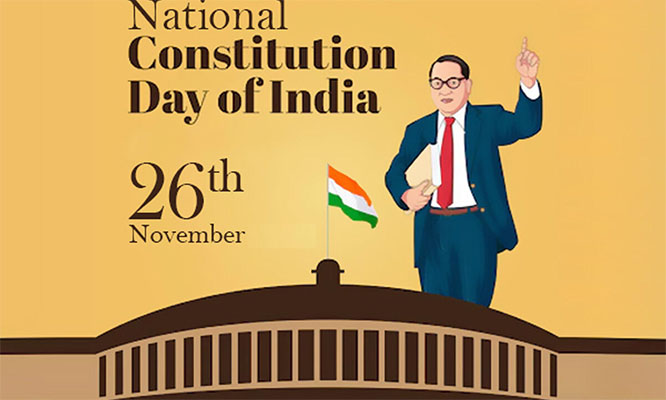
Constitution Day, also known as Samvidhan Divas, is observed every year on November 26 to honor the adoption of the Constitution of India and to recognize the visionary effort that shaped the world’s largest democracy.

Historical Background

It’s on November 26, 1949, the Constituent Assembly of India formally adopted the Constitution.This date is commemorated to acknowledge the completion of nearly three years of drafting, debate, and refinement.

On January 26, 1950, the Constitution came into force, marking India’s transition from a dominion to a sovereign republic.

The date 26 January was chosen to honor the “Purna Swaraj” declaration made in 1930 that marked the relentless efforts & sacrifices of the many. 

Why Constitution Day is Celebrated

* To honor & remember the framers of the Constitution, especially Dr. B. R. Ambedkar, the Chairman of the Drafting Committee, & many others. 

* To remind the citizens of the values, responsibilities, and rights enshrined in the Constitution.

* To promote constitutional values & literacy among students, institutions, and the general public.

* To reaffirm the nation’s commitment to justice, equality, liberty, fraternity and secular values. 

Vision and Significance of the Constitution

It establishes the fundamental political and legal framework for the nation.

Defines the structure, powers and functions of:
    •    The Executive
    •    The Legislature
    •    The Judiciary
    •    Guarantees a comprehensive set of Fundamental Rights, including:

-Equality before law
-Freedom of speech & expression
-Protection of life and personal liberty
-Freedom of religion
-Embeds Directive Principles of State Policy, guiding governance toward social justice and welfare.
-Introduces Fundamental Duties to ensure civic responsibility among citizens.

Key Features Celebrated on Constitution Day

-The Indian constitution is considered one of the longest written constitutions of the world. It’s systematically drafted considering almost all aspects that properly fits to the country. 

-Blend of multiple global constitutional principles while staying rooted in Indian values and realities.

-Framework that balances Federalism, Secularism, Democracy and Rule of Law. This makes everyone-from President to common man-below the law & are equal in the sight of law. 

-Another feature is that it’s based on built-in mechanisms for amendments, ensuring the Constitution grows with changing needs.

Message of the Day

The core ethos of this  Constitution Day is not merely about looking back at history-it’s a reminder of the continuous duty to protect democratic values, respect diversity and uphold the principles that define India as a sovereign, socialist, secular and democratic republic.

Happy Constitution Day to all my compatriots

Comments

Add new comment

  • Coastaldigest.com reserves the right to delete or block any comments.
  • Coastaldigset.com is not responsible for its readers’ comments.
  • Comments that are abusive, incendiary or irrelevant are strictly prohibited.
  • Please use a genuine email ID and provide your name to avoid reject.
Agencies
November 22,2025

indiapak.jpg

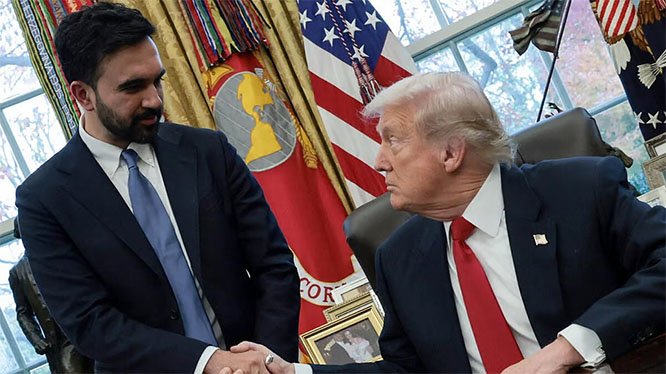
New York/Washington: US President Donald Trump has again claimed to have solved the conflict between India and Pakistan, repeating his assertion during a meeting with New York City Mayor-elect Zohran Mamdani in the Oval Office.

Mamdani flew to Washington DC for his first meeting with Trump in the White House on Friday. Trump said he “enjoyed” the meeting, which he described as “great.”

During remarks in the Oval Office, with Mamdani standing next to him, Trump repeated his claim that he solved the May conflict between India and Pakistan.

"I did eight peace deals of countries, including India and Pakistan,” he said.

On Wednesday, Trump had said he threatened to put 350 per cent tariffs on India and Pakistan if they did not end their conflict, repeating his claim that he solved the fighting between the nuclear-armed neighbours and that Prime Minister Narendra Modi had called him to say “we're not going to go to war.”

Since May 10, when Trump announced on social media that India and Pakistan had agreed to a “full and immediate” ceasefire after a “long night” of talks mediated by Washington, he has repeated his claim over 60 times that he “helped settle” the tensions between India and Pakistan.

India has consistently denied any third-party intervention. India launched Operation Sindoor on May 7, targeting terror infrastructure in Pakistan and Pakistan-occupied Kashmir in retaliation for the April 22 Pahalgam attack that killed 26 civilians. India and Pakistan reached an understanding on May 10 to end the conflict after four days of intense cross-border drone and missile strikes.

Mamdani emerged victorious in the closely-watched battle for New York City Mayor, becoming the first South Asian and Muslim to be elected to sit at the helm of the largest city in the US.

He had been the front-runner in the NYC Mayoral election for months and defeated Republican nominee Curtis Sliwa and political heavyweight former New York State Governor Andrew Cuomo, who ran as an independent candidate and was officially endorsed by Trump just hours before the elections.

Indian-descent Mamdani is the son of renowned filmmaker Mira Nair and Columbia University professor Mahmood Mamdani. He was born and raised in Kampala, Uganda and moved to New York City with his family when he was 7. Mamdani became a naturalised US citizen only recently, in 2018.

Comments

Add new comment

  • Coastaldigest.com reserves the right to delete or block any comments.
  • Coastaldigset.com is not responsible for its readers’ comments.
  • Comments that are abusive, incendiary or irrelevant are strictly prohibited.
  • Please use a genuine email ID and provide your name to avoid reject.
News Network
December 3,2025

indigo.jpg

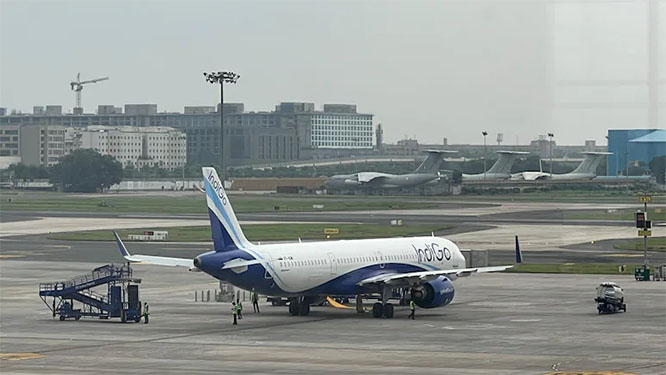
IndiGo, India’s largest airline, is battling one of its worst operational disruptions in recent years, with hundreds of delays and cancellations throwing domestic travel into chaos.

Government data on Tuesday showed its on-time performance plunging to 35%, an unusual dip for a carrier long associated with punctuality.

By Wednesday afternoon, airports in Delhi, Mumbai, Bengaluru and Hyderabad had collectively reported close to 200 cancellations, stranding travellers across the country.

Crew Shortage After New Duty Norms

A major trigger behind the meltdown is a severe crew shortage, especially among pilots, following the rollout of revised Flight Duty Time Limitation (FDTL) norms last month.

The rules mandate longer rest hours and more humane rosters — a shift IndiGo has struggled to incorporate across its vast network.

Sources said several flights were grounded due to lack of cabin crew, while some delays stretched upwards of eight hours.

With IndiGo controlling over 60% of India’s domestic aviation market, the ripple effect has impacted airports nationwide.

IndiGo Issues Apology, Lists “Compounding Factors”

In a statement, IndiGo acknowledged the large-scale disruption:

“We sincerely apologise to customers. A series of unforeseen operational challenges — technology glitches, winter schedule changes, adverse weather, system congestion and updated FDTL norms — created a compounding impact that could not have been anticipated.”

To stabilise operations, the airline has begun calibrated schedule adjustments for the next 48 hours, aiming to restore punctuality. Affected passengers are being offered refunds or alternate travel arrangements, IndiGo said.

What the FDTL Rules Require

The FDTL norms, designed to reduce pilot fatigue, cap duty and flying hours as follows:
•    Maximum 8 hours of flying per day
•    35 hours per week
•    125 hours per month
•    1,000 hours per year

Crew must also receive rest equalling twice the flight duration, with a minimum 10-hour rest period in any 24-hour window.

The DGCA introduced these limits to enhance flight safety.

Hyderabad: 33 Flights Cancelled, Long Queues Reported

Hyderabad’s Rajiv Gandhi International Airport saw heavy early-morning crowds as 33 IndiGo flights (arrivals and departures) were cancelled.

The airport clarified on X that operations were normal, advising passengers to contact IndiGo directly for latest flight status.

Cancellations included flights to and from Visakhapatnam, Goa, Ahmedabad, Delhi, Bengaluru, Chennai, Madurai, Hubli, Bhopal and Bhubaneswar.

Bengaluru: 42 Flights Disrupted

Bengaluru’s Kempegowda International Airport recorded 42 cancellations — 22 arrivals and 20 departures — affecting routes to Delhi, Mumbai, Chennai, Hyderabad, Goa, Kolkata and Lucknow.

Passengers Vent on Social Media

Irate travellers took to X to share their experiences. One passenger stranded in Hyderabad wrote: “I have been here since 3 a.m. and missed an important meeting.”

Another said: “My flight was pushed from 1:55 PM to 2:55 PM and now 4:35 PM. I was informed only three minutes before entering the airport.”

Delhi Airport Hit by Tech Glitch

At Delhi Airport, the disruption deepened due to a slowdown in the Amadeus system — used for reservations, check-ins and departure control.

The technical issue led to longer queues and sluggish processing, adding to delays already worsened by staff shortages.

Comments

Add new comment

  • Coastaldigest.com reserves the right to delete or block any comments.
  • Coastaldigset.com is not responsible for its readers’ comments.
  • Comments that are abusive, incendiary or irrelevant are strictly prohibited.
  • Please use a genuine email ID and provide your name to avoid reject.