



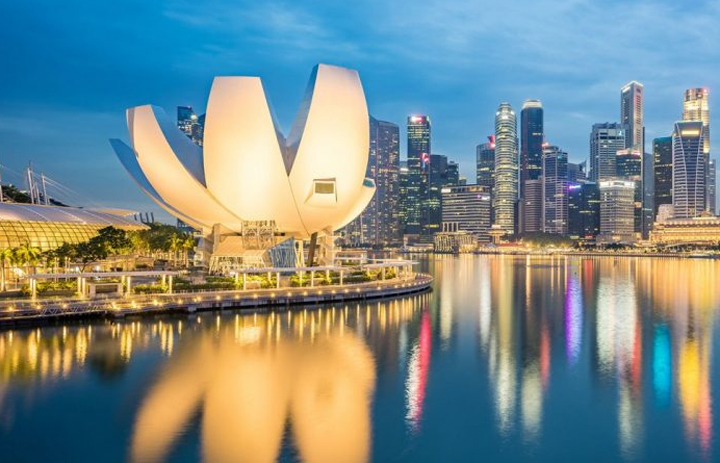
Indian cities suffer significant drop in Global Smart City Index; Singapore on top

News Network
September 17, 2020

singapore.JPG

New Delhi, Sept 17: Four Indian cities -- New Delhi, Mumbai, Hyderabad, and Bengaluru -- witnessed a significant drop in their rankings in the global listing of smart cities that was topped by Singapore.

The Institute for Management Development (IMD), in collaboration with Singapore University for Technology and Design (SUTD), has released the 2020 Smart City Index, with key findings on how technology is playing a role in the Covid-19 era.

In the 2020 Smart City Index, Hyderabad was placed at the 85th position (down from 67 in 2019), New Delhi at 86th rank (down from 68 in 2019), Mumbai was at 93rd place (in 2019 it was at 78) and Bengaluru at 95th (79 in 2019).

"Cities in India (New Delhi, Mumbai, Hyderabad, Bengaluru) suffer significant drops this year. This can be attributed to the detrimental effect that the pandemic has had where the technological advancement was not up to date," the report said.

It further added that "Indian cities have suffered more from the pandemic because they were not prepared".

From 15 indicators that the respondents perceive as the priority areas for their city, all four cities highlighted air pollution as one of the key areas that they felt their city needed to prioritise on.

For cities like Bangalore and Mumbai, this was closely followed by road congestion while for Delhi and Hyderabad it was basic amenities, the report said.

The 2020 Smart City Index (SCI) was topped by Singapore, followed by Helsinki and Zurich in the second and the third place respectively. Others in the top 10 list include Auckland (4th), Oslo (5th), Copenhagen (6th), Geneva (7th), Taipei City (8th), Amsterdam (9th) and New York at the 10th place.

In SCI's context, 'smart city' describes an urban setting that apply technology to enhance the benefits and diminish the shortcomings of urbanization.

The second edition of the SCI ranked 109 cities worldwide by capturing perceptions of randomly chosen 120 residents in each city.

Hundreds of citizens from 109 cities were surveyed in April and May 2020 and asked questions on the technological provisions of their city across five key areas: health and safety, mobility, activities, opportunities and governance.

Reflected in this year's rankings is that cities have ever differing approaches to technology as managing the pandemic has become increasingly important in local politics, the report said.

"We cannot ignore the impact of Covid-19," said IMD's Professor Arturo Bris, who led the work of the ranking as the Director of the World Competitiveness Center at the Swiss management institute which is behind it. Those with better technology manage the pandemic better. Smart cities are not the solution, but technology helps,” he explained.

"Smart cities closer to the top of the rankings seem to deal with unexpected challenges of the devastating pandemic with a better outcome," remarked Professor Heng Chee Chan, Chairperson of the Lee Kuan Yew Centre for Innovative Cities at SUTD.


Comments

Add new comment

  • Coastaldigest.com reserves the right to delete or block any comments.
  • Coastaldigset.com is not responsible for its readers’ comments.
  • Comments that are abusive, incendiary or irrelevant are strictly prohibited.
  • Please use a genuine email ID and provide your name to avoid reject.
News Network
December 7,2025

Mangaluru, Dec 7: A 34-year-old fruit and vegetable trader in Mangaluru has reportedly lost ₹33.1 lakh after falling victim to an online investment scam run through a fake mobile app.

Police said the scam began in September, when the victim received a link on Facebook. Clicking it connected him to a WhatsApp number, where an unidentified person introduced a high-return investment scheme and instructed him to download an app.

To build trust, the fraudster asked him to invest ₹30,000 on September 24. The trader soon received ₹34,000 as “profit,” convincing him the scheme was genuine. Over the next two months, he transferred money in multiple instalments via Google Pay and IMPS to different scanner codes and bank accounts shared by the scammers. Between September 24 and December 3, he ended up sending a total of ₹33.1 lakh.

When he later requested a refund of his investment and promised returns, the scammers demanded additional payments, claiming he needed to pay a “service tax” first. Even after he paid a small amount, no money was returned, and the scammers continued pressuring him for more.

A case has been registered at the CEN Crime Police Station.

Comments

Add new comment

  • Coastaldigest.com reserves the right to delete or block any comments.
  • Coastaldigset.com is not responsible for its readers’ comments.
  • Comments that are abusive, incendiary or irrelevant are strictly prohibited.
  • Please use a genuine email ID and provide your name to avoid reject.
News Network
December 6,2025

pilot.jpg

New Delhi: IndiGo, India’s largest airline, faced major operational turbulence this week after failing to prepare for new pilot-fatigue regulations issued by the Directorate General of Civil Aviation (DGCA). The stricter rules—designed to improve flight safety—took effect in phases through 2024, with the latest implementation on November 1. IndiGo has acknowledged that inadequate roster planning led to widespread cancellations and delays.

Below are the key DGCA rules that affected IndiGo’s operations:

1. Longer Mandatory Weekly Rest

Weekly rest for pilots has been increased from 36 hours to 48 hours.

The government says the extended break is essential to curb cumulative fatigue. This rule remains in force despite the current crisis.

2. Cap on Night Landings

Pilots can now perform only two night landings per week—a steep reduction from the earlier limit of six.

Night hours, defined as midnight to early morning, are considered the least alert period for pilots.

Given the disruptions, this rule has been temporarily relaxed for IndiGo until February 10.

3. Reduced Maximum Night Flight Duty

Flight duty that stretches into the night is now capped at 10 hours.

This measure has also been kept on hold for IndiGo until February 10 to stabilize operations.

4. Weekly Rest Cannot Be Replaced With Personal Leave

Airlines can no longer count a pilot’s personal leave as part of the mandatory 48-hour rest.

Pilots say this closes a loophole that previously reduced actual rest time.

Currently, all airlines are exempt from this rule to normalise travel.

5. Mandatory Fatigue Monitoring

Airlines must submit quarterly fatigue reports along with corrective actions to DGCA.

This system aims to create a transparent fatigue-tracking framework across the industry.

The DGCA has stressed that these rules were crafted to strengthen flight safety and align India with global fatigue-management standards. The temporary relaxations are expected to remain until February 2025, giving IndiGo time to stabilise its schedules and restore normal air travel.

Comments

Add new comment

  • Coastaldigest.com reserves the right to delete or block any comments.
  • Coastaldigset.com is not responsible for its readers’ comments.
  • Comments that are abusive, incendiary or irrelevant are strictly prohibited.
  • Please use a genuine email ID and provide your name to avoid reject.
News Network
December 16,2025

jordan.jpg

Prime Minister Narendra Modi on Monday held talks with Jordan’s King Abdullah II in Amman, during which the two leaders discussed ways to further strengthen bilateral relations, with the Prime Minister outlining an eight-point vision covering key areas of cooperation.

Describing the meeting as “productive”, PM Modi said he shared a roadmap focused on trade and economy, fertilisers and agriculture, information technology, healthcare, infrastructure, critical and strategic minerals, civil nuclear cooperation, and people-to-people ties.

In a post on social media platform X, the Prime Minister praised King Abdullah II’s personal commitment to advancing India–Jordan relations, particularly as both countries mark the 75th anniversary of the establishment of diplomatic ties this year.

“Held productive discussions with His Majesty King Abdullah II in Amman. His personal commitment towards vibrant India-Jordan relations is noteworthy. This year, we are celebrating the 75th anniversary of our bilateral diplomatic relations,” PM Modi said.

The meeting took place at the Al Husseiniya Palace, where the two leaders also exchanged views on regional and global issues of mutual interest. According to the Ministry of External Affairs (MEA), both sides agreed to further deepen cooperation in areas including trade and investment, defence and security, counter-terrorism and de-radicalisation, fertilisers and agriculture, infrastructure, renewable energy, tourism, and heritage.

The MEA said both leaders reaffirmed their united stand against terrorism.

PM Modi arrived in Amman earlier on Monday and was received by Jordanian Prime Minister Jafar Hassan, who accorded him a formal welcome. Following the talks, King Abdullah II hosted a banquet dinner in honour of the Prime Minister, reflecting the warmth of bilateral ties.

Jordan is the first leg of PM Modi’s three-nation tour. From Amman, the Prime Minister will travel to Ethiopia at the invitation of Prime Minister Abiy Ahmed Ali, marking his first official visit to the African nation. The tour will conclude with a visit to Oman.

Comments

Add new comment

  • Coastaldigest.com reserves the right to delete or block any comments.
  • Coastaldigset.com is not responsible for its readers’ comments.
  • Comments that are abusive, incendiary or irrelevant are strictly prohibited.
  • Please use a genuine email ID and provide your name to avoid reject.
