Indian economy, battered by covid-19, needs its lost growth

News Network
September 1, 2021

The coronavirus continues to batter India’s damaged economy, putting growing pressure on Prime Minister Narendra Modi to nurture a nascent recovery and get the country back to work.

The coronavirus, which has struck in two waves, has killed hundreds of thousands of people and at times has brought cities to a halt. Infections and deaths have eased, and the country is returning to work. Economists predict that growth could surge in the second half of the year on paper.

Still, the damage could take years to undo. Economic output was 9.2% lower for the April-through-June period this year than what it was for the same period in 2019, according to India Ratings, a credit ratings agency.

The coronavirus has essentially robbed India of much of the momentum it needed to provide jobs for its young and fast-growing workforce. It has also exacerbated longer-term problems that were already dragging down growth, such as high debt, a lack of competitiveness with other countries and policy missteps.

Economists are particularly concerned about the slow rate of vaccinations and the possibility of a third wave of the coronavirus, which could prove to be disastrous for any economic recovery.

“Vaccination progress remains slow,” with just 11% of the population fully inoculated so far, Priyanka Kishore, the head of India and Southeast Asia at Oxford Economics, said in a research briefing last week. The firm lowered its growth rate for 2021 to 8.8%, from 9.1%.

Even growth of 8.8% would be a strong number in better times. Compared with the previous year, India’s economy grew 20.1% April through June, according to estimates released by the Ministry of Statistics and Program Implementation.

But those comparisons benefit from comparison with India’s dismal performance last year. The economy shrank 7.3% last year, when the government shut down the economy to stop a first wave of the coronavirus. That led to big job losses, now among the biggest hurdles holding back growth, experts say.

Real household incomes have fallen further this year, said Mahesh Vyas, chief executive of the Center for Monitoring Indian Economy. “Till this is not repaired,” he said, “the Indian economy can’t bounce back.”

At least 3.2 million Indians lost stable, well-paying salaried jobs in July alone, Vyas estimated. Small traders and daily wage labourers had bigger job losses during the lockdowns than others, though they were able to go back to work once the restrictions were lifted, Vyas said in a report in August. “Salaried jobs are not similarly elastic,” he said. “It is difficult to retrieve a lost salaried job.”

About 10 million people have lost such jobs since the beginning of the pandemic, Vyas said.

In August, Modi’s government moved to rekindle the economy by selling stakes worth close to $81 billion in state-owned assets like airports, railway stations and stadiums. But economists largely see the policy as a move to generate cash in the short term. It remains to be seen if it will lead to more investment, they say.

“The whole idea is that the government will borrow this money from the domestic market,” said Devendra Kumar Pant, chief economist at India Ratings. “But what happens if this project goes to a domestic player and he is having to borrow in the domestic market? Your credit demand domestically won’t change.”

Pant added that questions remained about how willing private players would be to maintain those assets long term and how the monetization policy would ultimately affect consumer prices.

 “In India, things will decay for the worse rather than improve,” he said, adding that the costs to users of highways and other infrastructure could go up.

During the second wave in May, Modi resisted calls by many public health researchers, including Dr Anthony Fauci, director of the US National Institute of Allergy and Infectious Diseases, to reinstitute a nationwide lockdown.

The lockdowns in 2021 were nowhere near as severe as the nationwide curbs last year, which pushed millions of people out of cities and into rural areas, often on foot because rail and other transportation had been suspended.

Throughout the second wave, core infrastructure projects across the country, which employ millions of domestic migrant workers, were exempted from restrictions. More than 15,000 miles of Indian highway projects, along with rail and city metro improvements, continued.

On Tuesday, Pant said that India’s growth estimates of 20.1% for the April through June period were nothing but an “illusion.” Growth contracted so sharply around the same period last year, by a record 24%, that even double-digit gains this year would leave the economy behind where it was two years ago.

Economists say that India needs to spend, even splurge, to unlock the full potential of its huge low-skilled workforce. “There is a need for very simple primary health facilities, primary services to deliver nutrition to children,” Vyas said. “All these are highly labour intensive jobs and these are government services largely.”

One of the reasons Indian governments typically have not spent in those areas, Vyas said, is that it has been considered “not a sexy thing to do.” Another is the government's “dogmatic fixation” with keeping fiscal deficits in control, he said. The government simply can’t rely on the private sector alone for creating jobs, Vyas said.

The “only solution,” he said, is for the government to spend and spur private investment. “You have a de-motivated private sector because there isn’t enough demand. That’s what’s holding India back.”

Comments

Ramesh Mishra
 - 
Monday, 13 Sep 2021

INDIAN ECONOMY
Due to the malfeasance in the Judiciary, Politicians and Executives, the economy is gone back 75,years behind. The malfeasance into the three vital branches can not be corrected and consolidated because all the three vital organs of the government have completely collapsed. Modi, PM of India has pilloried, tortured, traumatised, harassed, humiliated, degraded and destroyed his opposition, critics. India is now a " total loss". The internal conflict has ruined the trade commerce and the mutual trust. Hindu, Muslim, Christian and Sikh are divided due to the lack of leadership. The division of India can't be prevented its too late to rebuild the public trust. The public is cheated at every step in India which is a country of crooks.
Ramesh Mishra, Victoria, British Columbia, CANADA

Add new comment

  • Coastaldigest.com reserves the right to delete or block any comments.
  • Coastaldigset.com is not responsible for its readers’ comments.
  • Comments that are abusive, incendiary or irrelevant are strictly prohibited.
  • Please use a genuine email ID and provide your name to avoid reject.
News Network
November 30,2025

The United Nations Committee against Torture (CAT) has condemned the Israeli regime for enforcing a policy of “organized torture” against Palestinians.

In a report published on Friday, CAT stated that the occupying regime enforces a deliberate policy of “organized and widespread torture and ill-treatment” against Palestinian abductees, particularly since October 7, 2023, when Israel launched its genocidal war on Gaza.

The committee expressed “deep concern over repeated severe beatings, dog attacks, electrocution, water-boarding, use of prolonged stress positions [and] sexual violence” inflicted on Palestinians.

Palestinian prisoners were degraded by “being made to act like animals or being urinated on,” systematically denied medical care, and subjected to excessive restraints, “in some cases resulting in amputation,” the report added.

CAT also condemned the routine application of “unlawful combatants law” to justify the prolonged detention without trial of thousands of Palestinian men, women, and children.

More than 10,000 Palestinians, including women and children, are currently held in Israeli prisons, according to Palestinian and international human rights groups, with 3,474 Palestinians in “administrative detention,” meaning they are imprisoned without trial for indefinite periods.

The report highlighted the “high proportion of children who are currently detained without charge or on remand,” noting that while Israel sets the age of criminal responsibility at 12, even younger children have been abducted.

Children designated as security prisoners face severe restrictions on family contact, may be subjected to solitary confinement, and are denied access to education, in clear violation of international law.

The committee further suggested that Israel’s policies across the Occupied Territories constitute collective torture against the Palestinian population.

“A range of policies adopted by Israel in the course of its continued unlawful presence in the Occupied Palestinian Territory amounts to cruel, inhuman or degrading living conditions for the Palestinian population,” the report said.

On Thursday, the Palestinian resistance movement Hamas condemned the systematic killing and torture of Palestinian abductees in Israeli prisons, urging international action to halt these abuses.

Citing human rights data, Hamas stated that 94 Palestinians have been killed in Israeli prisons since the start of Tel Aviv’s genocidal war on Gaza.

“This reflects an organized criminal approach that has turned these prisons into direct killing grounds to eliminate our people,” the resistance movement said.

Hamas called on the international community, the UN, and human rights organizations to immediately pressure Israel to end crimes against prisoners and uphold their rights as guaranteed by all international conventions and norms.

Comments

Add new comment

  • Coastaldigest.com reserves the right to delete or block any comments.
  • Coastaldigset.com is not responsible for its readers’ comments.
  • Comments that are abusive, incendiary or irrelevant are strictly prohibited.
  • Please use a genuine email ID and provide your name to avoid reject.
News Network
November 24,2025

lebanon.jpg

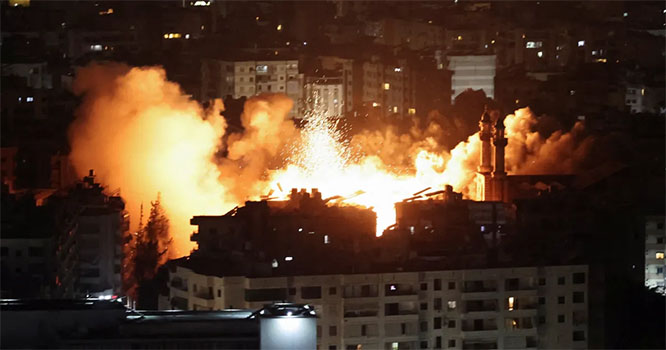
Israel has launched a new act of aggression on a residential neighborhood in Lebanon's capital, Beirut, killing and injuring about two dozen civilians.

The Israeli regime's military said in a statement that its forces carried out a so-called precise strike in a residential apartment in Dahiyeh in the southern suburbs of Beirut on Sunday.

The aggression targeted residential areas, killing at least five people and injuring more than 28 people, Lebanon's Health Ministry said. 

Hezbollah announced the martyrdom of senior Hezbollah commander Haytham Ali Tabatabai and four resistance fighters.

Lebanese President Michel Aoun condemned the airstrike, calling it a clear demonstration of Tel Aviv’s disregard for repeated international calls to halt violations on Lebanese soil.

“Israel refuses to implement international resolutions and all efforts aimed at ending the escalation and restoring stability,” Aoun said, urging the international community to take action to prevent further aggression.

The Palestinian Islamic Jihad movement also condemned the attack, holding the international community accountable. 

“The international community bears responsibility and continues to provide cover for these attacks as long as it does not restrain the occupiers,” said Ali Abu Shahin, a member of the group’s political bureau.

Israeli prime minister Benjamin Netanyahu’s office announced that the Israeli army carried out a strike “in the heart of Beirut."

Netanyahu reportedly approved the operation following recommendations from top Israeli security officials.

Two senior US officials commented on the Israeli strike.

The first official said that Israel did not notify Americans in advance about the attack. "We were informed immediately after the strike was carried out."

The second senior official said that the "US knew for several days that Israel was planning to escalate its strikes in Lebanon, but did not know in advance the timing, location, or target of the strike."

Speaking from the site of the Israeli strike, Lebanese MP Ali Ammar condemned the attack as part of a broader campaign of aggression that has targeted "all of Lebanon since the Washington-sponsored ceasefire."

He stated that "any attack on Lebanon is a violation of red lines; this aggression is part and parcel of the entity that targets Lebanon's dignity, sovereignty, and security of citizens."

Ammar went on to say the resistance is responding with "utmost wisdom, patience, and will confront the enemy at the appropriate time."

"Unfortunately, the enemy is emboldened to commit its aggression by voices within Lebanon that have turned themselves into tools that support its aggression," he added.

The Israeli attack on the southern suburbs of the Lebanese capital is the latest blatant violation of the ceasefire Israel signed with Hezbollah in November 2024, which was intended to end hostilities that had escalated into full-scale war.

An Israeli strike on the Ain al-Hilweh camp near Sidon in southern Lebanon late Tuesday killed at least 14 people. It wounded several others, including young students, according to the Lebanese health ministry.

The military claimed the attack targeted “a Hamas training compound” used to plan and carry out attacks against the regime -- a claim that has frequently been made without evidence.

Hamas rejected the allegations as “a blatant lie aimed at justifying the massacre,” stating it had “no military installations in the Palestinian camps in Lebanon” and that the targeted site was merely “an open sports field.”

According to Lebanese authorities, Israeli attacks have killed approximately 4,000 people and displaced more than 1.2 million residents across the country since October 2023.

Comments

Add new comment

  • Coastaldigest.com reserves the right to delete or block any comments.
  • Coastaldigset.com is not responsible for its readers’ comments.
  • Comments that are abusive, incendiary or irrelevant are strictly prohibited.
  • Please use a genuine email ID and provide your name to avoid reject.
P A Hameed Padubidri
November 26,2025

CD.jpg

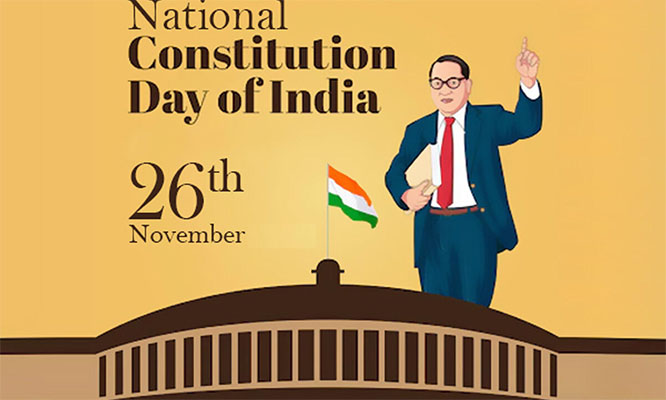
Constitution Day, also known as Samvidhan Divas, is observed every year on November 26 to honor the adoption of the Constitution of India and to recognize the visionary effort that shaped the world’s largest democracy.

Historical Background

It’s on November 26, 1949, the Constituent Assembly of India formally adopted the Constitution.This date is commemorated to acknowledge the completion of nearly three years of drafting, debate, and refinement.

On January 26, 1950, the Constitution came into force, marking India’s transition from a dominion to a sovereign republic.

The date 26 January was chosen to honor the “Purna Swaraj” declaration made in 1930 that marked the relentless efforts & sacrifices of the many. 

Why Constitution Day is Celebrated

* To honor & remember the framers of the Constitution, especially Dr. B. R. Ambedkar, the Chairman of the Drafting Committee, & many others. 

* To remind the citizens of the values, responsibilities, and rights enshrined in the Constitution.

* To promote constitutional values & literacy among students, institutions, and the general public.

* To reaffirm the nation’s commitment to justice, equality, liberty, fraternity and secular values. 

Vision and Significance of the Constitution

It establishes the fundamental political and legal framework for the nation.

Defines the structure, powers and functions of:
    •    The Executive
    •    The Legislature
    •    The Judiciary
    •    Guarantees a comprehensive set of Fundamental Rights, including:

-Equality before law
-Freedom of speech & expression
-Protection of life and personal liberty
-Freedom of religion
-Embeds Directive Principles of State Policy, guiding governance toward social justice and welfare.
-Introduces Fundamental Duties to ensure civic responsibility among citizens.

Key Features Celebrated on Constitution Day

-The Indian constitution is considered one of the longest written constitutions of the world. It’s systematically drafted considering almost all aspects that properly fits to the country. 

-Blend of multiple global constitutional principles while staying rooted in Indian values and realities.

-Framework that balances Federalism, Secularism, Democracy and Rule of Law. This makes everyone-from President to common man-below the law & are equal in the sight of law. 

-Another feature is that it’s based on built-in mechanisms for amendments, ensuring the Constitution grows with changing needs.

Message of the Day

The core ethos of this  Constitution Day is not merely about looking back at history-it’s a reminder of the continuous duty to protect democratic values, respect diversity and uphold the principles that define India as a sovereign, socialist, secular and democratic republic.

Happy Constitution Day to all my compatriots

Comments

Add new comment

  • Coastaldigest.com reserves the right to delete or block any comments.
  • Coastaldigset.com is not responsible for its readers’ comments.
  • Comments that are abusive, incendiary or irrelevant are strictly prohibited.
  • Please use a genuine email ID and provide your name to avoid reject.