India’s 2027 Census: All the Key Details and Timeline You Need to Know

News Network
June 16, 2025

New Delhi, June 16: The Narendra Modi-led government has officially notified plans to conduct India's 16th national census in 2027 — the first in 16 years since the last full enumeration was carried out in 2011. This upcoming census will, for the first time, include caste-based data collection across the country.

According to the notification issued on Monday, the census will be conducted with two different reference dates:

•    October 1, 2026 for snow-bound and non-synchronous areas such as Ladakh, parts of Jammu and Kashmir, and the states of Himachal Pradesh and Uttarakhand.

•    March 1, 2027 for the rest of the country.

The government plans to deploy around 34 lakh enumerators and supervisors, supported by 1.3 lakh census functionaries, all equipped with digital devices to streamline the massive data collection exercise.

A significant update for the 2027 exercise is the inclusion of caste enumeration, a move that has long been debated in policy circles and public discourse. Additionally, the census will provide an option for self-enumeration, allowing citizens to submit their data digitally.

Union Home Minister Amit Shah reviewed the preparations for the exercise on Sunday in a high-level meeting attended by Union Home Secretary, Registrar General and Census Commissioner Mritunjay Kumar Narayan, and other senior officials.

Two-Phase Operation

The census will be conducted in two distinct phases:

1.    House Listing Operation (HLO): This phase will record housing conditions, household assets, and amenities.

2.    Population Enumeration (PE): This phase will capture detailed information on demographic, socio-economic, and cultural aspects of each individual in every household.

This will be India’s 16th decennial census since the first one in 1872, and the eighth since Independence in 1947.

The government has also assured that robust data security protocols will be implemented to safeguard information during collection, transmission, and storage, addressing concerns around privacy and digital vulnerabilities.

Comments

Add new comment

  • Coastaldigest.com reserves the right to delete or block any comments.
  • Coastaldigset.com is not responsible for its readers’ comments.
  • Comments that are abusive, incendiary or irrelevant are strictly prohibited.
  • Please use a genuine email ID and provide your name to avoid reject.
News Network
January 23,2026

modIKERALA.jpg

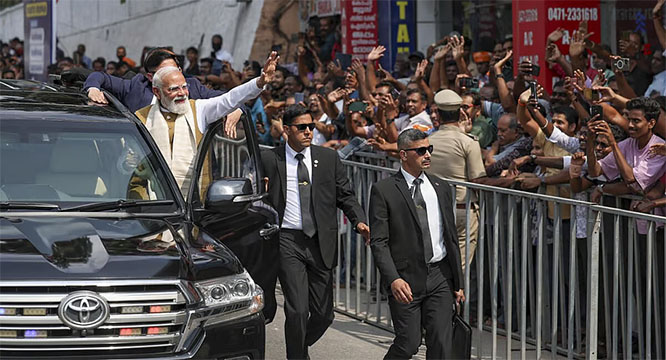
Prime Minister Narendra Modi, during his visit to Thiruvananthapuram on Friday, January 23, indicated that the Bharatiya Janata Party (BJP) is aiming to expand its political footprint in Kerala ahead of the Assembly elections scheduled in the coming months.

Speaking at a BJP-organised public meeting, Modi drew parallels between the party’s early electoral gains in Gujarat and its recent victory in the Thiruvananthapuram Municipal Corporation. The civic body win, which ended decades of Left control, was cited by the Prime Minister as a possible starting point for the party’s broader ambitions in the state.

Recalling BJP’s political trajectory in Gujarat, Modi said the party was largely insignificant before 1987 and received little media attention. He pointed out that the BJP’s first major breakthrough came with its victory in the Ahmedabad Municipal Corporation that year.

“Just as our journey in Gujarat began with one city, Kerala’s journey has also started with a single city,” Modi said, suggesting that the party’s municipal-level success could translate into wider electoral acceptance.

The Prime Minister alleged that successive governments led by the Left Democratic Front (LDF) and the United Democratic Front (UDF) had failed to adequately develop Thiruvananthapuram. He accused both fronts of corruption and neglect, claiming that basic infrastructure and facilities were denied to the capital city for decades.

According to Modi, the BJP’s control of the civic body represents a shift driven by public dissatisfaction with the existing political alternatives. He asserted that the BJP administration in Thiruvananthapuram had begun working towards development, though no specific details or timelines were outlined.

Addressing the gathering at Putharikandam Maidan, Modi said the BJP intended to project Thiruvananthapuram as a “model city,” reiterating his party’s commitment to governance-led change.

The Prime Minister’s visit to Kerala also included the inauguration of several development projects and the flagging off of new train services, as the BJP intensifies its political outreach in the poll-bound state.

Comments

Add new comment

  • Coastaldigest.com reserves the right to delete or block any comments.
  • Coastaldigset.com is not responsible for its readers’ comments.
  • Comments that are abusive, incendiary or irrelevant are strictly prohibited.
  • Please use a genuine email ID and provide your name to avoid reject.
News Network
January 20,2026

iran.jpg

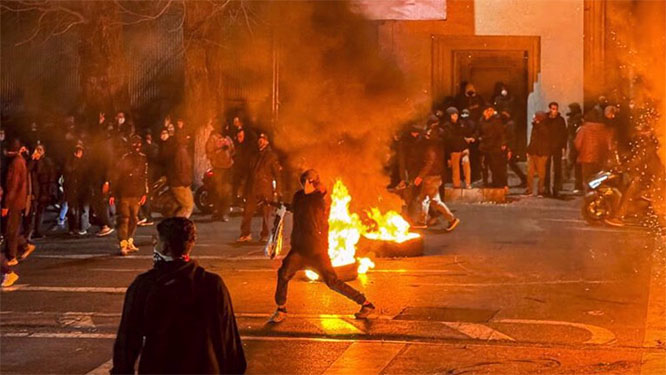
Iranian security and intelligence forces have captured more than 470 individuals in three provinces, identified as key figures behind the recent wave of violent unrest and terrorist activities linked to foreign-backed networks.

The Intelligence Ministry's provincial office in Khorasan Razavi announced on Monday the arrest of 192 armed terrorists, identified as the main agents behind recent riots in the region. 

According to an official statement, the detainees were involved in the killing of several security personnel and civilians, setting fire to mosques, public service facilities, and buses, as well as attacks on military and law enforcement centers.

The seized items from the group include several bulletproof vests, Kalashnikov rifles, hunting weapons, Winchester rifles, and various cold weapons such as daggers, swords, brass knuckles, tactical knives, crossbows, and chains.

Evidence indicates that some of the individuals were tied to hostile movements and terrorist organizations, with links overseas. Others were identified as members of violent criminal gangs, actively taking part in the unrest alongside their associates.

Simultaneously, in the western province of Lorestan, the IRGC announced the arrest of 134 individuals as the main leaders and influential field agents of a US-Israeli terrorist network.

The IRGC statement stated that these individuals formed terrorist cells during the recent unrest, committing "Daesh-like" acts.

They wounded security forces with firearms and cold weapons, and burned and destroyed public and private properties, including mosques, shops, banks, and private and public vehicles.

In the northwestern province of Zanjan, the police reported detaining 150 people identified as principal leaders and agents behind recent riots.

Authorities noted that these individuals were responsible for destroying public and private property and intentionally setting fire to vehicles in the province's squares.

Their crimes include shedding the blood of innocent people, destroying public and private property, attempting to enter military sites, disrupting public order, and spreading terror among citizens.

A variety of cold weapons were reportedly seized from the detainees.

What began late last month as peaceful protests over economic hardship across Iran turned violent after public statements by US and Israeli regime figures encouraged vandalism and disorder.

During the unrest, foreign-backed mercenaries rampaged through cities, killing security forces and civilians and damaging public property.

Comments

Add new comment

  • Coastaldigest.com reserves the right to delete or block any comments.
  • Coastaldigset.com is not responsible for its readers’ comments.
  • Comments that are abusive, incendiary or irrelevant are strictly prohibited.
  • Please use a genuine email ID and provide your name to avoid reject.
News Network
January 23,2026

Mangaluru: The Karnataka Government Polytechnic (KPT), Mangaluru, has achieved autonomous status from the All India Council for Technical Education (AICTE), becoming the first government polytechnic in the country to receive such recognition in its 78-year history. The status was granted by AICTE, New Delhi, and subsequently approved by the Karnataka Board of Technical Education in October last year.

Officials said the autonomy was conferred a few months ago. Until recently, AICTE extended autonomous status only to engineering colleges, excluding diploma institutions. However, with a renewed national focus on skill development, several government polytechnics across India have now been granted autonomy.

KPT, the second-largest polytechnic in Karnataka, was established in 1946 with four branches and has since expanded to offer eight diploma programmes, including computer science and polymer technology. The institution is spread across a 19-acre campus.

Ravindra M Keni, the first dean of the institution, told The Times of India that AICTE had proposed autonomous status for polytechnic institutions that are over 25 years old. “Many colleges applied. In the first round, 100 institutions were shortlisted, which was further narrowed down to 15 in the second round. We have already completed one semester after becoming an autonomous institution,” he said. He added that nearly 500 students are admitted annually across eight three-year diploma courses.

Explaining the factors that helped KPT secure autonomy, Keni said the institution has consistently recorded 100 per cent admissions and placements for its graduates. He also noted its strong performance in sports, with the college emerging champions for 12 consecutive years, along with active student participation in NCC and NSS activities.

Autonomous status allows KPT to design industry-oriented curricula, conduct examinations, prepare question papers, and manage academic documentation independently. The institution can also directly collaborate with industries and receive priority funding from AICTE or the Ministry of Education. While academic autonomy has been granted, financial control will continue to rest with the state government.

“There will be separate committees for examinations, question paper setting, boards of studies, and boards of examiners. The institution will now have the freedom to conduct admissions without government notifications and issue its own marks cards,” Keni said, adding that new academic initiatives would be planned after a year of functioning under the autonomous framework.

Comments

Add new comment

  • Coastaldigest.com reserves the right to delete or block any comments.
  • Coastaldigset.com is not responsible for its readers’ comments.
  • Comments that are abusive, incendiary or irrelevant are strictly prohibited.
  • Please use a genuine email ID and provide your name to avoid reject.