India’s fertility rate drops below replacement level as population hits 1.46 billion

News Network
June 10, 2025

indpopulation.jpg

New Delhi: India’s population is projected to reach 1.46 billion in 2025, maintaining its status as the world's most populous nation, according to a new UN demographic report. However, the report highlights a significant demographic shift: India's total fertility rate has fallen below the replacement level.

The 2025 State of World Population (SOWP) Report, titled The Real Fertility Crisis, published by the United Nations Population Fund (UNFPA), urges a shift from concerns about declining fertility rates to addressing unmet reproductive goals. 

It asserts that millions of people cannot achieve their desired fertility outcomes, which poses a greater challenge than underpopulation or overpopulation. The solution, the report suggests, lies in greater reproductive agency—ensuring individuals have the freedom to make informed choices about sex, contraception, and family planning.

Key Findings

•    India’s total fertility rate has declined to 1.9 births per woman, below the replacement level of 2.1. This indicates that, on average, women are having fewer children than needed to maintain population levels over generations, without migration.

•    Despite this trend, India’s youth population remains significant, with:

o    24% aged 0-14
o    17% aged 10-19
o    26% aged 10-24

•    The working-age population (15-64 years) constitutes 68% of the total population, presenting a potential demographic dividend—provided it is met with adequate employment opportunities and policy support.

•    The elderly population (65 and older) currently stands at 7%, and is expected to rise as life expectancy improves.

•    As of 2025, life expectancy at birth is projected to be 71 years for men and 74 years for women.

India's Demographic Transition

According to UN estimates, India's current population is approximately 1.463 billion. While India is now the world's most populous country, projections indicate that the number will continue to grow to around 1.7 billion before gradually declining—a shift expected in about 40 years.

The report highlights how demographic change is influenced by the choices and constraints experienced by millions of couples. While some families actively decide to start or expand their households, others face limited autonomy in reproductive decisions.

In 1960, India's population was 436 million, and the average woman had nearly six children. At the time, fewer than 25% of women used contraception, and less than half attended primary school (World Bank Data, 2020). Over the following decades, educational attainment increased, healthcare access improved, and more women gained decision-making power over their reproductive lives. Today, the average fertility rate is approximately two children per woman.

However, the report emphasizes that despite progress, women in India—and across the globe—still face barriers in achieving full reproductive autonomy. The nation remains part of a group of middle-income countries undergoing rapid demographic shifts, with its population doubling time now estimated at 79 years.

Expert Insights

"India has made remarkable strides in reducing fertility rates—from nearly five children per woman in 1970 to about two today, thanks to better education and expanded reproductive healthcare, leading to significant reductions in maternal mortality," said Andrea M. Wojnar, UNFPA India Representative.

"This progress means millions more mothers are alive today, raising children and strengthening communities. Yet, deep inequalities persist across states, castes, and income groups.

"The real demographic dividend comes when individuals have the freedom and resources to make informed reproductive choices. India has a unique opportunity to demonstrate how reproductive rights and economic prosperity can advance in tandem," Wojnar added.

Comments

Add new comment

  • Coastaldigest.com reserves the right to delete or block any comments.
  • Coastaldigset.com is not responsible for its readers’ comments.
  • Comments that are abusive, incendiary or irrelevant are strictly prohibited.
  • Please use a genuine email ID and provide your name to avoid reject.
News Network
December 2,2025

DKSsiddu.jpg

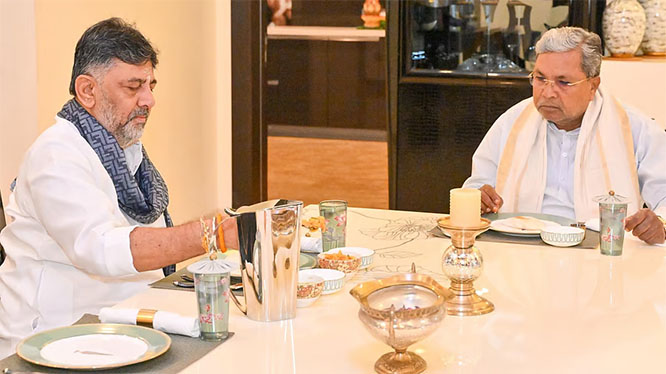
Bengaluru: 'Nati koli saaru' (country chicken curry) considered one of Chief Minister Siddaramaiah’s favourites along with steaming hot idlis was on the breakfast menu at Deputy CM D K Shivakumar’s residence on Tuesday, according to official sources.

The spread also included 'nati koli' fry, vada and pongal, among other items, they said.

In an apparent show of unity, Siddaramaiah visited Shivakumar’s residence for breakfast, just days after the two leaders shared a meal amid a simmering power tussle in the state Congress.

Siddaramaiah drove to the Deputy CM’s residence in Sadashivanagar, where he was received by Shivakumar and his brother D K Suresh, who is a former Congress MP.

Suresh and Kunigal MLA H D Ranganath, a relative of Shivakumar, joined them for breakfast, which featured a mix of vegetarian and non-vegetarian dishes.

Speaking to reporters later, Siddaramaiah said Shivakumar had invited him during his visit to the CM’s residence for breakfast on Saturday.

Asked about the difference between the two meals, the chief minister said, "At his (Shivakumar’s) house it was non-veg, while at my house it was veg. He is a vegetarian, I am a non-vegetarian. I had not prepared non-veg. I told DK to get chicken from the village as you won’t get the original in Bengaluru."

Shivakumar said he had initially invited Siddaramaiah to his residence, but the CM had suggested visiting his place first and reciprocating later. "It was a vegetarian breakfast at the CM’s house on Saturday," he noted.

"Today, I invited him (the CM) to my house. He enjoyed the breakfast, which had his Mysuru taste," Shivakumar added. At this point, Siddaramaiah remarked that Shivakumar’s wife is also from Mysuru.

Saturday’s breakfast at Siddaramaiah’s official residence, held as part of efforts by the Congress high command to ease tensions in the leadership dispute between the two, reportedly included idlis and sambar, according to official sources.

Comments

Add new comment

  • Coastaldigest.com reserves the right to delete or block any comments.
  • Coastaldigset.com is not responsible for its readers’ comments.
  • Comments that are abusive, incendiary or irrelevant are strictly prohibited.
  • Please use a genuine email ID and provide your name to avoid reject.
News Network
November 27,2025

Bengaluru, Nov 27: Karnataka Chief Minister Siddaramaiah’s camp is reportedly on alert as the Congress leadership tussle in the state intensifies, particularly amid speculation over the potential promotion of Deputy Chief Minister D.K. Shivakumar. Siddaramaiah is said to be in a “wait-and-watch” mode after admitting to “confusion” earlier this week and urging the party to “put a full stop” to it.

Sources say his supporters are ready to act if senior leaders — including party chief Mallikarjun Kharge, Sonia Gandhi, and Rahul Gandhi — give any indication of backing Shivakumar. If the party insists on a leadership change, Siddaramaiah’s camp has a list of alternatives, underscoring the deep rift between the two leaders. One possible candidate is Home Minister G. Parameshwara, a Siddaramaiah loyalist and influential Dalit leader.

The strategy was reportedly finalized at a meeting led by PWD Minister Satish Jarkiholi, another Siddaramaiah supporter, who stressed that Delhi leaders need to resolve the issue. Kharge and the Gandhis are expected to meet soon, after which Siddaramaiah and Shivakumar may be summoned to Delhi.

Shivakumar has largely stayed non-confrontational, publicly endorsing Siddaramaiah and downplaying speculation about his own ambitions. However, he has made pointed comments emphasizing the importance of honoring promises, directed at Siddaramaiah.

The feud traces back to the 2023 state election, when Siddaramaiah was chosen as Chief Minister while Shivakumar, who led the party’s campaign, was made Deputy CM and state party chief — a departure from the Congress’ usual “one post per person” rule.

There were also hints of a prior understanding that Siddaramaiah would step down midway through the term. As the halfway mark passed last week, Shivakumar-aligned lawmakers have ramped up pressure on the party for a leadership change, with Shivakumar himself hinting at stepping down as state party chief to pursue the top job.

Comments

Add new comment

  • Coastaldigest.com reserves the right to delete or block any comments.
  • Coastaldigset.com is not responsible for its readers’ comments.
  • Comments that are abusive, incendiary or irrelevant are strictly prohibited.
  • Please use a genuine email ID and provide your name to avoid reject.
News Network
November 24,2025

israelsyra.jpg

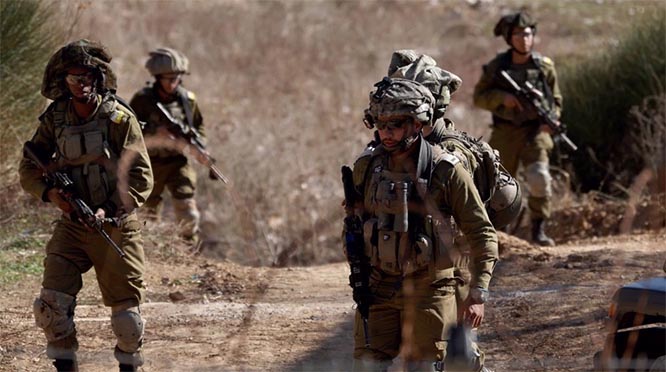
Israeli forces have pushed over the Syrian frontier, erecting a checkpoint and stopping vehicles in the southwestern city of Quneitra, in yet another breach of the Arab country’s sovereignty.

The violation took place on Sunday, when the troops made their way across the border, setting up the outpost near the Ain al-Bayda junction in northern Quneitra, Syrian outlets reported.

According to the al-Ikhbariya paper, an Israeli detachment positioned itself at the junction, halting cars and conducting searches.

The Syrian Arab News Agency (SANA) reported that three Israeli military vehicles then moved further into the northern countryside, deploying between the town of Jubata al-Khashab and the villages of Ofaniya and Ain al-Bayda. The agency added that a separate Israeli unit mounted a new incursion in the central region, approaching the villages of Umm Batina and al-Ajraf.

Residents said such activities have surged in recent months, pointing to Israeli advances onto farmland, leveling of extensive forested areas, arrests, and spread of mobile checkpoints.

The Israeli regime began markedly increasing its military aggression against Syria last year.

The escalation coincided with increasingly ferocious onslaughts throughout the country by the so-called Hay'at Tahrir al-Sham (HTS) Takfiri terrorist group, which the government of President Bashar al-Assad had confined to northwestern Syria. The HTS, however, managed to overthrow the government as the Israeli attacks would pummel the country’s civilian and defensive infrastructure.

Various reports have shown that, during the escalation, the regime conducted more than 1,000 airstrikes on the Syrian territory and over 400 ground raids into the south.

Following the collapse of the Assad government, Tel Aviv also widened its grip over the occupied Golan Heights by taking control of a demilitarized buffer zone, in defiance of a 1974 Disengagement Agreement. Earlier this month, senior Israeli officials, including Prime Minister Benjamin Netanyahu, visited the buffer zone, prompting expressions of alarm on the part of the United Nations.

The United States, the regime’s biggest ally, has, meanwhile, been fraternizing the HTS head Abu Mohammed al-Jolani amid the widely reported prospect of rapprochement with Tel Aviv.

Comments

Add new comment

  • Coastaldigest.com reserves the right to delete or block any comments.
  • Coastaldigset.com is not responsible for its readers’ comments.
  • Comments that are abusive, incendiary or irrelevant are strictly prohibited.
  • Please use a genuine email ID and provide your name to avoid reject.